What the quarry needed from us
The quarry was preparing for a scheduled shutdown and needed a controlled supply of crusher wear parts rather than one full drop. The brief was simple in wording but tight in practice: keep jaw plates and liners on hand, release them in the right sequence, and get them to site without holding up maintenance crews. The plant team worked to a narrow window and needed parts ready for fitment as soon as the crusher was opened up.
It was a typical Middelburg-area job in one respect, and a tricky one in another. The site was close enough to plan from our depot, but the shutdown still depended on freight timing, gate access, and the order in which each part had to arrive. We were asked to keep the supply side organised so the maintenance team could focus on strip down, inspection and reassembly. No one wanted parts lying around in the wrong place, or a missing liner slowing the job down.
- Client type: quarry operation near Middelburg, Mpumalanga
- Parts required: jaw plates and liners for scheduled shutdown work
- Supply method: staged release from local stock
- Main concern: avoiding downtime during a fixed maintenance window
Stock held in Middelburg for a fast release
Because we hold crusher wear parts in Middelburg, we were able to treat the order as a stock-led supply rather than a wait-for-production job. That makes a big difference when a shutdown date has already been set and the plant team has labour, tools and lifting gear lined up. The required items were checked against the order list, packed for site handling, and made ready for dispatch in the sequence agreed with the quarry.
The holding point mattered because the quarry did not need a bulk shipment of everything at once. They needed the right plates, at the right time, with clear markings for fitment on site. We also kept the paperwork tidy so the receiving team could match each item to the maintenance plan without extra back and forth. In practical terms, that meant less confusion at the gate and less time spent checking what was in each bundle. It was not a big job in volume, but it had to be exact.
- Jaw plates were prepared as the primary high-wear items for the shutdown
- Liners were grouped for staged handover, not all at once
- Each bundle was checked for part count, marking and loading order
- Freight was arranged to suit the quarry’s access times and offloading plan
Freight planning for a live shutdown window
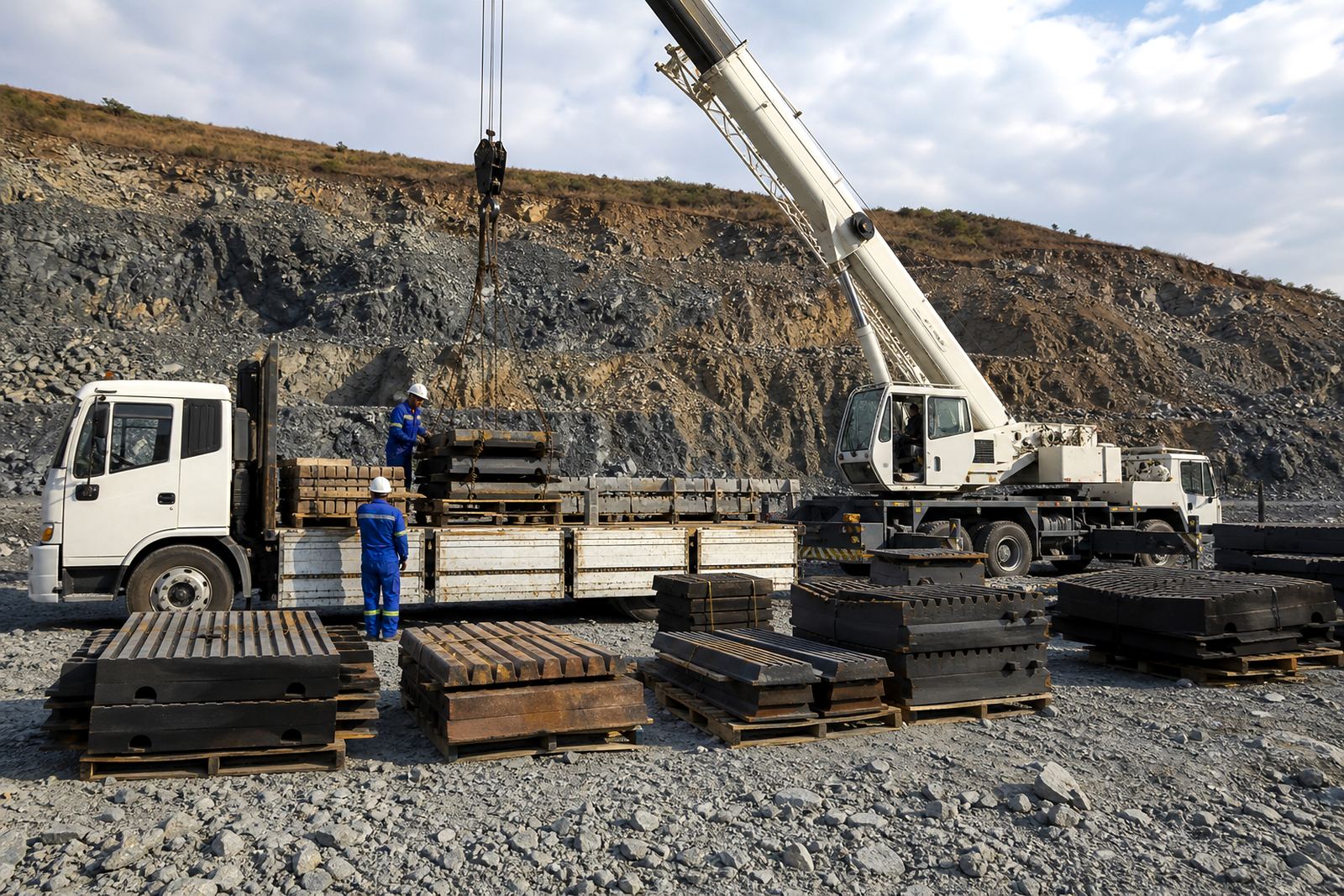
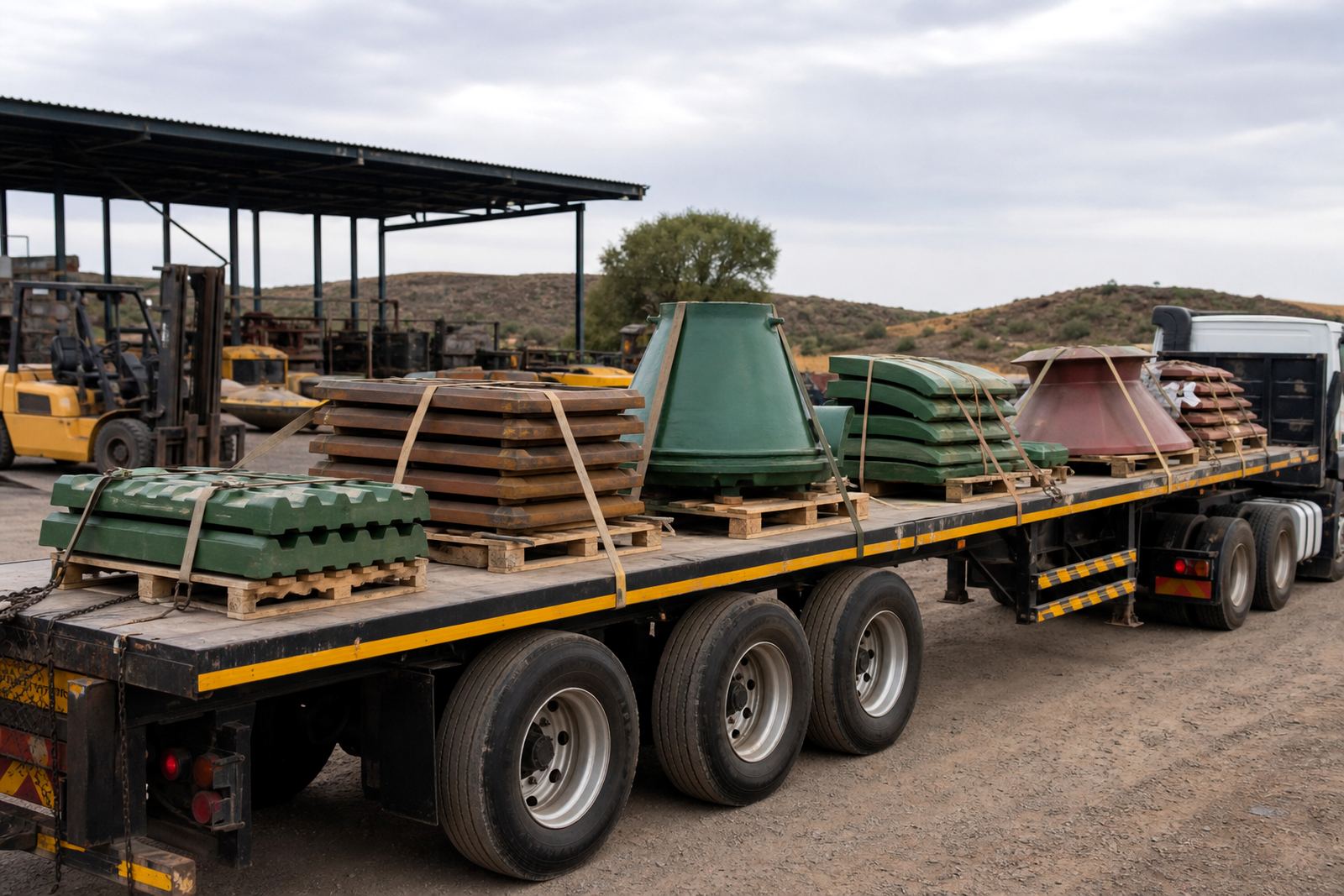
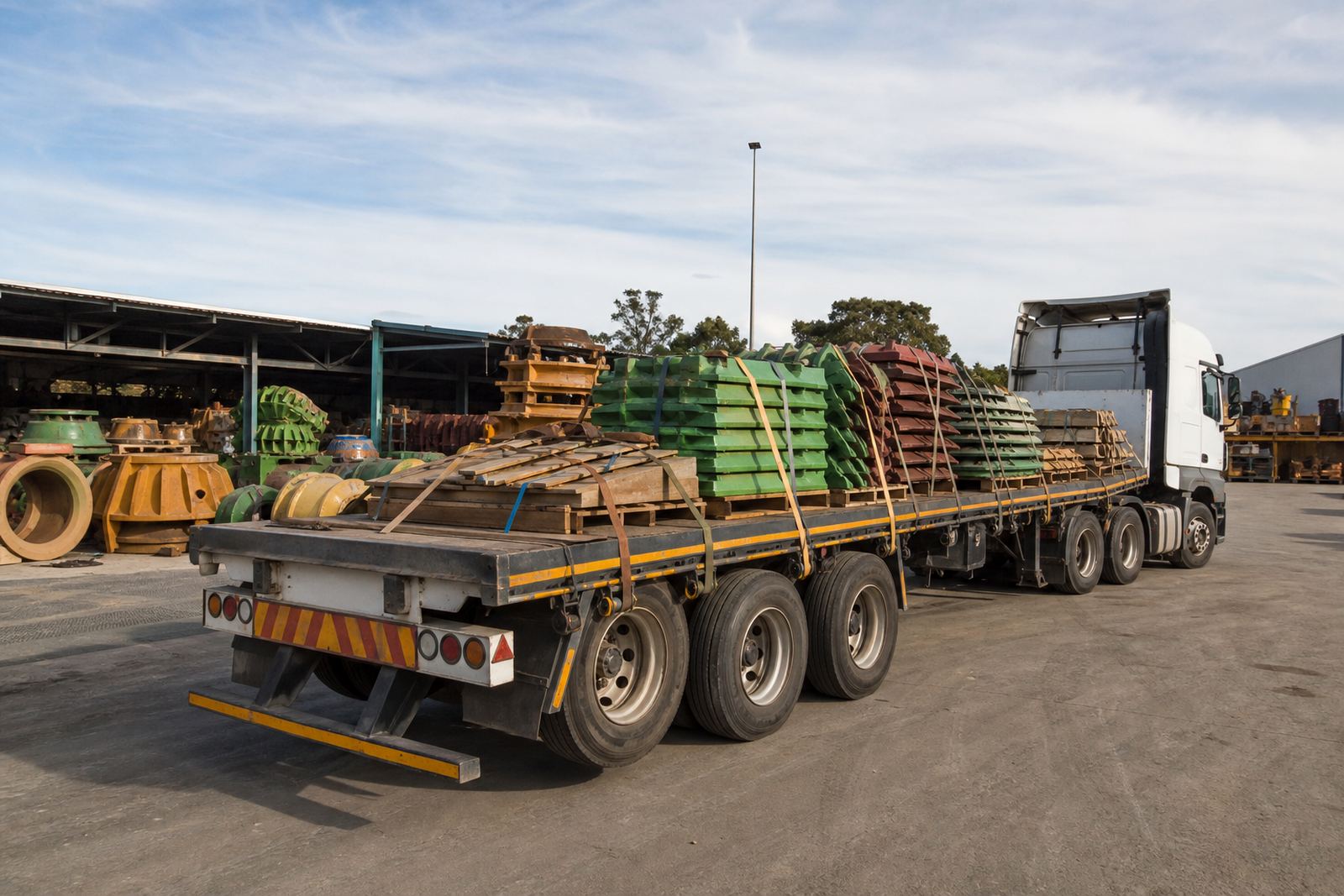
The freight side had to fit around a working quarry, not the other way around. Our team planned the route from Middelburg with the shutdown sequence in mind, including load securing and the timing of offloading on site. In areas where access roads can be rough or where a gate process takes longer than expected, those details are not small. They decide whether a part arrives ready for use, or sits waiting while the crew loses time.
Lerato Nkosi and Johan van der Merwe coordinated the release and transport schedule, while Sibusiso Mahlangu checked the packing and load security before dispatch. That coordination helped us avoid split deliveries landing in the wrong order. It also reduced the chance of damage in transit, which matters when heavy wear parts are moving across Gauteng roads and then out to a quarry approach road that may not be smooth. Load securing is basic work, but it is also where a lot of delays start if it is rushed.
- Route planning matched the quarry's receiving times
- Load securing was set for heavy crusher wear parts in transit
- Order consolidation reduced separate trips and cut handling points
- Return freight planning was kept ready in case any swapped parts needed to come back
How the shutdown delivery was staged
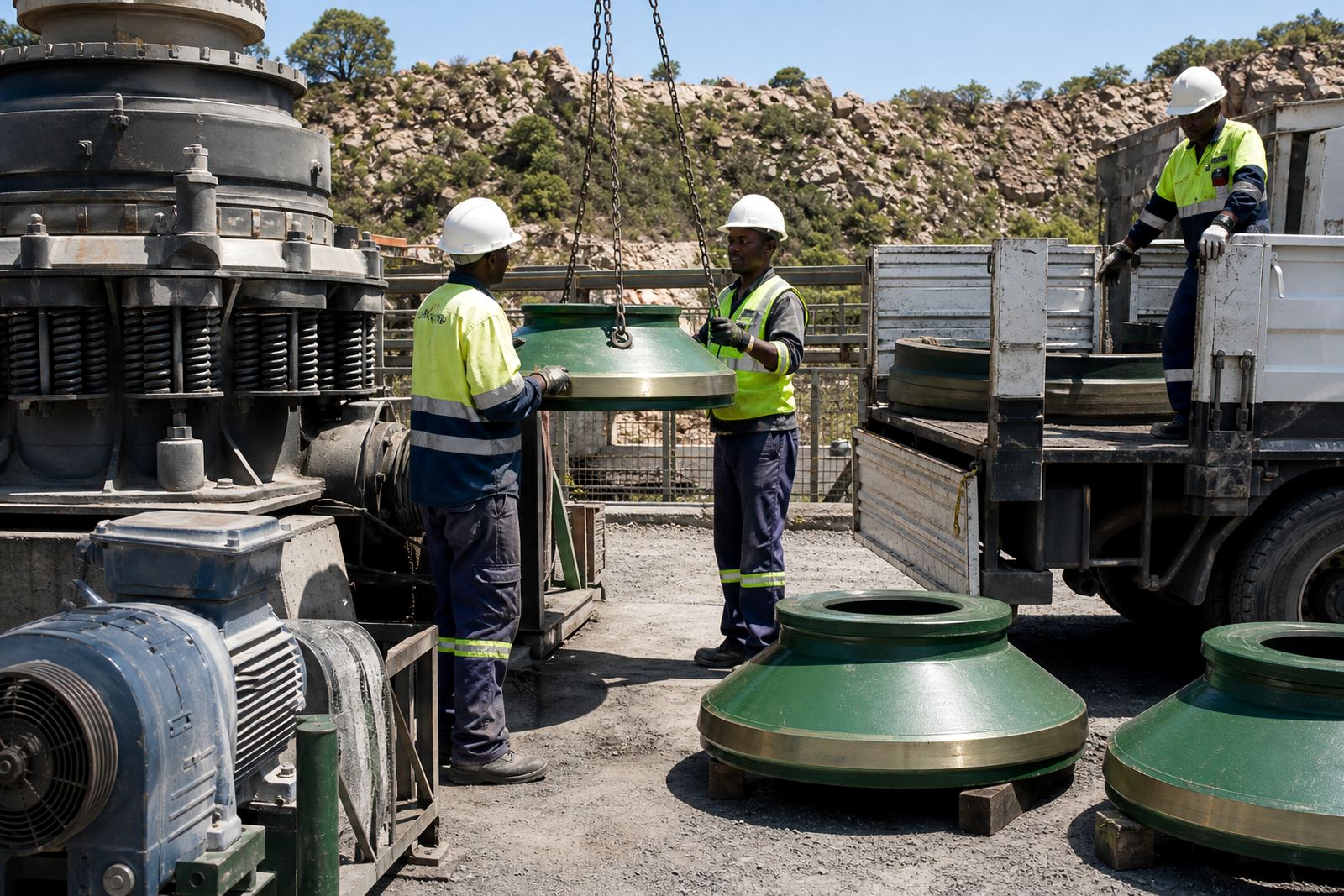
We split the supply into a first release for the opening phase of the shutdown, followed by a second release once inspection confirmed the next set of change-outs. This kept the site clear enough for maintenance crews to work safely and stopped unnecessary parts from being unpacked too early. The quarry did not need to manage a large pile of material on the floor. They needed the next item only when the team was ready for it.
Ayanda Dlamini handled the customer updates, and Megan Naidoo kept the order support side clean so each stage could be confirmed before dispatch. The result was a supply line that stayed calm through the shutdown, even with the normal pressure that comes with a short maintenance window. One missed call or a late pallet can throw the whole sequence, so we kept communication practical and brief. The quarry team had enough on their plate already.
- Stage one covered the first fitment sequence on jaw plates
- Stage two covered liners after inspection of wear patterns
- All dispatches were aligned to the shutdown calendar
- Site delivery coordination was used to match offloading with crew availability
What changed for the quarry team
The main result was simple: the shutdown ran without waiting on late wear parts. The plant crew could remove old components, fit the new pieces, and move on to the next task without the false starts that usually come from poor freight planning. That saved time in the yard and kept the maintenance plan on track. For a quarry, that matters because every extra hour on a shutdown affects production once the plant comes back on line.
Just as important, the team had one point of contact for supply, freight and order support. That cut down the number of calls and messages flying around during the shutdown week. The receiving team knew what was coming, when it was coming, and which bundle belonged to which stage. It sounds small, but in a busy quarry with dust, noise and moving plant, small admin mistakes become big delays very quickly.
From our side, the job reinforced why Middelburg is a good base for quarry supply across Mpumalanga and beyond. Being able to move stock quickly into the surrounding mining and quarry corridors means we can support planned work as well as urgent changes when a wear pattern shows up earlier than expected.
What we would repeat on the next shutdown
If we were doing this job again for the same quarry, we would keep the same structure: hold stock locally, agree the sequence before dispatch, and use staged delivery rather than sending everything in one load. That approach gives the maintenance crew room to work and keeps the receiving side tidy. We would also keep the same route and load checks, because they reduced risk on the road and at the gate.
For quarries and remote mine sites, the lesson is clear. Parts supply works best when it is treated as part of the shutdown plan, not as a separate task. With jaw plates, liners and other crusher wear parts, timing matters just as much as the item itself. If the wrong bundle arrives first, or the right bundle arrives late, the whole schedule gets stretched. Our job is to prevent that from happening.
- Hold the wear parts locally before the shutdown starts
- Release parts in the order the maintenance crew will fit them
- Keep freight times matched to site access and offloading rules
- Use one plan for stock, transport and order support
Key facts
| Project location | Quarry near Middelburg, Mpumalanga |
|---|---|
| Project type | Planned shutdown supply and freight coordination |
| Parts supplied | Jaw plates and liners |
| Delivery model | Staged release from stock |
| Timeline | 2 weeks from planning to final delivery |
| Outcome | Shutdown support completed without supply delays |