How route planning supports remote deliveries
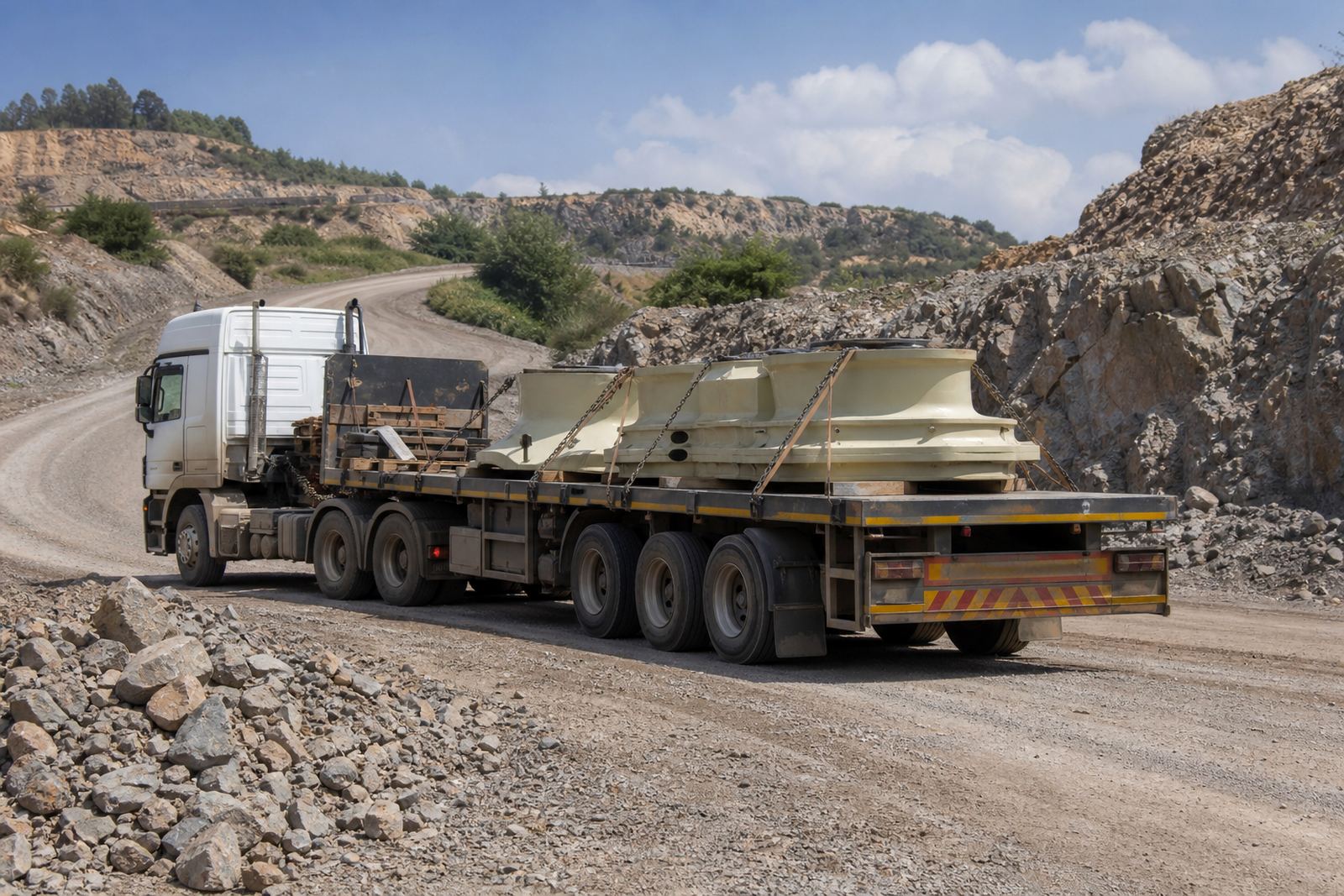
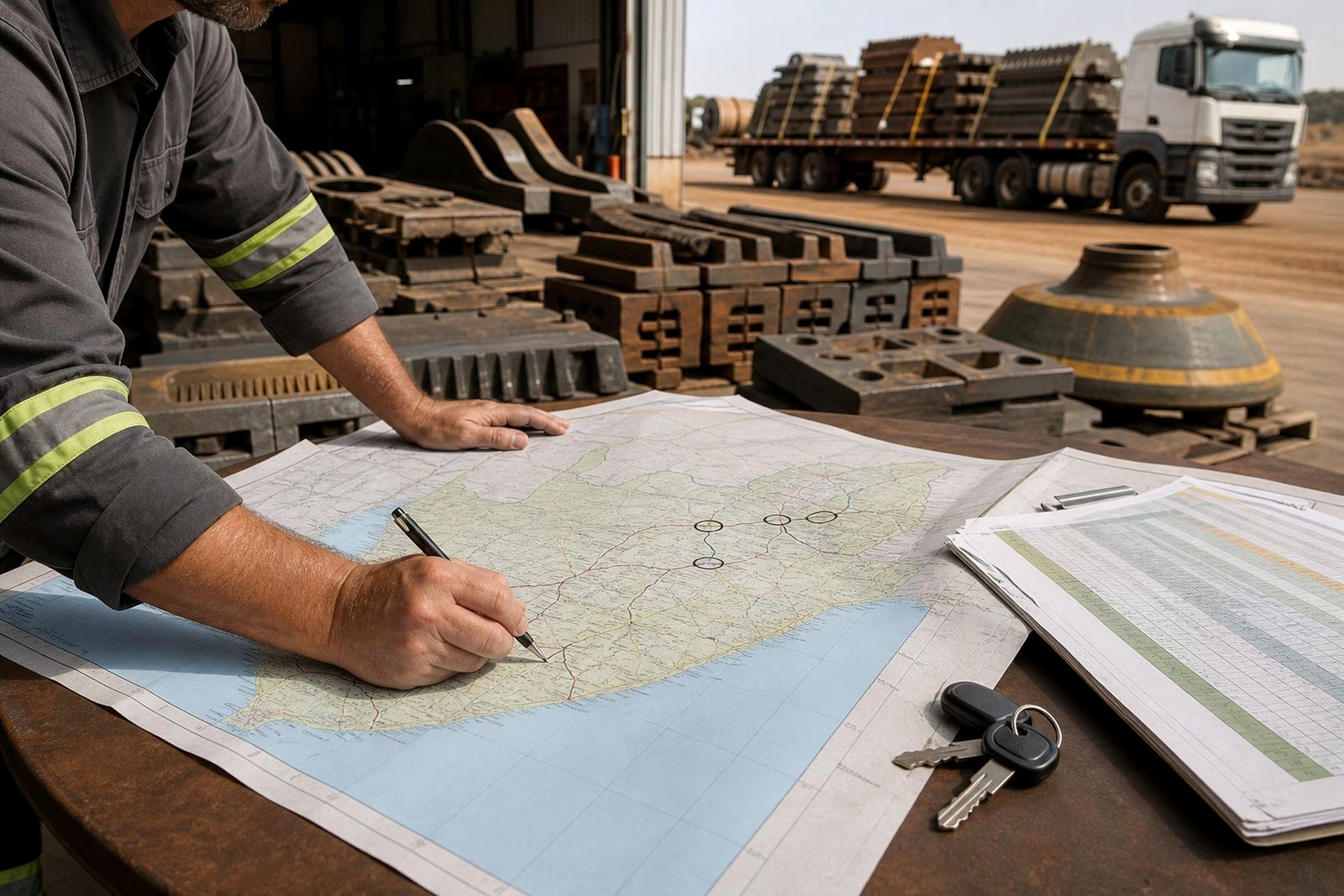
When a site is far from the main road, the wrong route can cost hours, extra fuel and a missed offload window. Route planning helps us match the delivery to the road conditions, the type of load, site access limits and the times when your crew can receive parts. That matters for crusher wear parts such as jaw plates, mantles, concaves, blow bars and liners, especially when a shutdown is scheduled and the machine must be back in service fast.
From our Middelburg base, we plan freight for mines and quarries that sit off gravel roads, require weighbridge checks or only allow entry during set site hours. We also factor in low bridges, steep approaches, informal detours and local traffic around towns like Witbank, Burgersfort, Phalaborwa and Rustenburg. In mining areas a small delay can push a whole installation back, so route planning is treated as part of the supply chain, not an extra step.
What is included in the route planning service
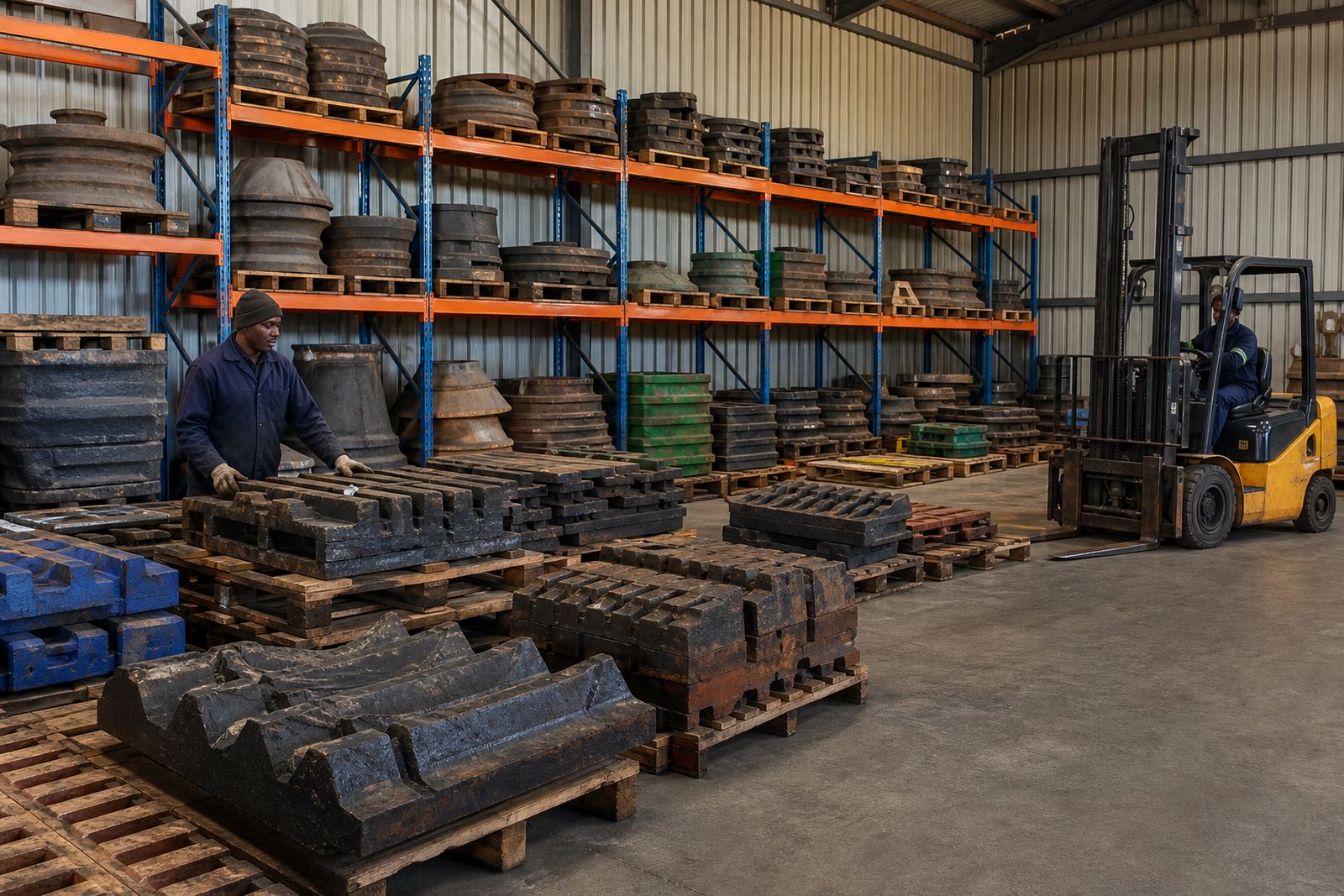
Our route planning service is built around the part list, the loading method and the destination. We look at the total mass, packaging size and the sequence of stops if more than one site is involved. Where possible, we consolidate orders so that crusher wear parts arrive together and on time, instead of sending separate loads that cost more and create handling risk.
- Route checks for road condition, distance and expected travel time
- Load matching for pallets, crates and loose wrapped parts
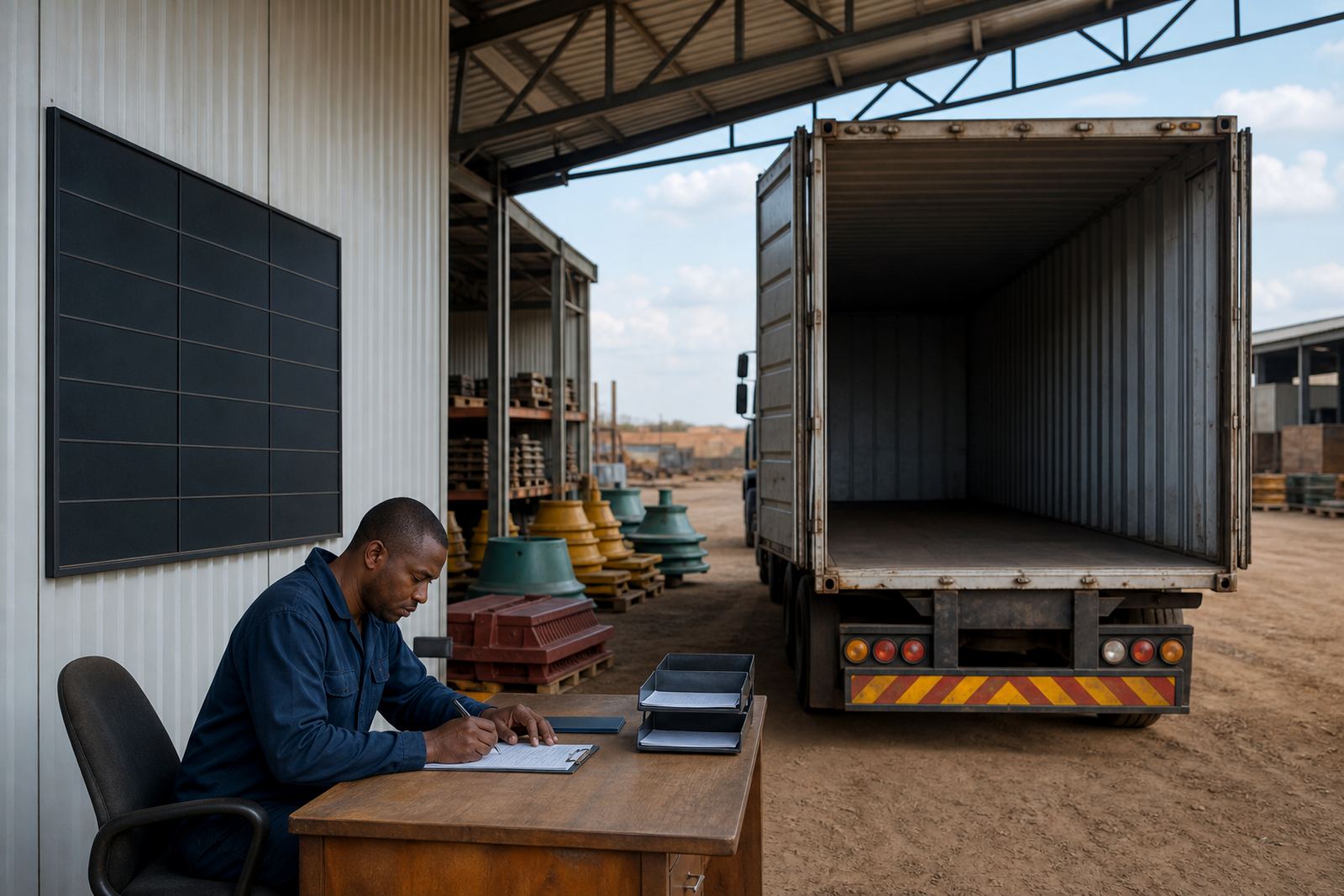
- Access planning for gate limits, weighbridges and offload areas
- Timing for day shift, night shift or shutdown work
- Coordination for urgent dispatch, return freight and multi-drop deliveries
- Load securing guidance for long-distance road freight
We also keep an eye on the practical side. A site with tight turn circles, soft edges after rain or limited offloading space needs a different plan to a quarry with open yard access. That is where local knowledge helps, because the route is only useful if the truck can actually get in, turn and unload without delay.
The planning process from order to offload
We keep the process straightforward. First, we confirm the part requirements and where the load must go. Then we check the route, the vehicle type and the likely delivery time window. If a site has access rules or a booking system, we plan around that before the truck leaves Middelburg.
The steps are usually:
- Review the order list and confirm the destination site
- Check road access, travel time and any site restrictions
- Match the load to the correct vehicle and securing method
- Confirm the delivery window and offload contact
- Track the movement and update the customer if conditions change
Where a delivery involves more than one area, we look at consolidation and backhaul options to reduce wasted kilometres. If the route passes through weather affected sections or areas with heavy traffic flow, we build in a buffer. Not every delay can be avoided, but careful planning cuts the risk of parts sitting on a truck when they should already be at the crusher floor.
Turnaround times for remote mine freight
Turnaround depends on distance, load size and site access. Deliveries into nearby Mpumalanga and Gauteng areas are often turned around faster than long hauls into the Northern Cape or deep rural sections of Limpopo and North West. Urgent part dispatch is handled differently to planned freight, but even urgent loads still need a safe route and proper load securing.
We work around load-shedding, road closures and weather changes, because those all affect freight timing in real life. During shutdown periods, we suggest route planning well before the stop-start date so there is room to adjust if the truck meets delays at a weighbridge, security gate or municipal access point. For remote mines, a clean route plan often saves a full day. Sometimes more, depending on the road and the offload setup.
Where a site needs repeat deliveries, we can align route planning with maintenance intervals so replacement parts arrive before wear reaches a critical point. That is useful for operations that run continuous shifts and cannot afford to wait for the next available truck after a part failure.
Pricing approach for route planning and freight
Pricing is based on the actual movement, not guesswork. Distance, road class, delivery urgency, load size and any special handling all affect the freight cost. If the route needs extra stops, return freight planning or after-hours access, that is worked into the quote before dispatch. We keep the structure clear so the customer understands what is being charged and why.
For crusher wear parts, the most cost-effective route is not always the shortest one. A road that looks direct on a map may be slower, rougher or unsuitable for a heavy load. We weigh up fuel use, vehicle wear, offload timing and risk of damage. That gives a more practical price for mines and quarries that need parts delivered safely, not just quickly.
If you place repeat orders, we can plan around regular freight intervals to reduce emergency costs. A planned run from Middelburg to a remote site is usually better value than a last-minute dispatch when the crusher has already stopped. It also gives the warehouse team time to prepare the load properly, which helps avoid delays at the gate.
Maintenance intervals and delivery planning by wear cycle
Route planning works best when it lines up with maintenance intervals. Crusher wear parts are usually replaced as part of a planned service cycle, and that cycle should guide freight timing. If a plant changes jaw plates or liners on a fixed shutdown pattern, we plan the delivery so the parts arrive with time for checking, sorting and staging before the fitment crew begins. For remote sites, this can make the difference between a one shift changeover and a drawn-out stoppage.
Typical planning points include:
- Regular checks for wear progress and upcoming replacement dates
- Shutdown calendars for planned fitment windows
- Buffer stock for critical parts at higher-risk sites
- Early dispatch for long distance freight to the Northern Cape or Limpopo
Good planning also helps with stock holding. If a part set is due within a known interval, we can hold it at our Middelburg depot and release it when the delivery window opens. That keeps the operation flexible and avoids panic buying when a component wears faster than expected. It is a practical way to keep mines moving, especially where road access and weather can change quickly.
Who handles your route planning
Our team works the route from order to offload. Thabo Mokoena oversees the service as Managing Director, with Lerato Nkosi handling operations, Johan van der Merwe coordinating freight, Ayanda Dlamini supporting customer queries, Sibusiso Mahlangu supervising the warehouse and Megan Naidoo managing procurement. That gives each delivery a clear owner from the moment the order is confirmed.
Clients across Middelburg, Witbank, Steelpoort, Burgersfort, Phalaborwa, Rustenburg, Kathu and Johannesburg East use the enquiry form on our contact page to request route support or freight planning. Whether it is one box of liners or a full load of crusher wear parts, we plan the movement around the site, the road and the work that still needs to happen after offload.
Key facts
| Base location | Middelburg, Mpumalanga |
|---|---|
| Service area | Mpumalanga, Limpopo, the Northern Cape, North West and Gauteng |
| Typical freight types | Crusher wear parts including jaw plates, mantles, concaves, blow bars and liners |
| Planning inputs | Site access rules, road condition, load size, delivery window and offload method |
| Turnaround basis | Distance, urgency, consolidation needs and route conditions |
| Related support | Stock holding, urgent dispatch, shutdown planning and return freight planning |