What Order Consolidation Covers
When a site needs jaw plates, mantles, concaves, blow bars and liners at the same time, splitting the order into several small consignments can add cost, delay and extra admin. Our order consolidation service brings those items together into one planned dispatch where the quantities, sizes and delivery points allow it. This is especially useful for remote mines in Mpumalanga, Limpopo, the Northern Cape, North West and Gauteng, where freight planning matters just as much as the parts themselves.
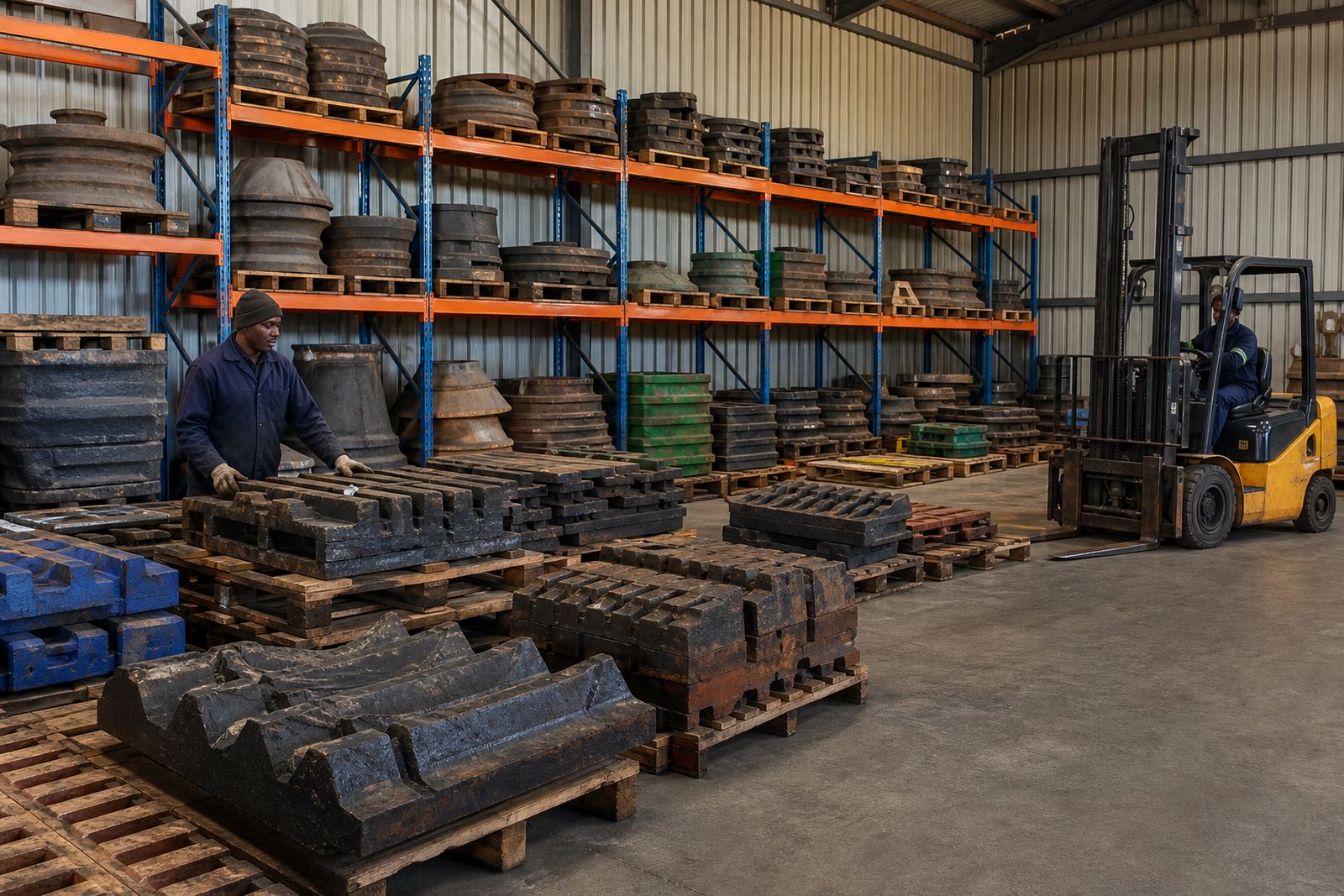
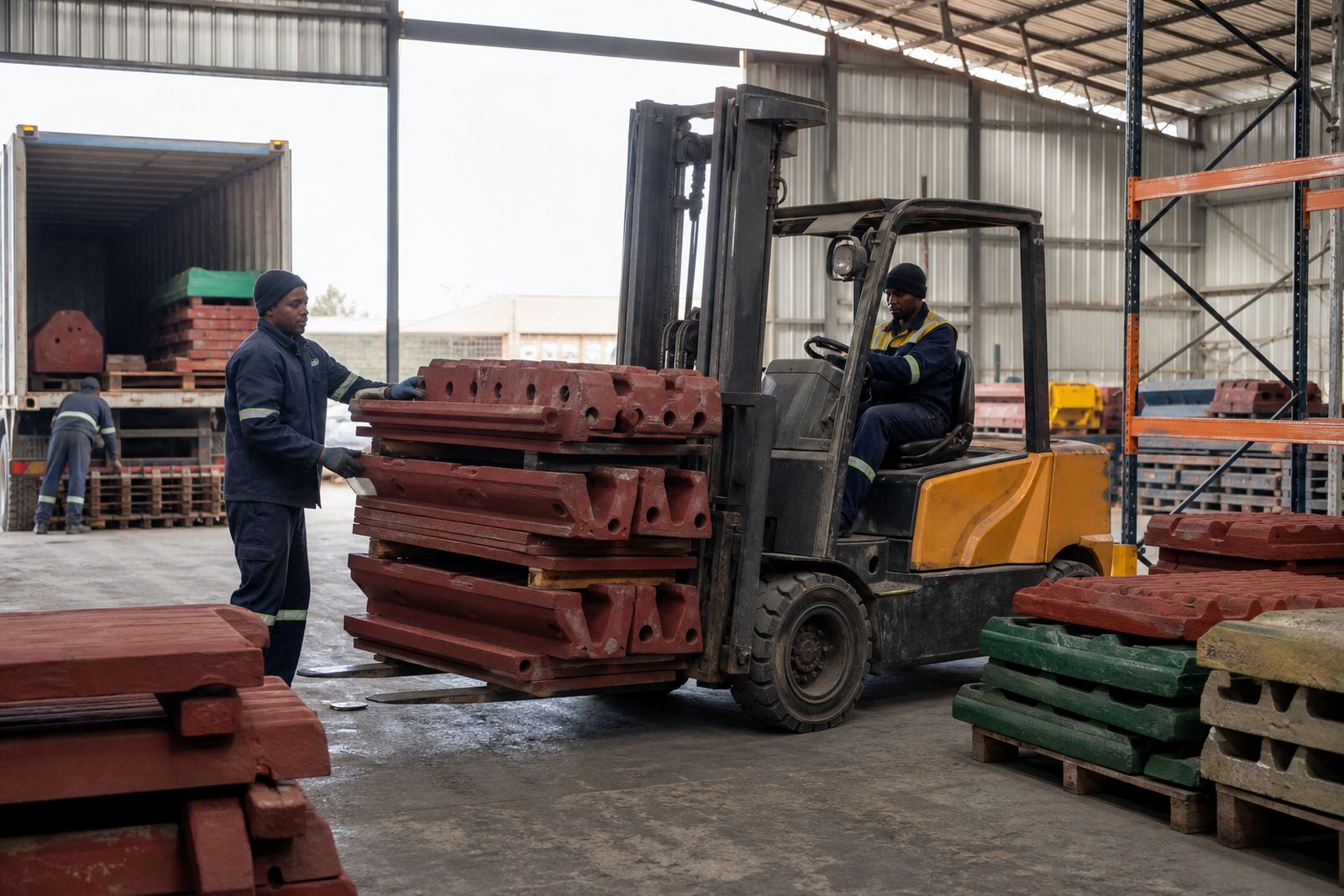
We hold stock in Middelburg, Mpumalanga and work from there to build combined orders for planned shutdowns, routine changeouts and emergency replacements. The aim is simple: fewer separate loads, fewer handovers and less chance of parts arriving out of sequence. A consolidated shipment also makes receiving easier on site because the store team can check one delivery note, one packing list and one set of labels instead of several. It saves time when the plant is already under pressure and shifts are tight.
- Jaw plates for primary crushing units
- Mantles and concaves for cone crushing circuits
- Blow bars for impact crushing applications
- Liners and related wear items
- Fast-moving consumables packed together by machine or project
How We Build a Combined Shipment
We start by checking what you need now, what is due soon and what can wait for the next dispatch window. If your maintenance team is planning a shutdown in two weeks but also needs a same-day replacement part for a worn liner, we work through the practical options and separate only what must go urgently. That helps protect the plant schedule while still keeping the freight as lean as possible.
Our team looks at part type, size, weight, fragility and delivery site. A set of smaller items can often travel inside the same consignment as a larger wear part if the packing is done properly and the route suits the load. Where a part needs special handling, we mark it clearly and secure it so it stays stable for the trip. In some cases, we also group orders by region, for example Burgersfort and Steelpoort can be planned on the same corridor if the delivery timing lines up. The process is practical, not fancy, and it is built around real mine receiving conditions.
- Review the full parts list and due dates
- Match items by machine, project or shutdown window
- Check stock availability in Middelburg
- Group compatible items into one shipment
- Confirm packing, route and delivery instructions
Packing, Load Securing and Delivery Notes
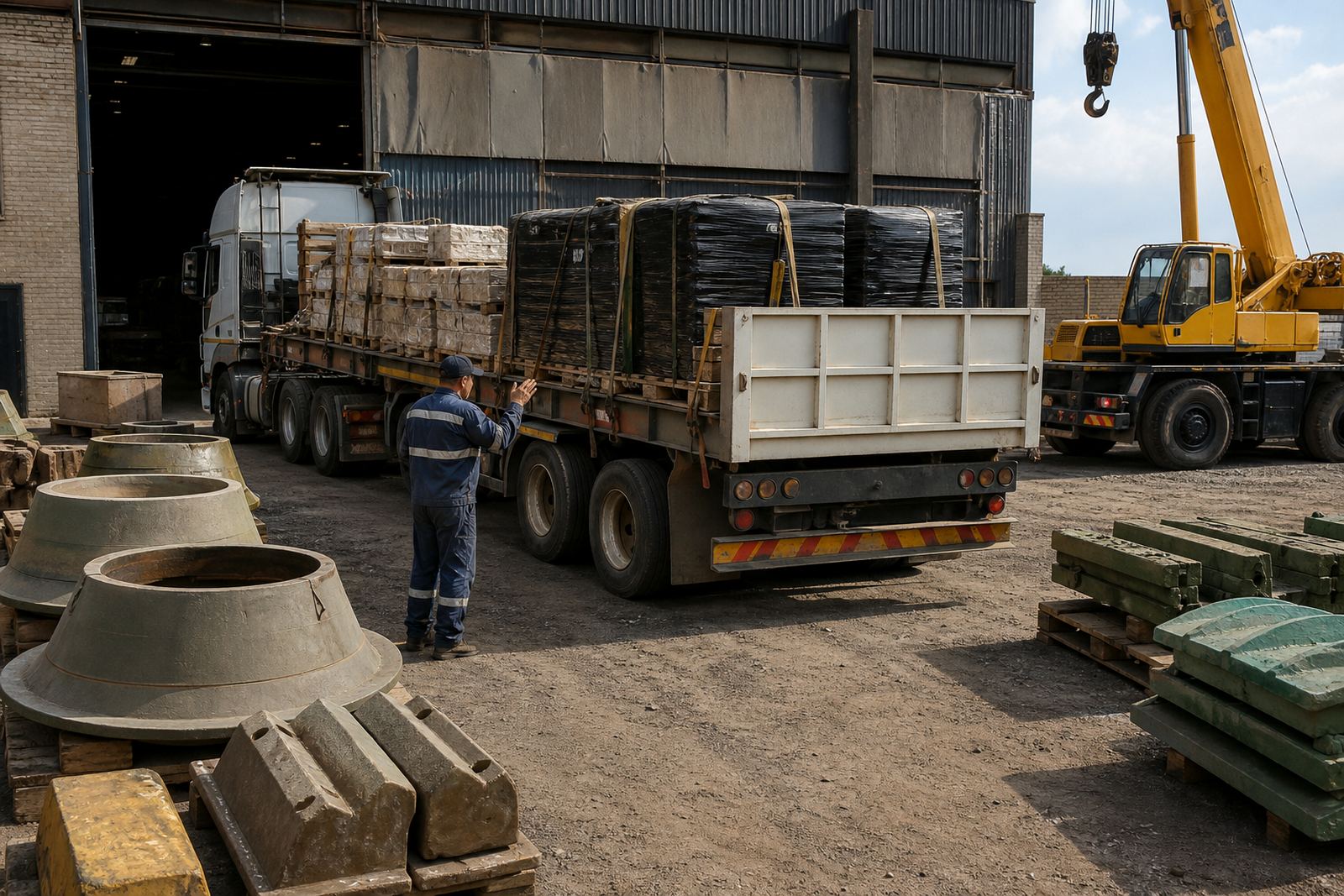
Crusher wear parts are heavy, awkward and often sharp-edged, so proper packing matters. We secure each consolidated order to reduce movement during transport and keep the load stable over rough roads, stop-start traffic and long-distance freight. This is important for deliveries into remote mining areas, where roads can be dusty, uneven or affected by weather. Coastal humidity is not the main issue here, but moisture and dust can still damage labels, documents and exposed surfaces if the load is not handled properly.
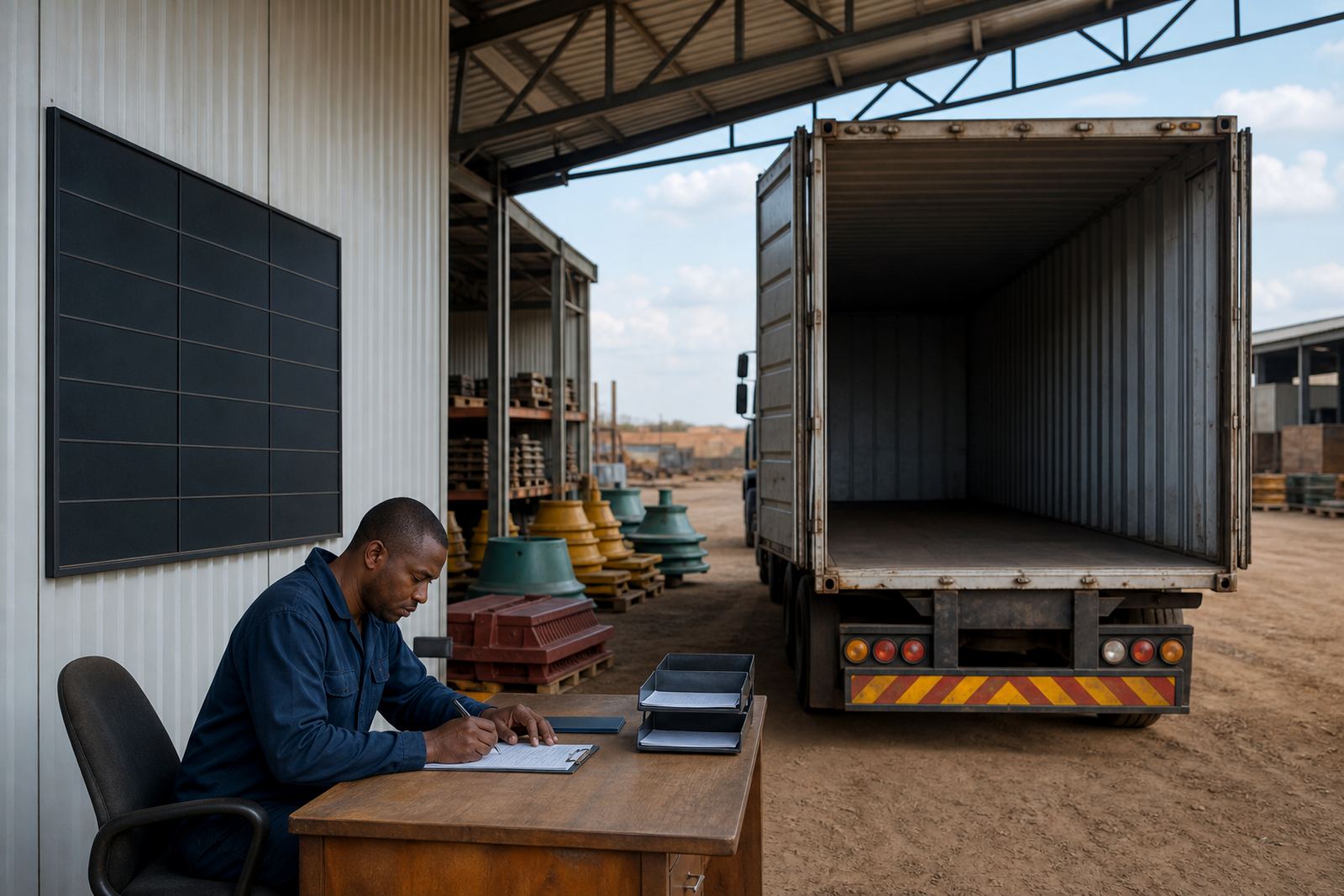
Every consolidated shipment is prepared with the receiving team in mind. Items are grouped by customer order, marked clearly and supported with a packing list that matches the physical load. Where needed, we keep similar-looking wear parts separated so there is no confusion during offloading. That makes stock control cleaner at site and reduces delays at the gate or in the workshop. It also helps if delivery must pass through a municipal access point, a mine weighbridge or a quarry yard with its own checking rules.
- Clear labelling by order and item type
- Load securing for mixed-size shipments
- Packing lists for easy receiving and checking
- Protection against rubbing, shifting and damage in transit
- Support for site delivery coordination and offloading instructions
Turnaround for Urgent and Planned Orders
Turnaround depends on stock on hand, the number of items being combined and the delivery point. If the required parts are already in Middelburg, a consolidated order can move quickly once the details are confirmed. For planned maintenance, we use the extra time to group items properly and line up the freight to your site. For urgent work, we separate only the part that must move immediately and consolidate the rest if that keeps the plant running without unnecessary freight.
Remote sites often face timing issues from load-shedding, shift changes and limited receiving hours, so we work around those realities rather than against them. We can plan for early gate access, specific offloading windows or staggered receipt where the site prefers it. If your maintenance interval is regular, such as monthly or around every shutdown cycle, we can help you keep a rolling parts list so the next consolidated shipment is ready before the old one is fully used. That way the order is not built from scratch every time.
Pricing Approach for Consolidated Freight
Pricing for order consolidation is based on the size of the shipment, the freight route, packing requirements and whether items can be sent together or need to move separately. Consolidation usually helps reduce avoidable transport cost because fewer individual loads mean fewer collections and deliveries. The final price is always linked to the actual order mix, not a one-size-fits-all rate.
We keep the pricing approach clear. If a customer sends a list of wear parts for a shutdown, we assess the stock position, packing needs and delivery route before confirming the shipment structure. Where it is practical to bundle parts together, we do so. Where parts need a separate movement for timing or safety, we say so upfront. This avoids surprises later and helps your maintenance budget stay in line with the real freight requirement.
- Based on route, weight and packing complexity
- Adjusted for urgent dispatch or scheduled delivery
- Fewer separate loads can lower total freight cost
- Quoted on the actual mix of wear parts requested
Maintenance Intervals and Stock Planning Support
Order consolidation works best when it follows the maintenance rhythm of the plant. Crusher wear parts are usually changed at different intervals depending on feed type, tonnage, material hardness and operating hours. Jaw plates may come off on one schedule while mantles, concaves or blow bars are due later. Liners can also wear in a different pattern depending on how the machine is loaded. Because of that, it helps to map the parts against the normal service cycle rather than ordering one item at a time.
We support customers who want to build a sensible replacement plan around shutdowns, inspections and forecast wear. That can include bundling the likely next set of parts so they are ready when the machine is opened, which cuts down on extra courier runs and last-minute gaps. For quarries and mines with long supply lines, this is often the most practical way to keep spares moving. It also gives the warehouse team and maintenance planner a shared view of what is due next, instead of working from scattered notes and urgent calls. A bit of forward planning goes a long way here.
- Match parts to service hours and inspection dates
- Plan ahead for shutdown windows and breakdown cover
- Group likely replacement items into future shipments
- Reduce repeat freight on parts with staggered wear rates
Key facts
| Base | Middelburg, Mpumalanga |
|---|---|
| Service area | Mpumalanga, Limpopo, Northern Cape, North West and Gauteng |
| Typical parts | Jaw plates, mantles, concaves, blow bars and liners |
| Shipment method | Combined freight for compatible wear part orders |
| Best for | Remote mines, quarries, shutdowns and routine stock planning |
| How to order | Use the enquiry form on our contact page |