Discharge liners for the high-wear exit point
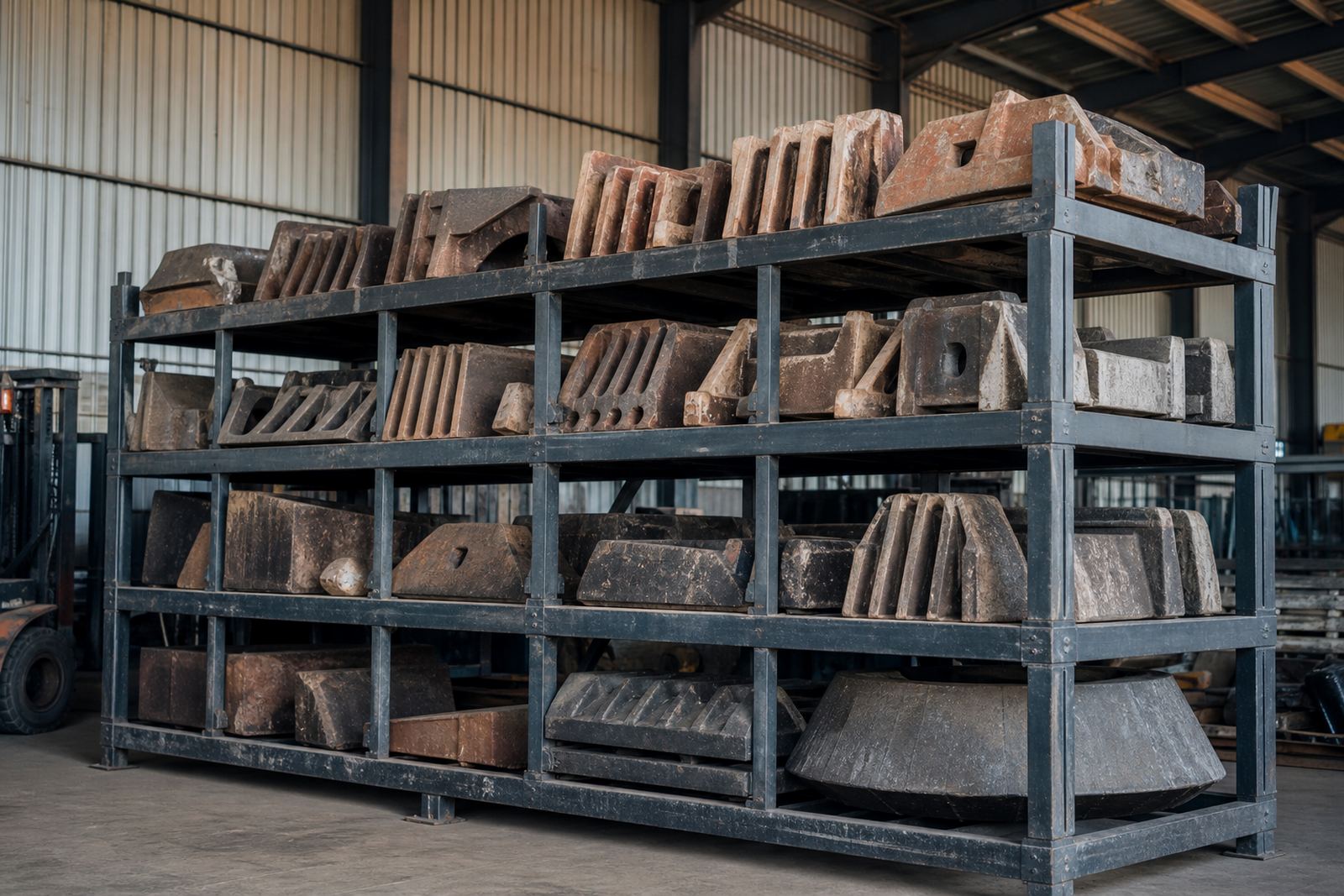
Discharge liners sit in the crusher discharge zone, where crushed material leaves the chamber and passes into the next stage of handling. This area sees constant rubbing, impact and scouring, especially when feed is abrasive, wet, or unevenly graded. The liner takes the punishment so the structure beneath it does not.
In practice, a worn discharge liner can lead to poor material flow, build-up, faster wear on nearby parts and extra stoppages. That is why this part is worth keeping on hand, particularly on remote sites where a small delay can hold up the whole plant. We hold stock in Middelburg, Mpumalanga and move it out with freight planning that suits mining and quarry operations across South Africa.
- Designed for the crusher discharge area and transfer points
- Helps reduce direct wear on the frame and surrounding surfaces
- Useful in high-abrasion, high-throughput crushing duties
- Supplied for planned maintenance and urgent replacement work
Sizes, profiles and material options
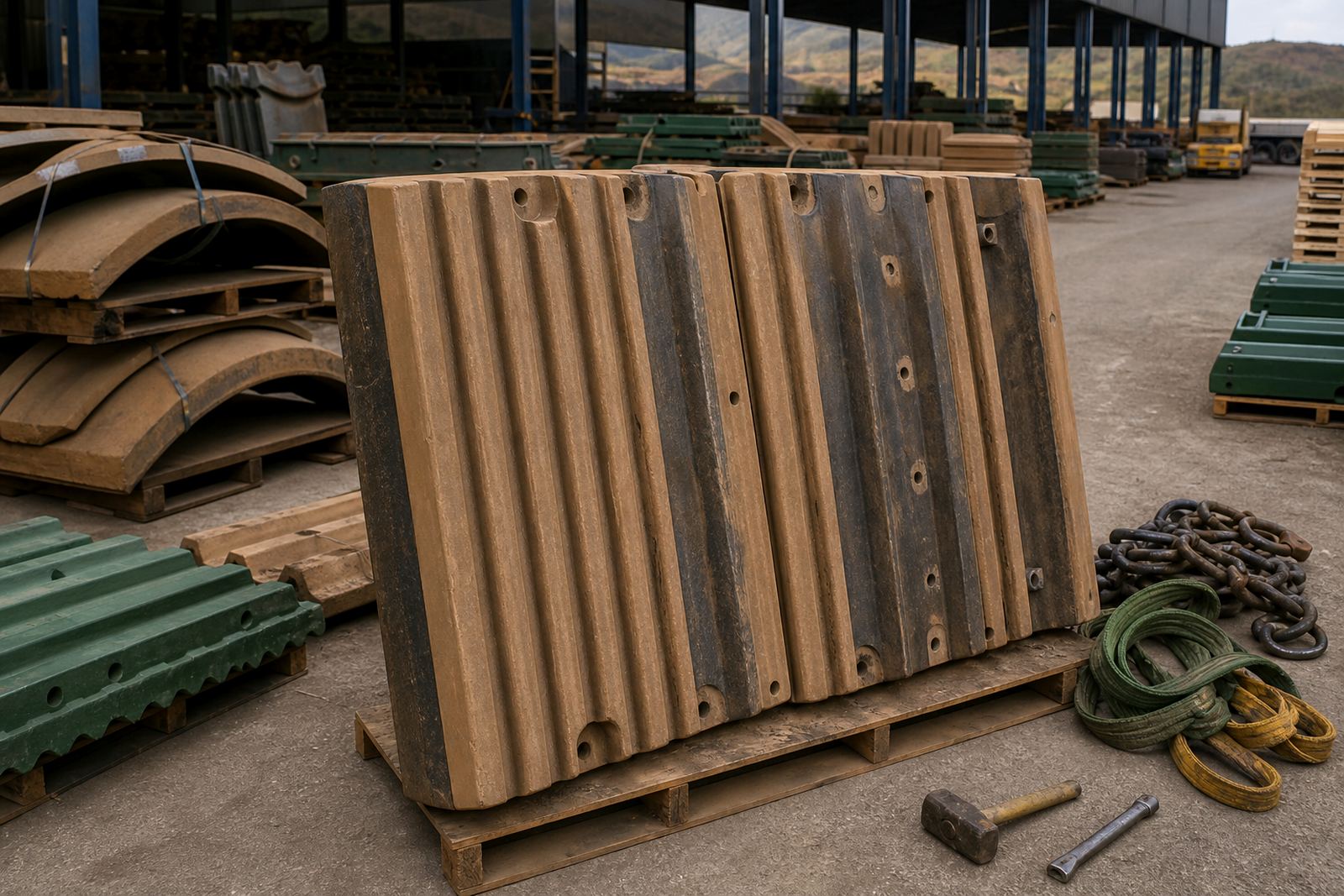
Discharge liners are not all the same. The right liner depends on the crusher type, the outlet shape, the material being crushed and the wear pattern on site. Some liners are flat and straightforward, while others have formed profiles or stepped sections to suit the way material leaves the machine. Where there is repeated impact or sliding abrasion, thicker sections may be preferred. In lighter duties, a thinner liner may be suitable if the fit is correct and the material path is controlled.
We supply discharge liners in a range of sizes and wear materials to suit common crusher discharge applications. Options can include wear plate in different thicknesses, formed sections, bolt hole patterns and left or right hand pieces where the setup needs it. If a site runs granite, chrome, quartz or similarly abrasive rock, the wear rate can be very different from a softer duty. That is why matching the liner to the actual application matters more than guessing from the machine size alone.
- Common thickness ranges from 8 mm to 30 mm depending on duty
- Can be supplied as flat plate, formed liner or profile section
- Hole patterns and edge details can vary by crusher layout
- Material choice depends on abrasion, impact and operating temperature
Where discharge liners suit best on South African sites
These liners suit crushing plants where material flow creates concentrated wear at the discharge end. That includes fixed plants, mobile units, skid-mounted setups and quarries with high daily tonnages. On mines in Mpumalanga and Limpopo, discharge zones often wear faster because of dust, vibration and long operating hours. In the Northern Cape, the dry abrasive fines can be hard on exposed steel. In coastal or humid areas, corrosion can also become part of the issue if the machine stands idle between shifts.
Discharge liners are also useful where site access is difficult and a breakdown team cannot just collect a part from town. We regularly support operations around Middelburg, Witbank, Steelpoort, Burgersfort, Phalaborwa, Rustenburg, Kathu and the greater Johannesburg East area. For remote mines and quarries, it helps to keep a spare liner in stock rather than waiting for a next delivery run.
- Fixed crushing plants and mobile crushing circuits
- Quarries handling hard, abrasive rock
- Mining operations with long shift cycles and limited spare holdings
- Sites where discharge build-up causes secondary wear
Installation, power needs and site requirements
Discharge liners themselves do not need power or gas. They are mechanical wear parts fitted to the crusher structure with the correct fasteners, clamps or weld method as specified by the machine setup. Installation usually takes place during a shutdown window, because the crusher must be isolated, cleaned out and made safe before any liner work starts. On sites with tight maintenance schedules, this makes proper shutdown planning very important.
Before fitment, the mounting surface should be checked for flatness, distortion, cracks and any remaining old weld or scale. If the surface is uneven, the new liner can sit badly and wear out sooner than it should. Good fitment also depends on correct clearances around the discharge path so the material flows out without hanging up. In dusty areas or where load-shedding disrupts plant routines, a planned maintenance slot is often better than a rushed repair after the fact.
- No electrical or gas connection required for the part itself
- Crusher must be safely isolated before installation
- Mounting faces should be cleaned, checked and measured first
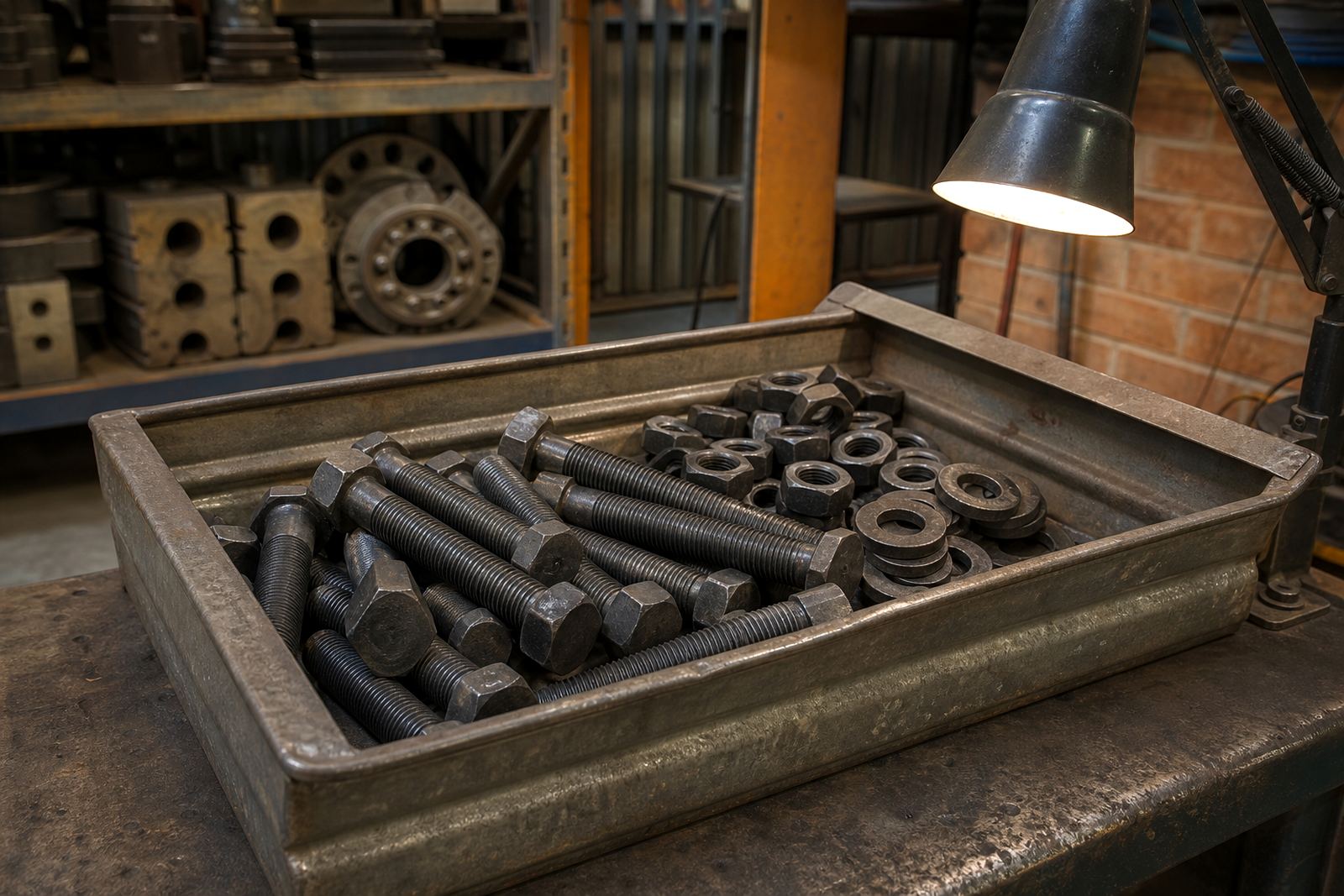
- Fasteners and fixings should match the liner design exactly
Care, servicing and signs of wear
Discharge liners should be checked during routine inspections, especially after heavy production runs or abrasive feed. Look for thinning at the leading edge, cracking around bolt holes, loose fixings, and any stepped wear that changes the material flow. A liner that wears unevenly can start to direct fines into places they should not be, which then creates extra wear on nearby panels and supports.
Good servicing is mainly about regular checks, clean-up and timely changeout. If material is building up around the discharge point, there may be a flow issue rather than just a worn part. It is also worth checking nearby liners, skirts and transfer points at the same time so one damaged section does not come back and undo the job. On shutdowns, our team can help with bundled part kits and order consolidation so the right pieces arrive together and there is less back and forth.
- Inspect for edge thinning, cracking and hole elongation
- Check for loosened bolts or shifted mounting points
- Watch for build-up that changes the discharge path
- Replace before the liner reaches a failure point
What to check before you order the liner
To supply the correct discharge liner, we need the crusher make and model where possible, plus measurements from the worn part or the mounting area. If the old liner is missing or badly damaged, photos of the discharge zone and the surrounding fixings help a great deal. It is also useful to know the material being crushed, whether the plant runs wet or dry, and whether the site needs a standard replacement or a more durable option for harder duty.
When you order, please check the following details carefully. Small differences in hole spacing, length or profile can cause delays if they are missed. Our Middelburg depot and service areas support mines and quarries across Mpumalanga, Limpopo, the Northern Cape, North West and Gauteng, so accurate order information helps us consolidate freight and get the part moving without wasting time.
- Crusher type, model and chamber arrangement
- Overall length, width, thickness and hole spacing
- Left hand, right hand or centre section if applicable
- Material type being processed and average wear rate
- Delivery site, access conditions and required timing
Stock holding and freight support from Middelburg
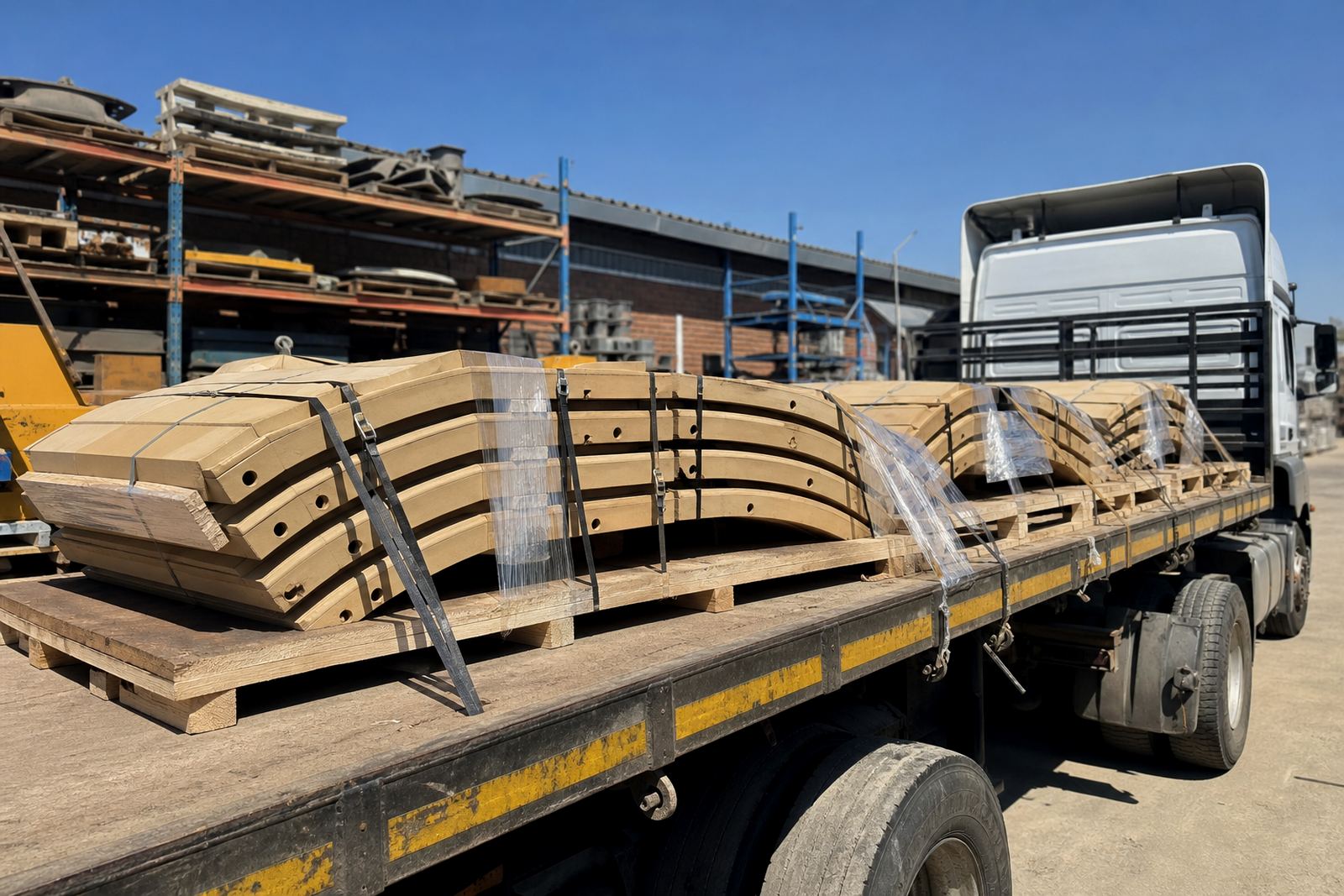
Crusher Consumables Direct holds discharge liners with the needs of remote operations in mind. We manage stock in Middelburg, Mpumalanga and arrange freight to mines, quarries and plant sites where access is not always simple. That includes route planning, site delivery coordination, load securing and return freight planning where old parts need to come back for inspection or disposal.
Whether the order is for a planned shutdown, a replacement after unexpected wear, or a bundled list of crusher consumables, we work to keep the process practical. The aim is simple: get the right part to the right place, with less downtime and fewer surprises. If you need discharge liners for a crusher zone that is wearing hard, send the details through the enquiry form on our contact page and we will take it from there.
Key facts
| Product type | Crusher discharge wear liner |
|---|---|
| Typical thickness | 8 mm to 30 mm, depending on duty |
| Fitment | Bolted, clamped or welded as per crusher setup |
| Material options | Wear plate and abrasion-resistant liner sections |
| Use location | Crusher discharge zone and transfer points |
| Supply base | Middelburg, Mpumalanga with freight nationwide |