What reversible jaw plates do in a crusher
Reversible jaw plates are fitted inside the jaw crusher to form the main crushing surface against the fixed side. When one face begins to wear, the plate can be turned and put back into service on the opposite face, which helps balance wear and can reduce downtime between changeouts. This is useful on sites where plant access is limited or where freight to the mine takes time, especially on remote operations with long lead times.
They are used for primary crushing of hard rock, ore, and quarry feed. The plate profile and material choice need to suit the feed size, abrasiveness, moisture and the type of product size the plant is trying to achieve. If the wrong profile is used, the crusher may draw more power, produce uneven wear, or require more frequent adjustments.
Sizes, profiles and fitment options
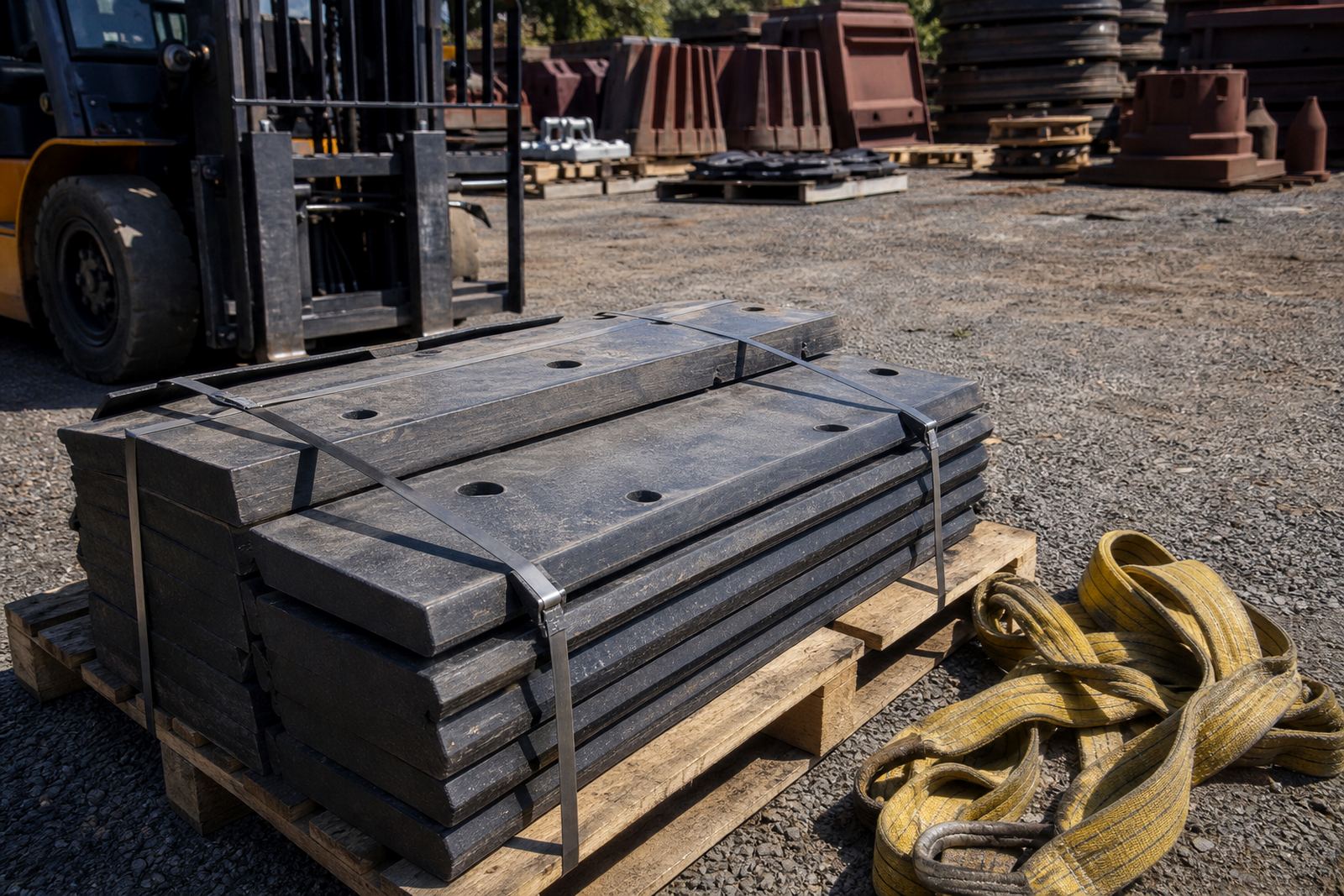
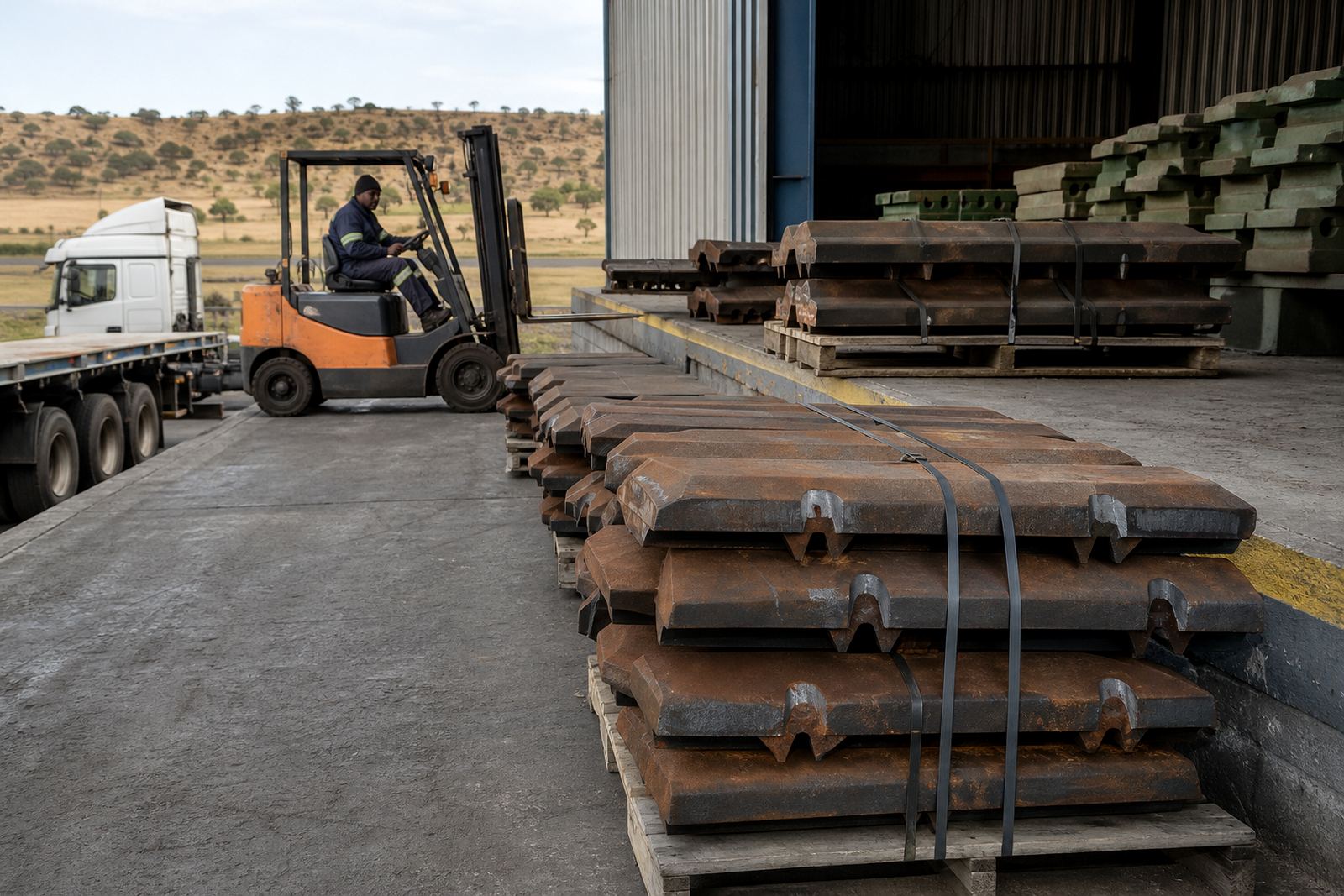
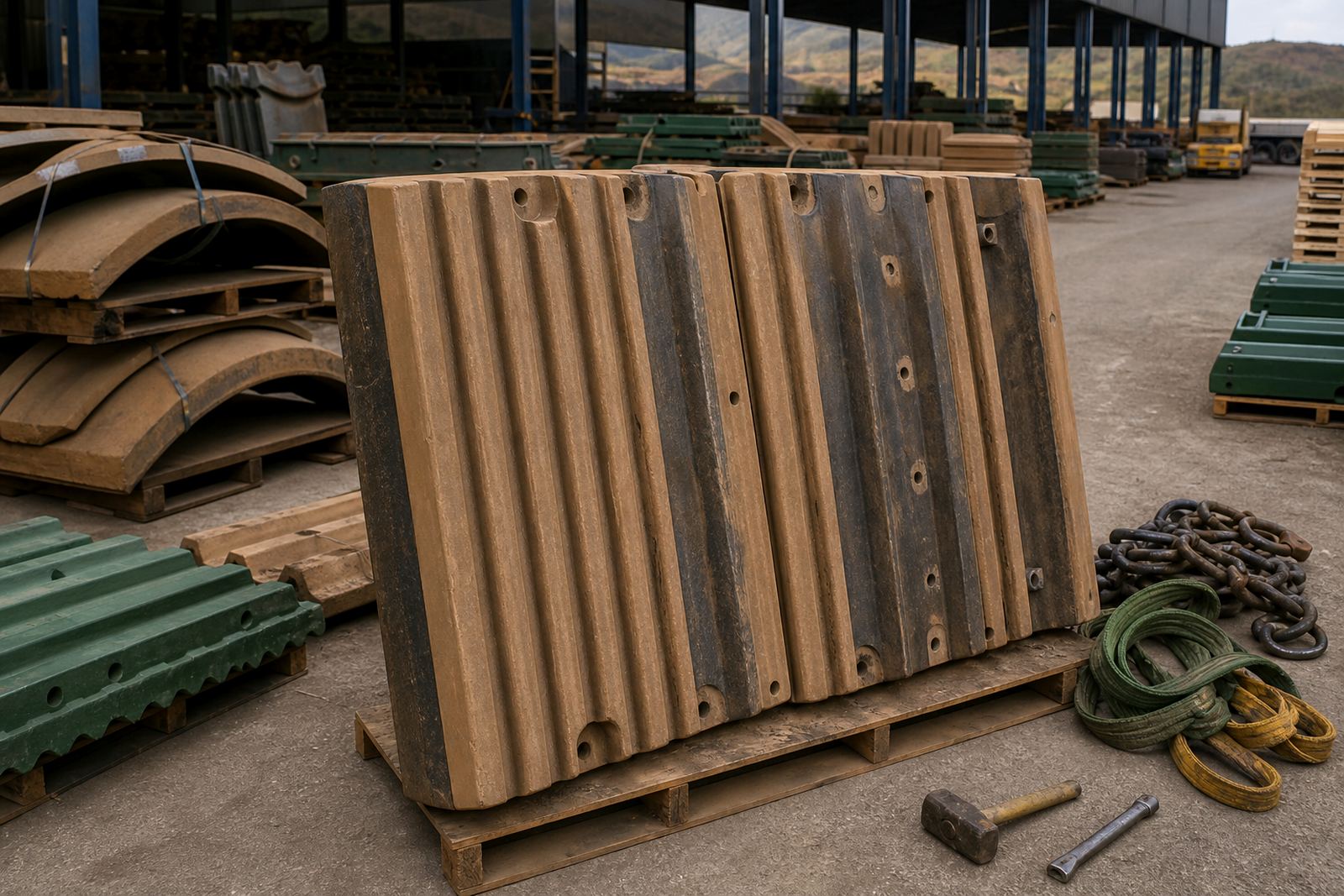
Jaw plates are selected to match the crusher frame and the existing crushing chamber, so the part number, length, height, thickness and fixing arrangement all matter. Reversible sets are often supplied as matched pairs, though the exact layout depends on the machine design. Some customers need a standard quarry profile while others need a deeper tooth form for tougher ore and coarser feed.
- Common fitment details include overall length, plate height and thickness
- Tooth profile can be standard, corrugated or heavy duty, depending on the crusher
- Fixing holes, clamp seats and wedge locations must match the machine exactly
- Wear direction and rotation pattern should be confirmed before dispatch
Because mines often run mixed feed, it is worth checking whether the current plate is working too hard at the top or bottom of the chamber. That tells you a lot about the right profile for the next set.
Where reversible jaw plates suit best
These plates suit primary jaw crushers on mines, quarries and crushing plants that want better use from each set of wear parts. They are a sensible choice where production is steady and shutdown windows are tight, or where freight costs make every extra week of service life important. In places like Steelpoort, Burgersfort, Phalaborwa and Kathu, that matters because a missed delivery can leave a plant waiting and that gets expensive quickly.
Reversible jaw plates can also help where the machine is running in dusty, abrasive or variable feed conditions. On municipal and quarry sites around Gauteng and Rustenburg, operators often want parts that are easier to plan around and less likely to catch them out mid-week. The right set should work with the crusher settings, not against them.
- Primary crushing of hard rock and ore
- Quarry applications with abrasive feed
- Remote mines with planned shutdowns only
- Plants needing better wear distribution across both faces
Installation, power demand and site checks
Reversible jaw plates do not need power or gas for installation, but they do need correct handling and proper fitment. Lifting gear, safe access and a clean chamber are essential. Before fitting, the crusher should be isolated, locked out and cleared of loose material. The mounting faces must be checked for damage, and all clamps or wedges must seat correctly so the plate does not shift under load.
After installation, the jaw setting and feed should be checked before the plant is brought back into full service. If the crusher is running on uneven feed or over-sized rock, the new plates can wear unevenly from the start. It also helps to confirm the nip angle, toggle condition and cheek liners while the machine is open. A small issue there can shorten wear life and put extra load on the drive.
Care, monitoring and when to turn the plates
Jaw plates should be inspected regularly, especially during load-shedding recovery periods or after wet weather when feed can pack in the chamber. Look for rounded teeth, loss of profile, cracked sections, loose fixing points and wear that is heavier on one end than the other. If the wear pattern is still even and there is enough remaining thickness, the plate may be turned and re-used.
Good housekeeping around the crusher helps as well. Keep the chamber free of trapped fines, check the feed sizing, and make sure tramp metal is being managed before it reaches the jaw. In coastal humidity or dusty inland conditions, storing spare plates on timber supports and under cover helps prevent corrosion and handling damage. A part can be in stock and still be useless if it was stored badly.
- Inspect during every planned shutdown
- Measure remaining thickness at the wear points
- Check for cracks around the fixing holes
- Turn the plate before the tooth form is too far gone
What to send when ordering reversible jaw plates
When ordering, send the crusher make and model if known, the plate dimensions, the tooth profile, and clear photos of the old part and fixing points. It also helps to confirm whether you need a left, right or matched reversible set, because some machines use different orientation on each side. If the plate has a casting or pattern number, include that too.
For remote sites, we also need the delivery location, gate procedure, offloading arrangements and whether the order must be bundled with other wear parts for the same shutdown. Our team in Middelburg handles stock holding, order consolidation and freight planning for mines and quarries across South Africa, so the aim is to get the right plate on the right truck first time. Thabo Mokoena and the team work with site schedules, not just part numbers.
Key facts
| Product type | Reversible jaw plate for jaw crushers |
|---|---|
| Application | Primary crushing for mine and quarry feed |
| Material options | Wear-resistant cast alloy options, selected to suit duty and feed |
| Fitment | Matched to crusher model, chamber profile and fixing arrangement |
| Face use | Designed for rotation and use on both working faces |
| Supply base | Middelburg, Mpumalanga with freight to remote sites nationwide |