Why hopper bridging starts at the feed point
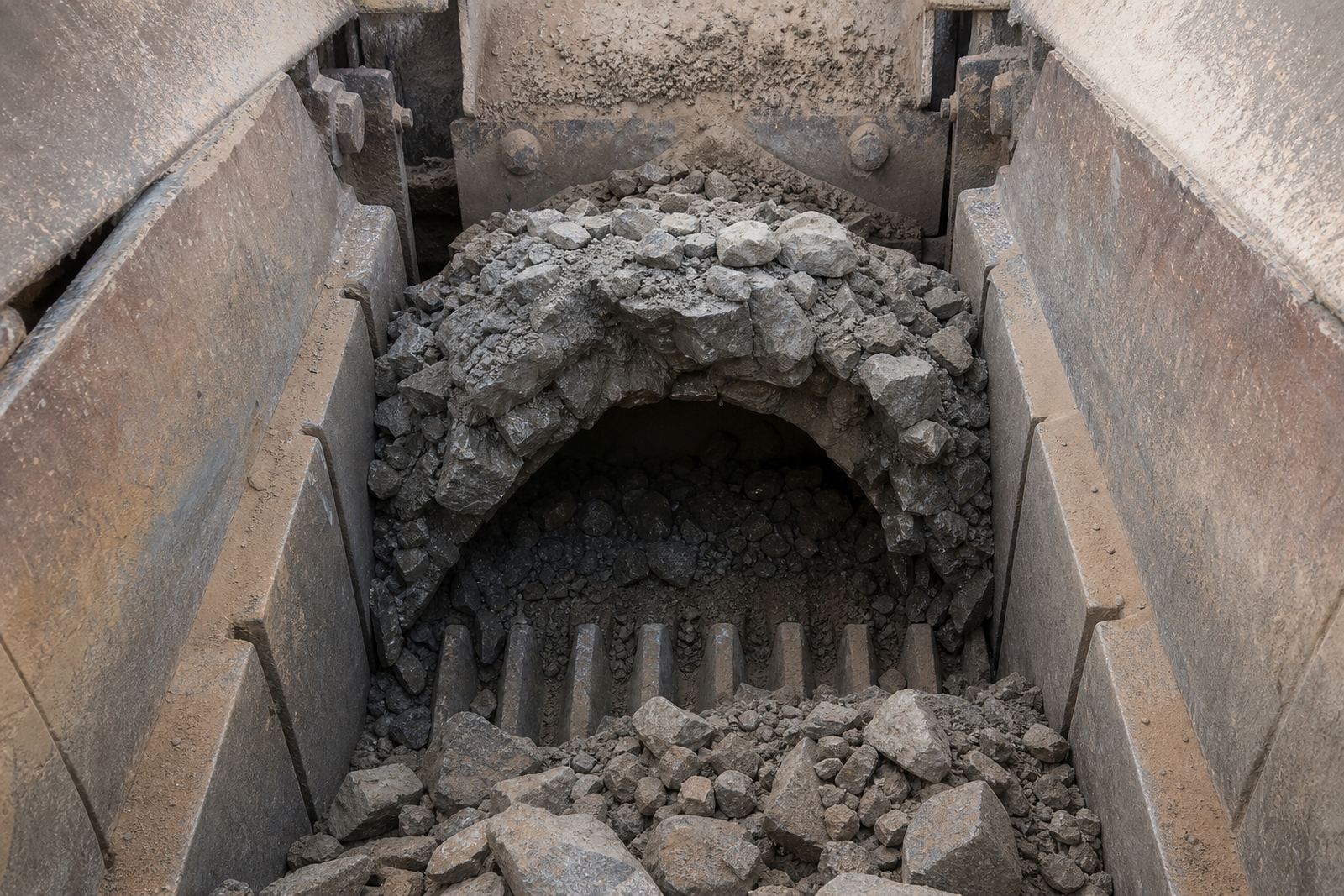
Bridging happens when material hangs together instead of flowing through the hopper. In the field, that is often a mix of sticky fines, sharp oversized rock, poor chute angles, and worn liner surfaces that no longer let the load slide as intended. When the surface profile changes, material can sit up on itself and form a bridge across the opening.
At mines and quarries around Middelburg, Witbank and the wider Mpumalanga belt, the problem often shows itself after rain, during high clay content runs, or when loading becomes irregular. A hopper that used to draw freely can start needing poking and stoppages, which is a clear sign the feed area needs attention before the issue gets worse.
Wear surfaces that change the flow
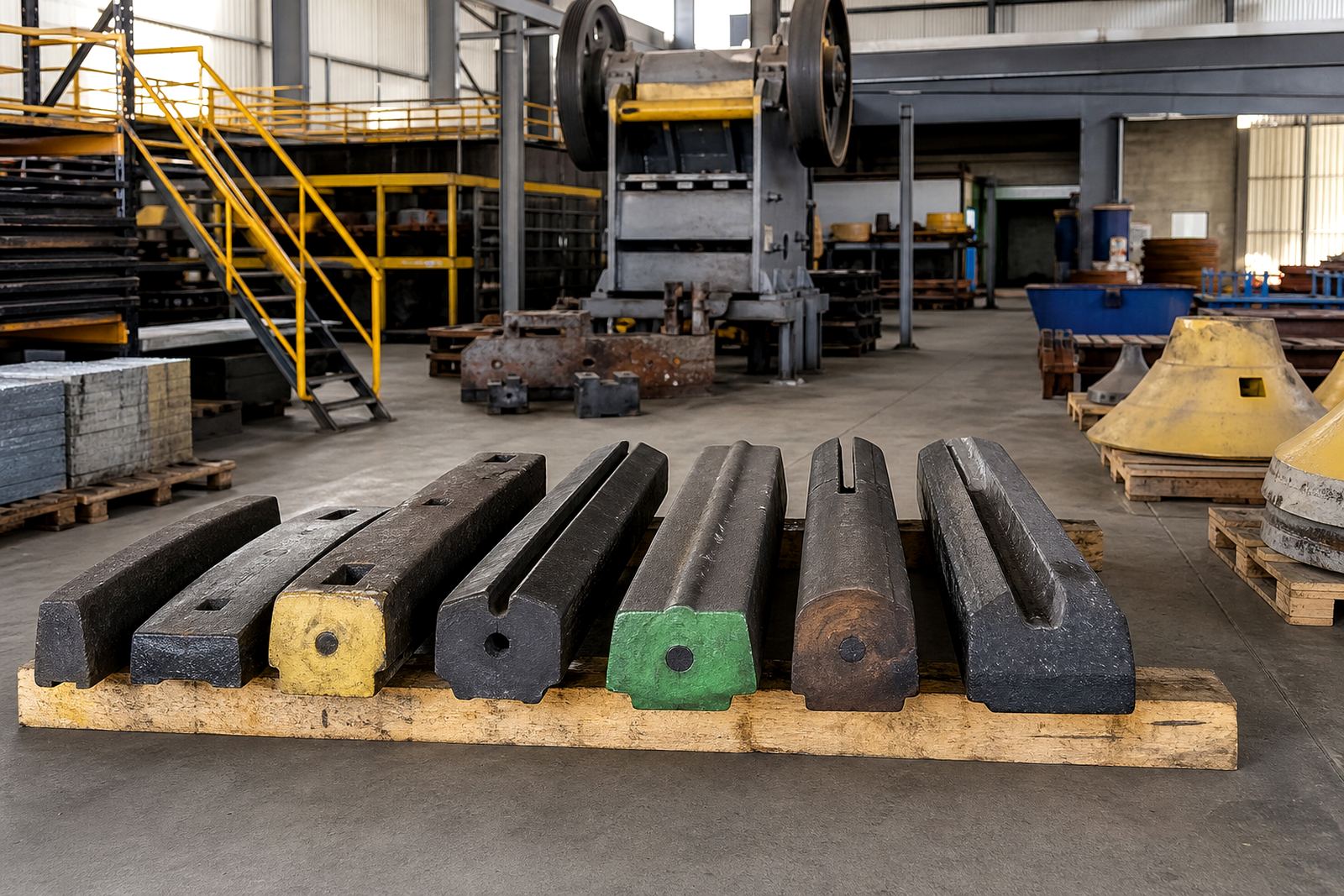
The wear parts around the hopper do more than protect steel. They also shape the path the material takes. Jaw plates, mantles, concaves, blow bars and liners all influence how material lands, spreads and moves toward the chamber. Once these surfaces wear unevenly, the feed becomes less controlled and bridging becomes more likely.
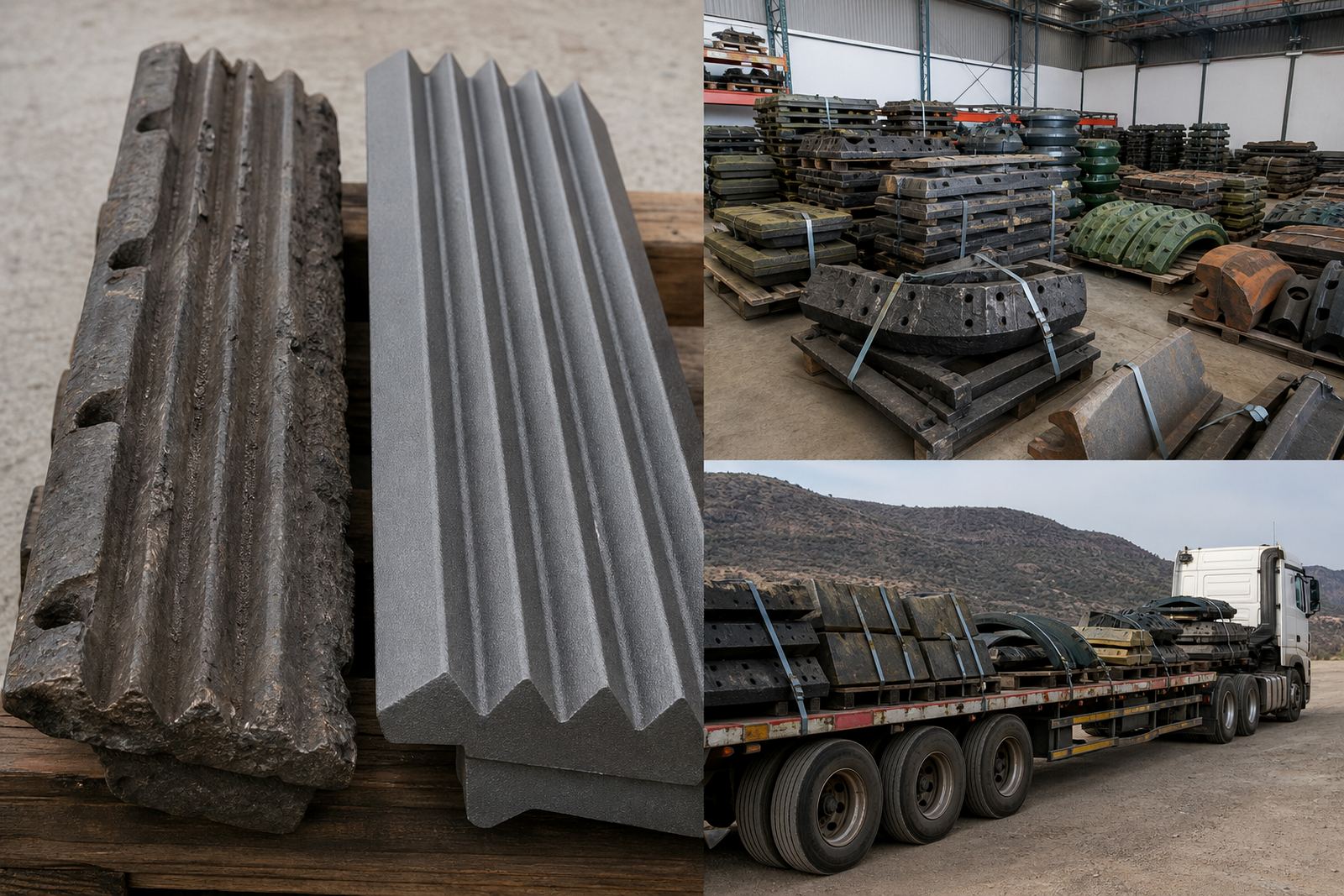
Feed liners and side liners are especially important where material first strikes the hopper. If they are grooved, thinned, or badly stepped, fines settle in the damaged areas and larger rock can lock over the top. That is why a hopper inspection should not just look for holes or cracks, but for changes in the flow path too.
- Look for polished high spots that show where material is hanging up.
- Check for scalloping, ridges and sharp lips on worn liners.
- Inspect transfer points for misalignment that causes spillage and build-up.
- Watch for uneven wear on one side of the feed box or hopper mouth.
How to spot bridging before production stops
Most bridging gives warning signs before a complete blockage. Operators may notice slower draw-down, frequent level changes, or the need to tap the hopper sides to get material moving. In some plants the feed sounds different as well, with an uneven thudding rather than a steady flow.
It helps to keep a simple checklist at shift handover. If the same section of the hopper keeps clogging, the cause is often repeatable and not random. A bent liner, a warped grate, or poor loading position can all be corrected once the pattern is picked up.
- Material hangs up on the same corner every shift.
- Operators report that fines are packing into the top section.
- The crusher feed rate drops even when the bin is full.
- There is visible build-up on the lip, chute or skirt area.
Local conditions that make bridging worse
South African operating conditions can be unforgiving. In Limpopo and the Northern Cape, long haul routes and dusty stockpiles can change the moisture content of the feed by the time it reaches site. Around Rustenburg and Gauteng, mixed ore and quarry product can bring a wider range of particle sizes, which makes consistent flow harder to maintain.
Coastal humidity is not the only factor. Inland weather swings, fine clay, and repeated stoppages during load shedding can all leave material sitting longer than planned. Once wet fines settle and dry again, they can cake on wear surfaces and tighten the bridge. That is why feed area inspections need to be regular not just reactive.
What to check during a shutdown
A planned shutdown is the best time to deal with bridging before it turns into lost tonnage. The hopper, liners and adjacent transfer points should be checked together so the same problem does not return a week later. If only one part is replaced while the worn section next to it is left in place, the material path stays uneven.
For remote sites, especially those working outside Middelburg, Burgersfort, Phalaborwa, Kathu or far into the North West, shutdown time is precious. A short but focused inspection can save several callouts later. Pay attention to the wear pattern, hardware condition and whether the liner set is still suited to the feed being processed.
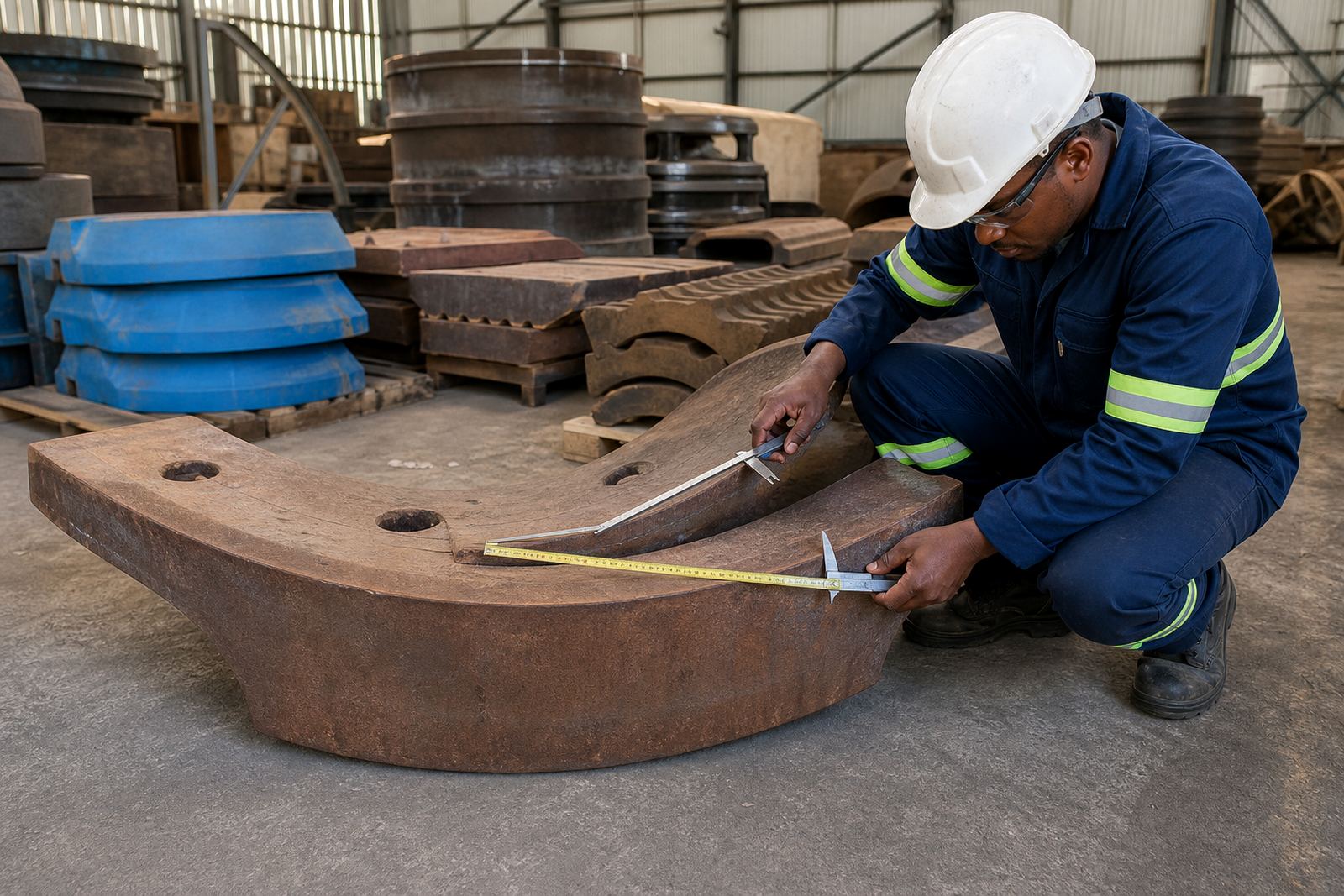
- Measure liner thickness and compare left to right.
- Check bolts, clamps and backing areas for movement.
- Look for trapped material behind liners or in dead pockets.
- Confirm chute angles and impact points match the current feed size.
Keeping stock and freight ready for remote sites
When a hopper starts bridging at a mine far from town, waiting for a replacement can be costly. That is why stock holding matters. Keeping common crusher wear parts on hand, together with bundled part kits, means the right items can move quickly when a feed problem shows up at short notice.
Freight planning is just as important as the parts themselves. Remote mine and quarry deliveries need proper route planning, load securing and order consolidation so the consignment arrives intact and ready for installation. In practice, that means less time waiting on the apron and fewer delays when the plant must get back up before the next shift starts.
Crusher Consumables Direct works from Middelburg, Mpumalanga with support across Mpumalanga, Limpopo, the Northern Cape, North West and Gauteng. The team includes Thabo Mokoena, Lerato Nkosi, Johan van der Merwe, Ayanda Dlamini, Sibusiso Mahlangu and Megan Naidoo, and the focus is simple: hold the right stock, move it cleanly, and keep the feed side of the plant from turning into a bottleneck.
A practical way to reduce repeat blockages
The best prevention plan is a mix of good inspection, matched wear parts, and sensible handling at the feed point. Operators should avoid overfilling the hopper, dropping material too high from the loader, or letting mixed oversize build up at the mouth. Those habits add shock wear and make bridging more likely over time.
A steady feed is easier to maintain when the wear profile is kept even and the site has a clear plan for urgent part dispatch and return freight planning. If the line keeps bridging, the answer is usually not one big fix but a few practical corrections made together. Small changes in the hopper can make a big difference to uptime, and to the amount of manual clearing required on site.
For mines and quarries across South Africa, the message is the same. Keep the feed path clean, watch the wear surfaces, and replace parts before they start shaping the problem instead of solving it.