Start With the Material You Are Crushing
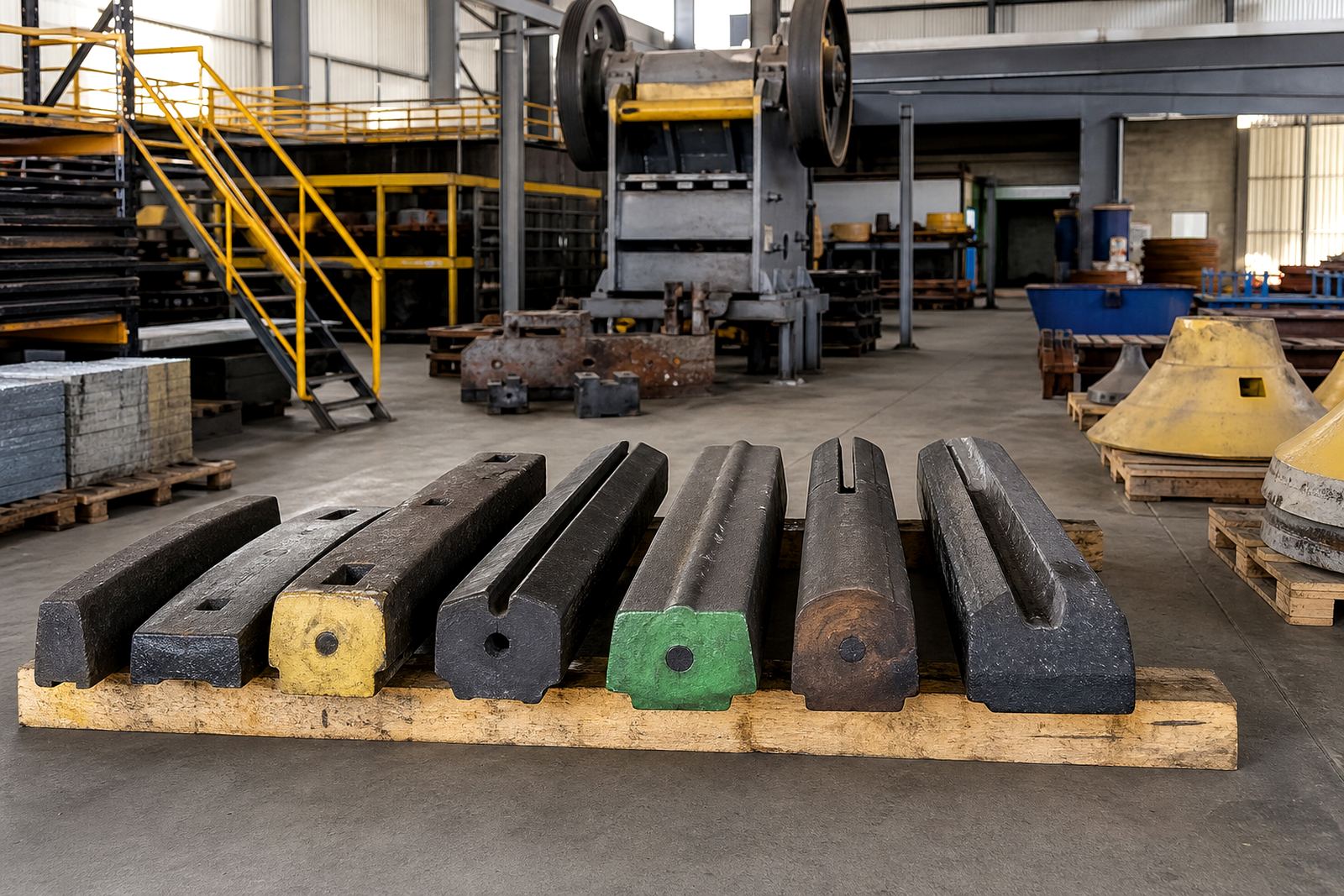
The first step in blow bar selection is to look closely at the feed. Hard, abrasive rock behaves very differently from softer or mixed material, and a bar that performs well in one feed condition may wear too fast in another. If the feed carries fines, rebar, clay or moisture, the impact pattern changes and so does the wear face.
In practice, teams should match the blow bar profile and material grade to the nature of the application. A site crushing clean rock for roadstone will often want a different wear pattern to a quarry handling variable feed after rain. Near Phalaborwa or in the Northern Cape, where dusty conditions and long haul distances are common, the selection also needs to consider how quickly parts can be turned around when the wear rate changes unexpectedly.
- Hard, abrasive feed calls for better wear resistance and steady impact performance.
- Mixed feed with fines or moisture can change how the bar wears across its face.
- Variable rock quality often needs closer inspection after the first few shifts.
Match the Blow Bar to Output Shape and Crusher Duty
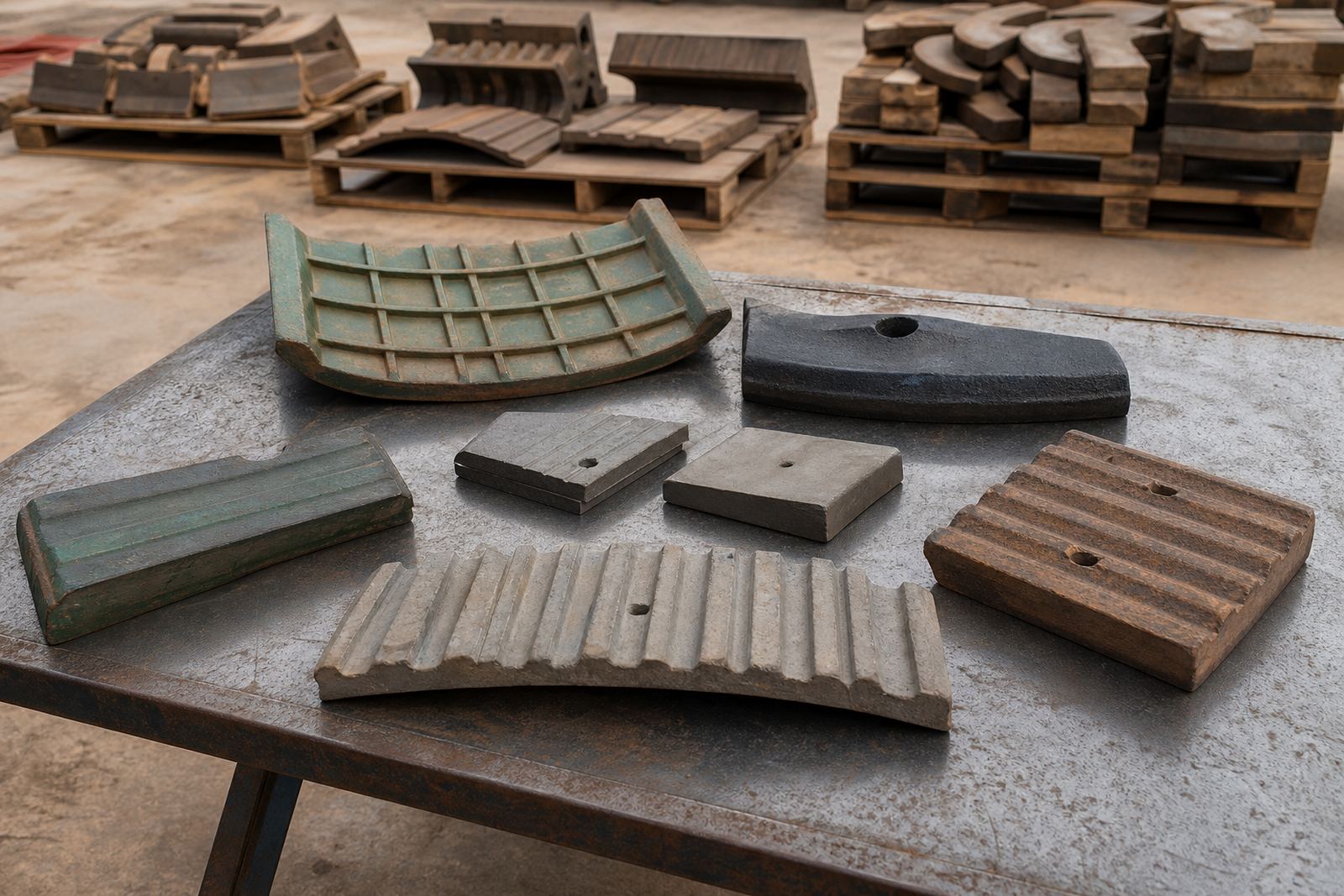
Blow bars do more than take impact. They influence product shape, fines generation and the amount of recirculation through the plant. If the operation needs a consistent final product for aggregate or road base, the bar choice should support that target rather than chasing wear life alone. In some cases a bar that lasts longer but produces poor shape can cost more in the long run.
Duty matters too. A unit running long hours on a high throughput circuit will usually need a different balance of wear resistance and impact strength than a machine used intermittently on a smaller quarry face. Around Middelburg and Witbank, where some sites run around load-shedding schedules and maintenance windows can be tight, it helps to keep a practical view of how the machine is used shift by shift.
- Higher throughput often needs stronger impact tolerance and stable wear behaviour.
- Product shape requirements may justify a more frequent changeout schedule.
- Intermittent crushing can favour parts chosen for predictable restart performance.
Consider Bar Material Against Maintenance Priorities
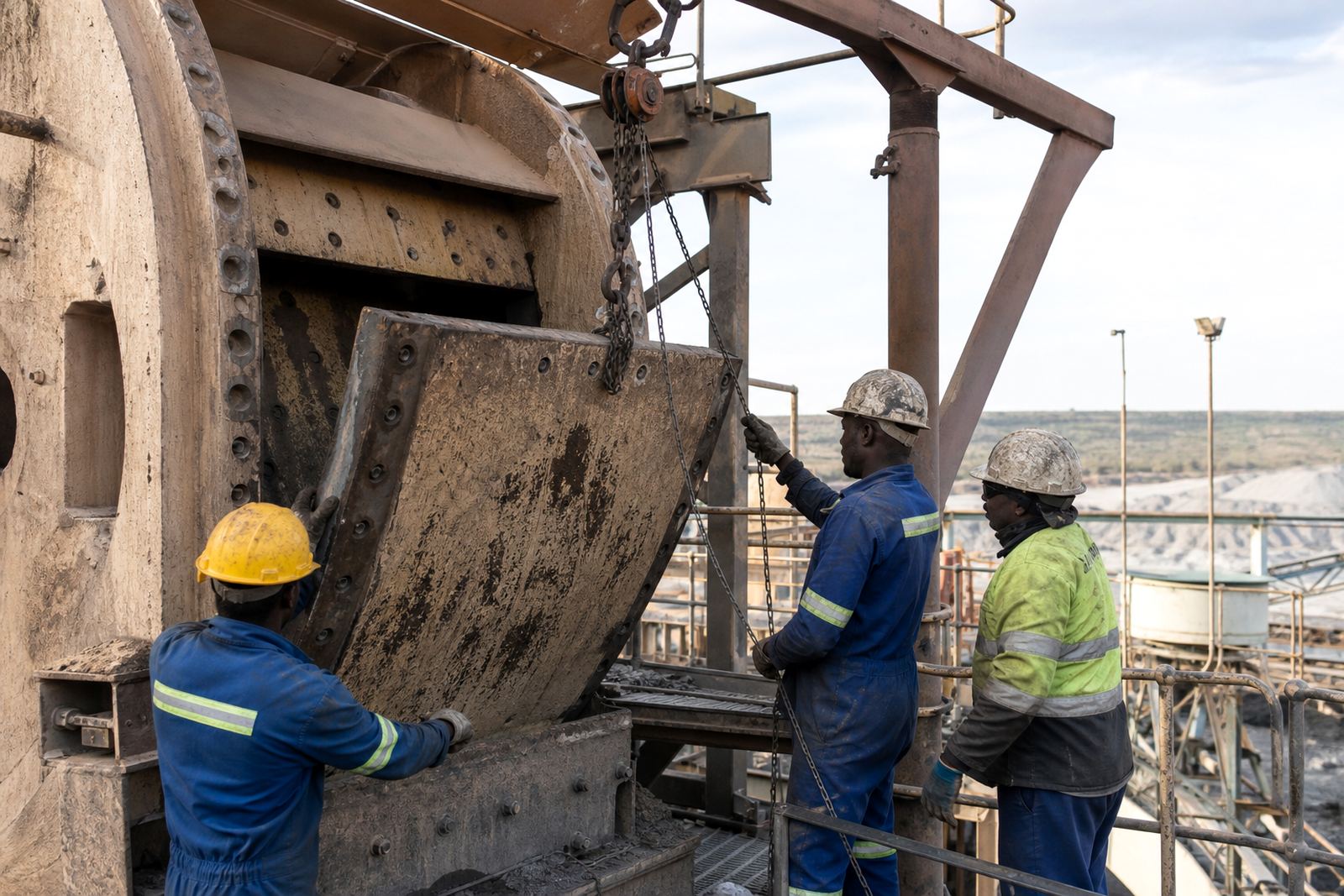
Not every site is chasing the same result. Some operations want the longest possible wear life, while others want easier changeouts, less downtime and simpler stock control. The right bar material depends on where the business is spending money: on labour, on freight, or on lost production. A mine with a long shutdown window may be able to plan a more specialist setup, while a quarry with short stop-start periods may need something easier to manage.
Maintenance teams should also think about how quickly wear can be monitored. If a site has limited supervision after hours, a blow bar that gives a more predictable wear pattern can be easier to plan around. That is especially useful in remote areas where a missed inspection can delay the next delivery and push the whole plant off schedule. A small change in wear behaviour can have a bigger cost than it first appears.
- Choose for wear life when freight and access are difficult.
- Choose for easier changeout when labour time is the bigger cost.
- Choose for predictable wear if inspection intervals are stretched.
Keep Freight and Stock Holding in the Selection Conversation
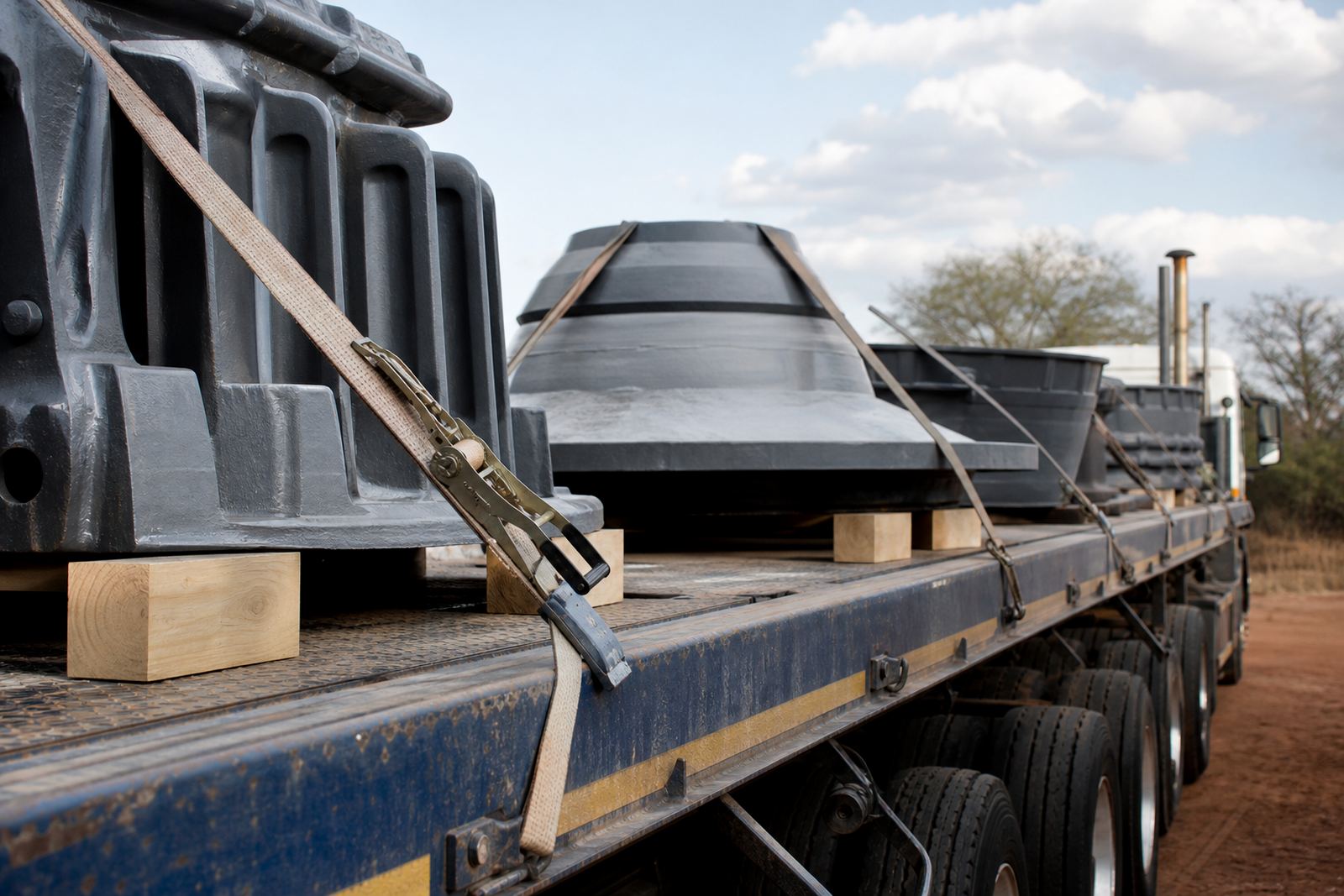
In South Africa, blow bar selection is never only a technical decision. It is also a supply decision. A part that suits the crusher but cannot reach the site in time is not a practical choice. Remote mines and quarries in Limpopo, the Northern Cape, North West and Gauteng often have to plan around long road runs, weather, access control and site timing. That is why stock holding and freight planning should sit alongside the wear discussion from the start.
At our Middelburg, Mpumalanga base, selection conversations usually include what is already on hand, what is moving next, and what should be bundled with other wear parts. For example, if a site is due to change jaw plates, mantles, concaves or liners at the same shutdown, it may make sense to consolidate the order so the freight arrives together. That saves time and reduces the chance of a machine waiting on one missing item.
- Check what is available before committing to a part that has a longer lead time.
- Use bundled kits where shutdown work covers several wear items at once.
- Plan freight around site access, escort requirements and delivery hours.
A Practical Example From a Remote Mpumalanga Site
A quarry outside Steelpoort may be crushing variable rock through the day, then facing a short maintenance window before the next production run. If the feed becomes more abrasive after rainfall, the team may notice the blow bars wearing unevenly on one side and the product size drifting. In that situation, the first response is not just to swap parts. It is to check feed conditions, impact settings and the maintenance history before choosing the next set.
For a site like that, the best answer might be a more suitable bar grade paired with a delivery plan that accounts for the road run, load securing and the site time slot. If the same operation is also waiting on liners or concaves, order support becomes just as important as the part itself. The goal is to keep the crusher running with fewer last minute calls and less pressure on the crew.
This is where practical communication matters. A clear note on what the machine is doing, how fast the wear is changing and when the next stop is due can save hours. It also helps avoid the common mistake of choosing a part only because it was available once before, not because it is still the right fit.
Questions to Ask Before You Place the Order
Before choosing a blow bar, it helps to ask a few direct questions. These are simple, but they prevent expensive guesswork and reduce the risk of a part that looks right on paper but performs poorly on site. The more clearly the team can describe the application, the better the selection will be.
- What material is being crushed, and how variable is the feed?
- Is the main priority wear life, product shape or faster changeout?
- How often can the crusher be inspected and when is the next shutdown?
- What other wear parts are due at the same time?
- How soon does the part need to reach the site, and what access limits apply?
For operations in Gauteng, Rustenburg, Kathu or the more remote stretches of the Northern Cape, these questions are not theory. They shape freight planning, stock decisions and the whole maintenance sequence. A good selection is one that fits the crusher, the schedule and the road between the warehouse and the plant.