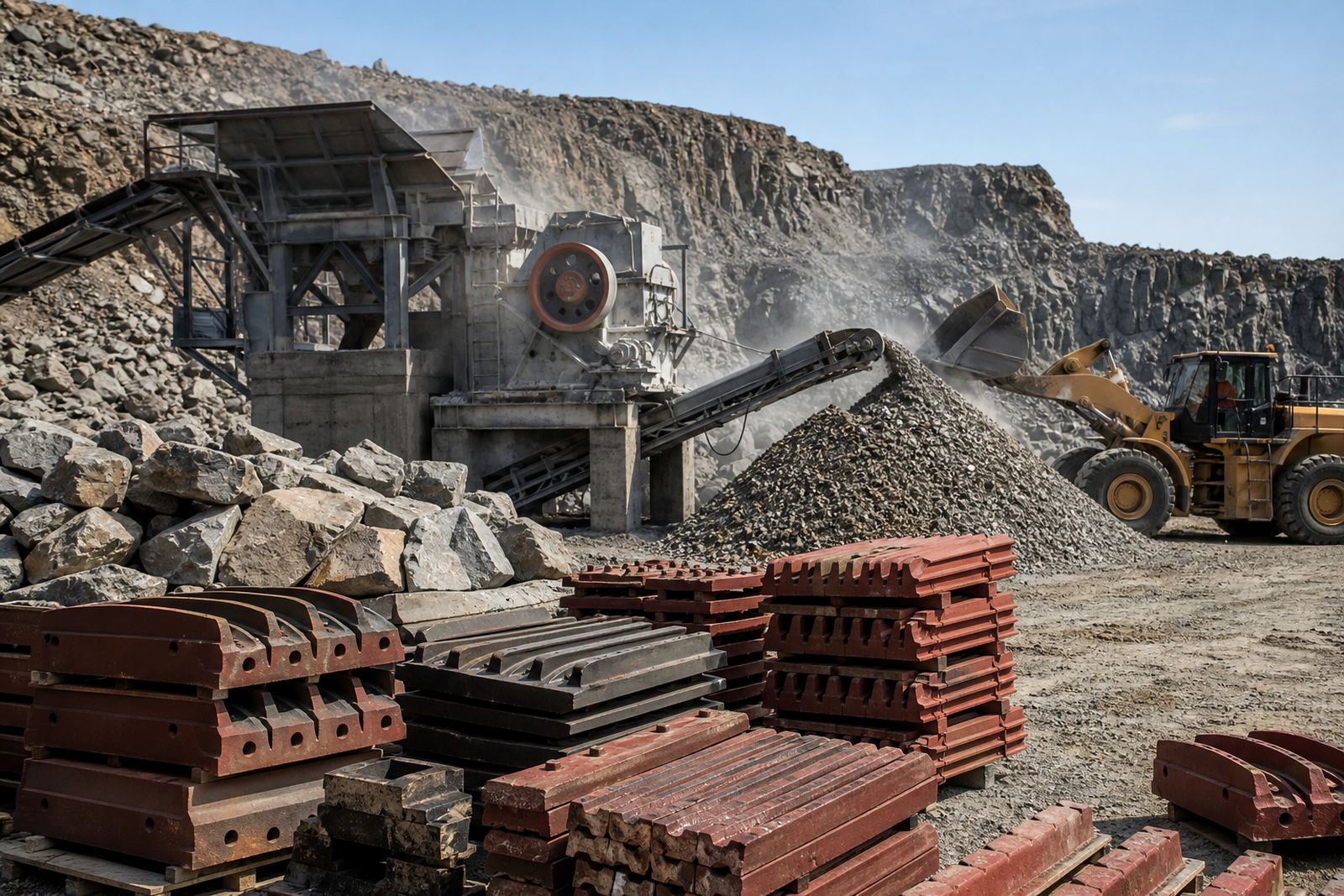
Granite feed needs parts that cope with hard, angular rock
Granite is unforgiving on crushing equipment. The rock is hard, abrasive and often uneven, which means jaw plates, mantles, concaves, blow bars and liners wear in a way that can shorten service life if the wrong grade or profile is used. In quarry work around Middelburg, Rustenburg, Kathu and the northern mining belt, the challenge is not just wear, but keeping the right spares on site when haul roads are long and freight can take longer than expected.
For granite applications, the main focus is consistency. The wear pattern changes when feed size is too large, the feed is too wet, or fines are not managed properly. A good maintenance plan starts with the crusher type, the reduction ratio you are running, and how often the plant is stopped for inspection. If parts are only ordered once they are near failure, the quarry can end up with avoidable downtime and a rushed freight charge.
Typical crusher setups seen in granite quarries
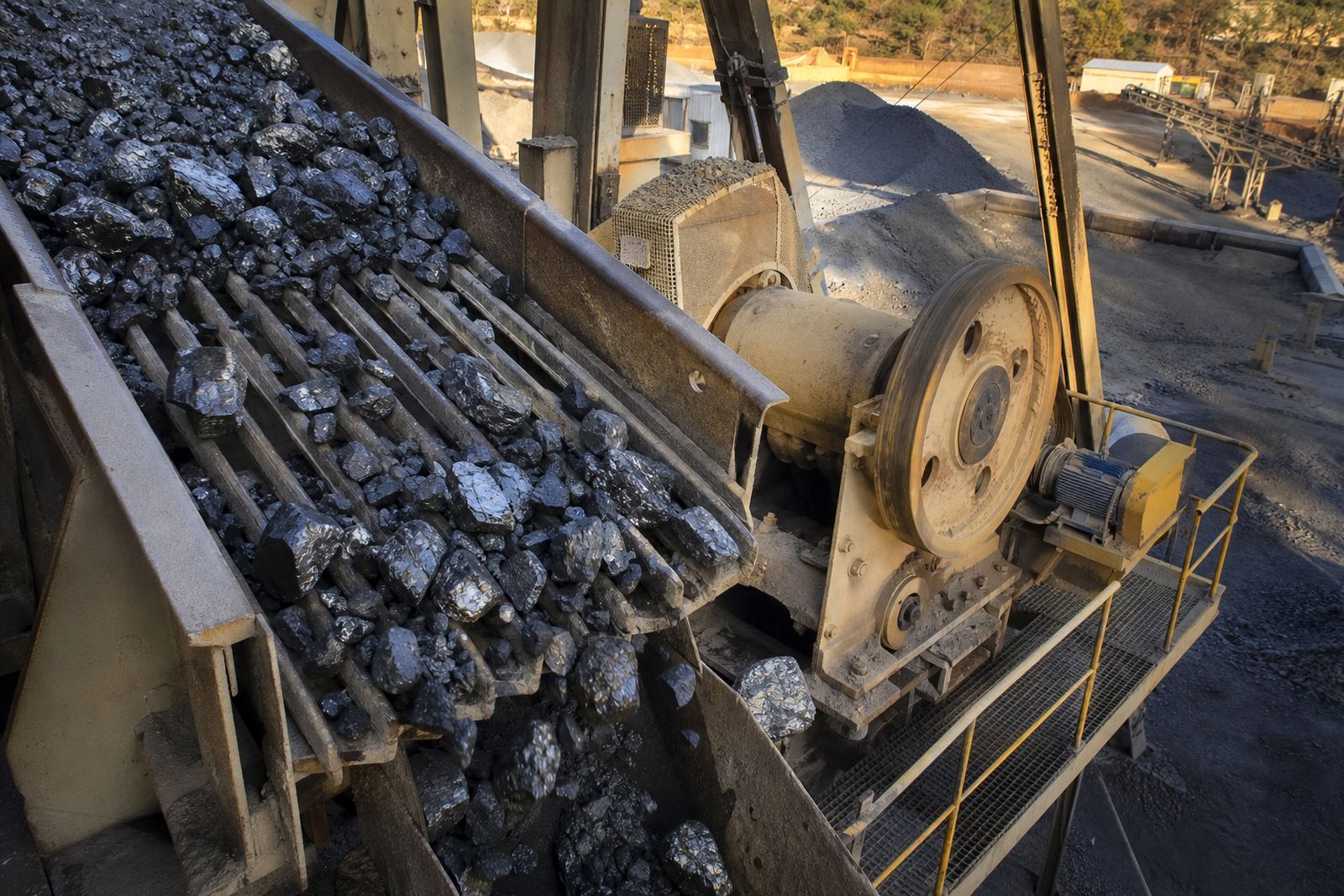
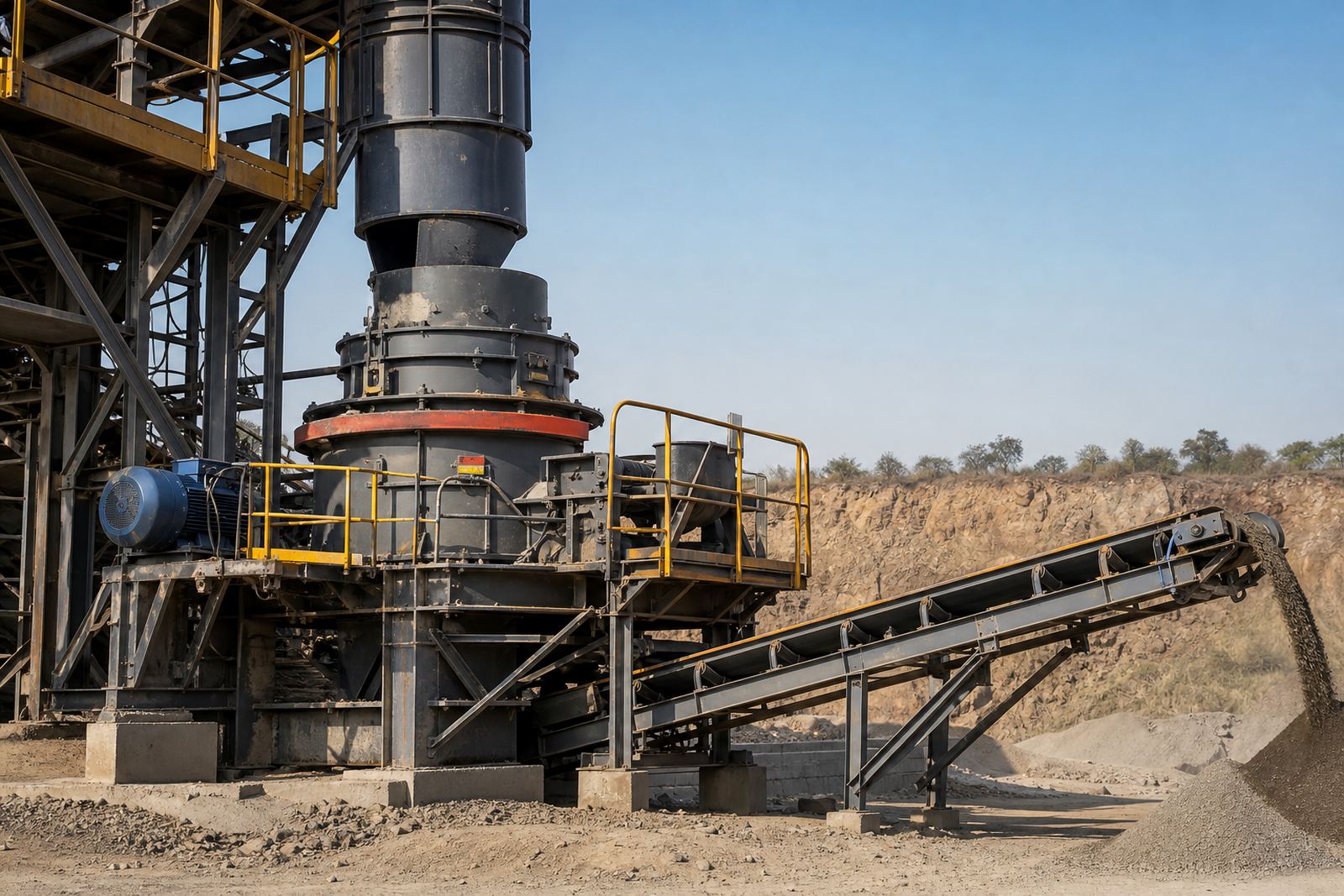
Granite quarries usually work with a primary crusher, then secondary and sometimes tertiary crushing to get the stone to spec for road base, concrete aggregate or drainage material. The exact setup varies, but the wear part list is often similar. Jaw crushers take the first impact, cone crushers handle fine reduction, and impact units may be used where shape control matters more. Each stage places different pressure on the consumables.
- Jaw plates for primary reduction and coarse feed control
- Concaves and mantles for cone stages where fine output is needed
- Blow bars for impact crushing where shape and cubicity matter
- Liners for hoppers, chutes, bins and transfer points
We also see quarries running bundled part kits so the right consumables arrive together, instead of one item at a time. That helps during shutdowns, especially at remote sites where labour, plant access and transport need to be planned carefully.
Layout and planning advice for remote quarry sites
In remote granite operations, the freight plan matters almost as much as the part itself. Sites in the Northern Cape or Limpopo may need route planning that takes bridge limits, road conditions and delivery windows into account. If the quarry has limited crane access or narrow stock areas, larger wear parts should be staged properly and lifted with the right equipment on hand.
Stock holding in Middelburg helps reduce the wait time for fast moving parts, while order consolidation keeps freight simpler for sites that need several items at once. We also advise matching deliveries to shutdown dates and avoiding late afternoon drop offs where site access is restricted, especially where security and weighbridge controls are strict.
- Confirm crusher model, chamber profile and wear pattern before ordering
- Check site access for lowbed, rigid or trailer offload
- Allow for load securing and safe offloading at the plant
- Build spare sets into shutdown planning, not just emergency orders
Common mistakes that shorten wear life in granite work
One common mistake is treating every granite quarry the same. Feed shape, moisture, blasting quality and the amount of recycled oversize all affect wear. If the crusher is repeatedly fed with oversized rock, wear parts can suffer uneven loading and the plant may use more power than expected. Another issue is running beyond the point where the wear profile still supports product size control.
We also see budgets stretched by avoidable freight runs. A quarry orders a single plate today, then a liner next week and a set of bars after that. That creates extra transport costs and delays. Consolidating orders and keeping a sensible stock level at site usually works better than ordering under pressure. A small typo in planning can turn into a full shift lost on the plant floor.
What to budget for wear parts in Rand
Granite quarries should budget for both planned replacement and urgent dispatch. A single wear item can range from a few thousand Rand for smaller liners or accessories to far higher amounts for larger crusher components, depending on size, weight and material grade. Bundled sets naturally cost more, but they often give better control over shutdown timing and freight handling.
For planning purposes, many operators set aside a monthly wear part allowance plus a shutdown reserve. That reserve is useful when a jaw set needs replacing sooner than expected or when a cone chamber shows uneven wear. Freight to remote sites can also vary depending on load size, road access and delivery urgency, so it is best to price the part and transport together rather than separately.
- Small consumables and liners: lower Rand ranges for site spares
- Primary wear sets and chamber parts: mid to higher Rand ranges
- Urgent freight and coordinated delivery: cost depends on route and timing
How Crusher Consumables Direct supports quarry operations
Crusher Consumables Direct is based in Middelburg, Mpumalanga and supports quarry and mining clients across Mpumalanga, Limpopo, the Northern Cape, North West and Gauteng. Our team, led by Thabo Mokoena, works with stock holding, freight coordination and order support so quarries can keep maintenance moving without chasing multiple suppliers. We also handle return freight planning where old parts need to be removed from site in an orderly way.
For granite quarries, the aim is simple: keep the plant supplied, keep deliveries planned and keep the right wear parts on hand before a stop becomes an emergency. Clients can reach us through the enquiry form on our contact page, and we will help match the part list to the crusher stages, site layout and planned maintenance window.