When tertiary crushing starts drifting off size
Tertiary crushing is where a lot of product quality is won or lost. If the chamber is worn unevenly, the feed starts behaving differently, the discharge changes, and you can end up with too much oversize or more fines than planned. On some sites the first sign is not a broken part but a steady drop in screen efficiency, a change in power draw, or recirculating load that climbs for no clear reason.
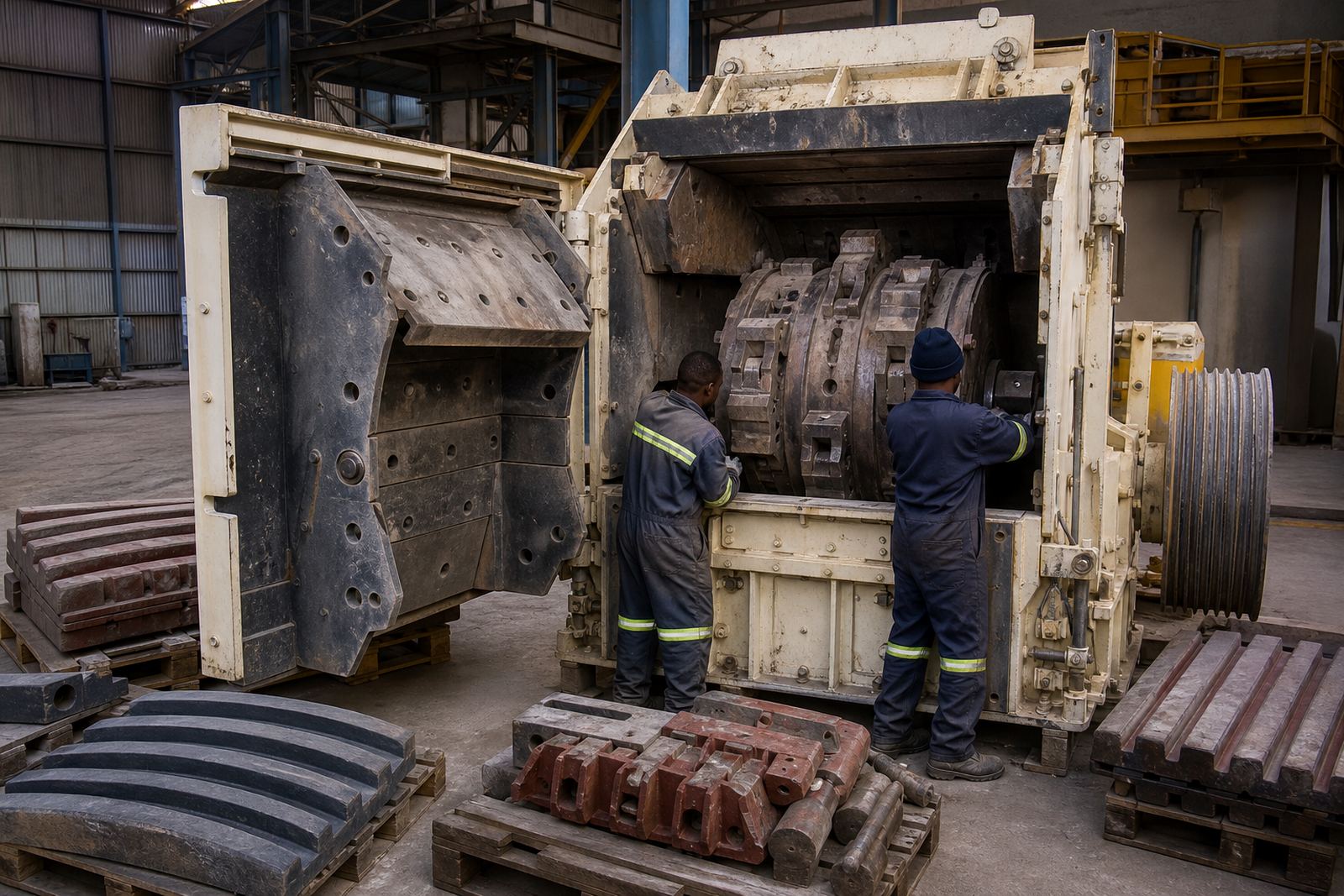
We work with mines and quarries that need jaw plates, mantles, concaves, blow bars and liners kept ready for fine reduction stages. In this part of the circuit, wear pattern matters as much as wear life. A part that still looks serviceable can still be costing you product shape, throughput and extra downtime if the chamber profile is no longer consistent.
For sites in Mpumalanga, Limpopo, the Northern Cape, North West and Gauteng, the challenge is often distance as much as wear. If a tertiary crusher is waiting on a set of liners or a matched wear kit and the closest spare is hours away, the whole plant gets pushed into a reactive rhythm. That is expensive and usually avoidable.
Typical tertiary setups and the wear parts that matter
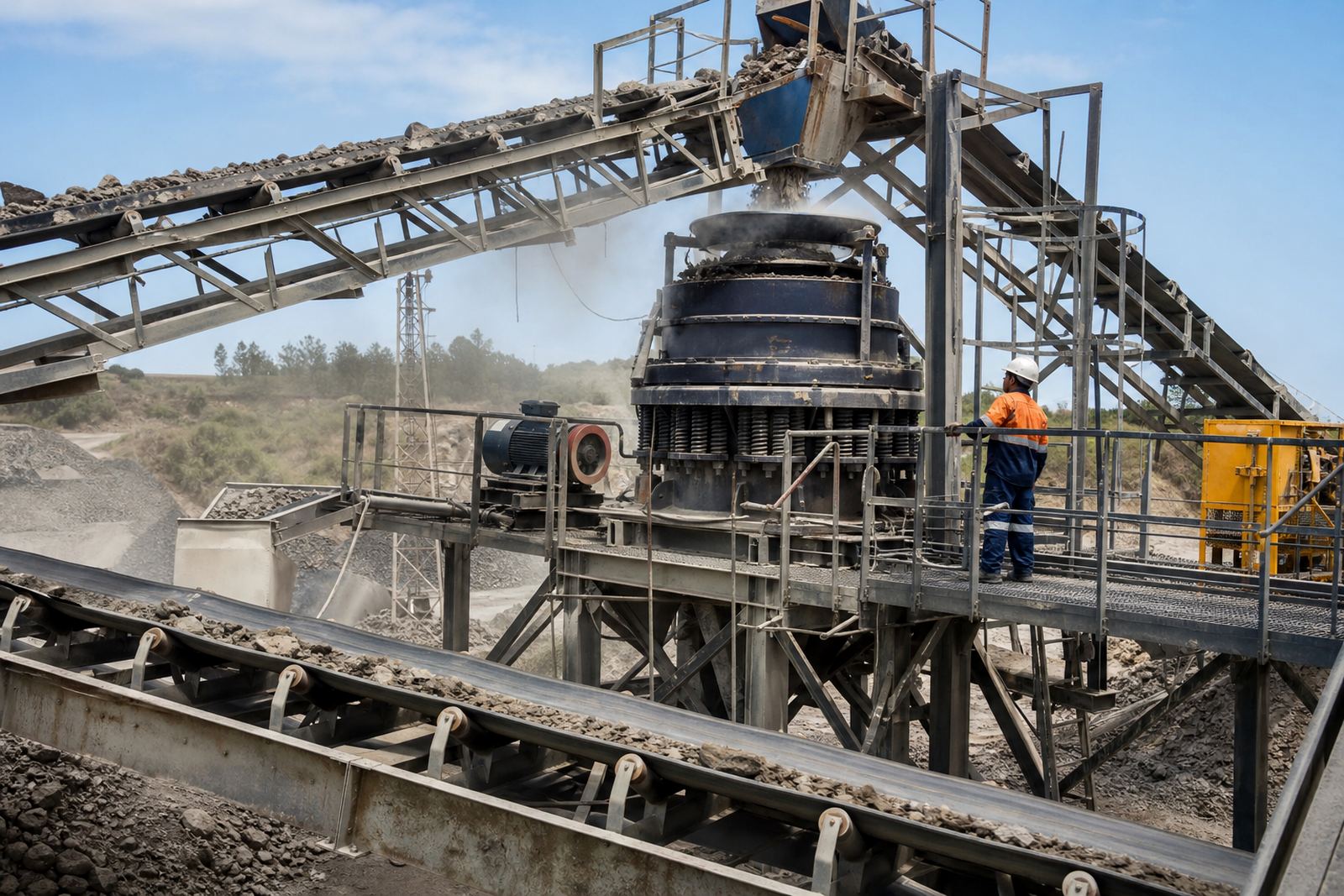
Tertiary circuits are often built around cone style or impact style equipment, with screens and return conveyors working hard to keep product within spec. The exact setup changes from site to site, but the planning issues are similar. Chamber condition, feed grading, and the timing of changeouts all affect the final product.
In a tertiary cone arrangement, the chamber profile, liner condition and feed consistency need to be watched closely. In a tertiary impact arrangement, blow bars and lining surfaces are usually the parts that drive the most attention. Either way, keeping the right wear parts in stock helps prevent a scramble when a shutdown is already booked and the plant has limited flexibility.
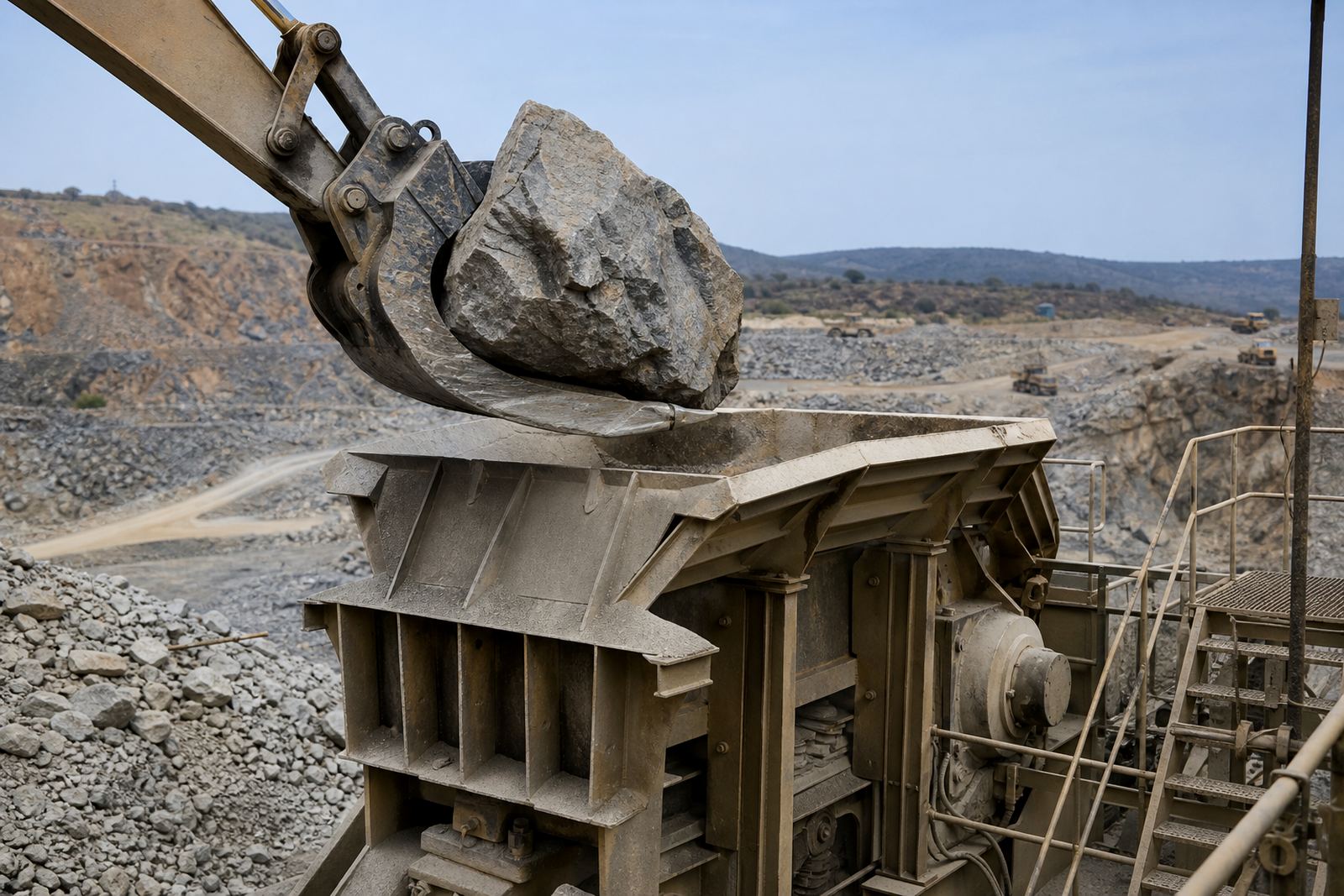
- Jaw plates may still be used in pre-crushing or secondary feed stages that support tertiary output.
- Manltes and concaves need to be matched to the chamber and the product target.
- Blow bars are often critical where impact reduction is part of the final sizing stage.
- Liners protect the chamber and help maintain a more even wear pattern.
When you are running in a dusty, high tonnage environment the parts that wear first are not always the only parts that need replacing. Side liners, wedge sets, fasteners and associated consumables should be checked at the same time so the machine does not go back together with one weak point still in place.
Planning stock around shutdowns and remote freight
Remote mines and quarries do not have the luxury of last minute part hunting. A tertiary crusher shutdown is usually booked around production targets, labour access, weather, and transport timing. In places like Kathu, Phalaborwa, Rustenburg or the more isolated parts of Limpopo, freight planning must happen before the machine is opened up.
Crusher Consumables Direct holds stock in Middelburg, Mpumalanga and coordinates delivery across South Africa. That means we can support planned shutdowns, urgent part dispatch and order consolidation for sites that need more than one item on the same truck. It also helps when a mine wants a bundled kit with the main wear items, fasteners and supporting consumables sent together instead of one parcel at a time.
- Plan changeouts around conveyor access and lifting equipment availability.
- Check route timing for long distance freight, especially where site gates close early.
- Keep a second set of high risk items ready if delivery windows are tight.
- Allow for load securing and packaging that protects machined surfaces on rough roads.
Load-shedding adds another layer in Gauteng and Mpumalanga, especially where maintenance crews work after hours. If your team is already on site with the chamber open, waiting for a late delivery can add an extra shift. Better to schedule the freight and the labour together, even if it means holding stock a little longer on the shelf.
Common mistakes that shorten wear life
The biggest mistake in tertiary crushing is treating all wear as if it is the same. A part can be made from the right material and still fail early if the chamber is misaligned, the feed is too coarse, or the crusher is being asked to take on a duty it was never set up for. We often see sites chasing the symptom instead of checking the profile, feed size and operating settings first.
Another common issue is under-ordering. If a mine only replaces the visibly damaged component, the rest of the chamber may stay out of balance. That can create uneven wear and another shutdown sooner than expected. It also makes it harder to keep product size steady from one campaign to the next.
- Do not fit new wear parts against worn mating surfaces without checking the full chamber condition.
- Do not ignore feed segregation from stockpiles with too much oversize.
- Do not leave old fasteners or damaged clamps in place to save a small amount on the job.
- Do not plan for delivery on the same day if the site is far from a main freight route.
There is also the budget trap. Some sites buy only on emergency and end up paying more for freight, overtime and production loss than they would have spent on holding a better stock line. That is especially true in remote areas where a missed delivery can stall more than one machine.
Budget ranges for tertiary wear parts in rand
Budgets depend on machine type, material grade, size and the scope of the shutdown, so it is better to treat tertiary wear spend as a working range rather than a fixed number. For smaller sites, a basic wear order might sit in the tens of thousands of rand. For larger plants, a full chamber change or a bundled set of critical spares can move into the hundreds of thousands of rand, depending on what is included.
Transport also needs to be budgeted properly. Freight to nearby areas may be straightforward, but remote deliveries to the Northern Cape or long haul routes into Limpopo can add material cost pressure if the order is split across several trips. Combining items into one dispatch is usually more practical and often easier to sign off.
When budgeting, it helps to break spend into three parts:
- Core wear parts such as jaw plates, mantles, concaves, blow bars and liners
- Supporting items such as fasteners, wedges, seals and fitting consumables
- Freight, site delivery coordination and any return freight planning for recovered items
If a site is running a shutdown programme, it is usually safer to keep a little contingency in the budget for one extra item that shows wear once the machine is open. That small buffer can save days of delay.
How our Middelburg team supports tertiary crushing sites
Crusher Consumables Direct is based in Middelburg, Mpumalanga and works with mines and quarries that need practical support, not just a sales promise. The team includes Thabo Mokoena, Lerato Nkosi, Johan van der Merwe, Ayanda Dlamini, Sibusiso Mahlangu and Megan Naidoo, with each person focused on keeping the order moving cleanly from enquiry to delivery.
Clients reach us through the enquiry form on our contact page, and we use that information to match the right parts, confirm the route, and plan the dispatch around the site schedule. We cover Middelburg Depot, Witbank Service Area, Steelpoort Service Area, Burgersfort Service Area, Phalaborwa Service Area, Rustenburg Service Area, Kathu Service Area and Johannesburg East Support, which helps when a site needs a fast answer on stock or freight timing.
For tertiary crushing, the value is in preparation. If the chamber needs parts next week or next month, it helps to have the list checked early, the freight planned properly, and the stock ready when the team opens the crusher. That is the difference between a controlled changeout and a rushed job.