When secondary crushing starts to slip, costs rise fast
Secondary crushing sits between primary reduction and final sizing, so it has to do two jobs at once: break material down further and keep a constant feed to screens, conveyors and stockpiles. If jaw plates, mantles, concaves, blow bars or liners wear unevenly, the result is usually poor product shape, more recirculation and higher power draw. On remote sites, that means more downtime waiting for parts and more pressure on the shutdown team.
Crusher Consumables Direct supports mines and quarries from our Middelburg, Mpumalanga base, with stock holding and freight planning for operations in Mpumalanga, Limpopo, the Northern Cape, North West and Gauteng. We work with sites that deal with long haul roads, dust, vibration, load-shedding and limited space for storing spares, so the supply plan has to be practical not just fast.
Typical secondary crushing equipment and wear parts
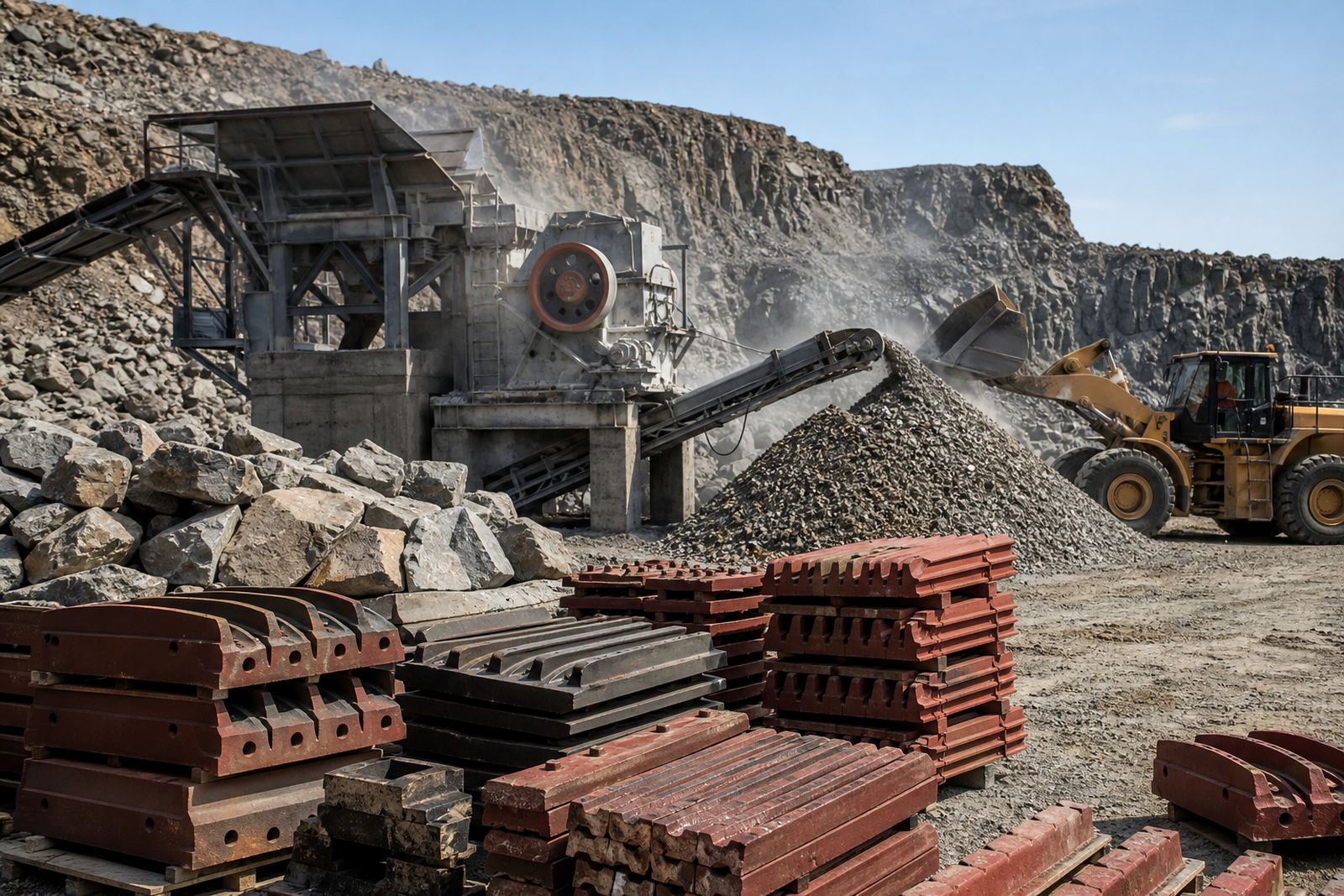
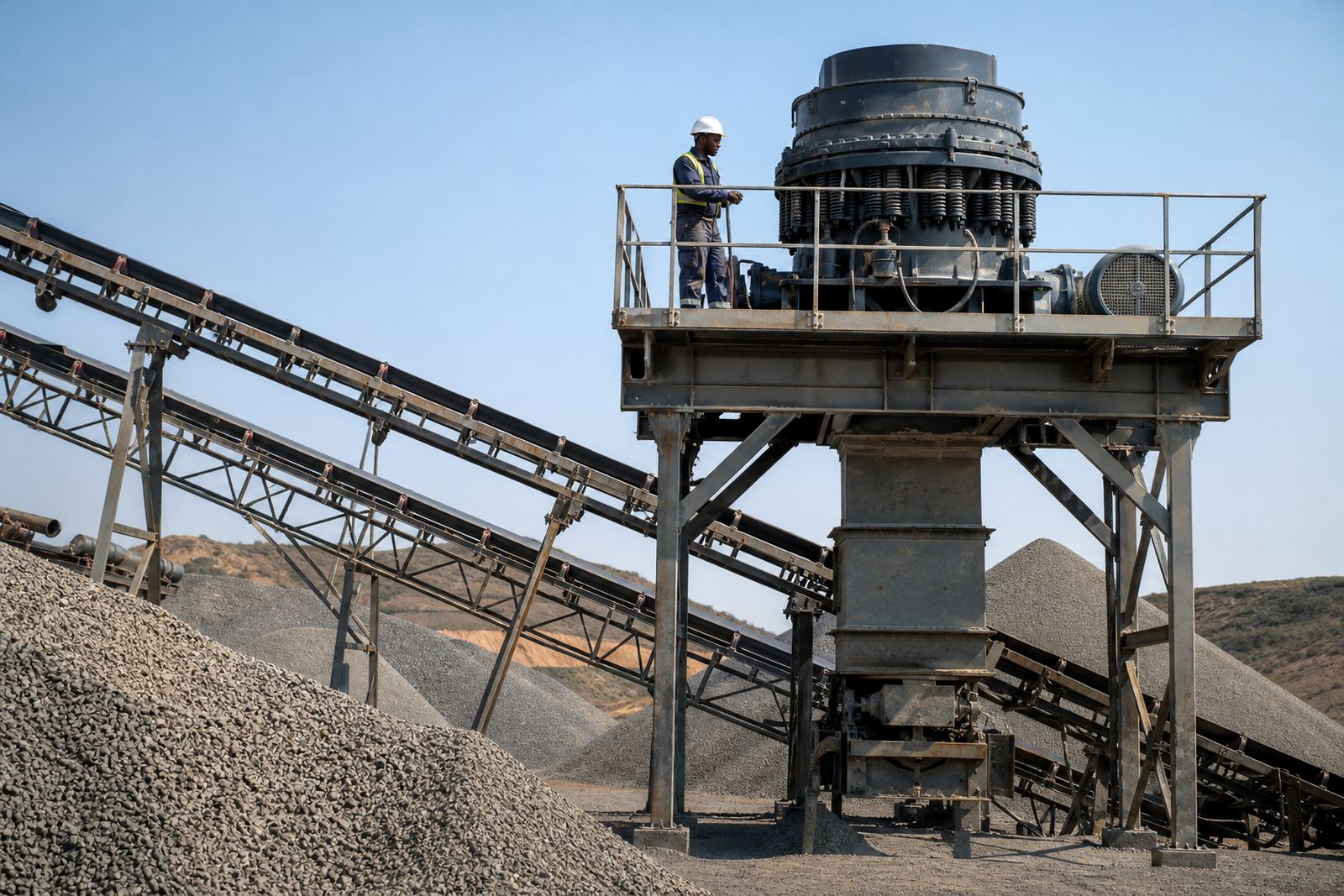
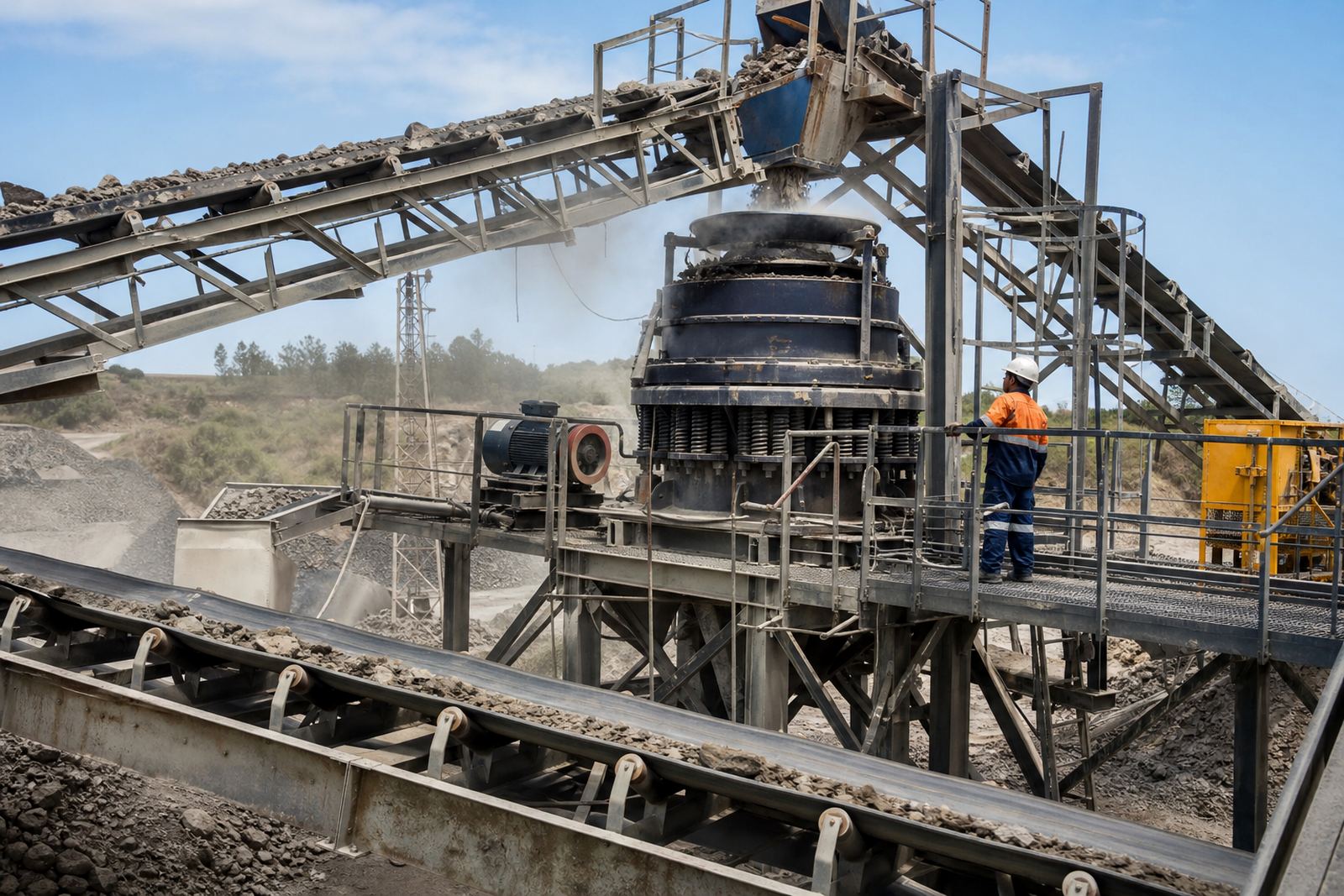
Secondary circuits can include cone crushers, impact crushers and some jaw-based reduction stages depending on the plant layout. Each unit needs wear parts matched to feed size, rock hardness and the way material enters the chamber. The wrong profile can shorten wear life or push material around the chamber instead of breaking it cleanly. That is especially common when feed is too coarse, too wet or full of fines.
- Jaw plates for secondary jaw units where further reduction is needed
- Cones with mantles and concaves for controlled reduction and a more consistent product
- Blow bars for impact systems where shape control matters
- Side liners, cheek plates and other liners that protect the frame and chamber walls
- Associated fasteners and fitment items for planned changeouts
For most sites, the best result comes from keeping a known set of parts on hand and tracking wear patterns by shift, tonnage and feed source. That makes ordering easier and cuts the chance of mixing the wrong profile into the wrong machine.
Planning stock around your feed, not just your machine
A secondary crusher rarely fails on parts alone. More often the problem is planning. If the upstream crusher sends oversized feed, the secondary unit wears faster and throughput drops. If the screen is not matching the crusher setting, recirculation climbs and the chamber works harder than it should. On some sites, the issue starts with a stockpile that is too wet after summer storms or too dusty during dry season handling. We have seen that turn a simple changeout into a full day of lost production, especially where the site is far from town and there is only one freight window.
Good planning starts with the right wear package, the right quantities and the right delivery timing. Our team handles order consolidation, route planning, load securing and return freight planning so the site does not have to split deliveries across multiple vehicles. Thabo Mokoena, Lerato Nkosi and the rest of the team coordinate from order to site delivery, with support for Middelburg Depot, Witbank Service Area, Steelpoort Service Area, Burgersfort Service Area, Phalaborwa Service Area, Rustenburg Service Area, Kathu Service Area and Johannesburg East Support.
Common mistakes that shorten wear life
Secondary crushing problems often look like a worn part issue but the root cause is usually somewhere else. A machine can chew through liners early if the feed is uneven, if tramp metal is getting through, or if the chamber is run too close to empty. The opposite can also happen, where overfeeding packs the crusher and causes poor product shape plus heat build-up. Either way, the wear parts become the complaint even when the layout needs attention.
- Running a crusher with irregular feed and no proper size control
- Leaving changeouts too late, which raises risk of shell damage and extra labour
- Ordering parts without checking chamber profile, setting or duty cycle
- Ignoring road access and offload limits at remote sites
- Failing to plan for shutdowns, power interruptions or rain delays
It also helps to keep the spares list tight. A site that holds every possible item often ties up cash and storage space, while a site with too few parts gets caught out when one liner set wears faster than expected. The aim is balanced cover, not overstock.
Remote mine freight that keeps the changeout moving
Remote mines need freight that matches the reality on site. A load can leave Middelburg in the morning and still need careful timing to reach a mine gate before weighbridge cut-off or shift change. Some roads are rough, some sites have strict access rules and some quarries only accept deliveries during narrow hours. We plan around those conditions so wear parts arrive secured, identified and ready for use.
For urgent part dispatch, bundled part kits and shutdown planning, it helps to combine freight with stock holding. That reduces split loads and gives the maintenance team one delivery point instead of several smaller drops. In practice, this can save time on receiving, checking and storing, which matters when the site is running with limited labour or handling equipment.
Budget ranges for secondary crushing wear parts
Budgeting for secondary crushing should cover both the wear parts and the logistics around them. A single set of liners or crusher components can vary a lot depending on machine size, material grade and how hard the circuit is pushed. For planning purposes, smaller replacement items may sit in the low tens of thousands of Rand, while full wear packages for heavier secondary units can move into the mid and higher hundreds of thousands of Rand. Freight, offloading and site handling should be added separately, especially for remote destinations.
Sites in Mpumalanga, Limpopo, the Northern Cape, North West and Gauteng often prefer a staged buying approach: keep fast moving items in stock, schedule larger changeouts around shutdowns and use consolidated orders where possible. That keeps cash flow steadier and makes it easier to hold the right mix of spares without overcommitting the maintenance budget.
What to send when you need support
When a secondary crusher needs parts, send the crusher type, current wear issue, approximate opening setting or product size target, and the delivery location. If you have a photo of the worn profile or the existing liner set, that helps confirm the right match. The more accurate the details, the easier it is to line up stock, freight and the next shutdown. We work through the enquiry form on our contact page, then the team follows up with order support and delivery planning.
Crusher Consumables Direct is based in Middelburg, Mpumalanga and led by Thabo Mokoena, with support from Lerato Nkosi, Johan van der Merwe, Ayanda Dlamini, Sibusiso Mahlangu and Megan Naidoo. The focus is simple: keep secondary crushing supplied, keep the freight moving and keep the plant working with the parts it actually needs.