Start with the crusher type and where the part fits
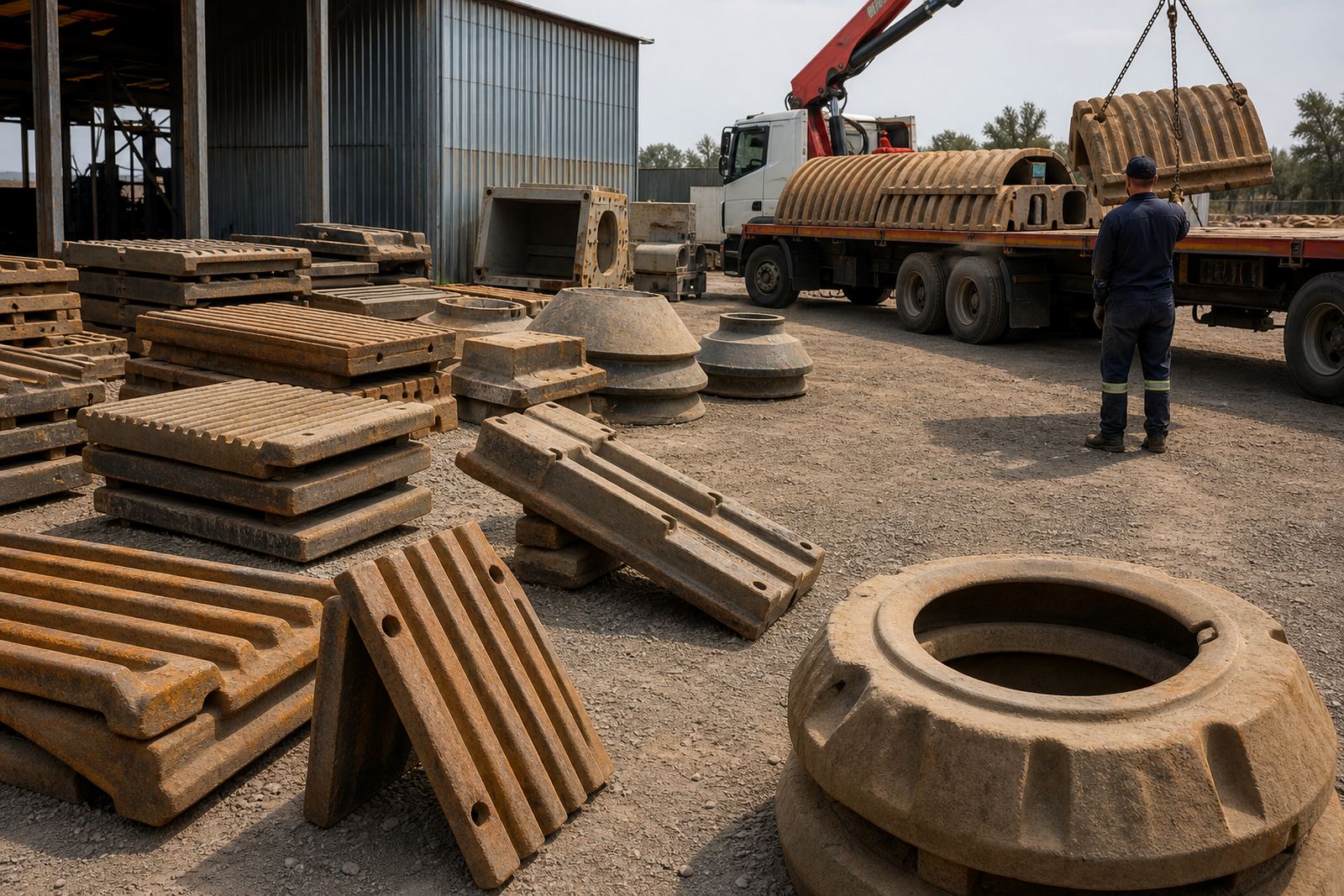
The fastest way to identify a wear part is to tell us what machine it came off and where it sits in the crusher. Jaw plates usually fit jaw crushers, while mantles and concaves are used in cone-style crushers. Blow bars are common on impact crushers, and liners can refer to several wear surfaces, so the location matters.
If you only know the site name or the machine is running in a remote area, that still helps. Our team in Middelburg works with mines and quarries in Mpumalanga, Limpopo, the Northern Cape, North West and Gauteng, so we are used to sorting part requests from busy shutdowns and rough operating conditions.
Send clear photos from more than one angle
Good photos save time and reduce the chance of ordering the wrong item. Take the part in natural light if you can, and clean off excess dust, grease or packed fines first. One photo from the front is not enough in most cases.
- Take a full view of the part
- Photograph the wear face and the back side
- Include any cast marks, numbers or symbols
- Place a tape measure or ruler next to the part
- If possible, photograph the part next to another item for scale
If the part is cracked, worn thin or broken in pieces, send each piece seperately so we can compare the shape and wear pattern more accurately.
Measure the key points before you send anything
Sizes matter, even when the part looks familiar. A small difference in length, thickness or bolt-hole spacing can change whether the part will fit. For many crusher wear parts, we check overall length, width, thickness, hole centres and the profile of the working face.
- Overall length, width and thickness
- Bolt-hole spacing and hole diameter
- Curvature, taper or profile shape
- Wear lip or ridge position
- Any casting marks, part numbers or old labels
If you do not have workshop tools on hand, a basic tape measure is still useful. Even rough measurements can narrow things down quickly and help us match the likely part type before freight is arranged.
Tell us how the part was used on site
Operating conditions often change what a part looks like after service. A jaw plate used on hard quartz ore will wear differently from one used on softer stone. High moisture, coastal humidity, dust, tramp metal and long periods of load-shedding all affect service life and wear patterns.
Let us know if the plant was used on ore or aggregate, whether the machine was overloading, and if the previous part failed by cracking, chipping or uneven wear. Those details help us work out whether the part is a standard wear item, a special profile or a part that should be checked against the crusher setting before reordering.
What our support team checks before confirming a match
Once we have your photos and measurements, we check the visible profile, the mounting points and the likely crusher type. We also look at the wear direction, the casting shape and any marks that might indicate whether the item is a jaw plate, mantle, concave, blow bar or liner.
Our order support is handled from Middelburg by people who deal with remote mine freight every day. That means we do not stop at identification only. We also look at stock availability, delivery route, packaging needs and whether the part should go out with other items in one consignment.
- Confirm the likely part family
- Check measurements against the crusher type
- Review stock status and dispatch options
- Plan freight to the mine or quarry site
- Bundle related items if the shutdown needs more than one part
If the part is broken, worn out or mixed with other pieces
Sometimes a failed wear part arrives in several pieces, or with other scrap metal mixed in after a shutdown. In that case, do not guess at the part name. Photograph every piece and tell us which machine the material came from. If there are old packing lists, delivery notes or store tags, include those as well.
For mines in remote areas, it is often better to wait an extra hour for clearer photos than to rush a replacement that does not fit. A wrong order can hold up a plant, cause extra freight cost and delay the return to production. We help you avoid that by checking the details carefully before anything is released.
How to get help through our contact page
Use the enquiry form on our contact page and include your crusher type, part description, photos and measurements. If you know your site location, add that too, especially if you need freight to Middelburg, Steelpoort, Burgersfort, Rustenburg, Kathu, Phalaborwa or Johannesburg East. That helps us plan the route and packing from the start.
Crusher Consumables Direct has supported stock holding and remote mine freight since 2011 from our Middelburg base. Thabo Mokoena leads the business with Lerato Nkosi, Johan van der Merwe, Ayanda Dlamini, Sibusiso Mahlangu and Megan Naidoo, so your enquiry is handled by people who know the pressure of shutdown work and the need to keep parts moving.