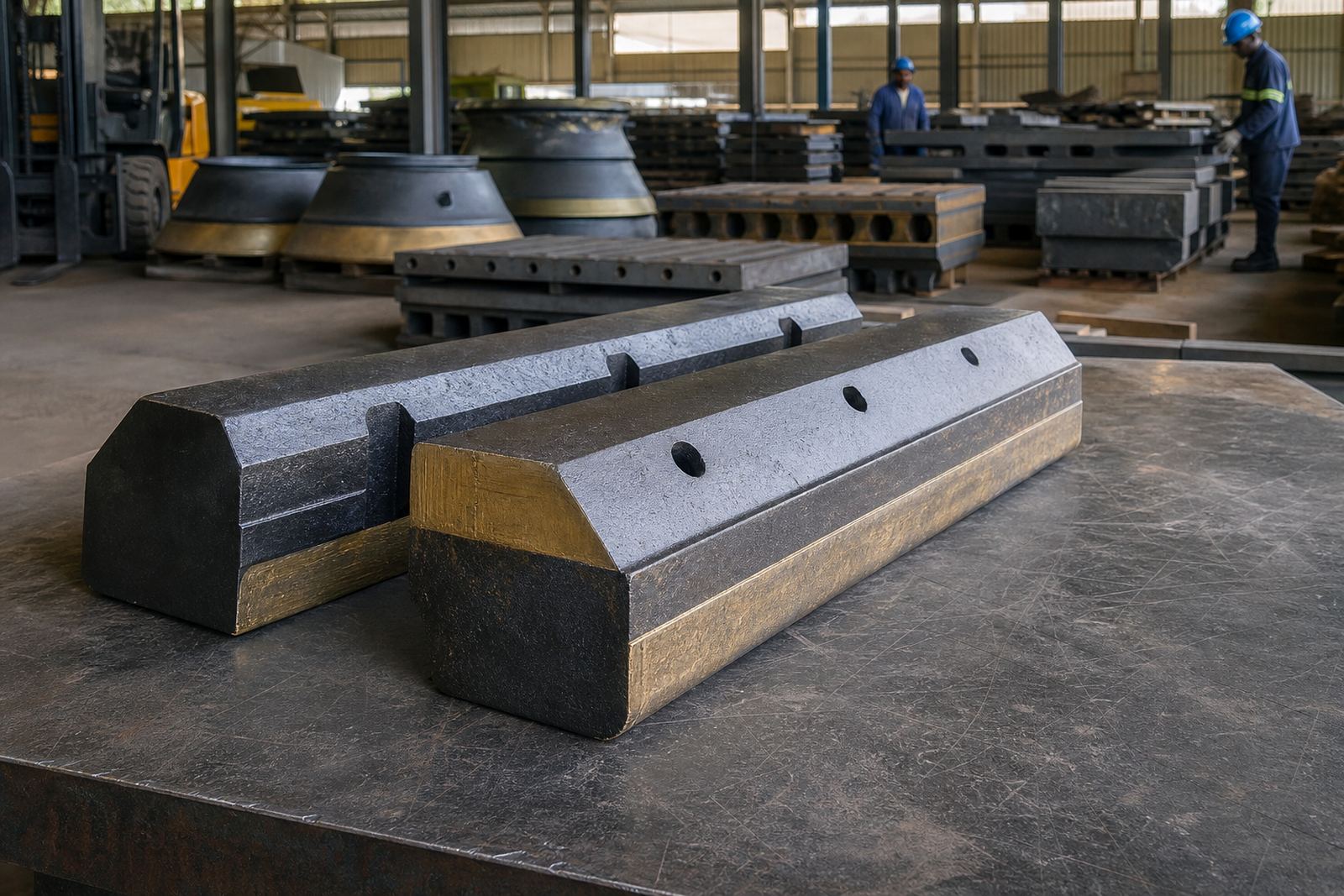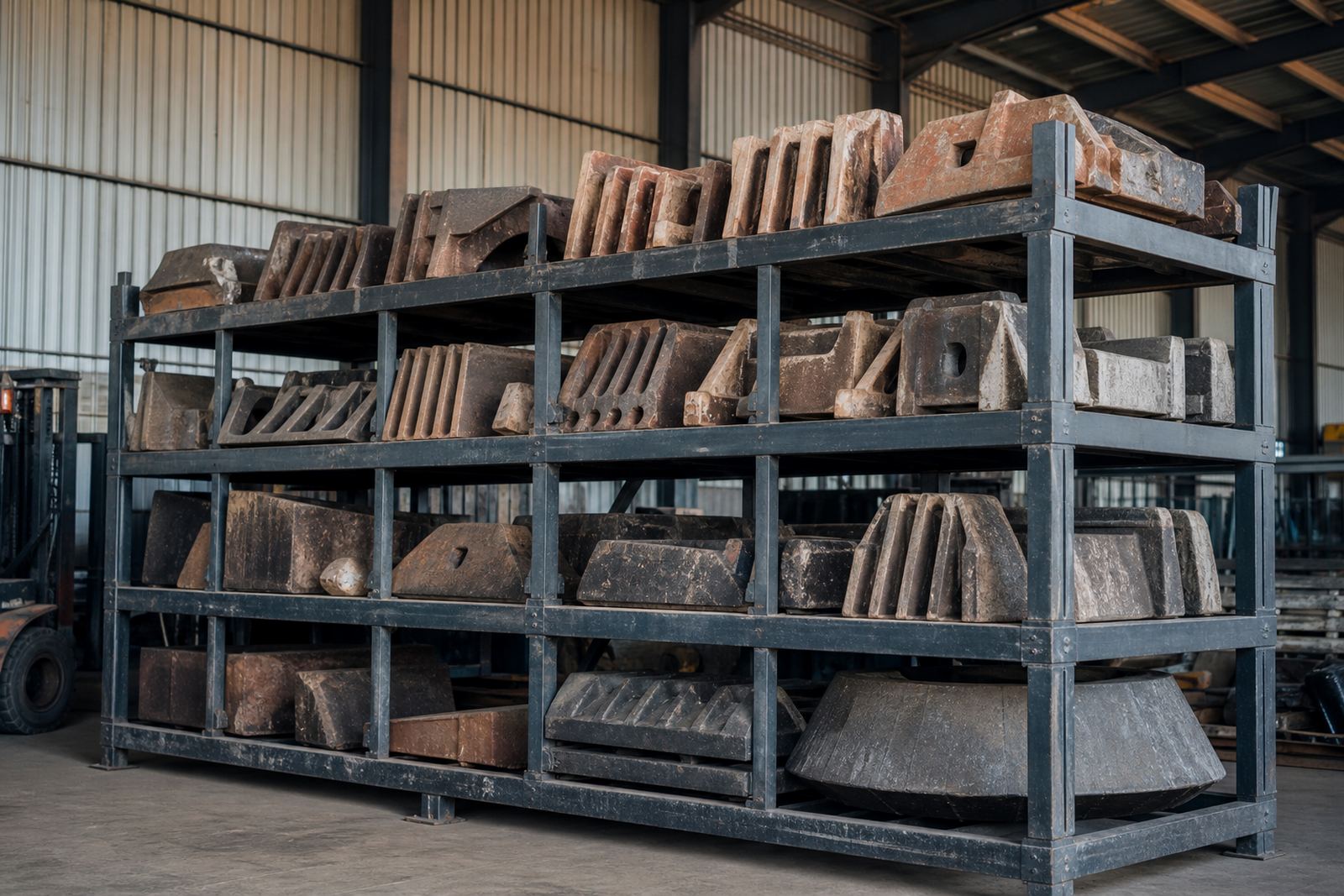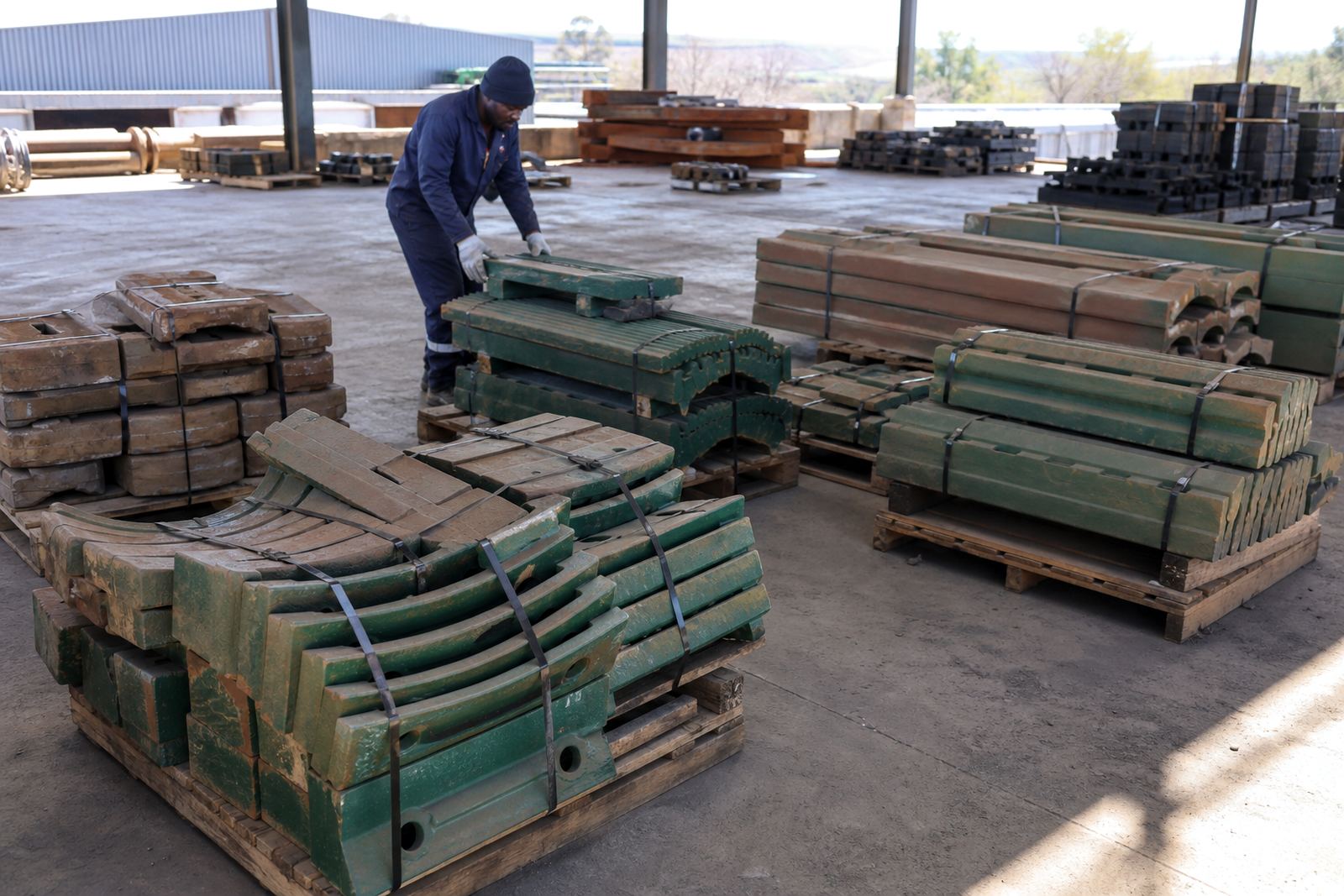
What apron wear components do in an impact crusher
Apron wear components form part of the impact zone inside an impact crusher, helping guide material through the chamber while taking the repeated удар from feed and broken rock. In plain terms, they protect the crusher body and help keep the chamber shape steady so the machine can keep working to a predictable profile. When aprons wear unevenly, operators often see poor reduction, more bypass, or changes in product shape that make the plant harder to control.
These parts are used where hard, abrasive material is being broken and where the crusher runs on a planned maintenance cycle. They are suitable for mines and quarries that need wear parts on hand before a shutdown, especially where lead times to remote sites can stretch because of road access, weather, or stock pressure. In Mpumalanga, Limpopo, the Northern Cape, North West and Gauteng, keeping a set ready for fitment can save a rushed shutdown and a lot of waiting around.
- Used in impact crusher chambers for wear control
- Supports planned rebuilds and liner changeouts
- Helps maintain stable crushing performance
Sizes, profiles and options to match your chamber
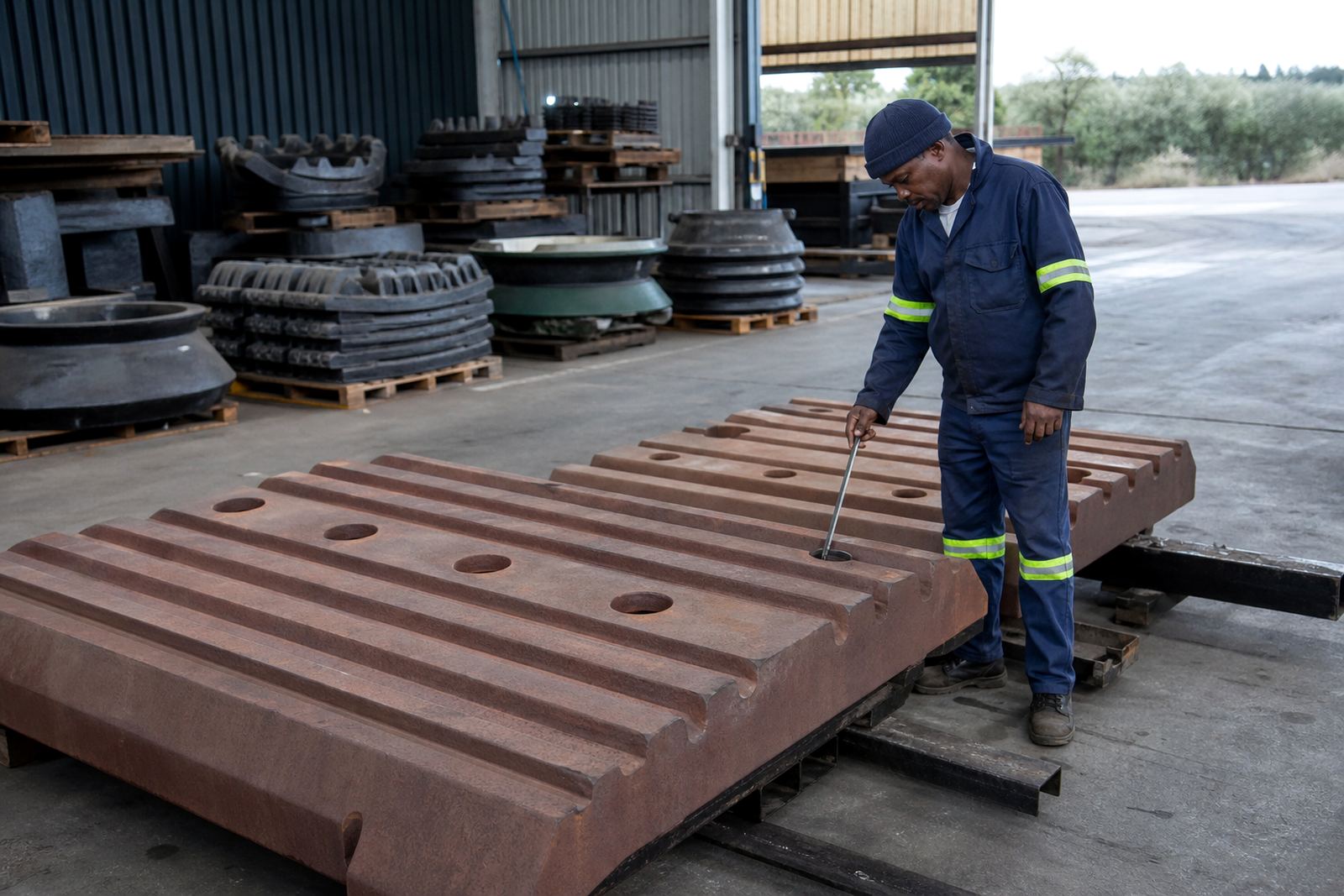
Apron wear components are not one-size-fits-all. The right fit depends on the crusher model, chamber arrangement, mounting style and the wear profile you are trying to achieve. We supply generic apron wear components for rebuild and maintenance work, including pieces sized to suit primary and secondary impact crusher applications. Some chambers need heavier sections for coarse feed, while others call for a finer wear pattern and tighter control of product shape.
When checking options, look at the overall length, width, thickness and fixing arrangement. If you are working from an old part, the casting number or a clear measurement sheet is useful. If the machine has already been rebuilt once or twice, it is worth checking whether the seating faces and fastener positions still line up properly, because worn hardware can make a new apron sit out of square. That is where problems start, and it is usually avoidable.
- Common options cover primary and secondary impact crusher chambers
- Available in different thicknesses and wear profiles
- Can be matched to measured samples or existing part drawings
Where aprons suit site conditions and material types
Apron wear components suit operations handling abrasive stone, ore and mixed rock where impact wear is high. They are commonly used in quarries, crushing plants and mine sites that process hard feed or variable material from run-of-mine stockpiles. In remote areas, the value is not only in the part itself but in having it on site before the maintenance window opens. If the part is late, the crusher sits idle and the plant crew waits.
They are particularly useful where dust, heat and long operating shifts are part of the day to day. Sites around Middelburg, Steelpoort, Burgersfort, Rustenburg and Kathu often run with tight maintenance windows and limited spare holding, so apron stock needs to be planned with the rest of the wear package. On coastal or humid sites there is also the risk of surface corrosion if parts are stored badly, so packaging and storage matter too.
- Suitable for mines, quarries and crushing plants
- Works well in abrasive and high impact feed conditions
- Helpful for remote sites with limited spare holding
Installation, handling and power needs
Apron wear components are mechanical wear parts, so they do not need gas, electrical connection or special power input of their own. They do however need correct handling, lifting gear and a safe installation plan. Because these parts can be heavy and awkward in the chamber, the fitment team should have a proper lifting method, clean seating surfaces and the correct fasteners on hand before the shutdown starts. Trying to improvise on the day usually creates delays.
For installation, make sure the crusher is isolated, locked out and cleared under site safety rules. The chamber should be clean so the new component sits flat and the retaining hardware can be torqued properly. If the apron is part of a bigger rebuild, it makes sense to line up the wear package as one order so the site can change everything in one shift or over one controlled stop. That saves freight costs and keeps the shutdown tidy, which is important on a busy mine where every hour counts.
- No power or gas connection required for the part itself
- Needs lifting equipment, safe isolation and correct fastening
- Best installed during planned shutdowns or chamber rebuilds
Care, servicing and storage before fitment
Good storage makes a difference. Keep apron wear components on level ground, under cover and away from standing water, especially at sites with coastal humidity or open yard conditions. If a component is left in the weather, rust on the contact faces or fastener holes can slow down fitment and create nuisance on the shutdown day. A light check before storage and again before installation is worth doing.
During service, inspect the apron for uneven wear, cracks, movement at the mounting points and any sign that the chamber is running out of profile. If the crusher begins producing more oversize, or if feed starts tracking differently through the chamber, the apron may be nearing changeout. Regular checks during planned maintenance help you avoid a surprise failure and keep your wear budget easier to manage. Small wear changes are easy to miss when the plant is busy, so a simple checklist helps.
- Store under cover on level ground
- Check for wear, cracking and movement at mounting points
- Inspect during each planned maintenance stop
What to check when ordering apron wear parts
Before ordering, confirm the crusher make and model if available, the chamber position, the part dimensions and the fastening pattern. A photo of the worn part can help, but measurements are better. Please include the site location, delivery window and whether the order is for a planned shutdown, urgent dispatch or a bundled wear package. If the apron is going to a remote mine, freight planning should start as soon as the order is confirmed so the load can be secured and routed properly.
At Crusher Consumables Direct, we hold stock in Middelburg, Mpumalanga and support mines and quarries across Mpumalanga, Limpopo, the Northern Cape, North West and Gauteng. Our team handles stock holding, remote mine freight, quarry deliveries, urgent part dispatch, shutdown planning and order consolidation so sites can keep maintenance moving. If you are unsure what matches your chamber, send the measurements through the enquiry form and we will help narrow it down. That usually gets the order moving without back and forth.
- Confirm model, chamber position and fixing pattern
- Send measurements, photos and delivery timing
- State whether the order is for shutdown or urgent dispatch
Key facts
| Product type | Apron wear components for impact crusher maintenance |
|---|---|
| Typical use | Impact crusher rebuilds and planned chamber changeouts |
| Material style | Wear-resistant cast components, supplied generically |
| Size range | Sized to suit measured chambers and existing fitment patterns |
| Installation | Mechanical fitment only, with lifting gear and safe isolation |
| Supply area | Middelburg base with freight across South Africa |