Bowl liners for controlled cone crusher wear
Bowl liners sit inside the top section of a cone crusher and work with the mantle to form the crushing chamber. As the liner wears, the chamber shape changes, which affects product size, throughput and how evenly the machine takes load. That is why bowl liner condition needs to be tracked closely during planned maintenance, shutdowns, and any time feed quality changes. In practice, a liner that is worn too far can lead to poor product control, higher power draw and extra strain on the rest of the crusher.
We supply bowl liners for mines and quarries that need dependable parts supply without long waiting times. Stock is held in Middelburg and freight is arranged for operations in Mpumalanga, Limpopo, the Northern Cape, North West and Gauteng. If your site is far from main roads or your delivery window is tight, we plan load securing and route timing so the part arrives ready for fitment, even where access roads are rough or weather is against you.
Sizes, profiles and fitment options
Bowl liners are selected by crusher model, chamber profile and the type of rock being processed. Some sites need a coarse profile for higher throughput and larger feed, while others need a finer chamber for tighter control on final size. We supply liners in the profile required for the duty, whether the plant is working hard on abrasive ore, sticky material or mixed quarry feed.
When ordering, it helps to confirm the following:
- Crusher make and model
- Chamber profile and liner type
- Desired feed opening and product size
- Whether the machine is running a standard or modified wear set-up
- Any wear pattern seen on the current liner set
Because bowl liners are fitted to match a specific chamber, small differences matter. A liner that is close but not correct can cause poor seating, uneven wear or contact issues during start-up. If you are not sure which profile is in the machine, we can work from the worn part, drawings or clear photos from site.
Where bowl liners suit the job best
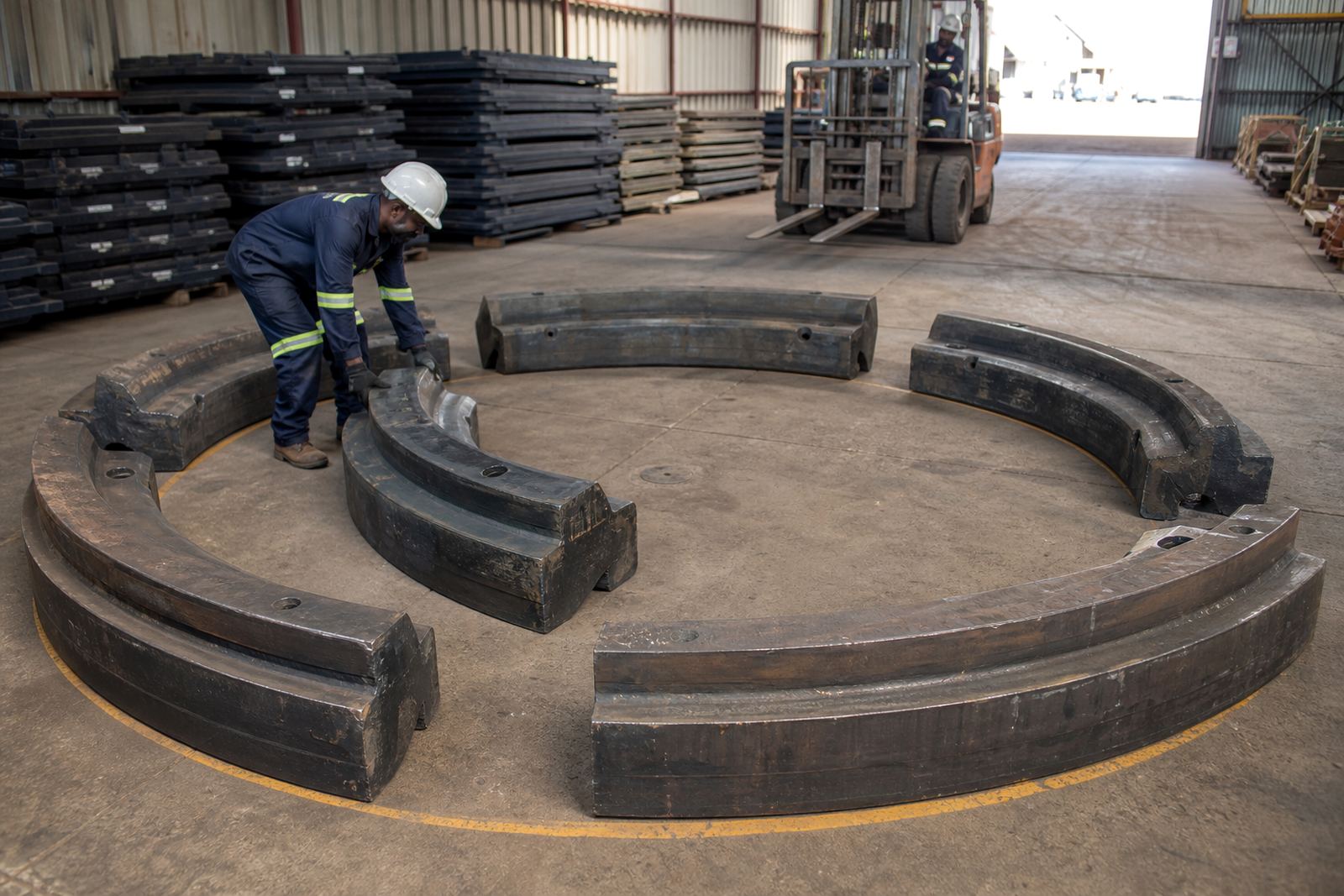
Bowl liners are used wherever cone crushers are part of the production line and chamber condition must be managed closely. That includes hard rock mining, aggregate production, roadstone, and quarry sites where consistent sizing is needed for downstream screens or secondary crushing. They are also common on remote sites where plants run long shifts and stopping early for a worn part is not practical.
On remote mines, access can be a bigger issue than the part itself. A crusher sitting outside a pit near Phalaborwa or on a dusty road in the Northern Cape still needs the same level of parts control as a plant in Gauteng. We plan freight around site rules, gate times and delivery restrictions, and we can consolidate bowl liners with matching wear parts so the whole set reaches site in one movement rather than in bits and pieces, which saves time and less handling.
- Suitable for cone crushers used in primary, secondary or tertiary duties
- Useful on abrasive material where chamber wear is closely monitored
- Appropriate for planned shutdowns and change-outs during maintenance windows
Installation, power use and site requirements
Bowl liners are installed during crusher maintenance with correct lifting gear, isolation and chamber access. The crusher must be fully shut down, locked out and made safe before any liner work begins. Depending on the machine, change-out may involve a lifting device, liner hooks, torque tools and a clean seating surface inside the bowl assembly. If the seat is dirty or damaged, the liner can move or wear unevenly after start-up.
No special gas supply is needed for the liner itself. Power requirements depend on the crusher and the plant around it, not the bowl liner. What matters is that the machine is isolated properly and that the maintenance team has enough time to check fasteners, wear faces and the condition of the backing or seating area if that forms part of the crusher set-up. On some sites, the biggest issue is access to the machine during load-shedding or after-hours shutdowns, so timing needs to be sorted before the crane is booked.
We support shutdown planning and can combine bowl liners with mantles, jaw plates, blow bars or liners where a broader wear schedule is being managed. That helps reduce repeat freight and keeps the maintenance team from waiting on missing items when the crusher is already open.
Care, inspection and when to replace
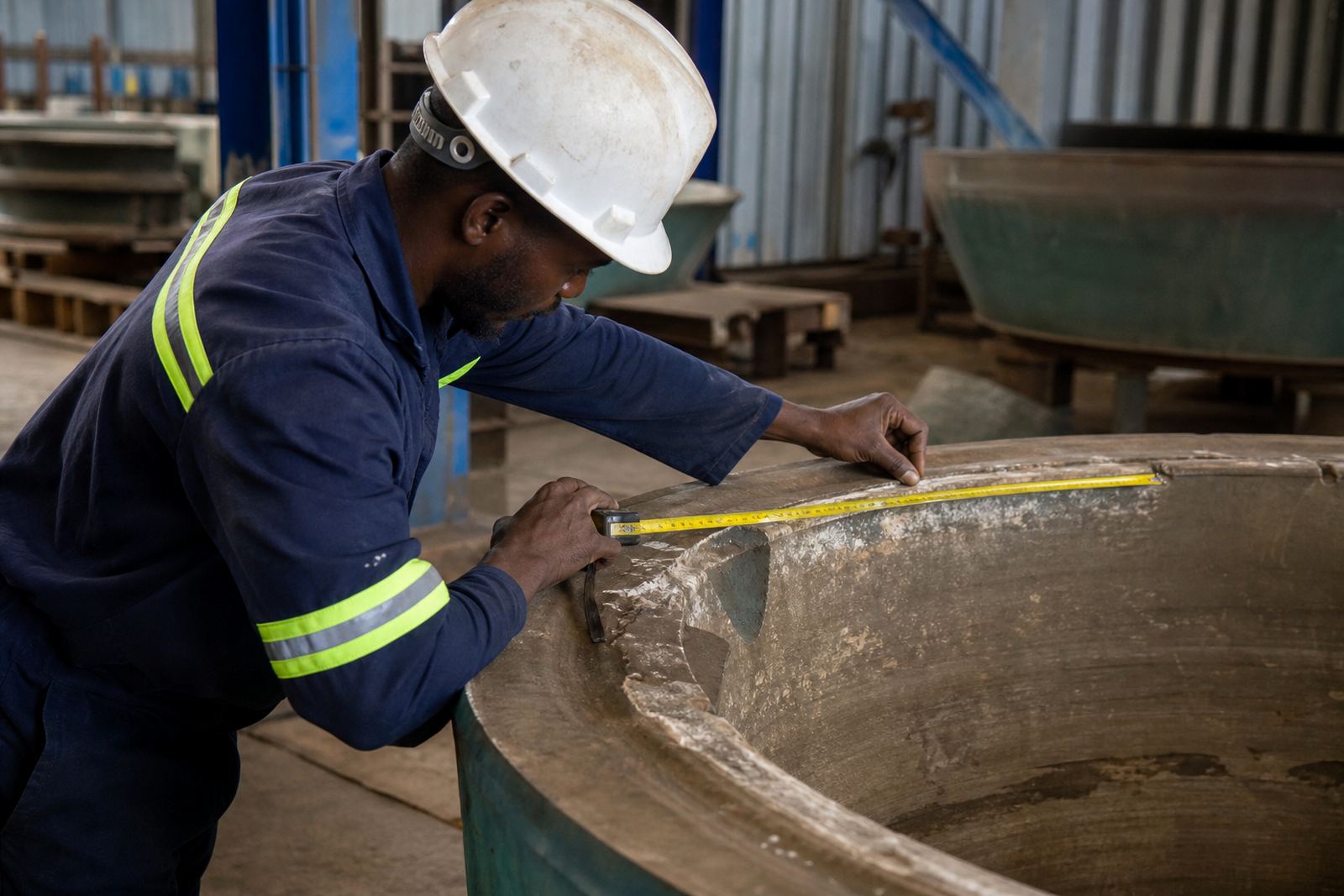
The best way to get value from a bowl liner is to inspect it regularly and replace it before the chamber becomes too flat or uneven. Look for visible scalloping, cracking, local hotspots, poor seating marks and wear that is not even around the chamber. If the liner is wearing far quicker on one side, there may be a feed issue, a chamber fill issue or a problem with the crusher setting. It is worth checking all three before the next fitment.
On busy sites, the wear pattern can change fast. A liner that looked fine two weeks ago may already be near the end of its useful life if the feed is highly abrasive or if the plant has had a hard run. That is why we suggest keeping replacement stock aligned with the maintenance cycle and not leaving it to chance. A spare bowl liner on site can prevent a long stoppage when the chamber starts to go off spec, and it gives the team time to plan the change rather than rush it at 2am.
- Check wear depth against the chamber profile, not just the outside edge
- Inspect seating surfaces before every fitment
- Keep record of run hours and product changes
- Replace liners in line with shutdown plans, not after failure
What to send with your order request
To avoid delays, send the crusher model, current liner dimensions, chamber profile, and any measurements taken from the worn part. If possible, include photos of the liner face, the back side, and the seating area. This helps confirm the correct part and reduces the chance of a mismatch. On older machines, it is also useful to note whether the chamber has been changed over time, because some sites have modified settings that are not obvious from the nameplate alone.
For freight, tell us the delivery point, gate rules, site contact process and whether the part needs to go with other items in the same load. If the mine is remote, or the road in is not friendly to a heavy truck, we will plan around it from the start. We also help with return freight planning where worn parts or packaging need to come back off site. That keeps the yard clear and avoids extra handling at the depot, which is one less thing for the team to worry about.
Clients reach us through the enquiry form on our contact page, and our Middelburg team handles the rest. Thabo Mokoena and the operations team work with sites that need practical support, steady communication and a clear delivery plan, whether the job is in Rustenburg, Steelpoort, Kathu or Johannesburg East.
Key facts
| Part type | Bowl liners for cone crushers |
|---|---|
| Function | Maintains chamber profile and supports controlled wear |
| Common use | Planned maintenance cycles and shutdown change-outs |
| Supply base | Middelburg, Mpumalanga |
| Freight area | Mpumalanga, Limpopo, Northern Cape, North West and Gauteng |
| Ordering details | Crusher model, chamber profile, dimensions, photos and delivery point |