What a toggle seat does in a jaw crusher
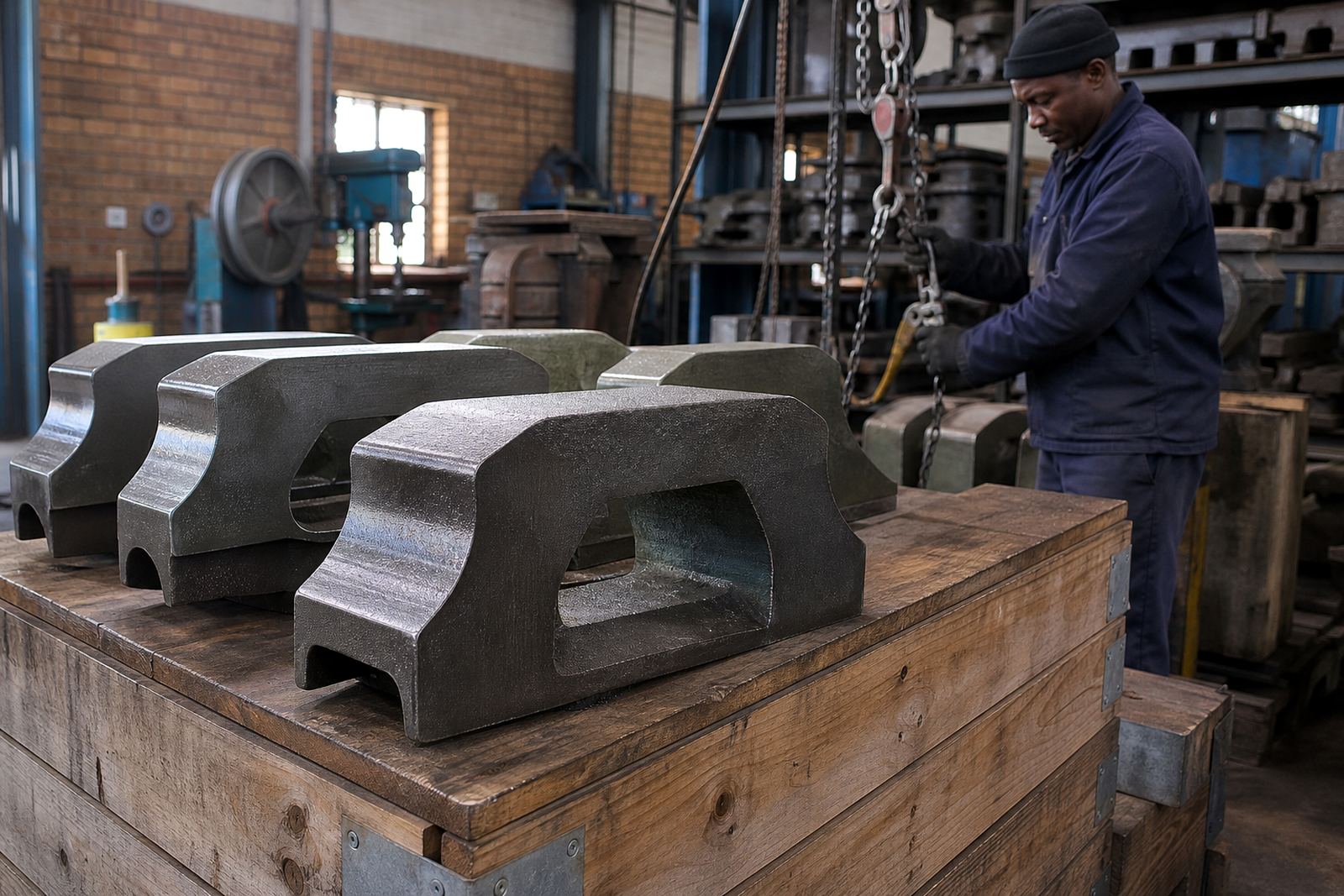
A toggle seat forms the bearing contact between the toggle plate arrangement and the crusher frame on many jaw crushers. Its job is simple but important: keep the contact area even, support the moving parts, and help the machine transfer crushing force without damaging the frame or setting surfaces. When the seat wears unevenly, crews start seeing poor alignment, extra vibration, noisy running, and faster wear on the matching parts.
For shutdown teams, a worn toggle seat is not a part to leave for later. Once the seating surface starts to dish, crack or gall, the crusher can lose proper support and the rest of the assembly takes the strain. On mines in Mpumalanga, Limpopo and the Northern Cape, that usually means more unscheduled work, longer changeouts and a bigger risk of heat build-up or metal debris in the housing.
Sizes, profiles and matching details
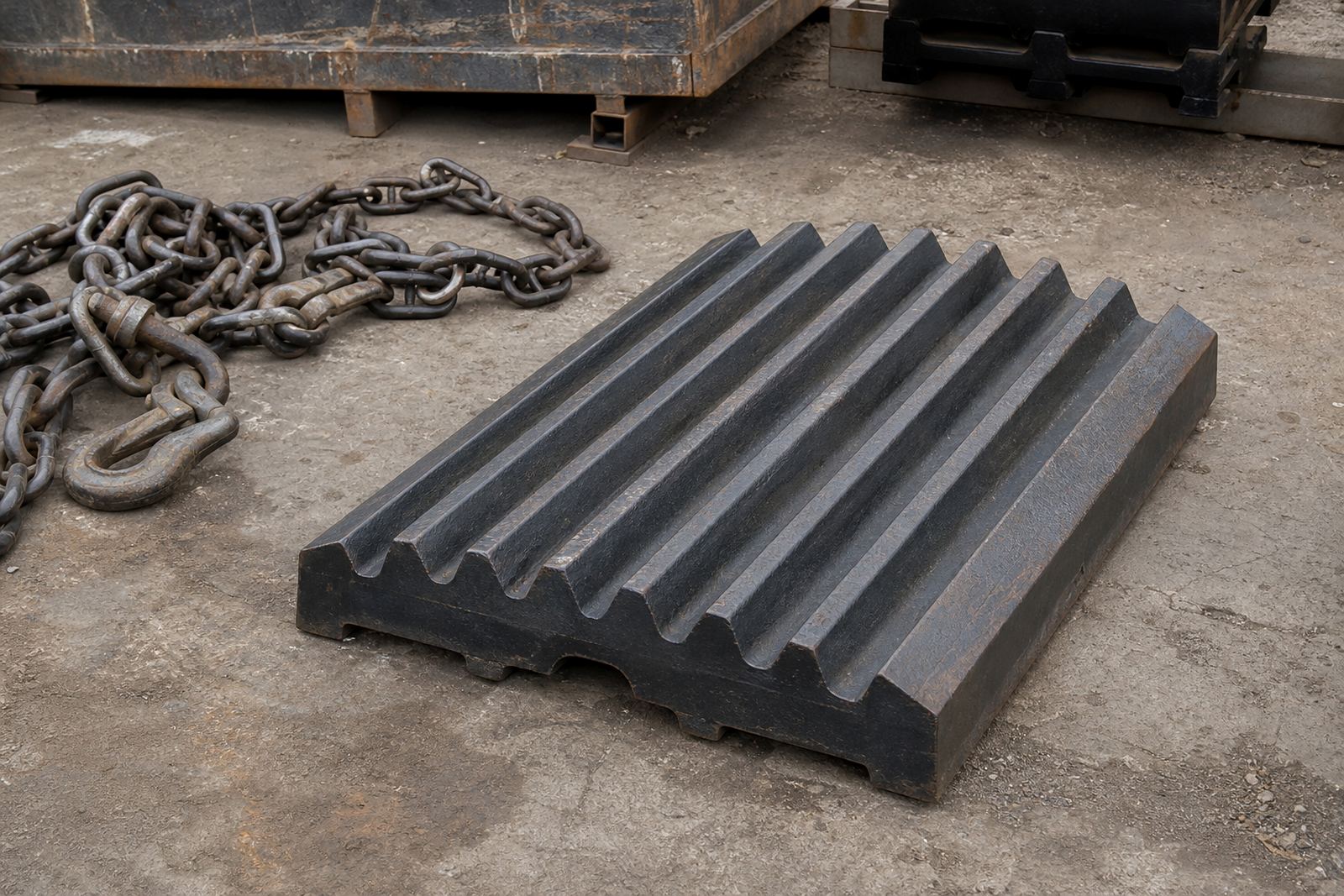
Toggle seats are supplied to suit the crusher make, model, jaw size and the exact toggle arrangement fitted to the machine. Some units use a plain seat profile, while others need a shaped contact face, a stepped edge or a specific thickness to match the original fit. We also check whether the machine uses a single toggle or double toggle setup, because the seating arrangement changes with the design.
- Common order details include seat length, width and overall thickness
- Contact face angle and profile need to match the toggle arrangement
- Mounting hole spacing or locating features may vary by model
- Some sites request matched pairs for both sides of the assembly
- Material can be selected to suit high-impact duty or heavier abrasive service
When ordering from stock, it helps to send the crusher model, serial number if available, and a photo of the old seat beside a tape measure. That saves back and forth and helps with fitment on remote mines where the window for spares delivery is short.
Where toggle seats are used on site
Toggle seats suit hard rock quarries, opencast coal work, chrome operations and smaller contract crushers that run under steady abrasive conditions. They are especially useful where the plant runs long shifts and the crew needs parts that can be changed during a planned shutdown, not after a failure. Sites around Rustenburg, Steelpoort, Burgersfort and Kathu often need parts that can reach them without waiting on multiple transport handovers.
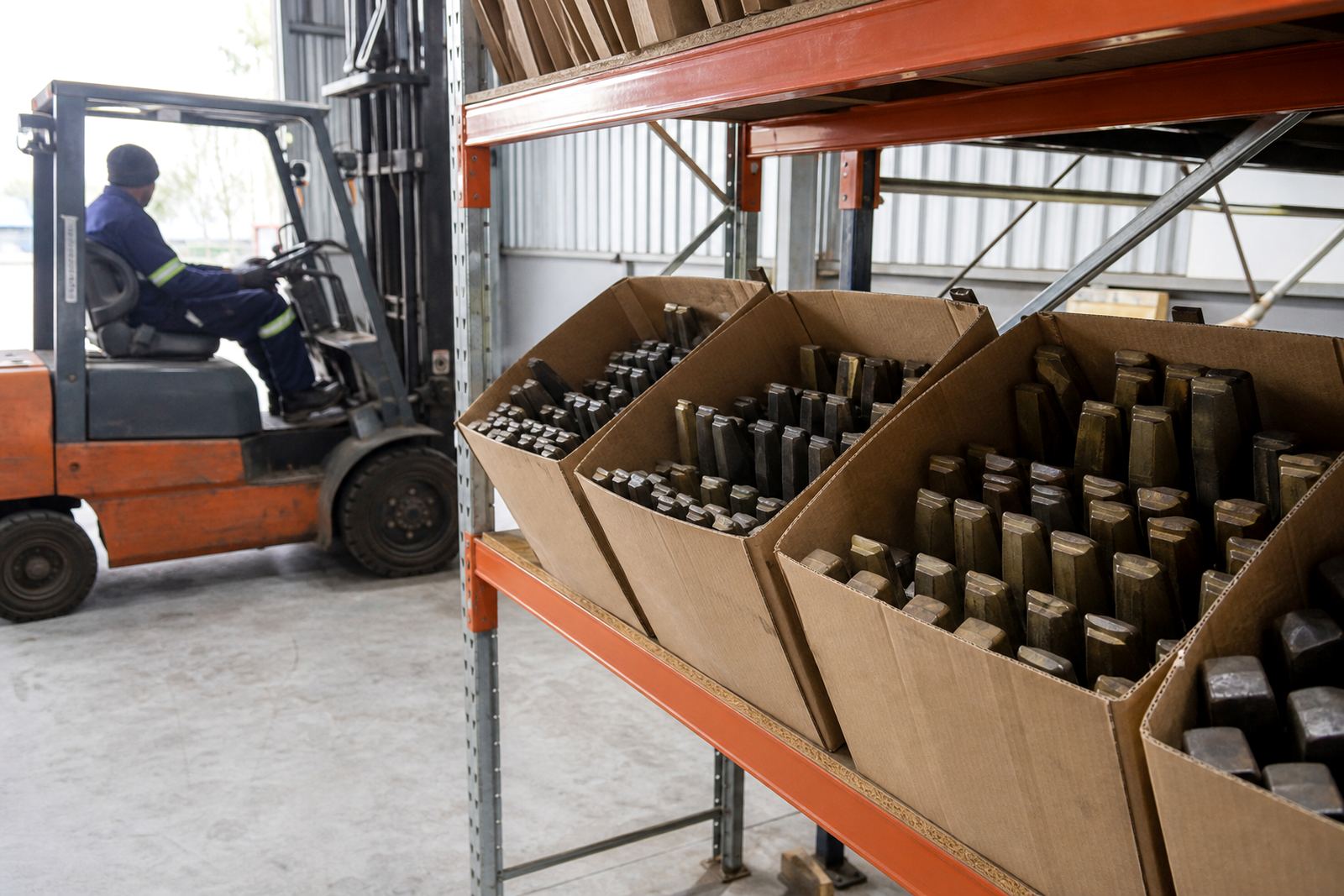
These parts are commonly ordered with jaw plates, liners, concaves or blow bars as part of a bundle for the same shutdown. That helps reduce freight costs and keeps the maintenance store better organised, which matters when the crew is working around dust, early starts and power interruptions. One missing wear part can hold up the whole team, even if the machine itself is ready to go.
- Jaw crushers in fixed plant and mobile setups
- Quarries processing aggregate, road stone and ballast
- Mining plants working in abrasive ore conditions
- Shutdown jobs where the toggle assembly is being stripped and checked
Installation notes and site requirements
Toggle seats do not need power or gas to install, but they do need the right lifting gear, hand tools and a clean work area. During fitment, the maintenance team should inspect the toggle plate, support points, housings and contact faces for scoring, cracks or heat damage. If a seat has worn badly, the mating part may also need attention before the crusher goes back into service.
On remote sites, we recommend planning installation during a proper shutdown window so the crew can clean out old grease, check alignment and re-torque all fasteners after the first run. In dusty inland areas, contamination from fines is a common issue. On coastal stockpiles, humidity can cause surface rust on stored parts if they are left open too long, so keep the new seat wrapped until it is needed.
- Confirm the crusher is isolated and locked out before work starts
- Check for flatness and correct seating before final assembly
- Use the correct fasteners and tightening sequence for the machine
- Inspect again after the first hours of operation
Care, storage and servicing between shutdowns
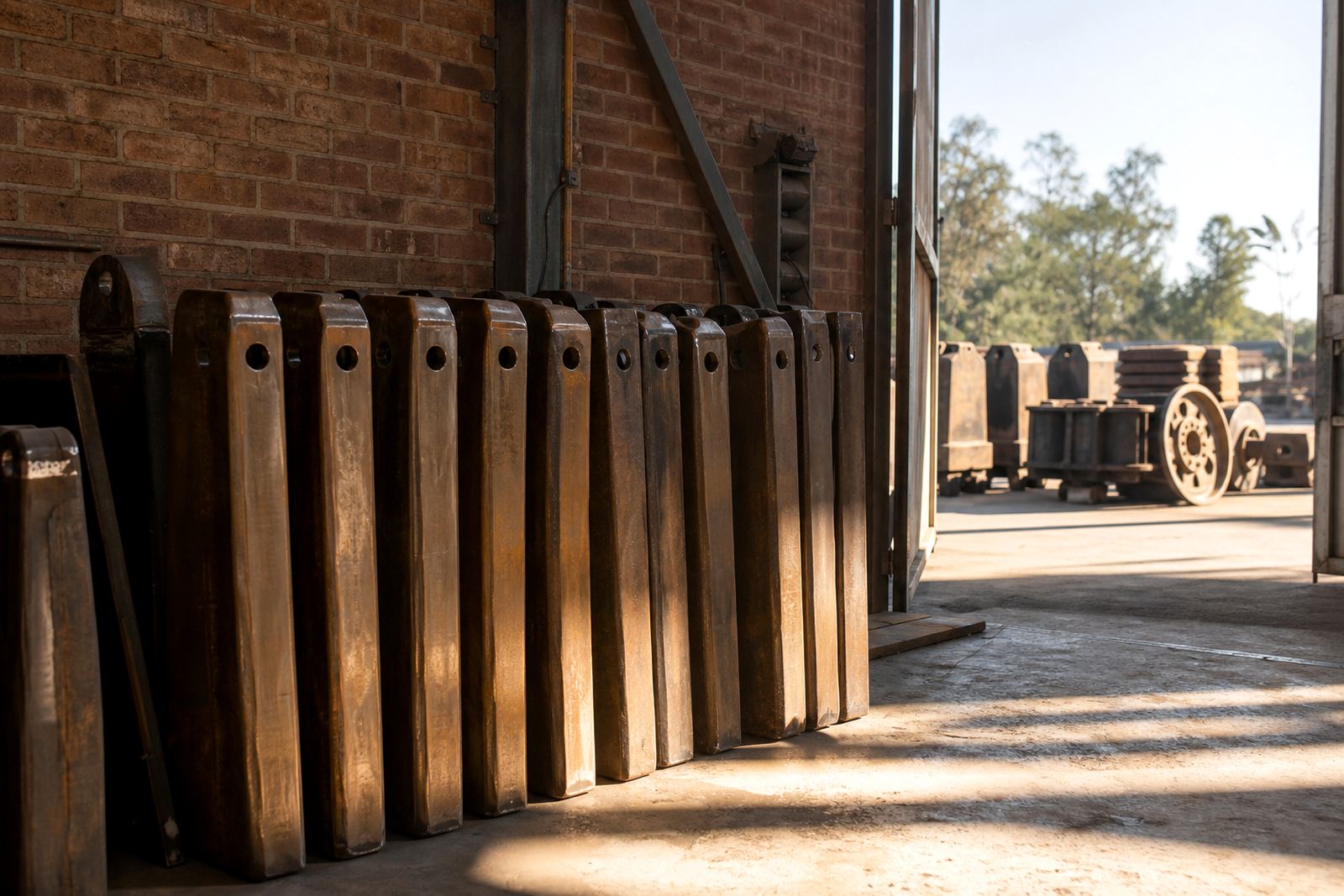
Toggle seats should be stored off the floor, in dry conditions and away from mud, wash water and direct handling damage. A light protective coating helps in coastal areas like Richards Bay routes or anywhere humidity is a problem. If the part has a machined face, avoid knocking it against other steel items in the yard, because small dents can affect how it beds in during the next shutdown.
During service intervals, maintenance teams should check for uneven wear, elongation of locating holes, cracked corners and any signs that the seat has moved under load. If the crusher has been running with unusual noise or vibration, check the whole toggle arrangement rather than only the visible wear face. That small extra check can save a second stoppage a week later, and it is worth the time.
What to confirm when placing an order
To avoid delay, send the crusher details and the old part information before dispatch. That is especially important for mines in Limpopo, Gauteng, North West and the Northern Cape where freight lead times and site access rules can change the delivery plan. A clear order also helps us consolidate with other wear parts where needed, so the truck arrives with the right pieces in one load.
- Crusher make and model
- Toggle arrangement, single or double
- Required dimensions and profile
- Whether you need one seat or a matching set
- Site name, delivery point and any access controls
- Shutdown date and preferred delivery window
Crusher Consumables Direct holds stock in Middelburg, Mpumalanga and arranges freight to remote mines and quarries across South Africa. Clients reach us through the enquiry form on our contact page, and our team can help with order support, consolidation and route planning for tight shutdown schedules.
Key facts
| Product | Toggle seats for jaw crusher toggle assemblies |
|---|---|
| Use | Replacement wear part for shutdown maintenance |
| Typical fit | Single toggle and double toggle jaw crushers |
| Sizes | Supplied to crusher model, drawing or sample part |
| Material | Wear resistant cast or machined steel, depending on application |
| Power or gas needed | None for the part itself |