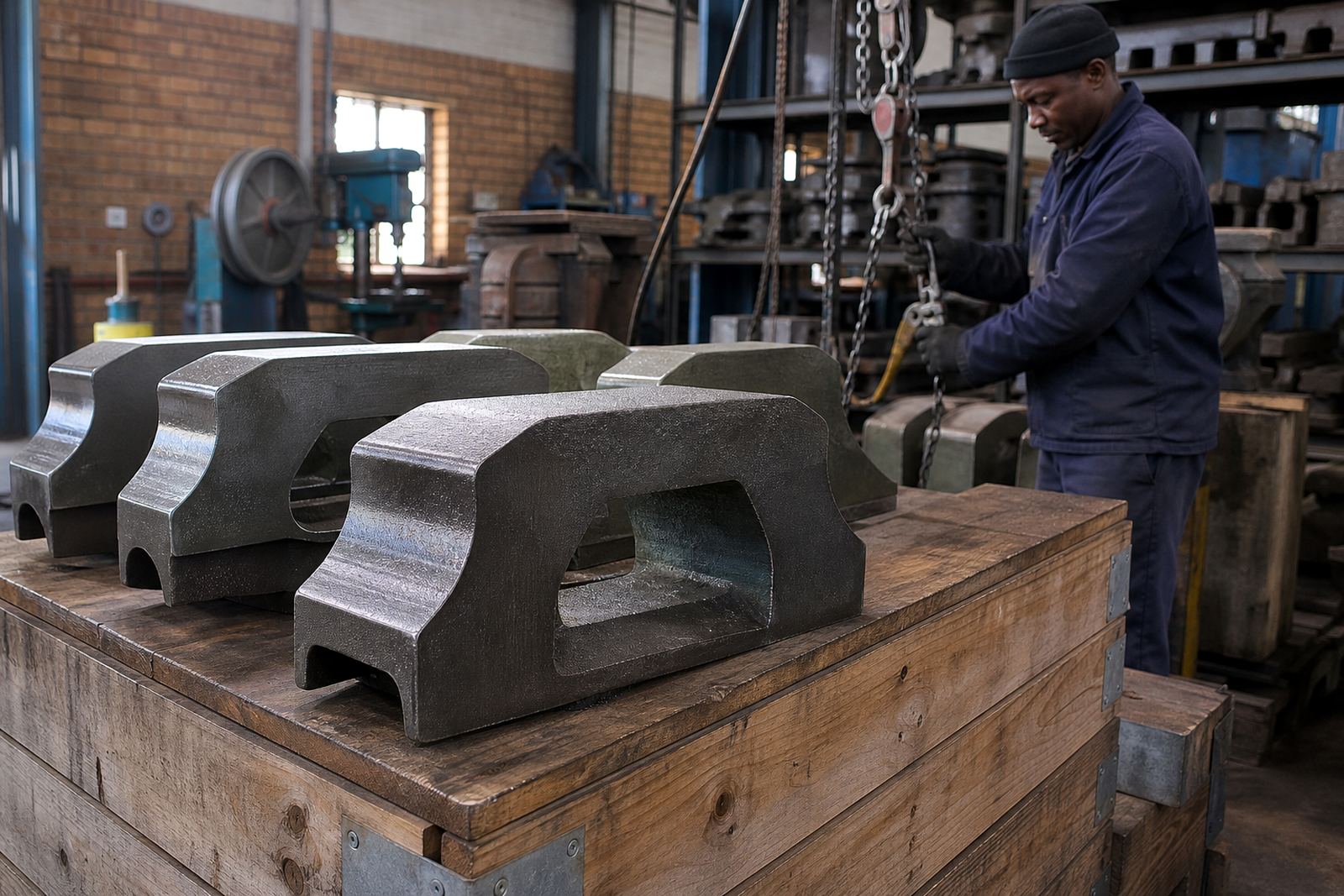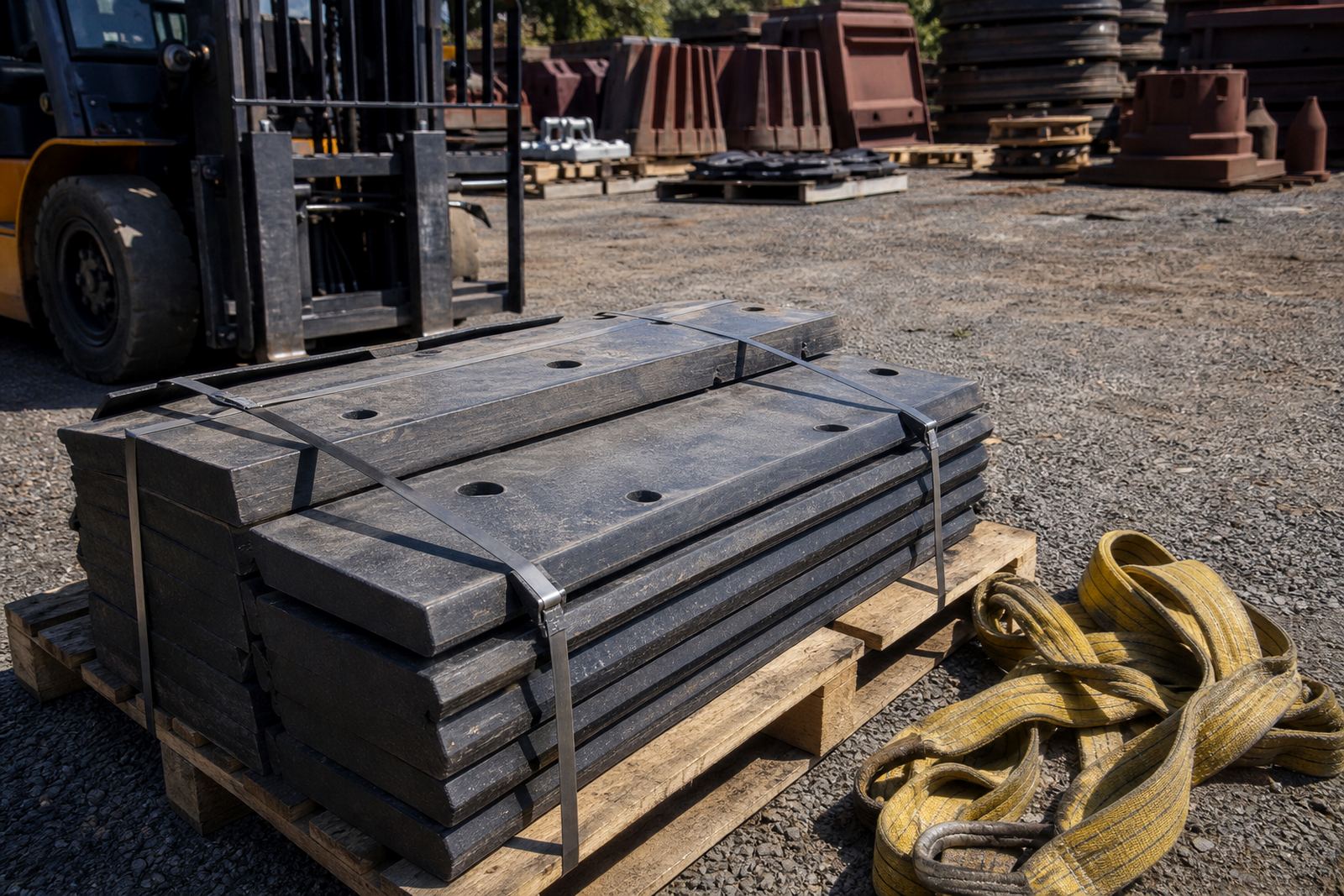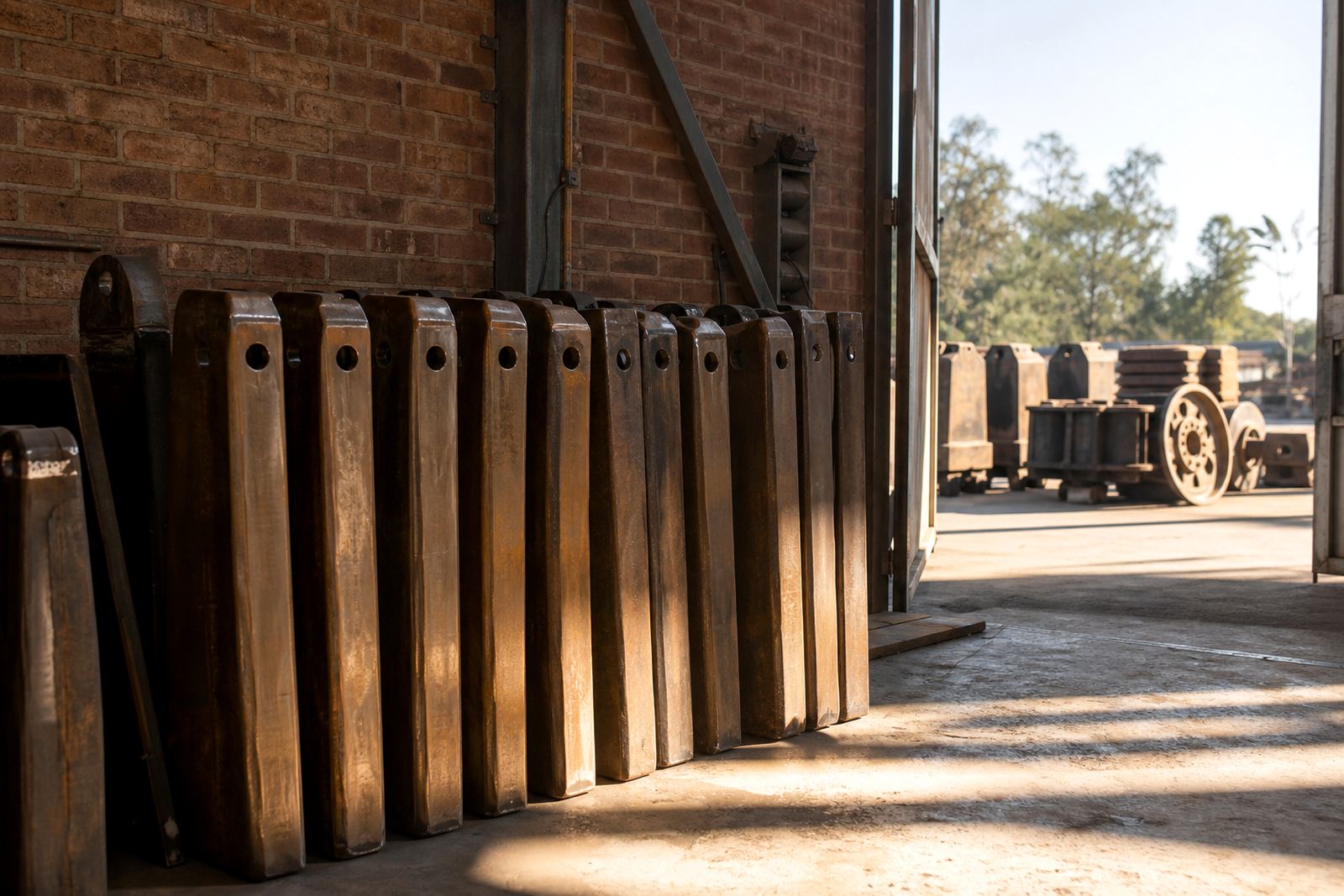

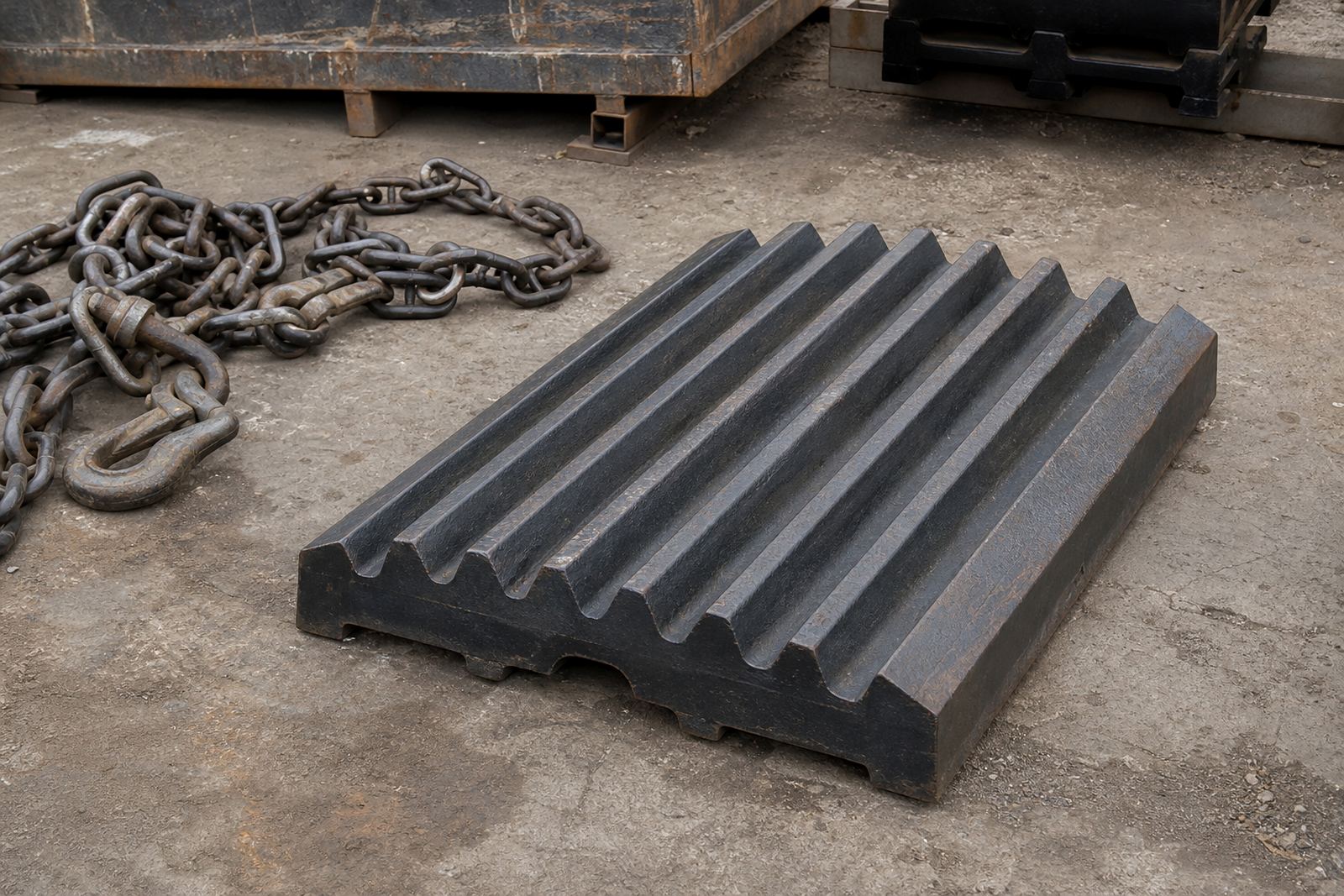
What fixed jaw plates do in a jaw crusher
The fixed jaw plate works with the swing jaw to crush feed down to a usable size. It stays in position against the crusher frame while the moving jaw presses material into it, so the face of the plate takes the wear day after day. On hard rock, competent ore and blasted quarry stone, the wear pattern often starts at the top and works down as the crusher runs, especially where the feed is coarse or uneven.
These plates are supplied as routine replacement wear parts for jaw crushers used in mining, quarrying and contractor work. They are not a one-size-fits-all item. The profile, thickness, profile angle and fixing arrangement must suit the machine and the application. In practice, that means a plate for a sand and stone quarry in Gauteng may not be the same as one used on abrasive ore in Limpopo or on a remote site in the Northern Cape.
We supply fixed jaw plates for scheduled change-outs, shutdown work and urgent replacements when a plate is cracked, worn too thin or has lost its grip on the feed. Keeping the right plate on hand helps avoid unnecessary stoppages and it also keeps the crusher drawing feed properly instead of fighting a poor crushing face.
Sizes, profiles and wear options
Fixed jaw plates come in different sizes, tooth patterns and wear grades depending on the crusher model and the material being processed. Some jobs call for a coarse profile that grips larger blasted rock, while others need a finer face for more consistent reduction. We can supply plates for single toggle and double toggle jaw crushers, as well as units used in fixed plant or mobile circuits.
The main selection points are the crusher opening, the plate length and height, the fixing bolt pattern, and the wear face required for the feed. Feed that contains high silica, clay pockets or recycled oversize will usually need a harder wearing option and tighter inspection intervals. If the crusher is running in dusty, hot conditions or near the coast, the plate and its fixings should also be checked for corrosion on the seating faces and bolts.
- Common sizes are matched to the crusher’s feed opening and jaw length
- Profiles can be smooth, corrugated or toothed depending on application
- Plates are supplied as matched sets where the crusher requires a fixed and moving face to work together
- Thickness and liner life should be matched to output target and feed abrasiveness
Where fixed jaw plates suit best
These plates are used wherever jaw crushers are breaking hard, abrasive or uneven feed. That includes quarry faces, primary crushing stations, mine rom pads, and contractor operations that move between sites. In Mpumalanga and Limpopo, the material can be tough and the shift pattern long, so plate life and stock availability matter just as much as the crusher itself. In the Northern Cape, long haul routes and remote site access make it even more important to plan wear part changes before the plate reaches the limit.
Fixed jaw plates suit operations that need stable reduction before cone, impact or screening stages. They are often ordered together with swing jaw plates, wedges and fixings to reduce downtime during a shutdown. If your site works through load-shedding or limited plant hours, it helps to have the plate on site before the change-out starts so the crew can finish the job in one visit. We also assist sites that need bundled part kits for planned maintenance windows or return freight planning after used parts come off the machine.
- Primary jaw crushing in mines and quarries
- Remote sites with limited parts storage
- Shutdown work where several wear parts are changed at once
- Sites handling hard rock, gravel, blasted stone or abrasive ore
Fitting, power needs and site requirements
Fixed jaw plates do not need special power or gas to operate as a product, but they must be fitted correctly to the crusher and torqued to the maker’s specification. Installation normally requires safe plant isolation, lifting gear, hand tools and a clean seating face. If the crusher is in a dusty area or the plant has been idle, the fitter should clear fines from the support surfaces before the new plate is installed. A poor seat can lead to movement, uneven wear or damage to the frame.
On some sites, the real challenge is access rather than installation. Remote mines can have long haul roads, rough ramps or weight limits on site access. That is why we plan freight with route conditions in mind and secure the load properly for travel over tar, gravel and uneven roads. For quarries near towns such as Middelburg, Witbank, Rustenburg or Johannesburg East, we can coordinate delivery to suit receiving hours and site rules.
Before fitting, the crew should confirm that the crusher chamber is clear, the liners are serviceable and the fasteners are correct for the plate being installed. Small mismatches between the plate and the fixing set can cause delays that are easy to avoid with proper pre-checks.
Care, servicing and wear checks
Good care starts with regular inspection. Measure wear at planned intervals and compare the remaining thickness against your replacement limit. If the face becomes too smooth, the crusher may start slipping feed instead of biting it cleanly. That can increase power draw, reduce throughput and put extra strain on the machine. Plates should also be checked for cracks around the fixing points, edge breakage and uneven wear across the face.
In coastal humidity, storage matters too. Keep fixed jaw plates off bare ground, protected from standing water and stacked so they do not damage each other. In dry areas like the Northern Cape, dust can get into the bolts and seating faces, so a clean store and regular inspection before installation is still important. On sites with heat, vibration and long operating hours, it pays to inspect the jaw plate at every planned service rather than waiting for a failure.
- Check remaining thickness against the wear limit set for your crusher
- Look for cracking, chipping and loose or damaged fixings
- Confirm even contact across the seating face
- Record wear patterns so the next order matches actual running conditions
What to check when ordering fixed jaw plates
When you order fixed jaw plates, the more detail you can give us the better the fit and the faster the dispatch. Start with the crusher make and model if available, then confirm the serial number, the feed opening size, the fixing arrangement and whether the machine uses a standard or non-standard jaw face. If the old plate is still on site, a photo of the back and the worn face helps with identification.
Also tell us what the crusher is processing. Hard rock, quartz-rich ore, blasted quarry stone and recycled material all wear differently. Feed size, moisture, clay content and running hours all matter. If the site is remote, let us know the delivery point, offload method and any gate or induction requirements so freight can be arranged properly. For mines in Phalaborwa, Burgersfort, Kathu, Rustenburg and other outlying areas, clear delivery notes save time and reduce the chance of a missed drop.
Crusher Consumables Direct is based in Middelburg, Mpumalanga and supports stock holding, order consolidation, urgent dispatch and remote mine freight across South Africa. Our team handles enquiries through the contact page and helps customers match the right wear part to the job, whether it is a planned shutdown or a plate that has reached the end of service. We keep the process practical and direct, because when a jaw crusher is down the whole site feels it.
Key facts
| Product type | Fixed jaw plate for jaw crushers |
|---|---|
| Function | Stationary wear face for primary crushing of hard rock and quarry feed |
| Common applications | Mines, quarries, contractor plants and remote crushing circuits |
| Options | Different profiles, thicknesses and fixing patterns to suit crusher model and duty |
| Installation needs | Mechanical fitment with lifting gear, hand tools and safe isolation |
| Supply area | Middelburg base with freight to Mpumalanga, Limpopo, the Northern Cape, North West and Gauteng |