Why abrasive feed wears parts faster than expected
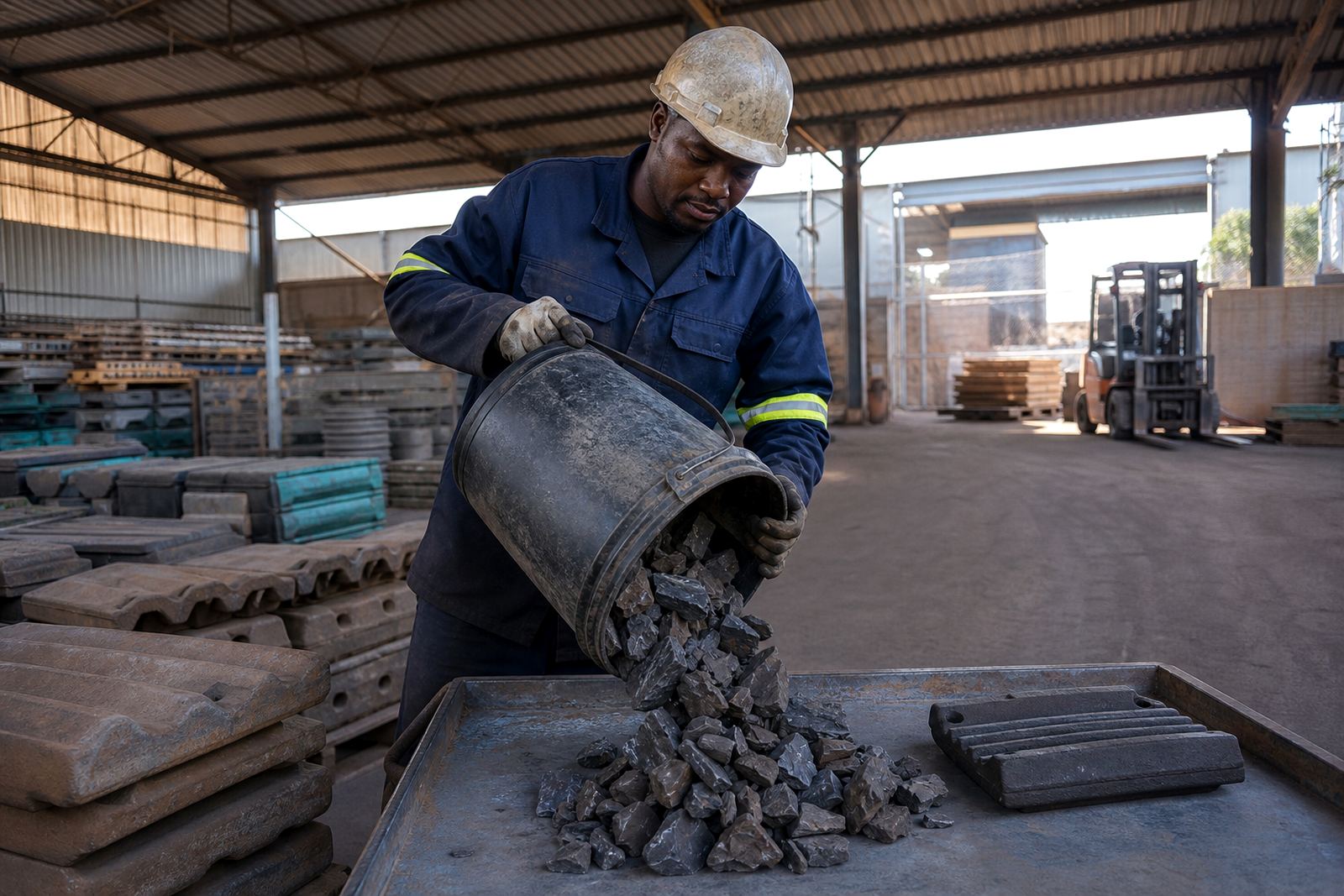
Abrasive feed is material that grinds rather than simply breaks. When fines, quartz-rich stone, hard ore or dirty feed moves through a crusher, it acts like sandpaper on jaw plates, mantles, concaves, blow bars and liners. The wear is not always obvious on day one. It starts as a change in profile, then the chamber opens up, product shape drifts and the machine begins using more power for the same tonnage.
In practice, abrasive feed affects more than the part itself. It changes the rate at which settings move, the amount of spillage around the plant and the timing of shutdowns. A site that runs mixed feed from a face in Middelburg and then switches to harder, dustier material from another pit can see the wear pattern shift within a single shift. That is why wear monitoring has to be tied to the feed, not just the calendar.
How different crusher types show the damage
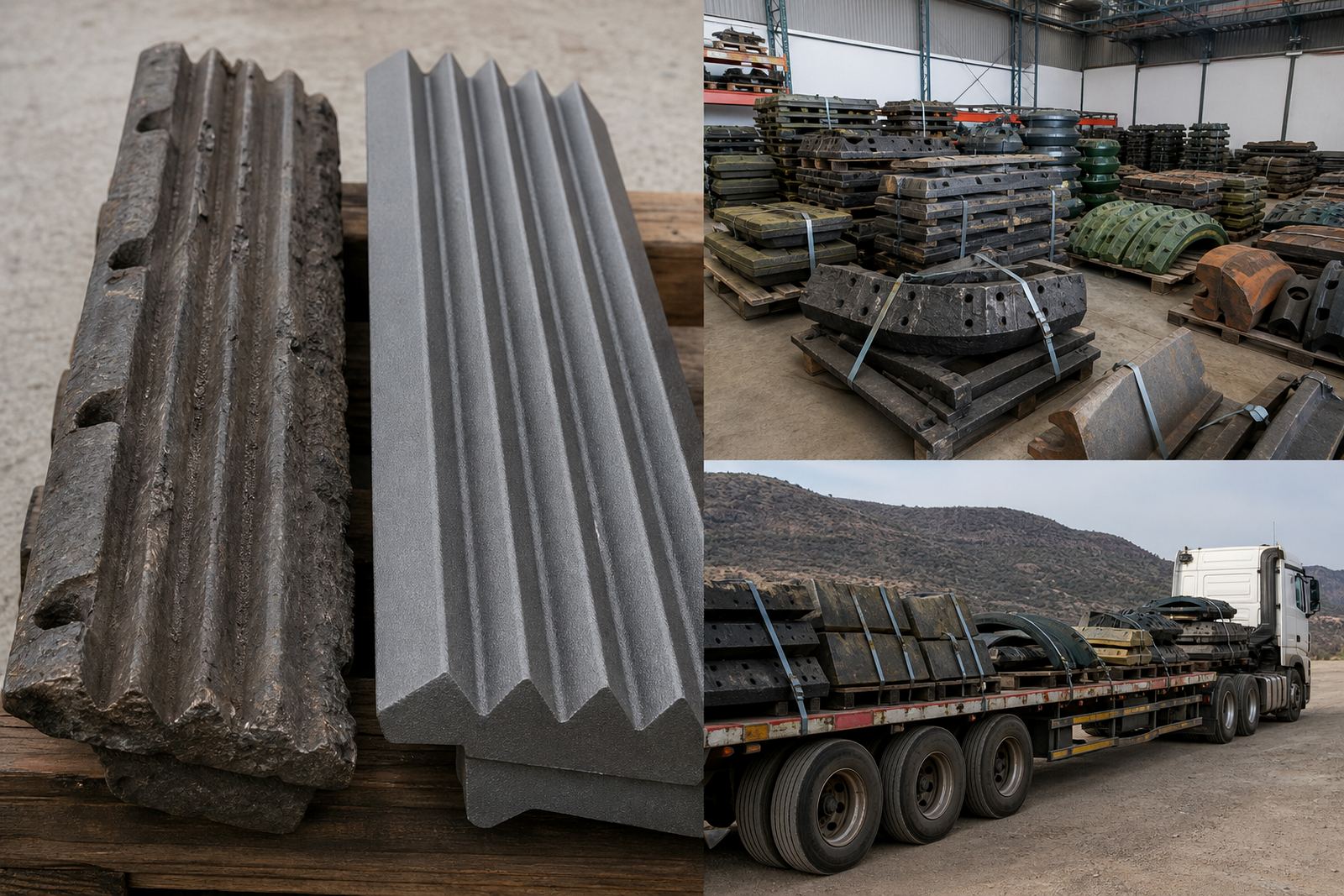
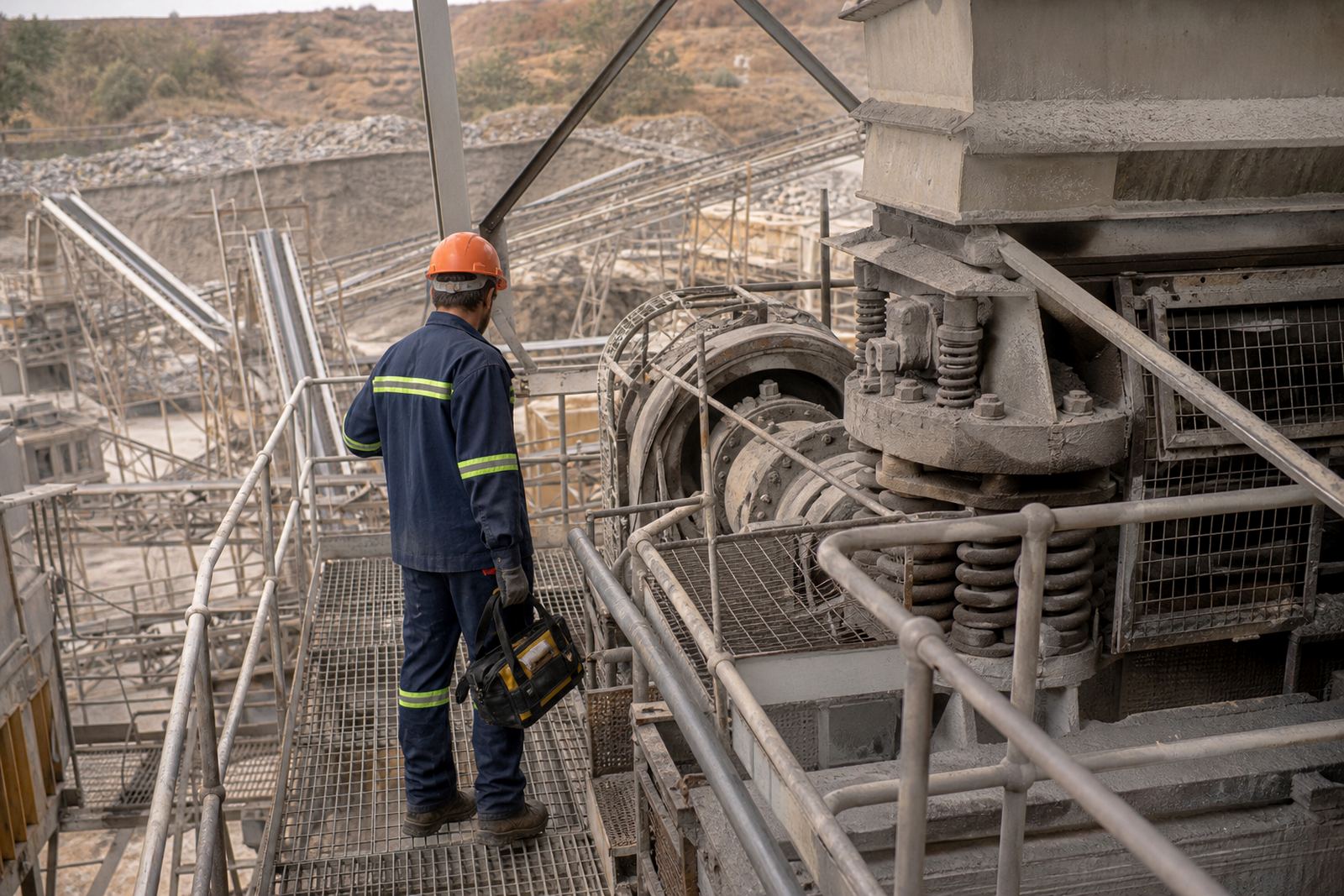
Different crushers show abrasive wear in different ways. Jaw crushers often lose the sharp edge on the jaw plates first, which reduces bite and slows the feed. Cone crushers usually show wear on the mantle and concaves, and the chamber can start producing more fines when the profile changes. Impact crushers can lose shape quickly on blow bars and side liners if the feed is highly abrasive or if tramp material gets in.
- Jaw crushers: watch the profile at the lower working edge and the setting trend.
- Cone crushers: check mantle and concave wear evenly around the chamber.
- Impact crushers: inspect blow bars, curtain settings and liner impact points.
- Transfer points: abrasive carryback can wear chutes, skirts and liners faster than expected.
When wear is uneven, the machine may still run, but the product is often less consistent. That can lead to more recirculating load, more dust and extra strain on screens and conveyors. It is easier to plan a change early than to wait for a sudden drop in output on a Friday afternoon.
What abrasive feed does to replacement planning
Replacement planning becomes more exact when the feed is abrasive. A part may last well on one ore body and much less time on another only 40 km away. This is common across remote operations in Mpumalanga, Limpopo and the Northern Cape where pits can change from cleaner rock to high-silica material or mixed face conditions. The same crusher setup can behave very differently from month to month.
Good planning starts with real wear data. Measure the liner profile, record tonnes processed, note feed changes and keep a simple log of shutdown intervals. Over time, this gives a clearer replacement window. It also helps with bundled part kits, because if a plant knows jaw plates, cheek liners and fasteners will likely move together, then the order can be grouped before the shutdown starts.
- Track wear by tonnes and feed type, not only by weeks in service.
- Keep a minimum holding level for fast-moving wear items on site or in transit.
- Match planned shutdowns with freight lead times to remote areas.
- Allow for extra changeout time when access roads, dust or rain affect delivery.
Remote sites need a different freight approach
Abrasive feed is one challenge. Getting the replacement part to a remote site on time is another. A mine near Kathu, a quarry outside Steelpoort or a plant in the Rustenburg area can all face the same issue, the part is needed sooner than a normal restock cycle allows. If the route is long, the road conditions are poor or the site has strict delivery rules, the freight plan must be set before the wear gets critical.
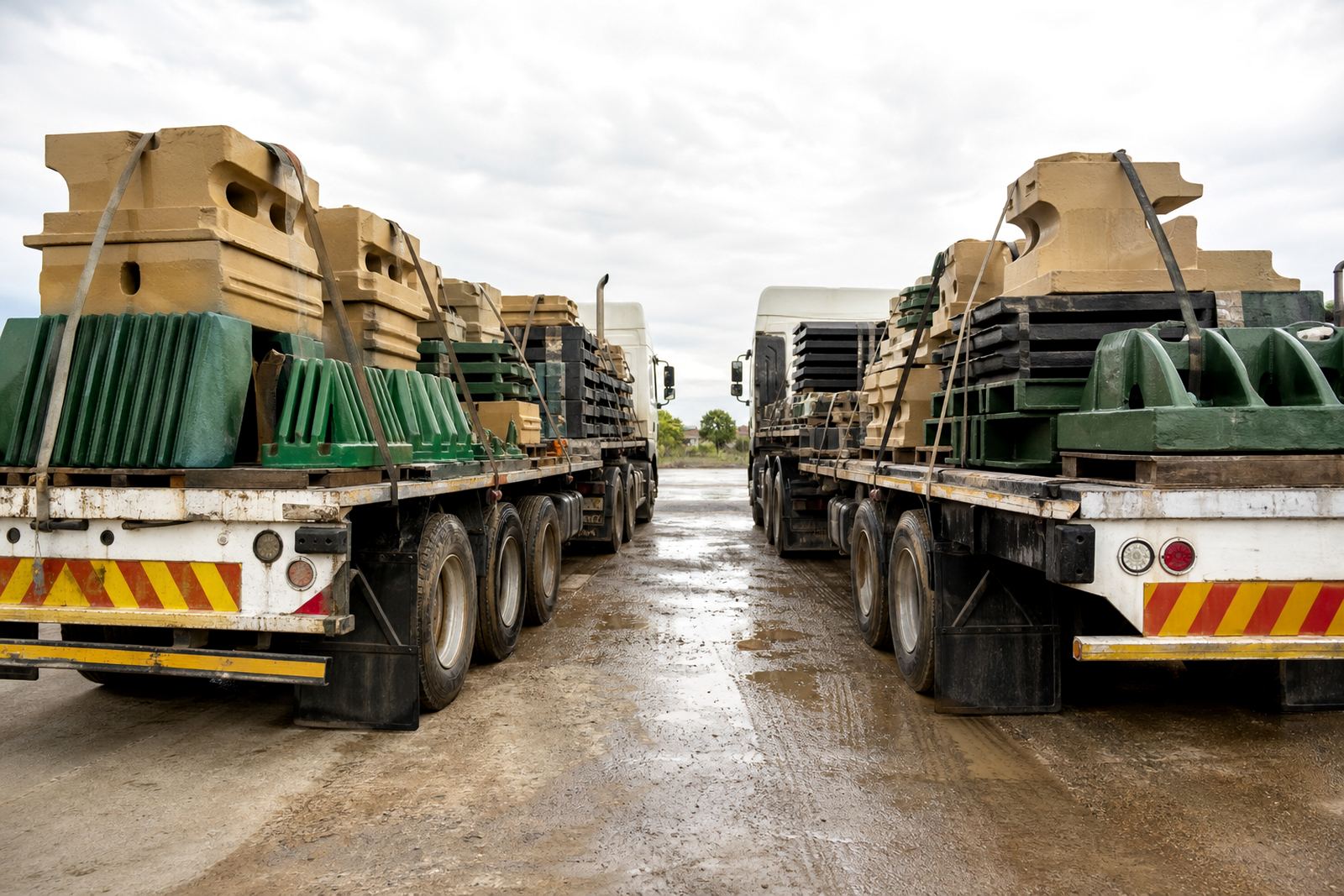
At our Middelburg base, stock holding and freight planning go together. Parts that move often are held ready for dispatch, and larger orders can be consolidated so the site receives what it needs in one trip rather than several small ones. This matters when load shedding affects dispatch timing, when roadworks delay transport or when a site only accepts deliveries during a narrow access window. One missed load can leave a crusher sitting idle and that is costly.
For operations in Limpopo and the Northern Cape, we also factor in route planning, load securing and return freight where required. If a used liner or worn set needs to come back for inspection, it helps to have that planned before the truck leaves. A bit of forward thinking can save a second trip and a lot of down time.
A practical example from hard rock work
Consider a quarry supplying aggregate into Gauteng with a feed that contains high quartz content and a fair amount of dust. The jaw crusher begins to lose profile faster than expected, but the machine is still making product so the wear is ignored. A few weeks later, the outgoing product is less uniform, the screen load increases and the operator has to run tighter settings to keep size under control. The wear part looked acceptable, but the chamber had already moved out of its ideal range.
In that kind of situation, early changeout and a stocked spare set would have been cheaper than waiting for the part to reach its limit. The real cost is not only the liner set. It is the extra labour, the fuel, the extra screen wear and the lost production during the unscheduled stop. This is why abrasive feed has to be included in replacement planning from the start, not after the first failure.
How Crusher Consumables Direct supports the plan
From Middelburg, we support remote mines and quarries across Mpumalanga, Limpopo, the Northern Cape, North West and Gauteng with stock holding and freight for crusher wear parts. That includes jaw plates, mantles, concaves, blow bars and liners, plus the practical support around order consolidation, shutdown planning and site delivery coordination. The aim is simple: get the right part to the right place before wear disrupts production.
Clients reach us through the enquiry form on our contact page, and from there we can work through what is needed, where it needs to go and when it must arrive. For abrasive feed, timing matters as much as the part itself. If the site is already seeing faster wear, it helps to plan early and keep the next changeout ready. That is often the difference between a controlled stop and a messy one.
- Stock holding for common wear items.
- Remote mine freight to outlying sites.
- Urgent part dispatch when wear moves faster than expected.
- Shutdown planning and bundled part kits for planned stops.