Why cheek plates matter more than many crews think
In a jaw crusher, cheek plates protect the sides of the chamber and help guide material through the crushing zone. When they start to wear unevenly, the feed path changes, fines can build up in the wrong places and the jaw plates may take impact where they should not. That extra stress shows up later as higher wear costs and more frequent stoppages.
At remote sites, it is easy to focus only on the main wear items because those are the parts everyone sees first. But cheek plates work alongside jaw plates, and the two should be checked together. If one side is wearing faster than the other, there is usually a reason in the feed, the setting or the way the crusher is being loaded.
What to look for during a quick inspection
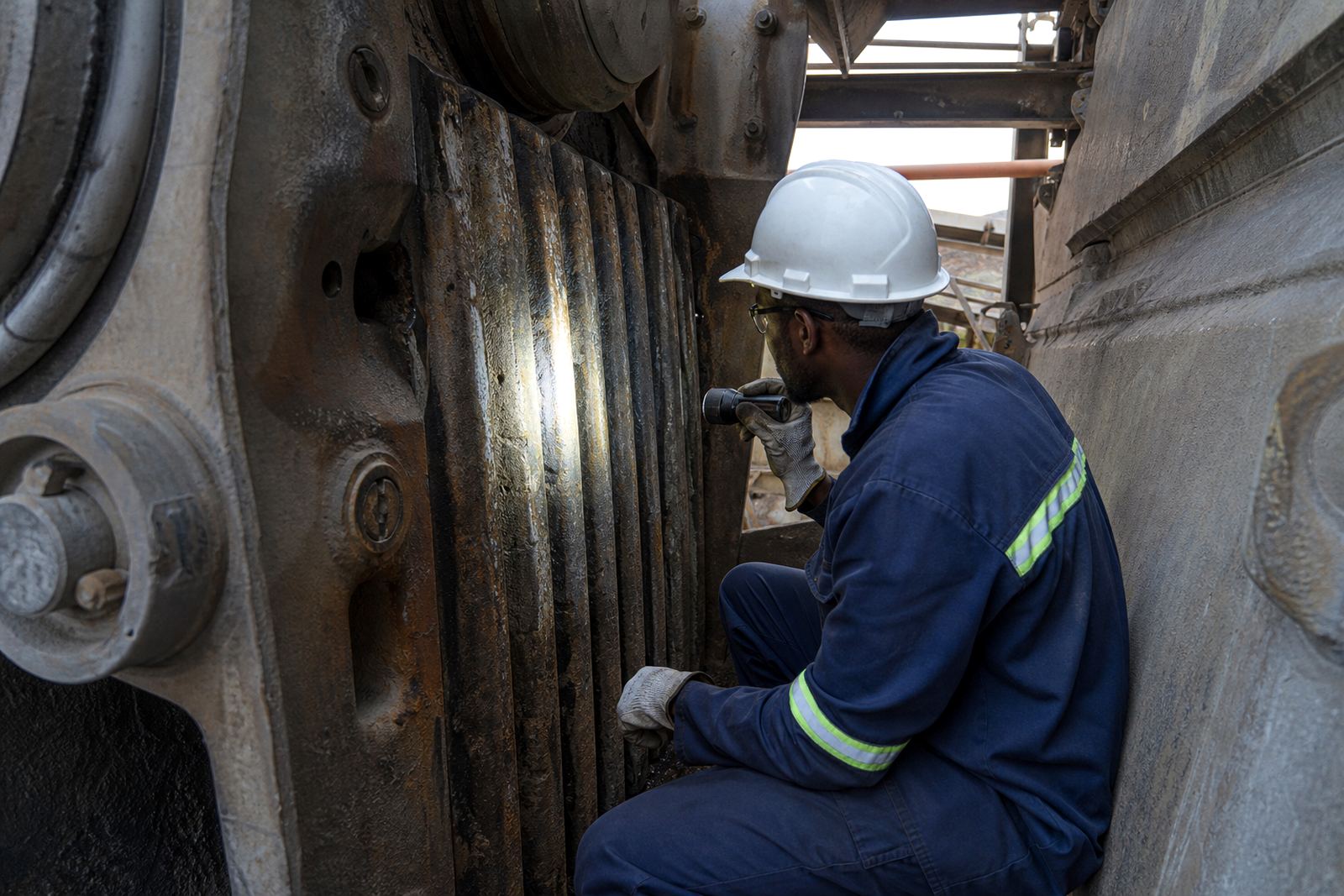
A proper check does not need a long shutdown. Start with the obvious signs, then move to the details. Look for thinning near the top of the plate, cracking around the bolt holes and any rubbing marks that suggest the plate is shifting. If the wear profile is uneven from left to right, the chamber may be taking a bad feed or the machine may not be level.
- Inspect both cheek plates at the same time, not one side only.
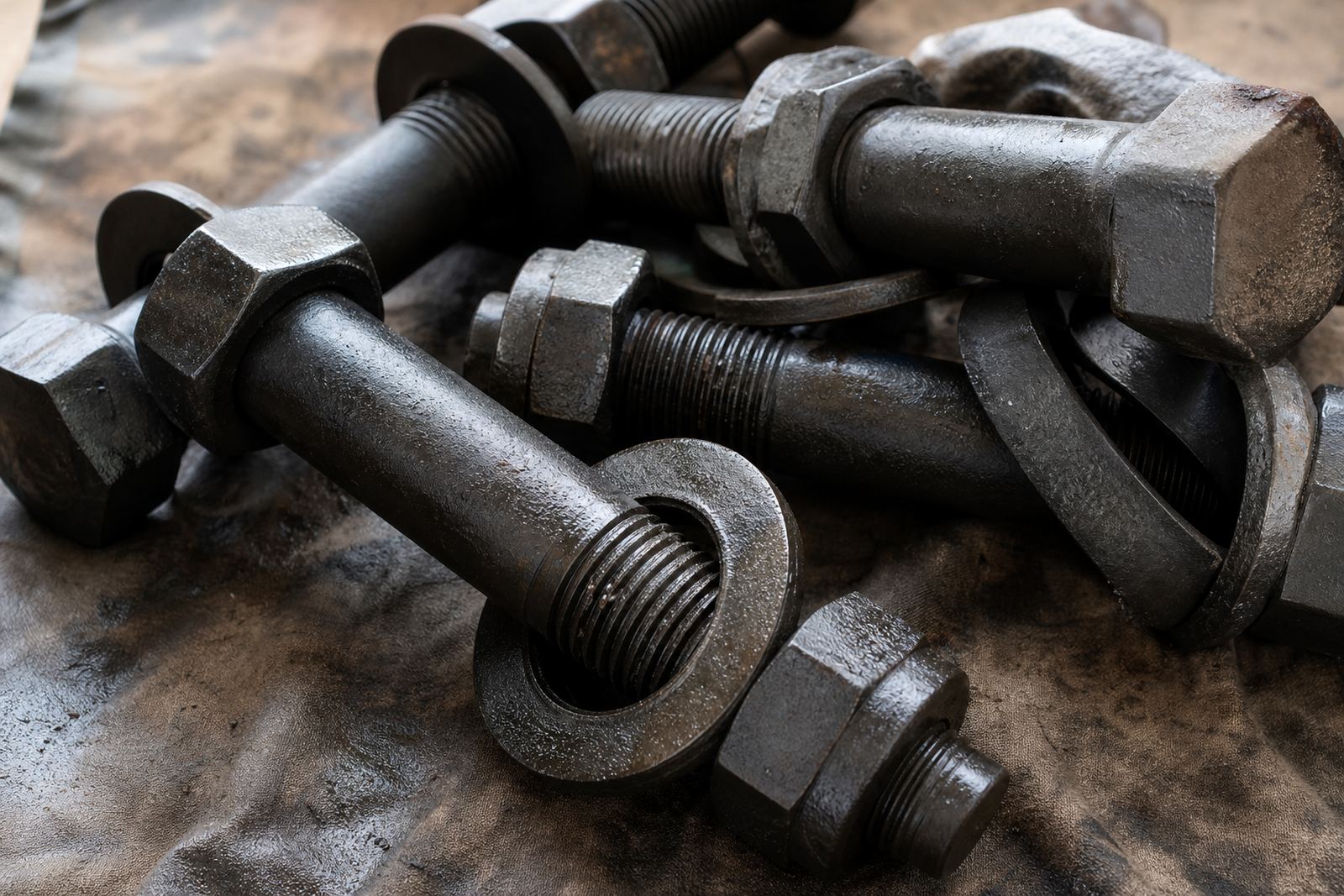
- Check bolt tightness and look for movement marks behind the plate.
- Measure wear at the same points every time so readings are comparable.
- Watch for material packing around the sides of the chamber.
- Note whether the jaw plate wear matches the cheek plate pattern.
On sites near Middelburg or Steelpoort, dusty conditions can hide early wear. In wetter coastal air you see more surface corrosion on stored parts, so a plate that looks acceptable from a distance may already have pitting or edge damage when you get close.
How cheek plate wear links to jaw plate wear
Cheek plates and jaw plates should wear in a controlled pattern. When the cheek plate loses material too fast, feed can drift into the side of the chamber and concentrate force on one part of the jaw face. That often leaves a stepped wear pattern, with one end of the jaw plate looking much more tired than the rest.
If you are seeing repeated jaw plate changes but the cheek plates are not being checked, the root cause can be missed. It may be a simple issue such as uneven feed, oversize rock entering too often, or a blocked chute causing material to fall off centre. It can also happen after a rushed restart where the chamber was not cleared properly after a stoppage.
Matching the wear between the two parts matters because it affects setting, throughput and product shape. A chamber that is not lined correctly may still run, but it will usually work harder than it should and give you a rougher service life. That is wasted money, especially when freight to remote mines takes planning and spare time is limited.
A practical checking routine for remote mines and quarries
For operations in Limpopo, the Northern Cape, North West and Gauteng, a simple routine works best. Build cheek plate checks into your normal inspection cycle so they happen before a shutdown becomes urgent. On smaller quarry plants, this may be weekly. On higher tonnage sites it may need to be done more often, especially after a hard feed day or a blockage event.
- Record the date, operating hours and setting when the inspection is done.
- Measure wear depth at the top, middle and lower section of each plate.
- Compare left and right side wear before deciding on replacement.
- Check the chamber for packing, blocked feed and uneven distribution.
- Confirm the next changeout set is already on hand before the plate reaches its limit.
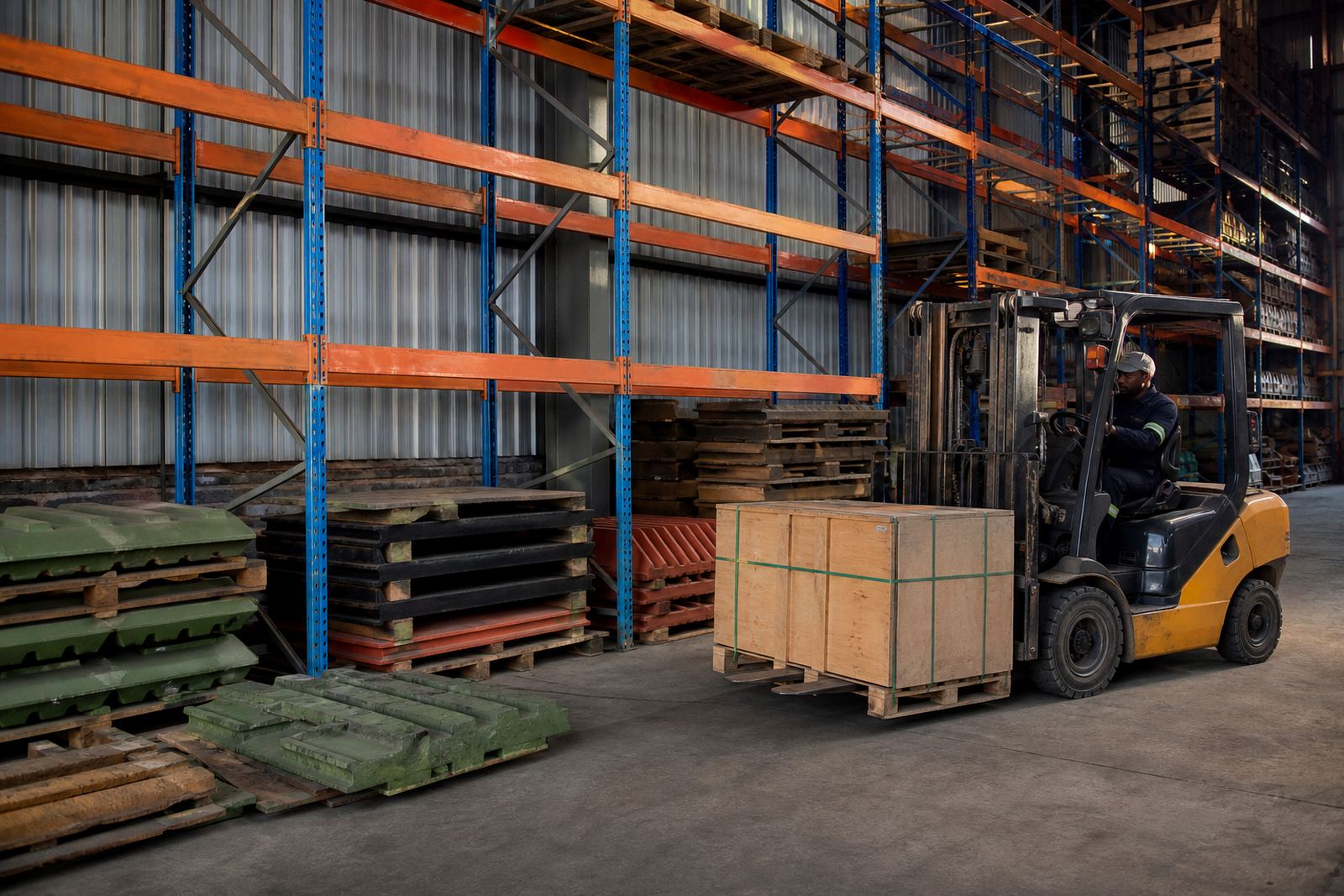
At a mine outside Kathu, a crew can lose half a shift if a plate is allowed to fail and the correct part is not on site. That is why stock holding and order consolidation make such a difference. One delivery can cover cheek plates, jaw plates, liners and other crusher wear parts for a planned stop, instead of sending parts separately and waiting on the road twice.
When to replace instead of keeping the plate in service
Not every worn cheek plate must be changed immediately, but there is a point where continued use becomes a false saving. If the plate is thin enough to expose the fixing area, if the bolt heads are beginning to sit proud, or if cracking is spreading from the corner, replacement should be moved forward. Once the plate starts to distort, it can affect adjacent wear parts as well.
Replacement should also be considered if you are chasing settings that no longer hold true. A worn cheek plate can make the chamber behave differently from one shift to the next. That is a sign the wear pattern has moved past normal service life.
Before the part comes out, make sure the team has the right lifting plan, load securing method and replacement set ready. On remote sites where access roads are long and weather can change quickly, the best time to order is before the part becomes a risk. Waiting until the last minute often means the crusher sits idle while everyone tries to solve the same problem at once.
Keeping a better record helps the next shutdown
Good records make cheek plate checks easier and more accurate. Write down what the plate looked like, where it wore fastest and what else was happening at the time. Was the feed mixed, was there a lot of fines, did the plant run through load-shedding with short restarts, or was the crusher fed more aggressively than usual. These details matter more than people think.
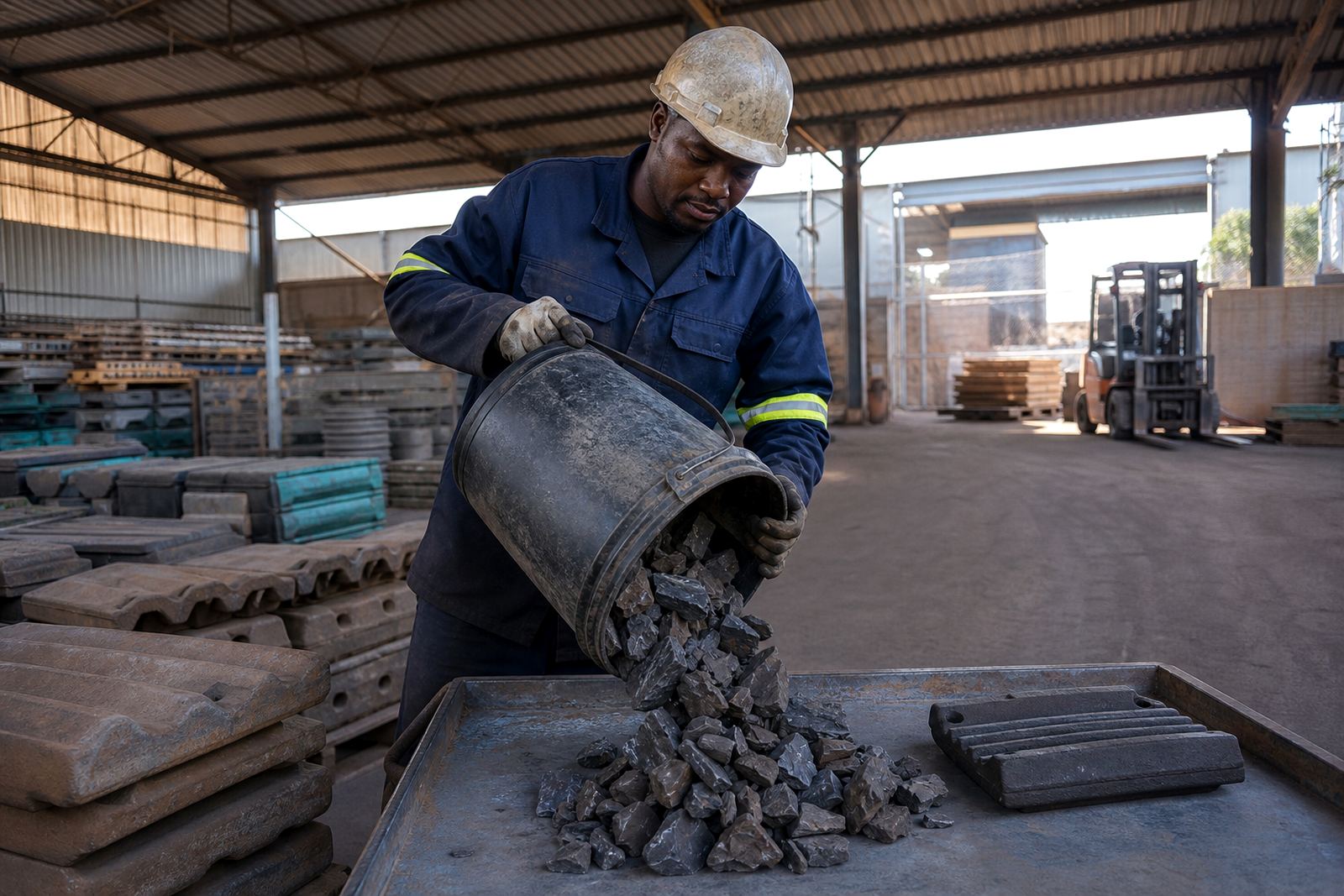
Over time, that record shows whether wear is following a normal pattern or being driven by a site issue. It also helps the procurement team decide when to bundle parts for the next freight run. A well planned order can include cheek plates, jaw plates, mantles, concaves, blow bars and liners where needed, so the site does not end up waiting on one missing item. That approach saves time and keeps the plant moving, even when the mine is far from the main routes.
Local support for checks, spares and freight timing
Crusher Consumables Direct is based in Middelburg, Mpumalanga and supports mines and quarries across South Africa with stock holding, remote mine freight and delivery coordination. That helps when a site in Phalaborwa, Rustenburg or Johannesburg East needs a replacement part without delay, or when a shutdown in Steelpoort has to be planned around limited access windows.
For cheek plate replacements, the practical issue is not just finding the part. It is getting the correct item dispatched, secured properly and routed to site in time for the stop. The right freight plan reduces the chance of missed windows and keeps the crusher ready for the next shift. It also gives your crew a better chance of handling the work once, instead of repeating the same job because the side wear was not checked early enough.