
Why the stock question matters on remote sites
For mines and quarries working in Mpumalanga, Limpopo, the Northern Cape, North West and Gauteng, the real issue is not only price per part. It is whether jaw plates, mantles, concaves, blow bars and liners are on hand when the machine needs them, especially when a haul road washes out or a delivery gets delayed by weather and traffic. A site in Middelburg may have better road access than a remote pit near Phalaborwa or Kathu, but even then the cost of waiting for a critical wear part can be higher than carrying stock.
Ordering only when required can suit low-usage sites, but it asks a lot of the transport plan. If the plant runs through load-shedding, or a shutdown window is short, there is little room for a late consignment or an incomplete order. That is why many operations now treat stock holding as a working buffer, not a luxury.
What stock holding actually gives a mine
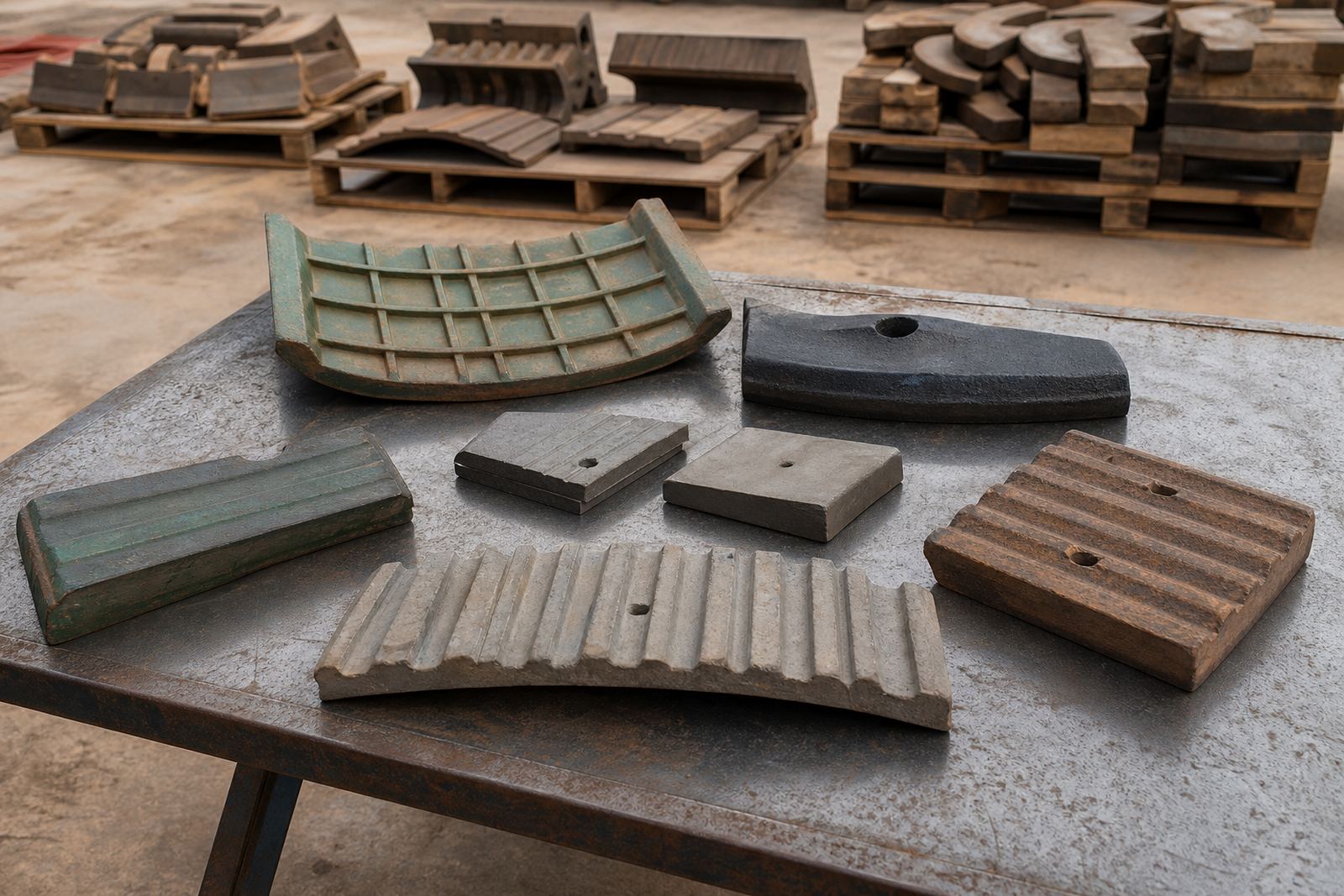
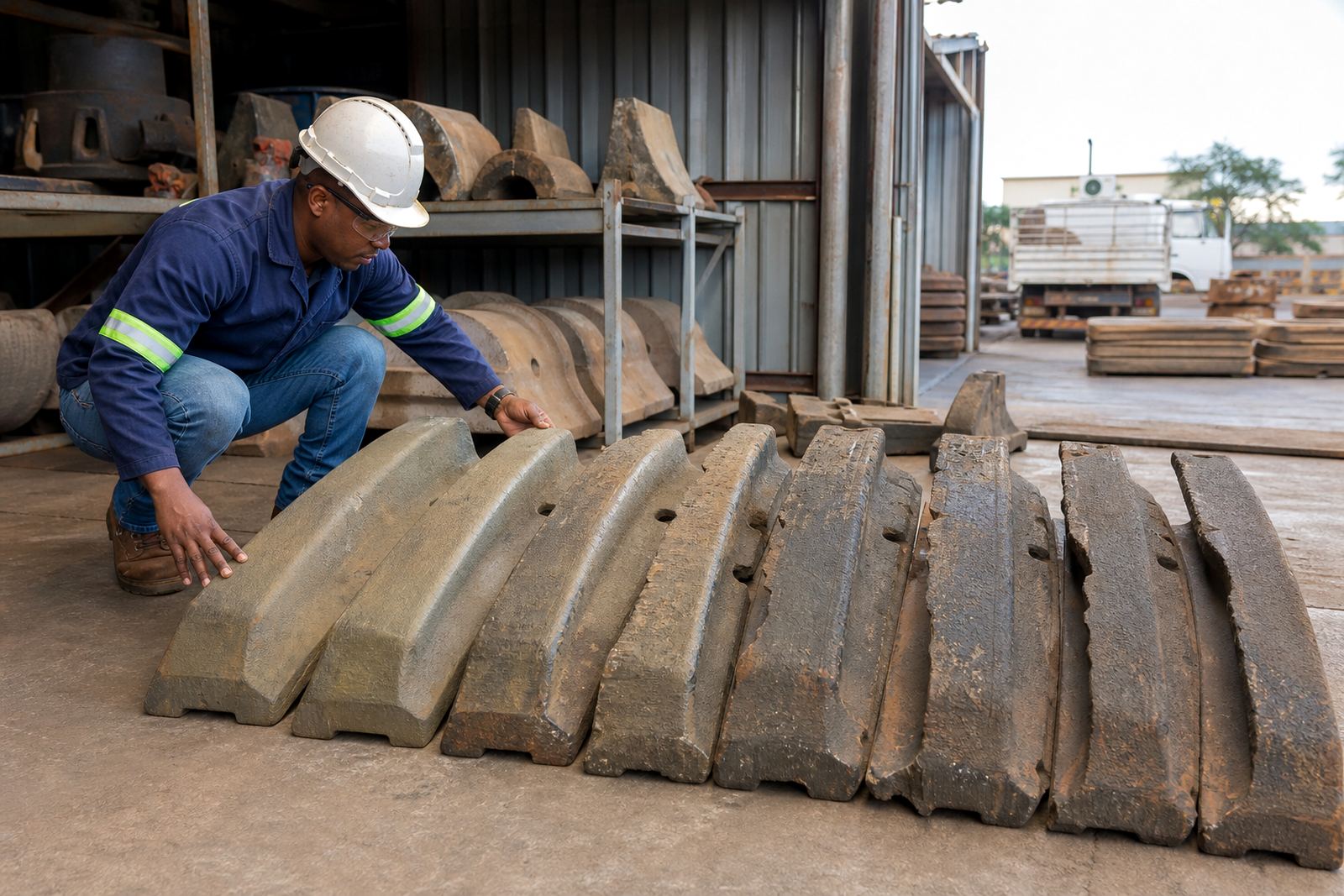
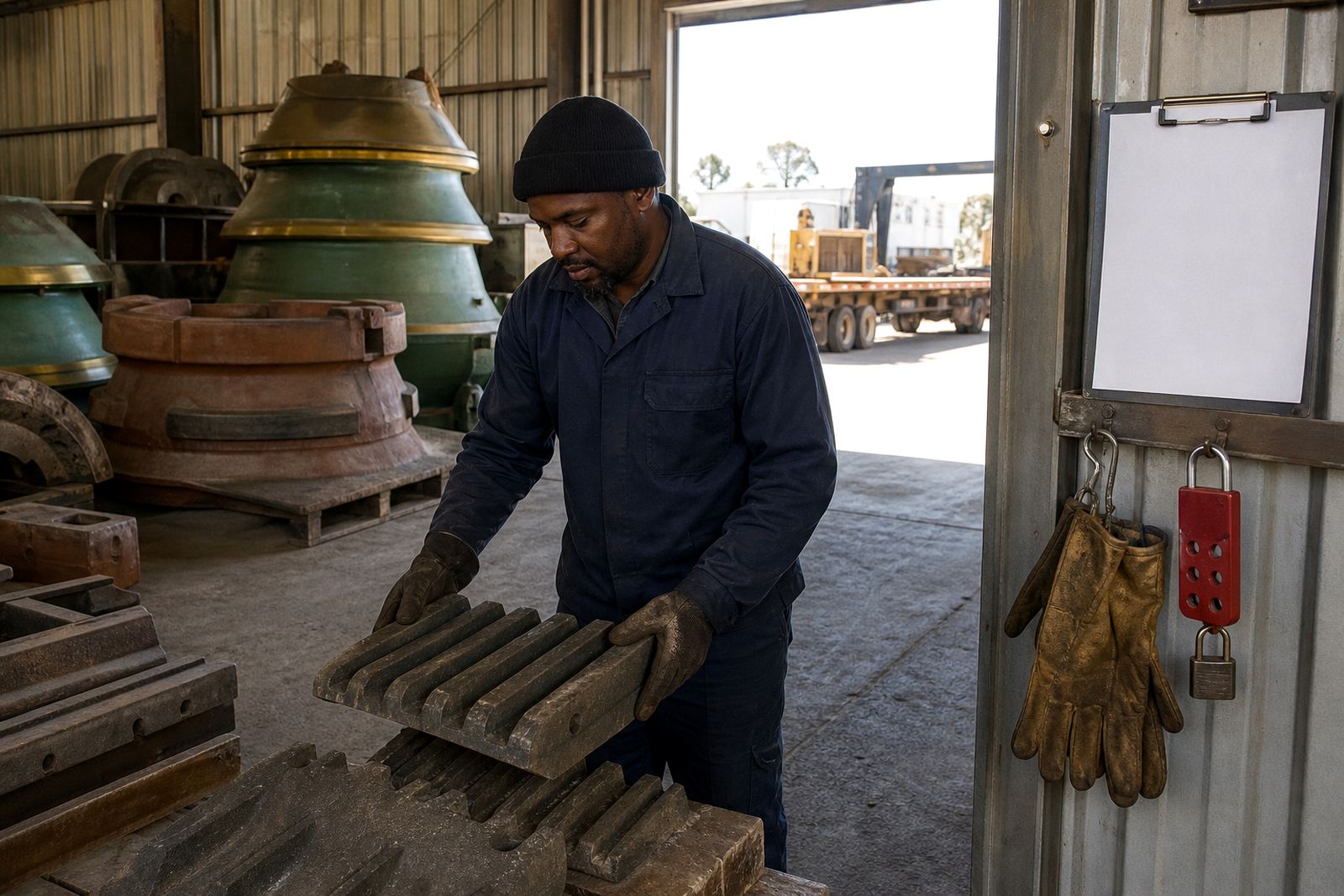
Keeping selected crusher wear parts on the shelf does more than shorten lead times. It gives the maintenance team time to plan labour, align spares with shutdown dates and avoid rushed fitment under pressure. It also helps when a crusher is processing hard, abrasive material and wear rates are not easy to predict from one month to the next.
- Faster response when a set of jaw plates or liners reaches change-out point
- Less risk of stoppage while waiting for freight from another province
- Better control over shutdown timing and site access arrangements
- More practical bundling of related parts into one delivery
In areas with long distances between service points, a stocked item can save a second trip. That matters on remote mine roads where freight must be secured well and delivered to the correct gate, with site approval in place before the vehicle arrives.
When ordering only when needed makes sense
Not every site needs every part on the shelf. Smaller quarries or low-throughput plants may prefer to order when wear is confirmed, especially where storage space is limited or the part mix changes often. This can keep holding costs down and reduce the chance of unused spares sitting for too long.
Ordering on demand can also suit operations with a steady supplier relationship and reliable site access. If the crusher is near a main route and freight can be booked with enough notice, the model can work well for non-critical items. The key is to know which parts are truly routine and which ones are likely to stop production if they are not available.
- Best for sites with stable lead times and predictable wear patterns
- Useful where storage area is tight or security is a concern
- Can work well for back-up parts that are not needed every cycle
The middle ground most operations use
In practice, many sites use a mixed approach. They hold the parts that are most likely to be needed first, then order less common items as required. This keeps cash tied up sensibly and still protects uptime. A well planned bundle of crusher wear parts can also reduce handling, because the team receives the matching items together instead of chasing one part at a time.
That approach is especially useful in South Africa where some mines are far from major freight hubs. A remote site outside Steelpoort may need frequent access to certain liner sets, while a quarry near Johannesburg East may only need urgent dispatch for the odd replacement. The mix should follow actual wear patterns, not guesswork.
- Hold high-turnover parts locally
- Order slower-moving parts against forecast wear
- Review the mix after each shutdown or crusher rebuild
Freight planning is part of the decision
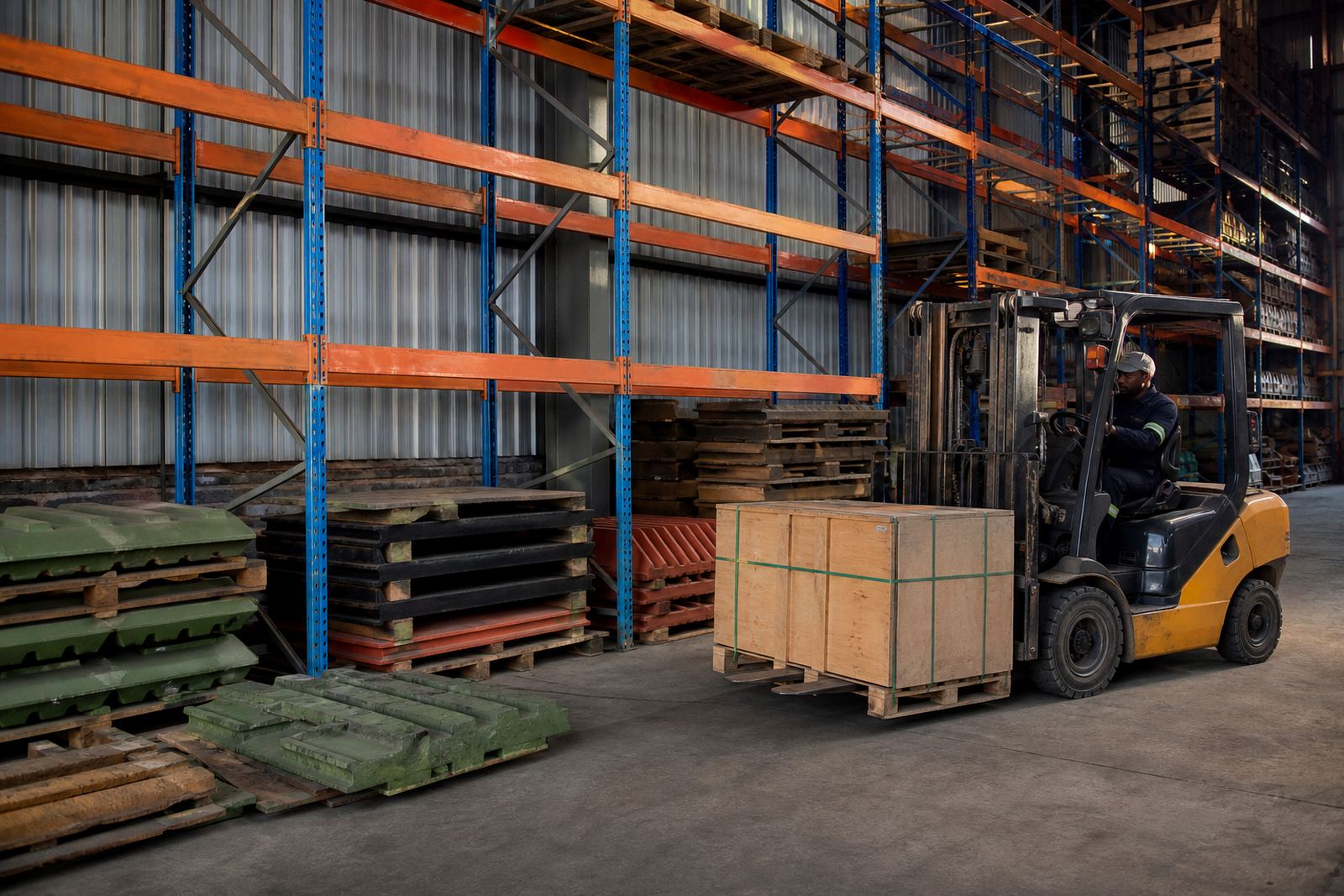
Stock holding only works if the freight side is managed properly. A part that is on the shelf but not prepared for dispatch is still a delay. Good route planning, load securing and order consolidation matter just as much as the item itself. That is why many mine teams look at the full process, from procurement through to site delivery coordination.
For remote mines and quarries, return freight planning can also be useful when worn-out parts must come back for inspection or recycling. On the road to Kathu or across the Northern Cape, a single well arranged load is often better than several small trips. It keeps transport costs clearer and reduces the chance of mix-ups at site.
If a plant is planning a shutdown, the best time to confirm stock is before the work starts not after the first set of bolts has already been removed. That small step can spare a lot of pressure later.
A Middelburg example from the coal and quarry belt
Consider a plant based near Middelburg, with regular freight going into Mpumalanga and Limpopo and an occasional run into North West. The site may choose to keep the most commonly changed wear parts in local stock, while ordering the heavier or slower-moving items ahead of scheduled maintenance. That way, the team can respond quickly if a chamber wears sooner than expected, but still avoid overbuying parts that are not due for months.
This kind of arrangement suits operations that deal with mixed road conditions, municipal timing rules at access points, and the sort of weather that can slow a delivery without warning. It also gives the maintenance team more certainty when planning labour and shutdown hours. A little forethought here saves a lot of scrambling later.
A practical way to decide what belongs on the shelf
The simplest way to choose between stock and ordering is to look at four things: frequency of use, lead time, storage space and the cost of downtime. If a part is used often, has a long lead time or would stop production if missing, it usually belongs in stock. If it is used rarely and can be ordered with enough notice, it may be better to buy only when needed.
- List every crusher wear part by usage rate
- Mark the items that stop the plant if unavailable
- Check freight time to your site in wet and dry seasons
- Review the list after every shutdown and major wear cycle
For remote mines, the best answer is rarely all stock or all ordering. It is a controlled mix that suits the site, the road and the machine. When that balance is right, the plant has the parts it needs without carrying unnecessary risk.