What uneven concave wear is telling you
Concaves should wear in a fairly even pattern across the chamber, with the wear face reflecting the way material is moving through the machine. When one side is polished harder, the top section stays thick while the lower section thins too quickly, or the profile looks stepped instead of even, the chamber is usually telling you something about feed or loading.
In practice, uneven wear normally points to an issue before it points to a faulty part. It can mean the crusher is being fed off centre, the feed size is too variable, or the chamber is running with pockets of material rather than a steady bed. On hard rock sites, especially where load shedding can interrupt plant rhythm, that pattern becomes even more obvious after repeated start stops.
Feed conditions that commonly drive uneven wear
Most concave wear patterns start at the feed end. If fines are low and large lumps are entering with little buffering material, the chamber takes impact in one area. If the feed chute is misaligned, the material may strike one side of the chamber more heavily. Wet feed can also bridge, then release in a surge that overloads part of the chamber and leaves the rest underused.
- Feed entering off centre from a worn chute or poor transfer point
- Large size variation in the feed stream
- Too much fines, or too little fines, in the mix
- Surging from inconsistent feeder settings
- Moisture causing build-up, then sudden release
At a quarry outside Rustenburg, for example, one concave set showed heavy wear on the drive side while the opposite side remained sharp. The issue was not the wear part itself, but a transfer point that was dropping material slightly to one side after maintenance. Once the chute was realigned, the next set wore far more evenly and chamber setting control improved.
How chamber loading affects the wear face
Concave wear is closely linked to how the chamber is loaded. A chamber that runs too empty allows material to hit the wear face directly, which often creates deep local wear marks and a harsh profile. A chamber that is overloaded can pack material too tightly, reducing movement and causing the lower sections to wear in a different way from the upper sections.
Even loading is the goal. The feed should build a consistent rock bed that cushions the chamber and keeps pressure spread across the wear surface. When loading is uneven, the machine may still produce tonnage, but it usually does so at the cost of shape, power draw and liner life. It is a bit of a slow leak, not a single failure point.
- Check whether the chamber is filling evenly across the width
- Watch for power draw swings during feed changes
- Look for material hanging on one side of the chamber
- Inspect the wear face for polishing, grooving or step wear
What to check before you order another set
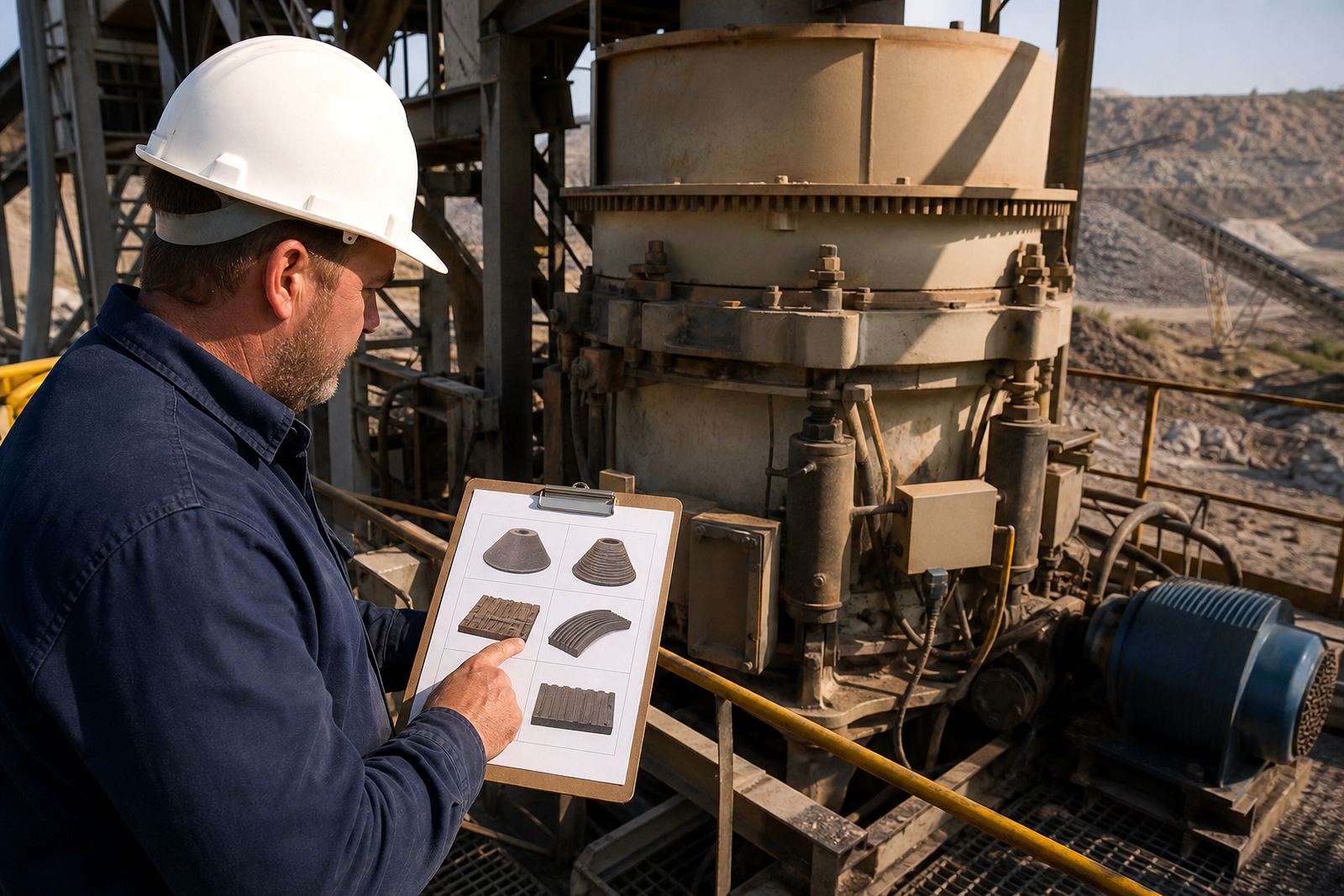
Before replacing concaves, it helps to confirm whether the wear pattern is caused by operating conditions. That means looking at the feeder, the transfer points, the discharge, and the condition of surrounding wear parts. Jaw plates, mantles, liners and blow bars can all influence how material enters and moves through the plant, so the concave should not be judged in isolation.
On remote mines in the Northern Cape or Limpopo, a worn part change is often planned around freight windows, access roads and shutdown timing. If a new set is ordered without checking the feed pattern, the same wear can repeat and the next delivery simply arrives to meet the same problem. A short inspection saves a lot of freight cost and lost time.
Practical steps to get a more even wear pattern
If the concave profile is wearing unevenly, start with the simple checks first. Small adjustments often make a bigger difference than people expect, especially on sites where the plant is worked hard and maintenance windows are tight.
- Centre the feed stream into the chamber
- Keep feed size as consistent as possible
- Reduce surging from the feeder or stockpile drawdown
- Inspect chute angles and liners for build-up or wear
- Confirm the chamber is not running too empty or too full
- Review shutdown notes after any recent change to the plant
If the wear is repeating after every changeout, the cause is usually upstream of the part. That is where proper order support and shutdown planning matter, because the replacement only lasts as long as the conditions around it.
Why remote sites need a practical wear plan
For mines and quarries in Mpumalanga, Gauteng, the North West, the Northern Cape and Limpopo, the cost of uneven wear is not only the liner cost. It also affects freight timing, stock holding, and whether a critical set reaches site before the next planned stop. A single missed delivery can hold up production, especially when access roads are long and site entry is controlled.
At Crusher Consumables Direct in Middelburg, Mpumalanga, the focus is on keeping crusher wear parts ready for dispatch and planned freight to remote operations. When concave wear patterns are read correctly, clients can bundle parts, plan returns, and reduce panic orders. That makes the whole job easier for the people on the ground, from the pit to the workshop, and it keeps the plant moving even when the week is not cooperating.