Why jaw and cone wear parts are not interchangeable
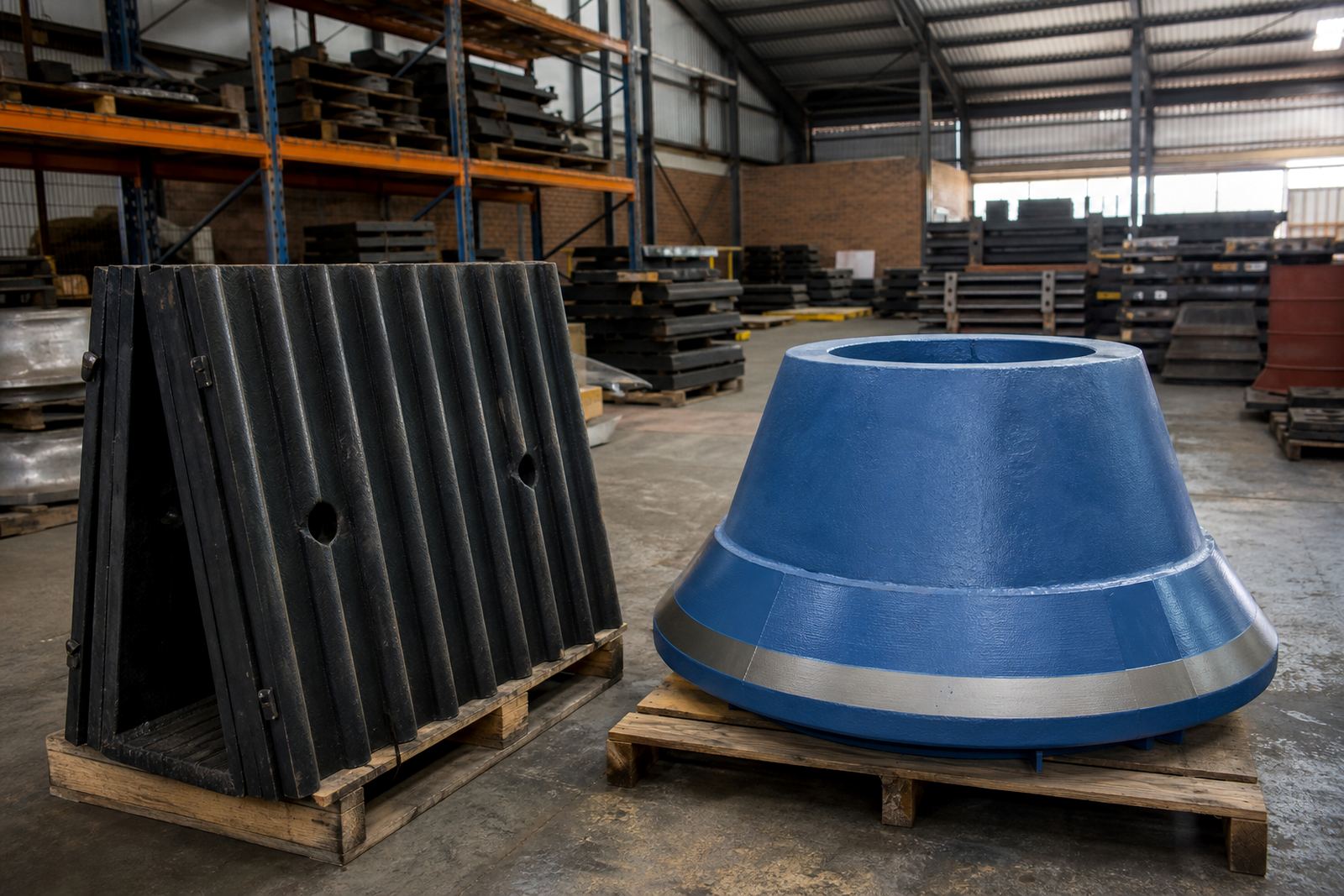
A jaw crusher does the first hard work. It takes the bigger feed, breaks down coarse rock, and carries the shock of uneven feed and tramp metal better than most operators expect. A cone crusher usually comes later in the circuit, where feed is more consistent and the machine is focused on shaping and reducing product size. That difference matters when you are planning stock, because the wear pattern, change-out frequency and part mix are not the same.
In simple terms, jaw wear parts are usually about handling impact and pressure at the front end of the line. Cone wear parts are more about maintaining a stable crushing chamber and keeping product size within spec. If you swap planning habits between the two, you can end up with the wrong part at the wrong time and a plant waiting on freight.
Where jaw crusher wear usually shows first
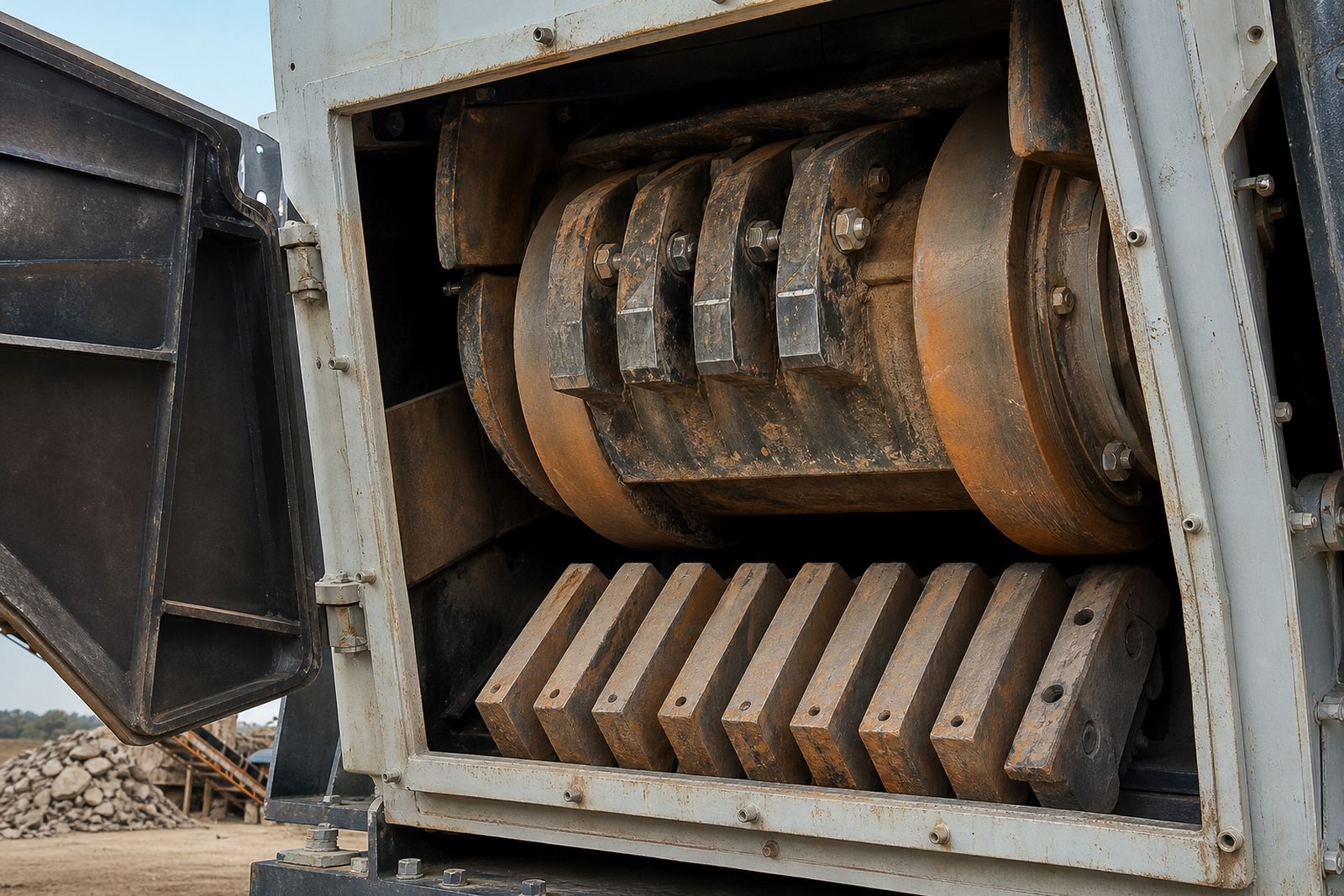
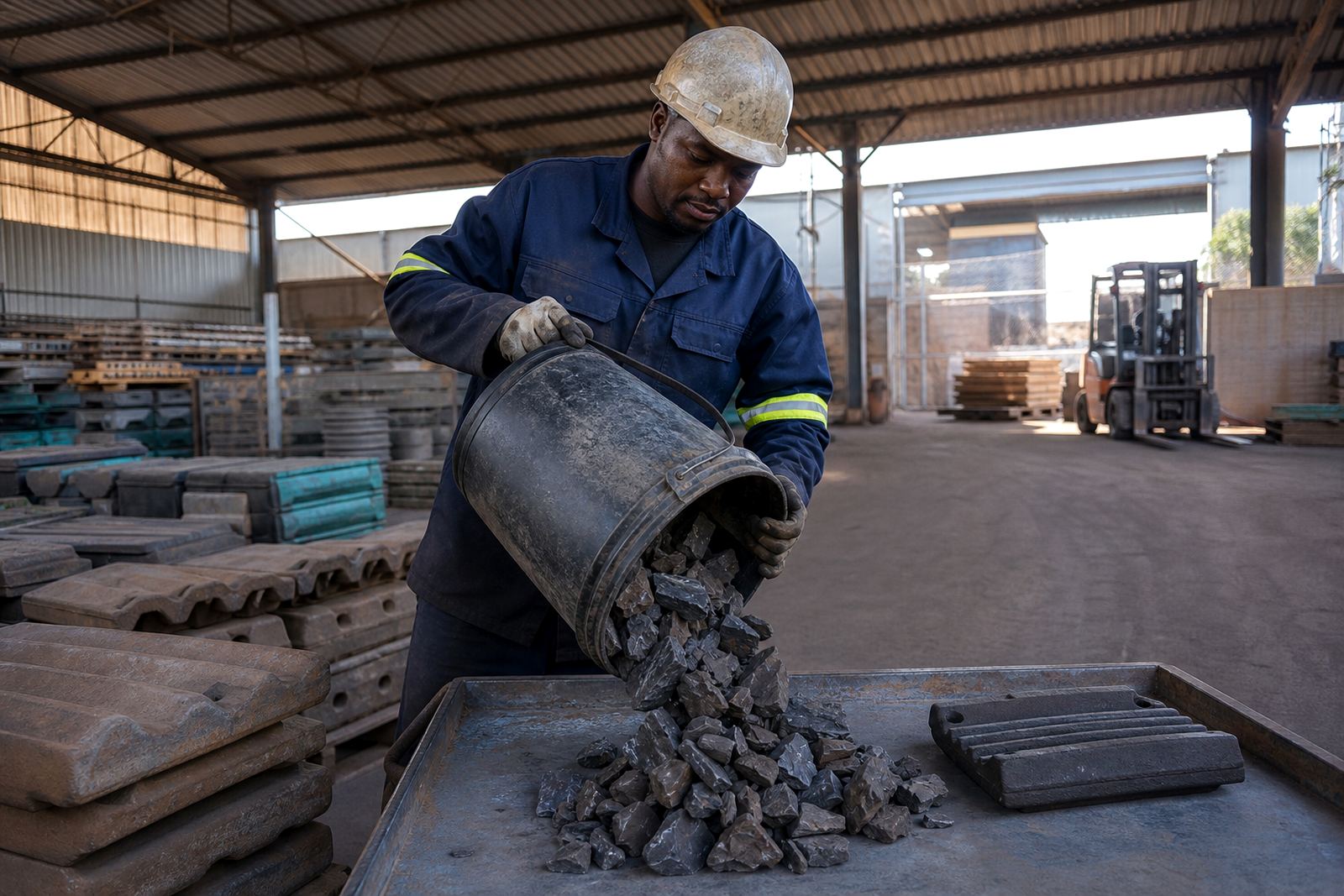
Jaw crushers tend to show wear on the fixed and moving jaw plates first, especially when the feed is coarse, abrasive or poorly sorted. If the quarry is running with dirt, fines, or slabby feed, the lower section of the plates often works harder. In many South African sites, especially where the feed changes with each face, wear can be uneven from one side to the other.
- Jaw plate wear often increases when feed is too fine or too wet.
- Bridging and oversize rock can chip the profile and reduce grip.
- Unstable feed can shorten life on the lower half of the chamber.
- Incorrect setting can lead to faster liner movement and poor product control.
For remote mines in Limpopo or the Northern Cape, it is worth holding jaw plates by size and profile, not just by machine name. The freight cost of sending the wrong item to a site near Kathu or Steelpoort can be as painful as the downtime itself.
How cone wear behaves differently in the field
Cone crushers wear in a more controlled but still demanding way. Mantles and concaves work together, so wear is linked to chamber shape, feed size and how steady the plant runs. A cone can look fine from a distance and still be losing performance because the chamber has opened up or the liner profile has changed too much.
On many sites, cone wear becomes noticeable through reduced throughput, finer product than planned, or a rise in power draw. That is why cone wear parts need closer attention to profile and matching sets. A mantle may still have life left, but if the concave profile has gone out of shape the chamber will no longer perform as it should. It is a case of looking at the pair, not just one item.
- Mantles and concaves should be checked as a matched set.
- Feed consistency has a bigger effect on cone performance than many crews expect.
- Worn liners can change product shape and increase recirculation.
- Waiting too long can cause extra strain on the drive and ancillaries.
Blow bars, liners and the rest of the circuit
Jaw and cone wear gets most of the attention, but the rest of the circuit matters too. Blow bars in impact stages, transfer liners, chute liners and other protective parts can drive wear costs if they are ignored. A plant that looks healthy on the crusher itself can still be losing money through thin liners, poor transfer points or material build-up in the wrong place.
That is one reason bundled part kits make sense for shutdown planning. If the jaw plates are due, the cones are close to change-out and the liners are thinning, one freight run can cover the lot. For a site outside Burgersfort or on the road to Phalaborwa that can save time, fuel and a lot of last-minute chasing. Good order consolidation also helps when load-shedding cuts into shift time and every delivery window has to count.
How to decide what to keep in stock at remote sites
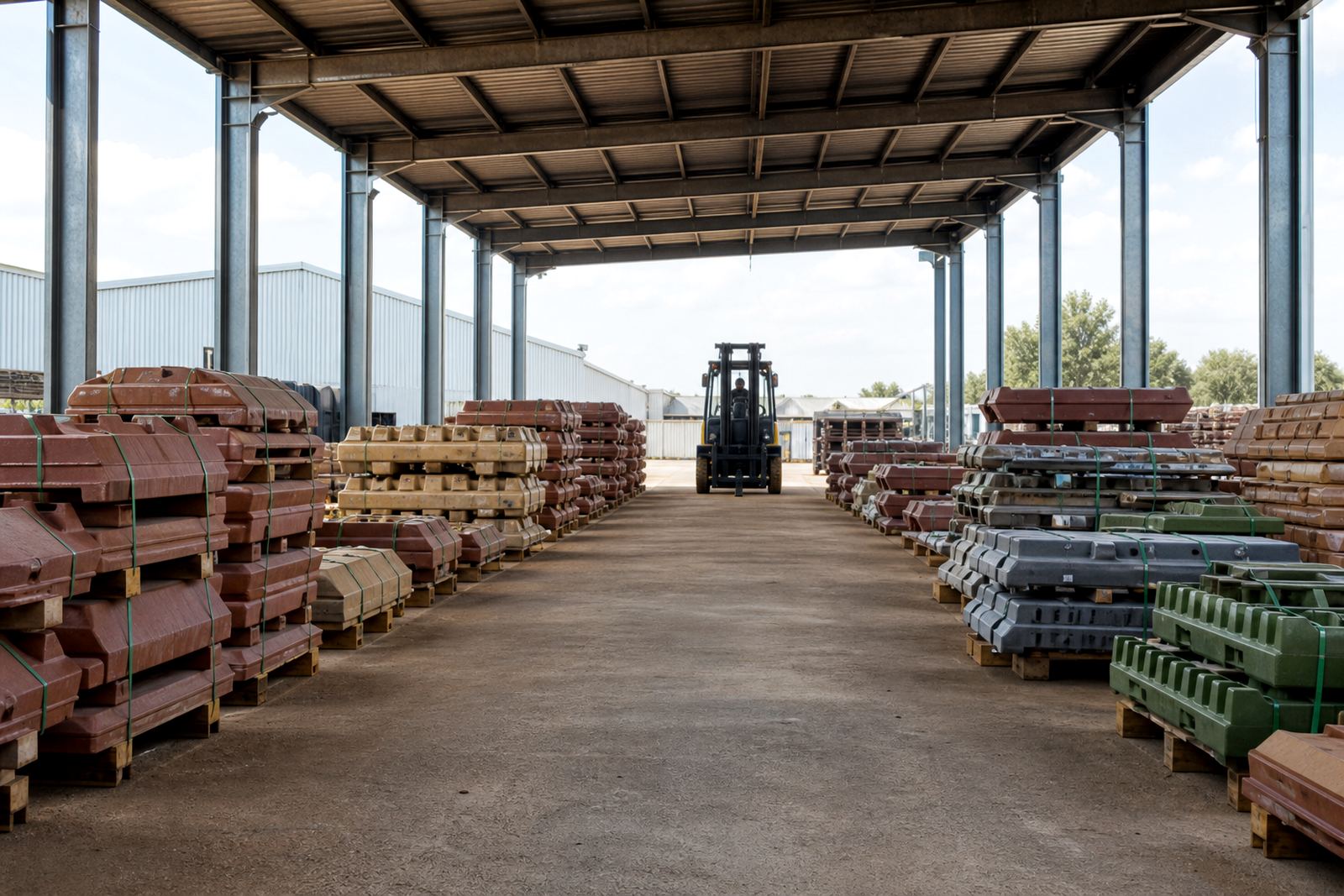
Stock holding should follow the way the plant actually runs, not only the catalogue list. A hard-rock site in Mpumalanga may need more frequent jaw plate changes, while a site with steadier feed and tighter product control may use cones more heavily. The best stock mix reflects rock type, haul distance, crusher size and how quickly you can get freight to site.
At Middelburg, where freight can be planned out to Witbank, Steelpoort, Rustenburg, Johannesburg East and further into the Northern Cape, it helps to split parts into urgent and planned categories. Urgent items are the ones that stop production. Planned items are the ones you know will come due on the next shutdown. Keeping both groups clear avoids confusion when a site suddenly reports a cracked liner or a plate nearing end of life.
- Keep one or two critical change-out sets ahead where access is poor.
- Track wear by hours, tonnes and visual inspection together.
- Separate jaw and cone stock so the wrong profile does not get dispatched.
- Plan freight around access roads, gate times and site induction rules.
A Middelburg example: one circuit, two wear strategies
Take a quarry near Middelburg feeding both a jaw and a cone in the same circuit. The jaw takes the rough first break on variable feed, while the cone handles the more consistent reduction stage. If the team focuses only on jaw plates, the cone can become the hidden cost. If they focus only on the cone, the jaw can lose bite and start sending poor feed downstream.
In practice, the better plan is to match the wear schedule to the machine that is under the most pressure, then support it with the right freight timing. A good run might mean jaw plates on one truck, cone liners on the next scheduled load, and a return freight plan for used parts where site rules allow it. That kind of coordination helps keep production moving without overbuying or waiting on stock from far off.
For mines across Mpumalanga, Limpopo, North West, Gauteng and the Northern Cape, the key lesson is simple. Jaw and cone wear behave differently, so the stock holding and freight plan must be different too. When those two are aligned, the plant spends less time waiting and more time producing.