What a cone crusher is really doing
A cone crusher reduces material by squeezing it between a moving mantle and a fixed concave. The feed enters at the top, gets compressed as the head rotates, and exits at a smaller size through the bottom setting. That sounds simple, but in practice the crusher is only as good as the wear profile inside it and the way the feed is presented.
In South African mining and quarry work, the feed is often mixed. You can have hard quartz, softer weathered rock, fines from previous stages and the odd bit of tramp metal all in one load. When that happens, the crusher has to absorb impact, maintain shape and keep a consistent chamber. If the chamber fills badly or the feed is too wet, the machine starts to choke and product size changes quickly.
Why the mantle and concave must work as a pair
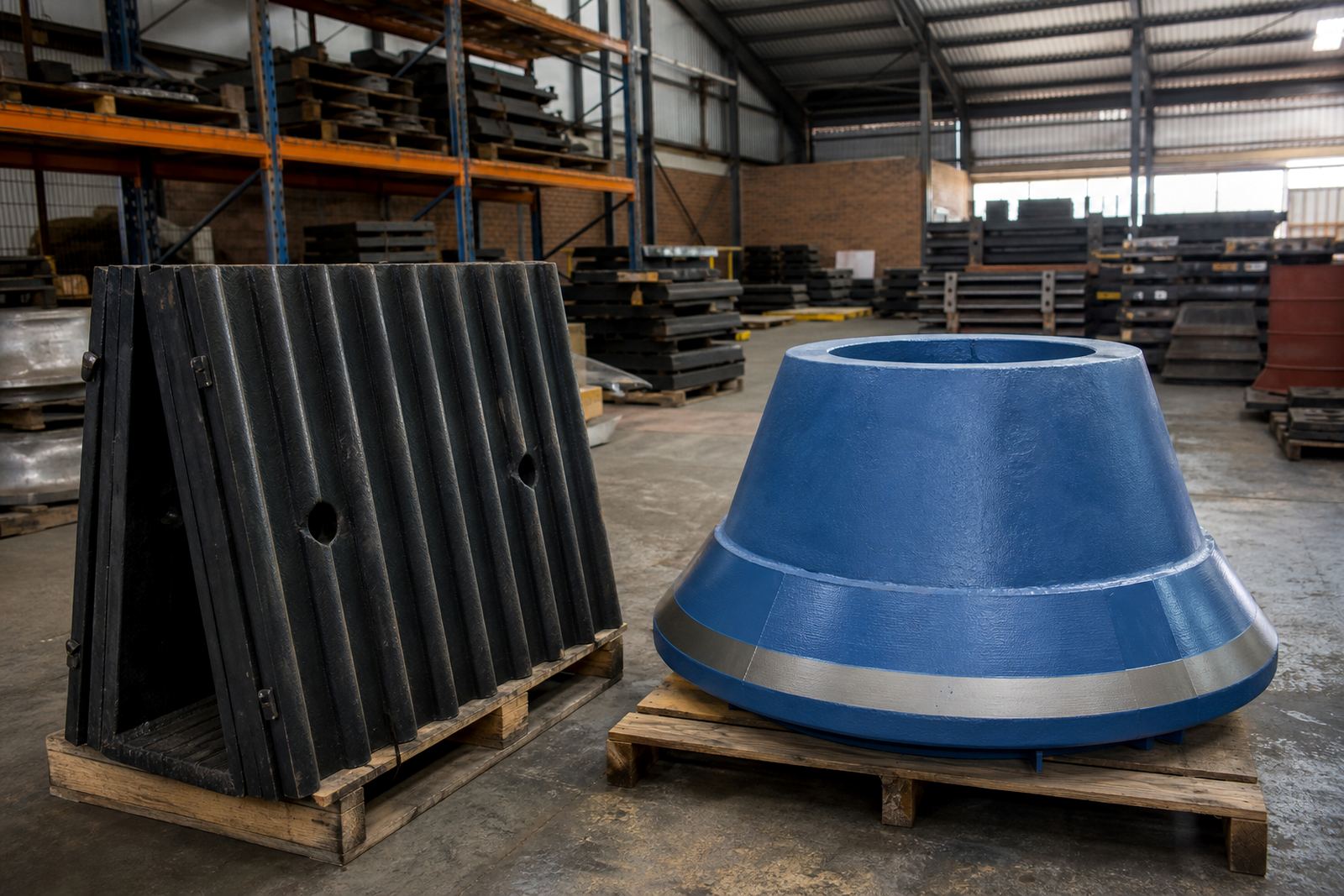
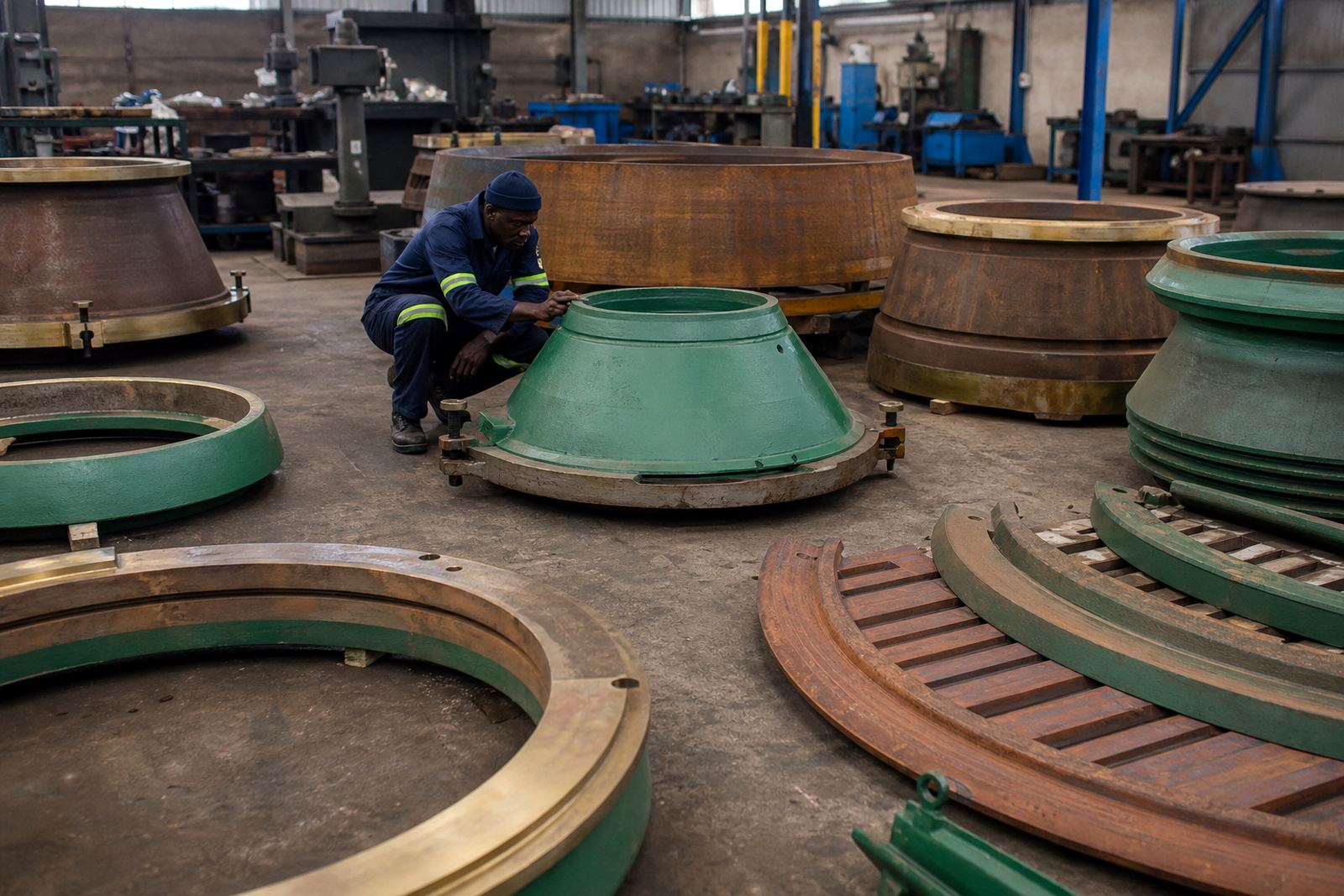
The mantle and concave are the main crushing surfaces, so their profile matters just as much as their material. A steep profile can give a different reduction pattern to a flatter one, and the wrong match can cause poor nip, higher wear, or excess fines. In plain terms, the rock should be gripped and broken, not just rubbed through the chamber.
When these parts are selected properly, the crusher draws feed more evenly and the load stays more stable. That helps with power use and output consistency, especially on sites where electricity supply is not always predictable and generators or load shedding plans affect daily running. A good fit also makes it easier to plan service intervals because wear is more even across the chamber.
- Check whether the chamber is set for hard ore, abrasive ore, or a mixed feed.
- Look at the wear pattern on both sides, not only the most obvious worn face.
- Replace matched parts together when the profile has changed too far.
Liners are not just protective plates
Liners protect the main machine body, but they also influence how material moves through the crusher. They help guide the feed, reduce direct impact on structural surfaces and support the overall chamber shape. If liners are neglected the machine may still run, but the feed path can become uneven and the crusher starts to behave differently from one shift to the next.
On remote mine sites, especially where replacement freight takes planning, liners need to be treated as part of the production plan not an afterthought. In some cases the liner condition tells the story of the whole circuit. A clean, even wear pattern usually points to better feed control. A broken or uneven pattern can show issues upstream, such as poor blending, incorrect closed side setting, or overfeeding after a blast.
- Inspect liners after every shutdown window if the plant is running long hours.
- Watch for edge wear, cracking, looseness and uneven seating.
- Keep spare liners on hand when freight lead times are long to places like Kathu, Phalaborwa, Steelpoort or the Northern Cape.
Matching wear parts to your ore and feed
No two sites wear the same. A quarry outside Middelburg can see different wear behaviour from a hard rock operation near Rustenburg or a remote mine in Limpopo. The right wear part choice depends on abrasive content, feed size, moisture, throughput and how well the upstream equipment is doing its job. If the feed is too coarse or too uneven, even a good part will wear faster than expected.
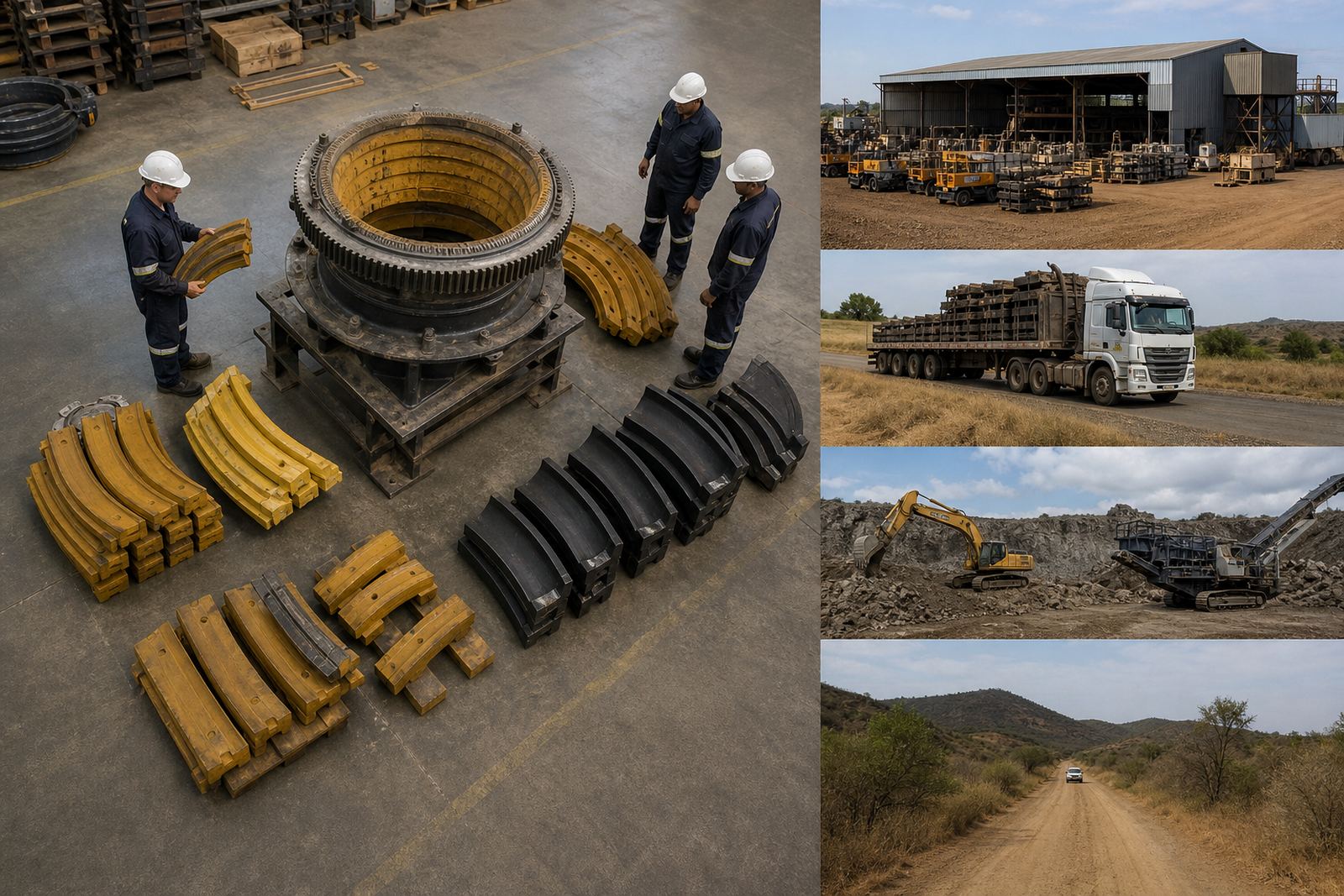
It also helps to think about downtime in practical terms. If a shutdown is planned for one weekend but the delivery is late by a day, the whole maintenance team is pushed back. That is why bundling the right jaw plates, mantles, concaves, blow bars and liners for the job, even when you only need some of them immediately, can save a lot of trouble later. One mistake many sites make is ordering only for the current failure point and forgetting the next likely changeout.
- Base your selection on the ore body and feed history, not only on machine size.
- Keep a record of wear life per shift, per ton and per location.
- Use bundled kits for shutdowns so the fitter has everything at hand.
Planning stock and freight for remote sites
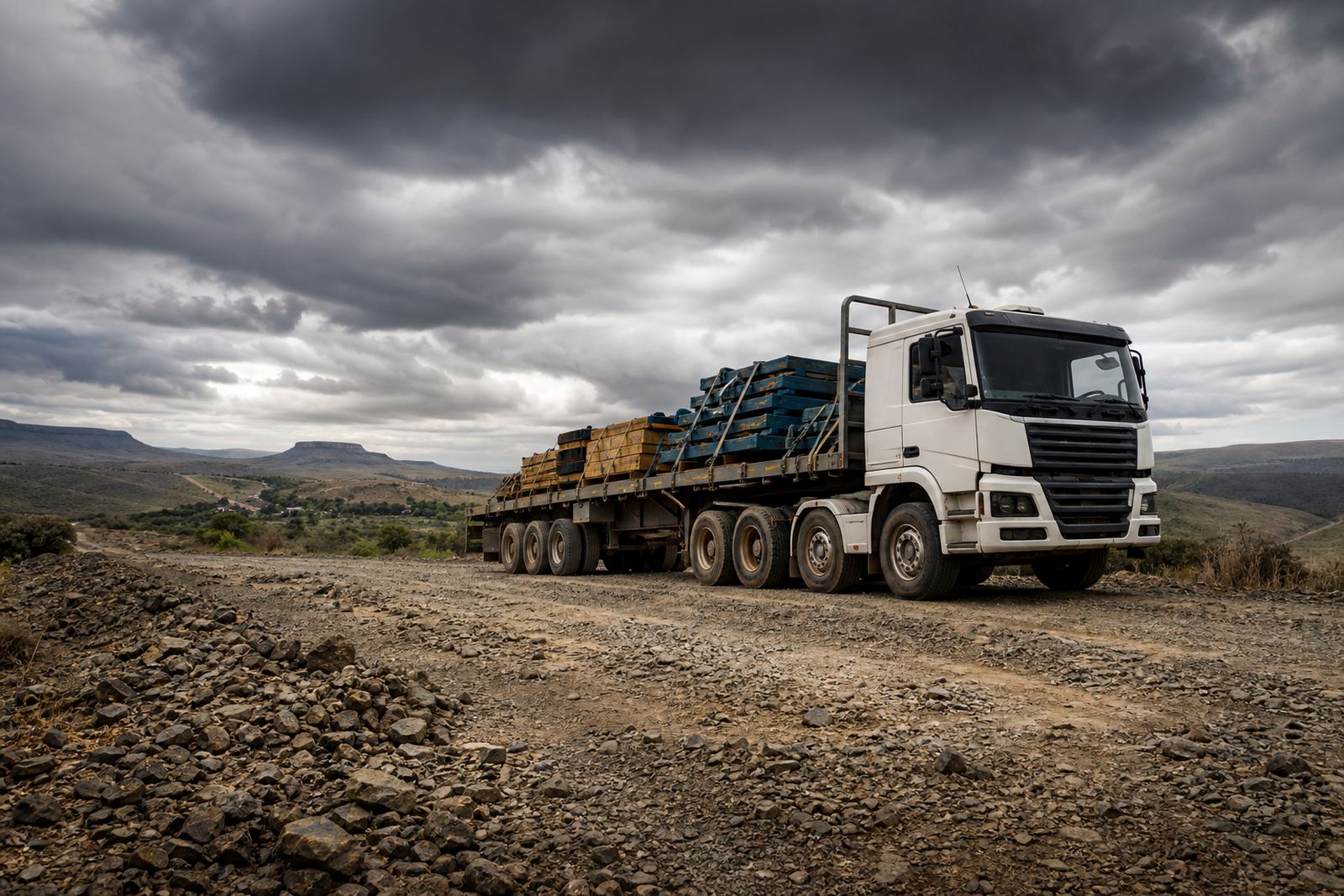
For mines far from major centres, stock holding is part of production security. When crusher wear parts are held in Middelburg, the site has a better chance of getting the right item out quickly instead of waiting for a long rebuild of the supply chain. That matters in Mpumalanga, Limpopo, the Northern Cape, North West and Gauteng where road conditions, weather and site access rules can all affect timing.
Freight planning should account for mine gate procedures, load securing, vehicle access times and after-hours delivery rules. Some sites need coordination with security, others require specific paperwork before the truck can enter. In the hotter months dust can affect packing and labelling, while coastal humidity is not the issue here, inland moisture and rain can still affect stored metal if it is left unprotected. Good order consolidation also helps reduce unnecessary trips and keeps transport costs under control.
- Confirm the site delivery window before dispatch.
- Plan return freight for old parts and reusable items where needed.
- Keep a clear list of urgent spares against planned shutdown stock.
A practical example from a Northern Cape shutdown
Picture a quarry in the Northern Cape that needs a cone crusher changeout during a short shutdown. The site has limited access, the crew is booked for one weekend, and the crusher must be back online by Monday morning. If the mantle arrives on time but the liners and concave are still in transit, the crew loses the benefit of the shutdown and the plant stays down longer than planned.
In that kind of situation, the better approach is to confirm the full list early, check the chamber condition, and dispatch all required wear parts together. This reduces handling, keeps the team focused and avoids a second stop-start repair cycle. It also gives the maintenance team a chance to inspect the feeder and the conveyor transfer points, which are often part of the same wear problem but get less attention than the crusher itself.
When to call for support on cone crusher wear parts
If product size has changed, power draw is climbing, or wear is happening unevenly, the issue may be the chamber setup rather than the crusher frame. That is when practical order support helps. A good supply team will look at what is in stock, what can be bundled for the next shutdown, and how to get the parts to site without wasting time on unnecessary freight. It saves the mine from making the same emergency order twice.
Crusher Consumables Direct supports remote mines and quarries from Middelburg with stock holding, urgent part dispatch, route planning and site delivery coordination. For cone crusher basics, the aim is straightforward: keep the mantle, concave and liners matched to the job, keep spares close to where they are needed, and keep the plant running as steadily as possible.