Why gravel access changes the delivery plan
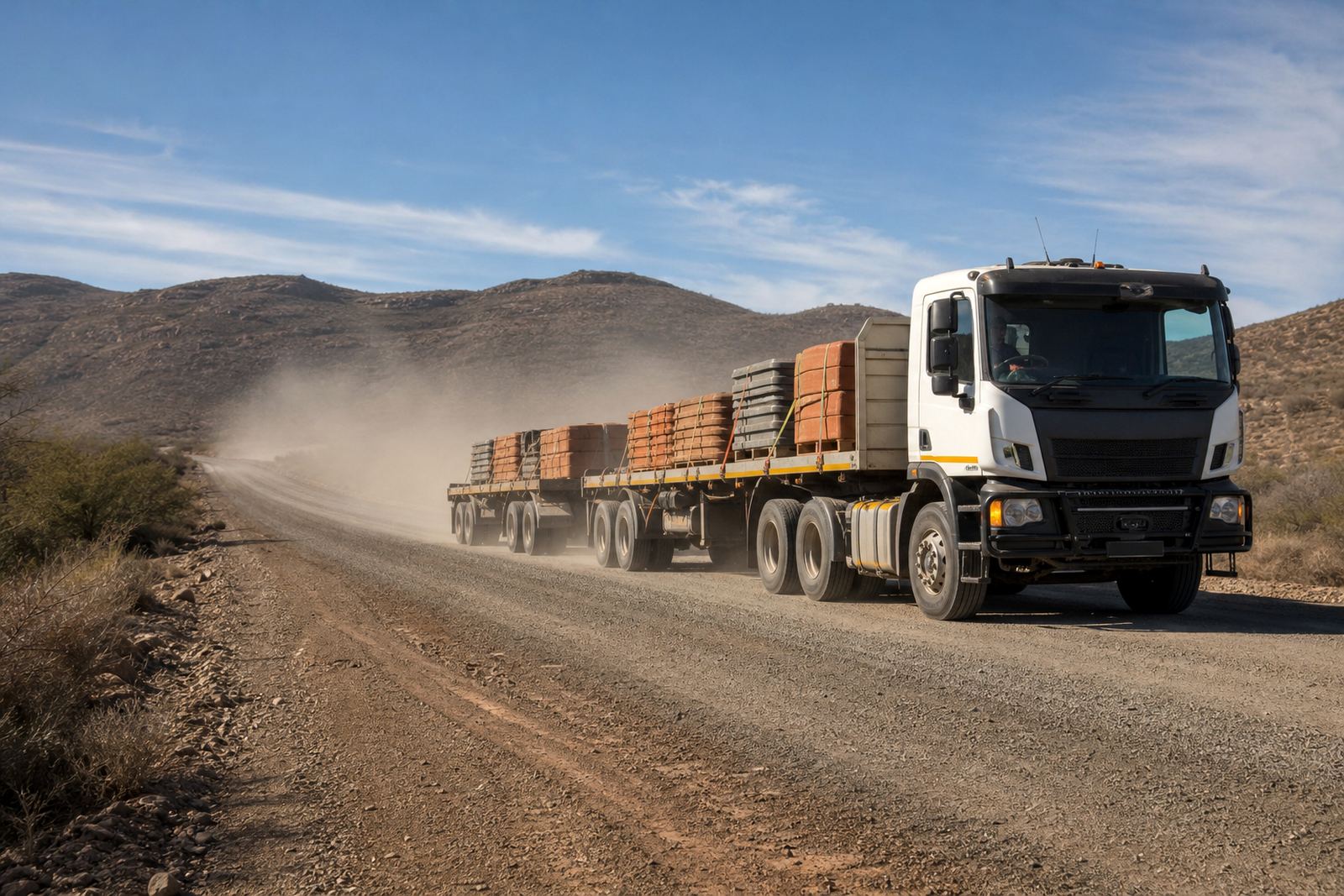
Gravel roads change the way freight has to be handled, especially on long runs to mines and quarries in Mpumalanga, Limpopo, the Northern Cape, North West and Gauteng. A route that looks straightforward on paper can include loose stone, washaways, sharp bends, cattle crossings and sections where the road surface is badly corrugated. That affects everything from travel time to how the load must be packed in the truck.
At Crusher Consumables Direct, gravel road deliveries are planned around the part mix, the site access, and the condition of the road on the day. Crusher wear parts such as jaw plates, mantles, concaves, blow bars and liners are heavy, awkward to handle and expensive to delay. If the truck arrives late or the load shifts en route, the whole chain at site gets pushed back.
For remote work, the real issue is not just distance. It is the last 20 to 80 kilometres where speed drops, tyres take a beating and delivery windows get tighter. That is why order consolidation and route planning matter so much for sites outside Middelburg, Steelpoort, Phalaborwa, Rustenburg and Kathu.
Packing wear parts so they survive the road
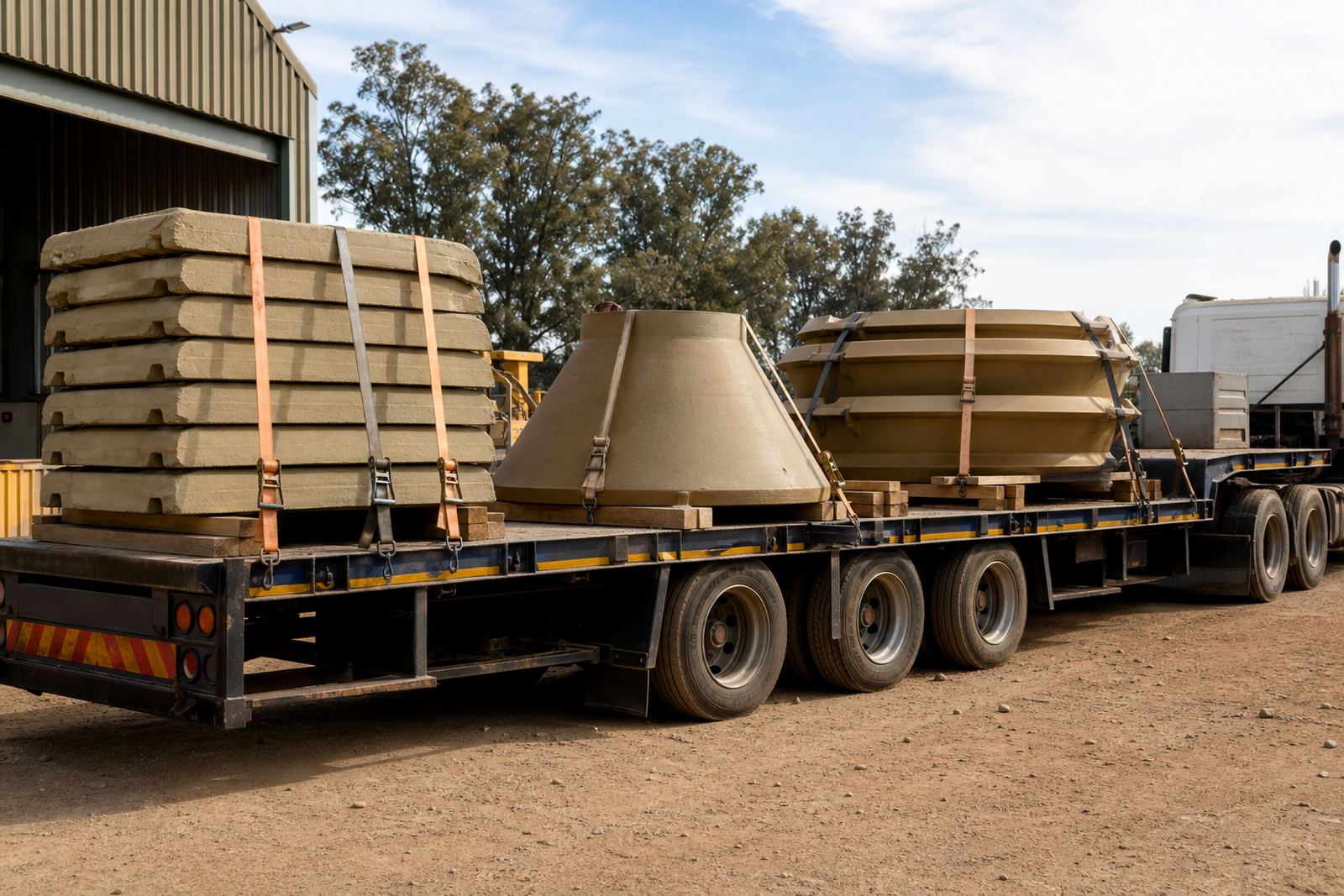
Crusher wear parts need to be loaded with care because a rough road can turn a poor pack into a damaged part before it ever reaches the plant. Heavier items must sit low and stable, with lighter items braced so they do not slide, tip or knock against each other. For mixed loads, bundled part kits are useful because they reduce loose movement and make offloading easier at site.
In practice, load securing is not a once-off step. It starts at the warehouse in Middelburg and carries right through to the site gate. Chains, straps, timber packing and dunnage are used to keep the load from moving on corrugations and braking points. On long gravel sections, even a small shift can place extra stress on the bed and on the parts themselves.
Our warehouse team checks the sequence of loading so the first item needed at site is the easiest to access. That helps on deliveries where the road is rough, the weather is hot, and the offload has to happen fast because the mine is still running.
- Heavier parts loaded first and secured low
- Loose accessories packed separately and marked clearly
- Timber support used to stop side movement
- Load checked again before the truck leaves Middelburg
Route planning for remote mines and quarries
Route planning for gravel access roads is about more than choosing the shortest distance. A truck heading to a site near Burgersfort, for example, may need a different plan from one going to a quarry outside Kathu, because road condition, traffic, bridge limits and fuel stops all vary. Seasonal rain can also change the route, especially where drainage is poor and low-lying sections hold water.
We look at where the road may slow down a driver, where night travel is unsafe, and where a detour might be needed if a section is closed or damaged. In remote areas, this is especially important for urgent part dispatch. If a mine has a breakdown after rain or during load shedding, the freight must still be able to get through without wasting time on the wrong road.
Good planning also helps with return freight planning. If used parts, packaging or supplier returns need to come back, the vehicle can be matched to the load so there is no wasted capacity. That keeps the run practical and helps control cost on long rural trips.
What site teams should prepare before the truck arrives
Even the best run can be held up if the site is not ready. Gravel road deliveries work better when the receiving team knows the vehicle type, access point and offload area in advance. If the access road narrows near the gate, or if there are low trees, soft shoulders or a steep entry, that needs to be shared early so the driver is not left guessing.
Mine and quarry teams can also save time by confirming who will receive the delivery, where the parts should be placed, and whether any lifting gear is available on site. If the area is muddy after rain, the offload point may need to be moved to firmer ground. In some places, especially around remote Limpopo and the Northern Cape, that one small detail can decide whether the delivery is simple or a headache.
- Confirm access road condition before dispatch
- Share gate instructions and receiving contact details through the enquiry form
- Prepare a clear offload area with enough turning space
- Let us know if the site needs timed delivery around shift change or blasting
Local example: Middelburg to a remote quarry road
A typical run from our Middelburg base might be a shipment of liners and jaw plates to a quarry reached by a long gravel access road outside Steelpoort. The first part of the trip is straightforward, but the last stretch can include dust, steep edges and sharp stone that punishes tyres. If rain has passed through the area, the surface can become slick in patches and the driver has to slow down well before the site entrance.
In that type of delivery, timing matters as much as packing. If the quarry needs the parts for planned maintenance, the truck must arrive with the right sequence of items on board, because once it is on site there may not be space for a second offload. That is where order consolidation helps. It reduces repeat trips and keeps the load together, which is better for both the freight and the site team.
We see the same pattern on runs to Phalaborwa, Rustenburg and Kathu. The road may be different, but the principle is the same: know the access, secure the load, and keep the delivery window realistic. That practical approach is what keeps crusher wear parts moving to remote sites without unnecessary delay.
How Crusher Consumables Direct supports rough-road delivery
Our team in Middelburg handles stock holding, freight coordination and order support for crusher wear parts going to mines and quarries across South Africa. That includes road planning, bundling parts for one delivery, and making sure the paperwork and site instructions are in order before the truck leaves. With load shedding, weather changes and rough access roads, a delivery plan needs to be flexible but still controlled.
Thabo Mokoena and the team, including Lerato Nkosi, Johan van der Merwe, Ayanda Dlamini, Sibusiso Mahlangu and Megan Naidoo, work together to keep urgent orders moving and shutdown stock ready when it is needed. For remote sites, that mix of warehouse control and freight planning is often what makes the difference between a smooth handover and a late arrival.
If your site is reached by gravel road, the best time to plan the delivery is before the truck is loaded. That gives room to match the right route, the right vehicle and the right packing for the road ahead. It is a simple step, but it saves trouble later on.