Why these two parts are planned together
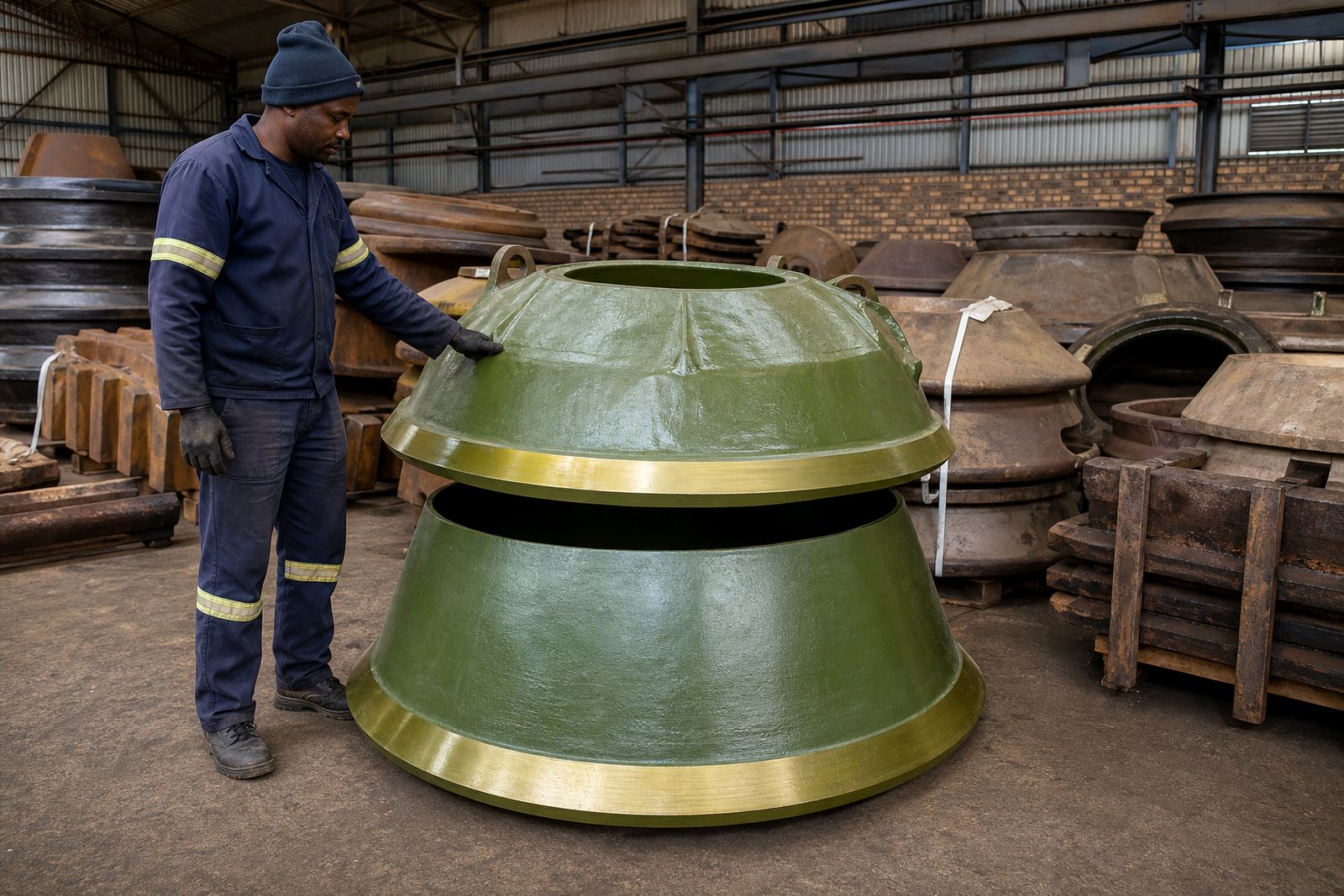
A mantle and concave pair does the main crushing work in many cone crushers. The mantle moves against the concave, breaking down material through pressure and repeated contact. Because they sit in the same chamber and take wear from the same feed, one side rarely gives good service on its own if the other side is already near the end of life.
That is why many mine maintenance teams and quarry supervisors treat them as one planning item. If the wear profile is uneven, the chamber shape changes and the crusher can start to lose capacity, produce less consistent sizing, or demand more attention from operators. In practice, it is usually better to look at both parts together when setting shutdown dates, ordering stock and planning freight from Middelburg out to site.
How matching wear affects downtime and output
When a mantle and concave are worn to similar levels, the crusher keeps a more predictable crushing profile. That matters on remote sites where the machine cannot simply be left aside while a spare is sourced from town. A poor match can lead to early loss of throughput, uneven product and more frequent adjustments at the plant.
For mines in Mpumalanga, Limpopo, the Northern Cape, North West and Gauteng, weather and access also play a part. Dust, wet feed, long haul roads and load-shedding all put pressure on maintenance windows. Planning the pair together gives the team a better chance of finishing the changeout in one shutdown instead of stretching the job over two or three separate interruptions.
- More consistent chamber geometry during the run period
- Better timing for shutdown labour and lifting gear
- Less risk of waiting on a single part while the other is already on site
- Cleaner freight planning when parts are moved together
Signs a mantle and concave should be considered as a set
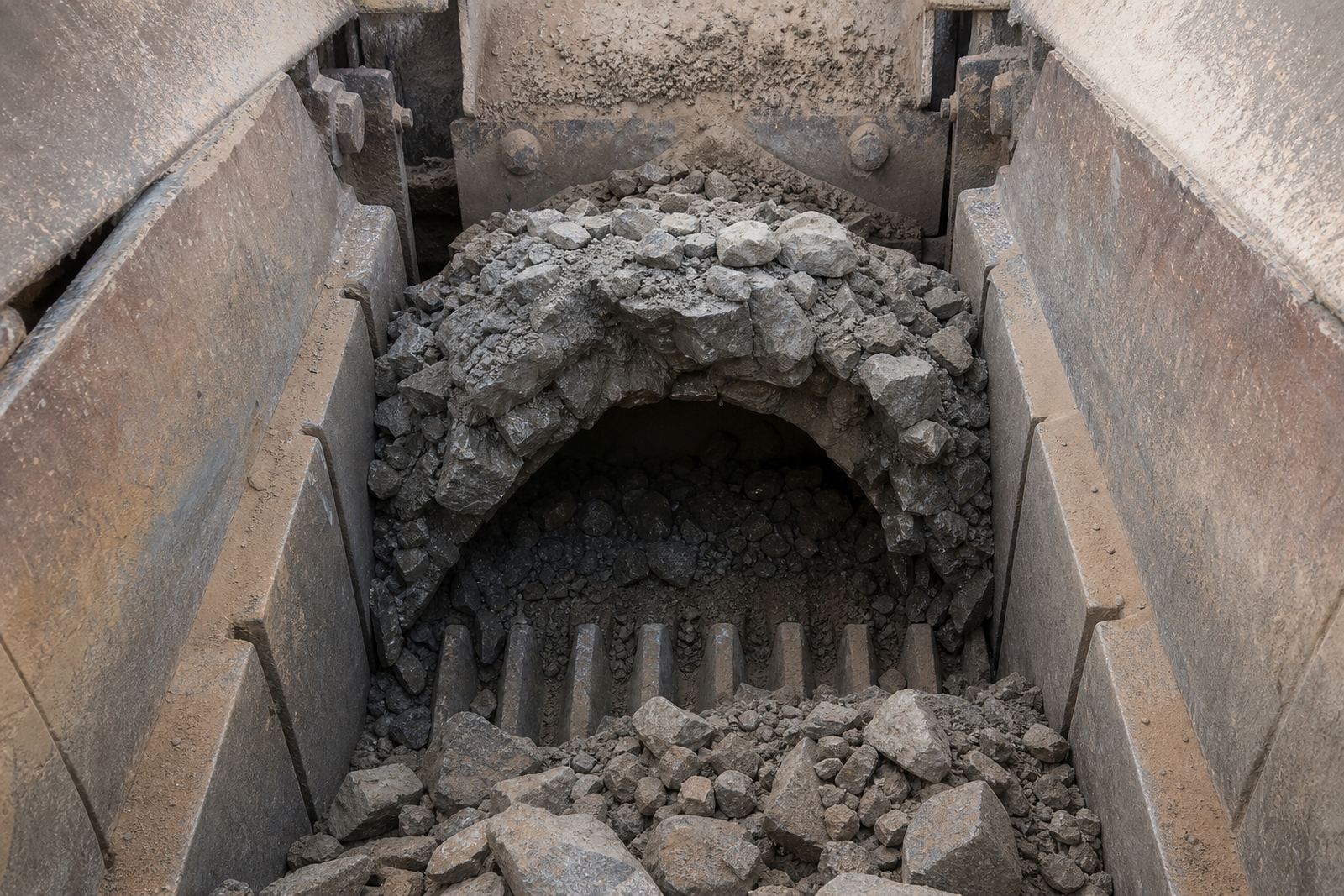
Operators often notice the first signs during routine checks. The crusher may need more frequent closed side setting adjustments, or the product size may drift before the expected wear limit. In some cases, the wear pattern shows one side pulling harder than the other, which can point to feeding issues, tramp metal events, or a part set that is no longer balanced.
It is worth assessing the pair when there is a planned shutdown, a major liner change, or a change in feed type from harder ore to mixed quarry stone. Even if only one part looks badly worn, the matching piece may already be close enough to the same service point that replacing both makes better commercial sense. That is especially true when freight to a remote mine needs to be booked in advance and access windows are limited.
- Frequent adjustment of the crusher setting
- Uneven wear marks across the chamber
- Drop in product consistency
- Longer changeout time because the old part and new part do not match in wear profile
What to plan before a shutdown
Shutdown planning is where paired ordering makes the biggest difference. If the mantle and concave are both due, the team can confirm dimensions, check stock, organise bundled part kits and make sure the crane, rigging and labour are available at the same time. That reduces the risk of a second call-out for a part that should have been included from the start.
At our Middelburg base, we see this often with remote sites that want freight timed around road access, site induction, or a short maintenance window. A mine in the Steelpoort or Burgersfort area may need different route planning from a quarry near Rustenburg or Kathu. The principle stays the same though: order the matching wear parts together, then align transport, site delivery coordination and return freight planning around the same job.
- Confirm crusher model and chamber dimensions
- Check whether both wear parts are due or one is only being carried as backup
- Include securing, lifting and unpacking needs in the plan
- Book delivery early for remote roads, mine gates and weekend access rules
Local freight realities for remote mines and quarries
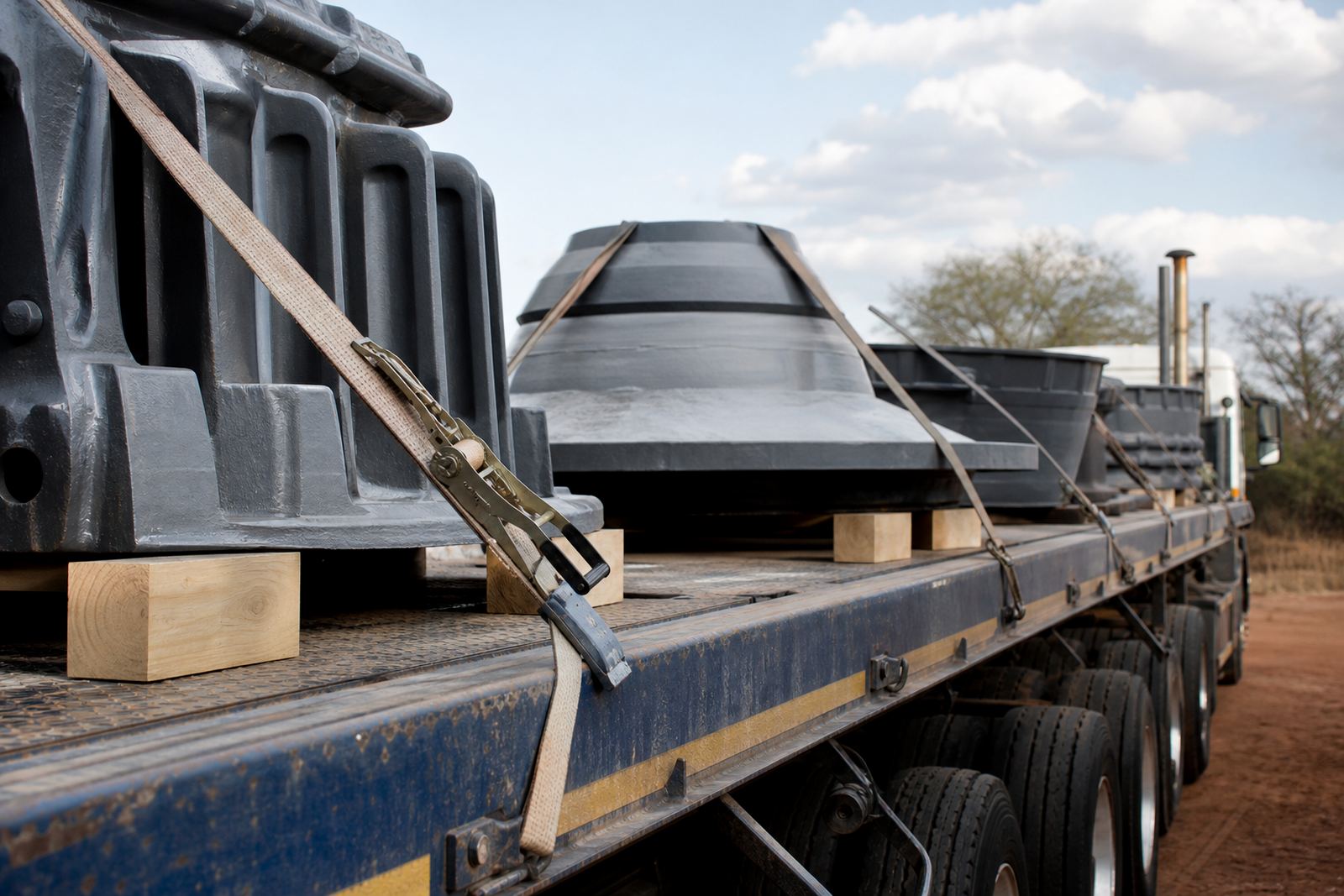
Freight is not just about getting a pallet from one place to another. On remote mines, the part has to arrive in the right order, in the right condition and on the right day. Load securing matters on long trips through the Northern Cape or up into Limpopo, where rough roads and distance can work against a tight programme. Coastal humidity is less of a factor inland, but dust, heat and handling still need attention.
Our Middelburg depot supports stock holding and remote mine freight, so the idea is to keep common wear parts moving without unnecessary delay. For a job in Phalaborwa, a shutdown near Johannesburg East, or a quarry around Witbank, the logistics may differ, but the goal stays the same: get the mantle and concave pair where they are needed before the crusher stands idle. Order consolidation also helps when other liners or blow bars are moving with the same load.
Why stock holding makes paired ordering simpler
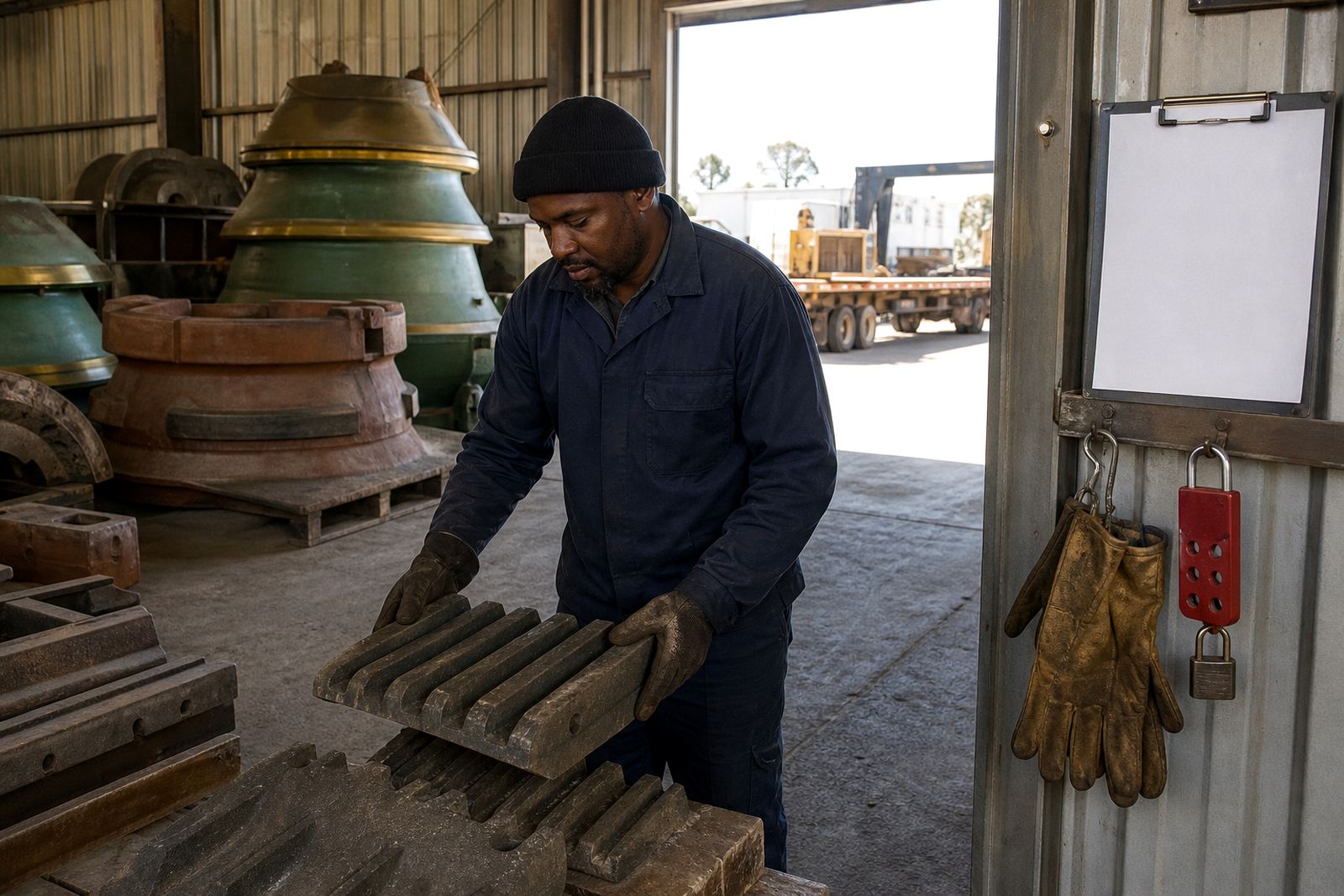
Holding wear parts locally takes pressure off the maintenance team. When a mantle is due but the concave might also need changing, having both close at hand makes the decision easier. It also helps with urgent part dispatch when a machine is down and production is already under strain. Instead of waiting for separate shipments, the site can receive the pair together and move straight into changeout.
That is why many customers use our stock holding, order support and bundled part kits service for crusher wear parts. It helps with planned maintenance, but it also helps when a breakdown comes without warning. In the real world, a missing pair can hold up an entire line while trucks, labour and loaders sit waiting. Having both parts ready is often the difference between finishing the work in one shift or losing another day.
A practical example from a South African shutdown
Take a plant feeding from a hard rock source outside Middelburg. The team sees wear increasing on a cone crusher and expects to change the mantle soon. On inspection, the concave is not fully finished, but the wear pattern shows it is close enough that leaving it in place would shorten the next cycle. The wiser move is to plan the pair together, book the freight, and set the shutdown around one complete exchange.
That approach saves time on site and keeps the chamber working as intended once the crusher goes back online. It also makes it easier to brief the operator, the maintenance crew and the logistics team as one group. For a business working across mine and quarry sites in Mpumalanga, Limpopo, the Northern Cape, North West and Gauteng, that kind of planning is often the most practical way to keep production moving, even when the weather turns, roads are busy, or power interruptions change the timetable. There is less guess work and more control over the job.