
What a jaw crusher is doing all day
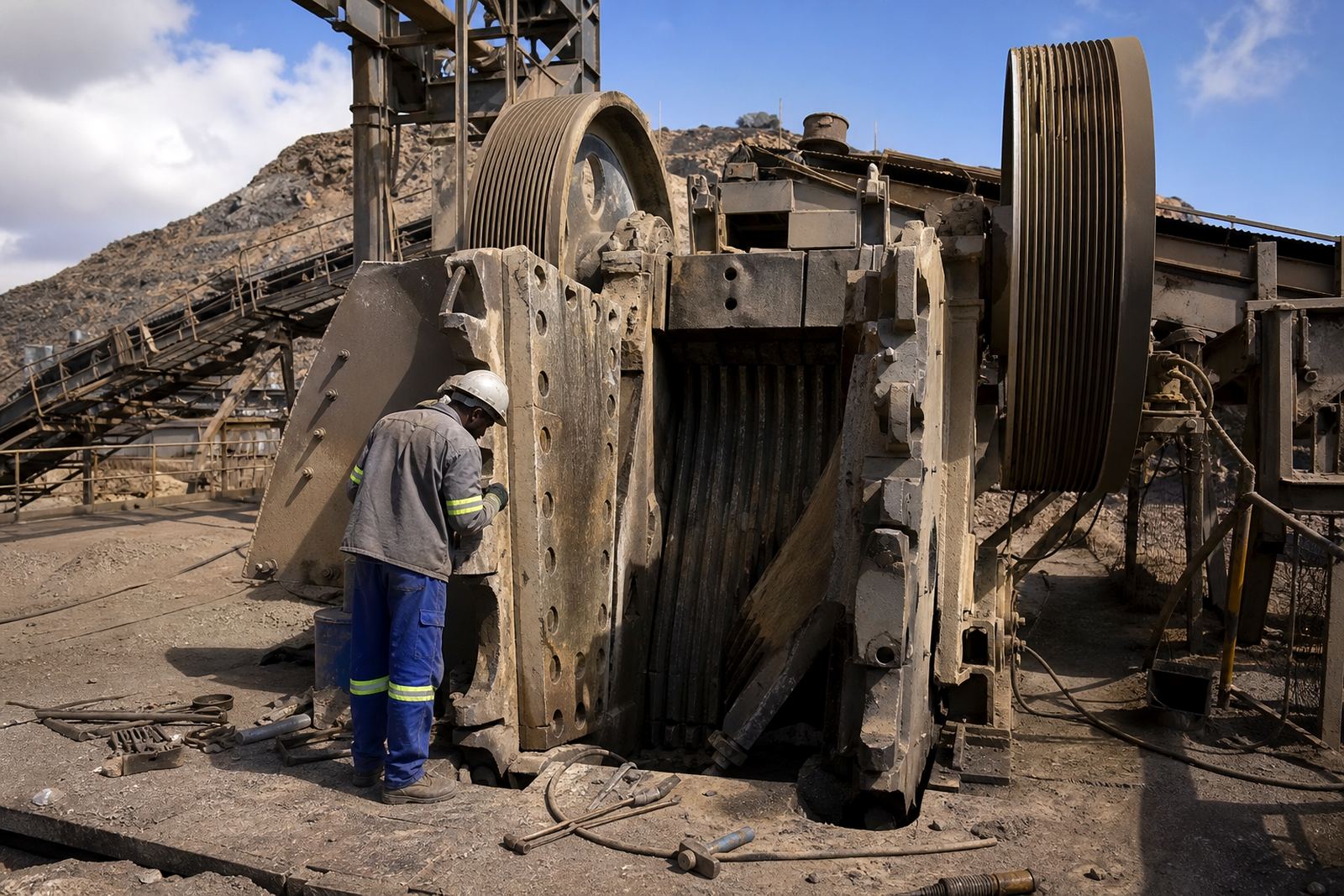
A jaw crusher takes the first bite out of run-of-mine rock, broken stone, or quarry feed. The machine works by squeezing material between a fixed jaw and a moving jaw, and that repeated compression is what makes it useful for primary reduction. It is also why the wear parts need regular inspection. The feed changes from site to site, so a hard quartzite face, an abrasive dolomite stone or a muddy run with fines can each wear the machine in different ways.
In practice, the jaw crusher is often the first point where a plant feels the cost of delay. When the jaw plates lose profile, the opening changes, the bite gets less effective and the crusher starts drawing attention from the whole operation. On remote sites, that means the spare parts plan matters as much as the machine itself. A good spares plan should cover the usual consumables and the freight route, not only the part number.
The main wear zones to watch
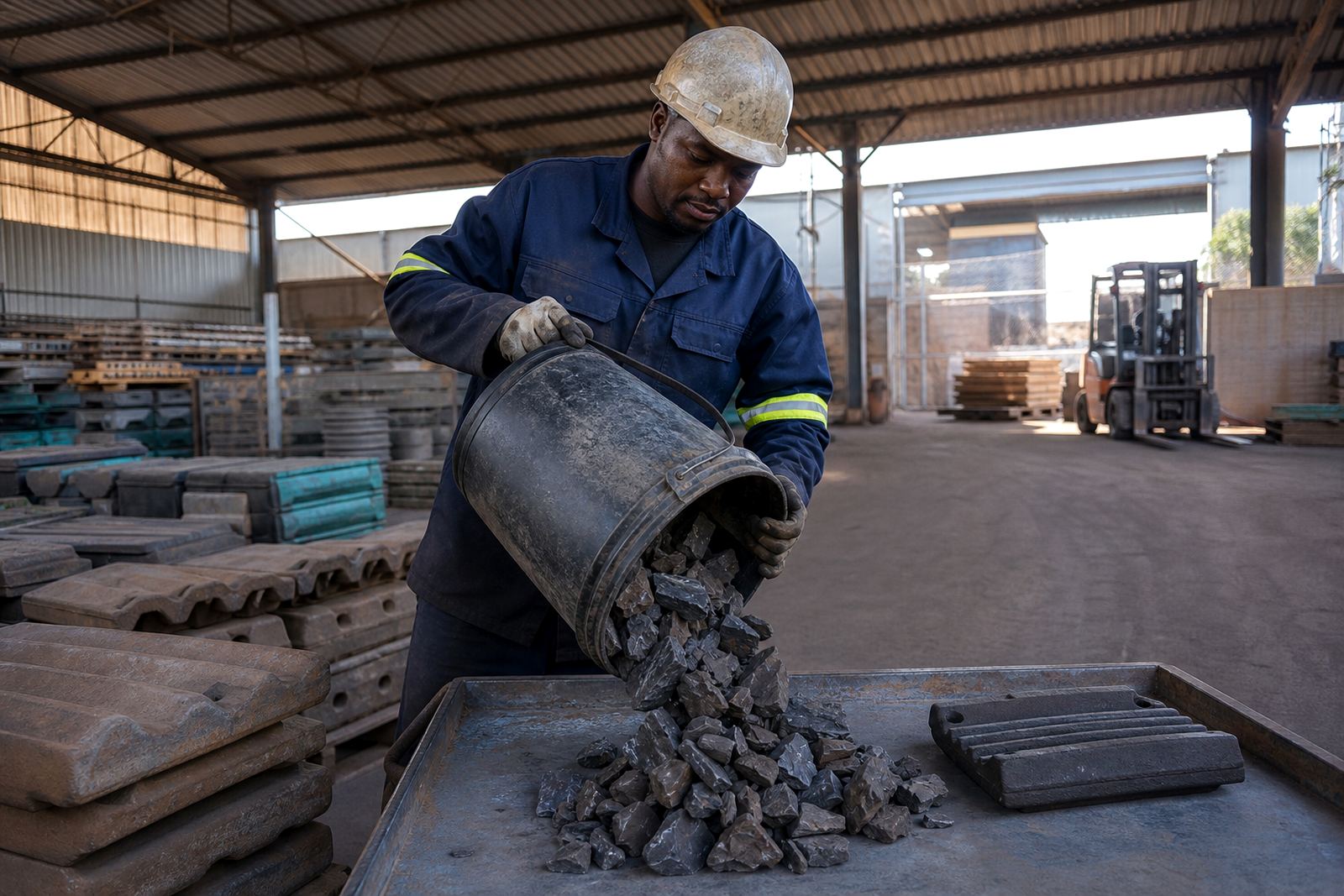
The parts most often discussed on a jaw crusher are the jaw plates, cheek liners, toggle components and supporting liner pieces around the chamber. The jaw plates do the main work. They take the direct impact and abrasion from every load. Cheek liners protect the side walls, while other liner pieces help shield exposed surfaces where material rubs hard during crushing.
Wear does not happen evenly. The lower part of the chamber often wears faster if feed is fine and abrasive, while uneven feeding can cause one side to go early. If the machine is run with poor feed control, tramp material, or frequent overfilling, the wear pattern becomes patchy and the service life shortens. That is why visual checks matter, not only hour counts.
- Look for a rounded jaw profile instead of a sharp crushing face
- Check for cracked liners, loose fixings, or movement at the seating points
- Watch for a drop in product consistency or a rise in oversize material
Why routine consumables run out faster in mining conditions
Mining and quarry work in South Africa puts crushers in tough conditions. Dust gets into every opening, temperature swings affect handling, and long haul distances make small delays into bigger ones. In Mpumalanga and Limpopo, moisture and sticky feed can load the chamber differently. In the Northern Cape, dry abrasive material can eat into wear surfaces quickly. On some sites, power interruptions and load-shedding also affect start-stop cycles, which can put extra strain on the whole plant.
That is why consumables should be planned as a working stock, not an emergency buy. Jaw plates, mantles, concaves, blow bars and liners all need to be considered together where a plant runs more than one crusher stage. Even if a jaw crusher is the focus, the supply pattern around it affects shutdown timing, screen performance and the cost of holding the plant. The right stock level depends on feed type, operating hours and how far the site sits from the nearest supply point.
- Abrasive rock usually means shorter wear life and tighter reorder control
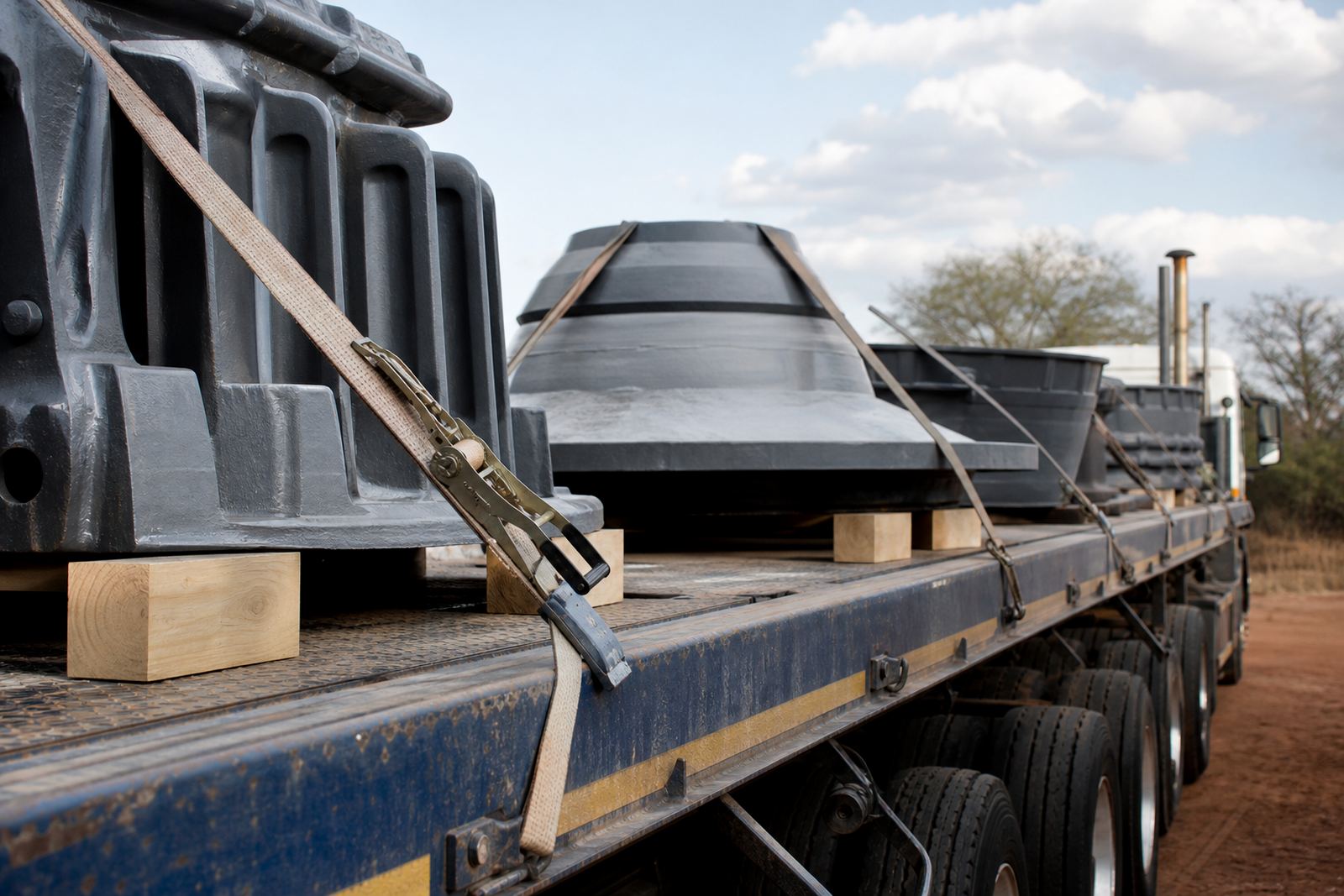
- Remote mine freight needs loading, route planning and site delivery timing
- Shutdowns work better when consumables are bundled before the outage starts
Signs it is time to change jaw plates
Operators usually notice the signs before a full failure, but the warning is not always dramatic. Output may drop first, or the crusher may need more adjustment to maintain the same product size. In some cases, the machine starts to sound different, with a harsher knock or more vibration through the frame. When the wear face is gone, the machine must work harder for less benefit.
A simple rule is to inspect before the chamber gets too thin or too smooth. If the profile is worn past the point where it can grip and break, the plates are already costing production. Sites in places like Steelpoort or Phalaborwa, where the freight distance can be long, are better off planning the change early rather than waiting for a breakdown. It saves time, transport and a lot of back-and-forth on the day.
- Reduced throughput with the same feed rate
- More oversize at the discharge point
- Visible wear near the lower chamber, or uneven wear on one side
How stock holding helps remote sites stay ahead
Good stock holding is not just about keeping shelves full. It is about having the right crusher wear parts in the right place, ready for the next change-out. For remote mines and quarries, that means keeping a practical mix of jaw plates, liners and related consumables in Middelburg and moving them by planned freight to the site that needs them. When the order is already consolidated and secured for transport, the site team can focus on the change-out instead of waiting on a last-minute search for parts.
Freight to places such as Kathu, Rustenburg, Burgersfort and Johannesburg East needs different timing, road planning and loading care. A bundled kit can make a shutdown easier because the crew gets the set parts together instead of piecing together a shipment one box at a time. That is especially useful where access windows are limited by road permits, site induction times, or a municipal gate schedule that does not allow late arrivals. A missed delivery can mean an extra shift lost, so order support and route planning count.
- Order consolidation cuts the chance of missing one critical component
- Load securing protects heavy wear parts on corrugated haul roads
- Return freight planning helps when used parts must be moved off site
A practical example from a Middelburg supply base
Picture a quarry outside Middelburg running a jaw crusher through a busy production week. The crew notices the product getting coarser and the jaw profile looking flatter than expected. The plant manager checks the wear pattern, confirms the plates are near change-out and asks for the next set to be sent with the rest of the shutdown material. Because the parts were already held in stock and the route had been planned, the delivery can go out without delay. The fitters arrive with the parts, the machine is turned around and the plant is back in service on schedule.
That is the point of practical supply support. The crusher does not care whether the site is on a farm road near Steelpoort or a larger industrial route near Gauteng. It only responds to condition, timing and correct consumables. A sensible jaw crusher plan keeps those three things lined up. It also reduces the chance of a frantic call when the old plates are past their limit and the machine is eating power for no gain.
At Crusher Consumables Direct, the focus is on stock holding, remote mine freight and straightforward order support from Middelburg, Mpumalanga. For mines and quarries that need jaw plates, liners and related wear items moved to site, the right plan usually starts before the old parts fail. That approach saves hours, sometimes days, and it keeps the crusher doing what it is there to do.