Why shutdown work starts before the first bolt is removed
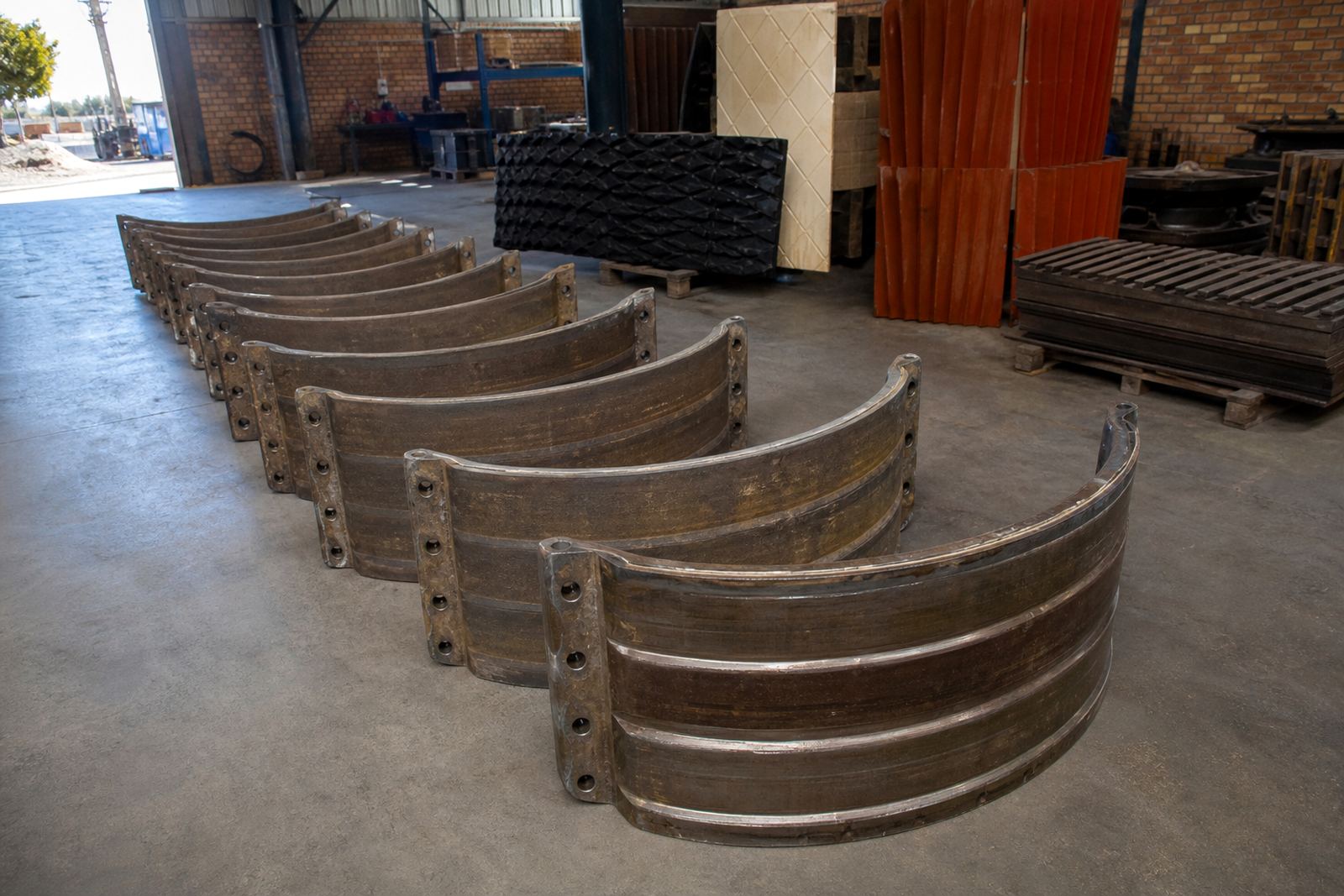
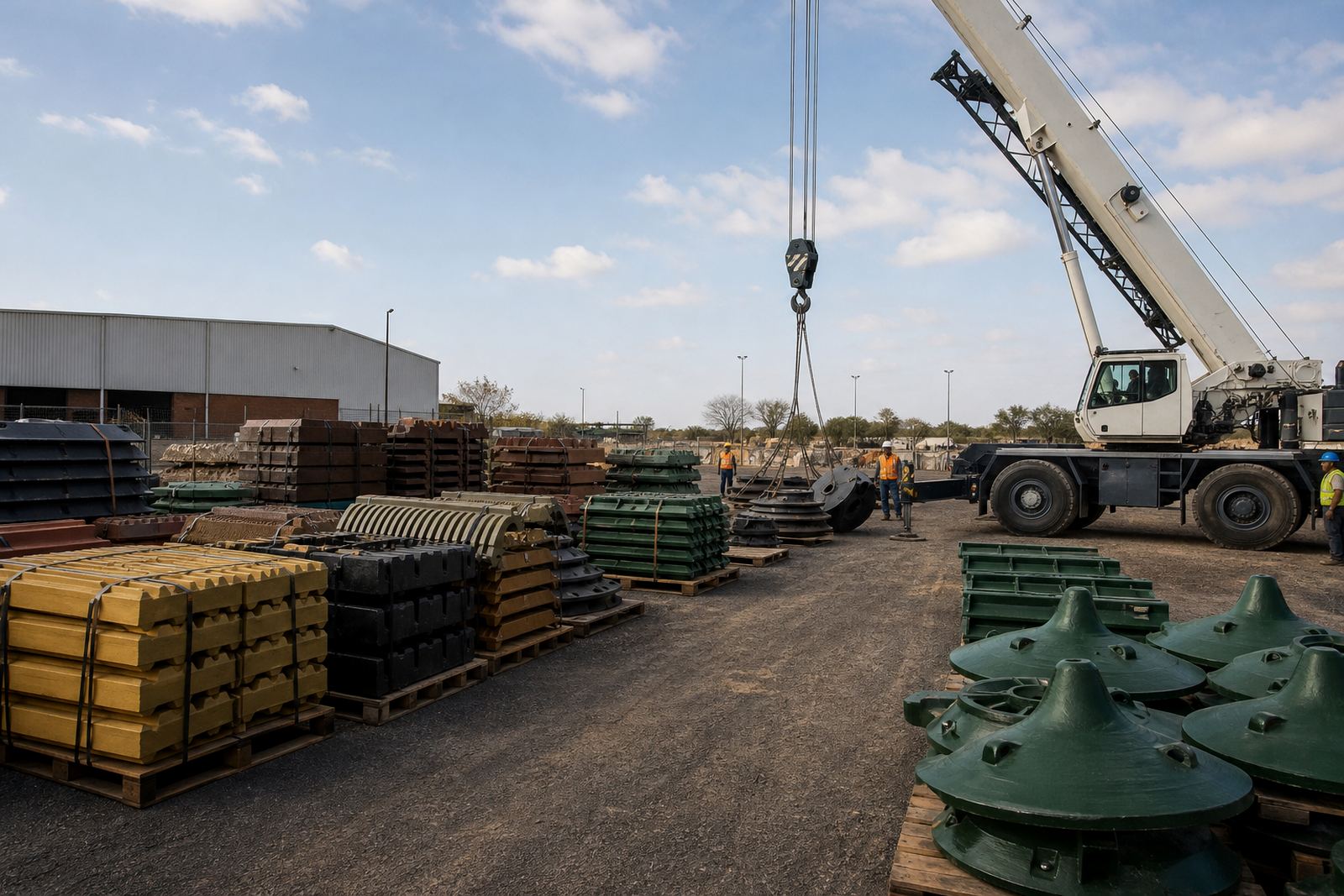
At shutdown time, the real pressure is not just on the fitters and supervisors. It sits in the freight plan, the release list, and the way each crusher wear part is packed for the road. If jaw plates, mantles, concaves, blow bars and liners are not staged in the right order, the crew may be ready while the parts are still on a truck in Middelburg or held back for paperwork. That wastes labour, fuel and machine time.
For mines in Mpumalanga, Limpopo, the Northern Cape, North West and Gauteng, shutdown logistics must account for distance, road conditions and site access times. A load leaving late on a Friday can arrive too early for a site handover or too late to meet the crusher team. Good planning means the right parts are released in sequence, so the most urgent items arrive first and the rest follow in line.
How stock holding protects the shutdown window
Stock holding gives operations room to move when a shutdown date changes. If a site brings the turnaround forward by two days or a supplier delay pushes work out, the warehouse can release what is needed without waiting for another collection. That matters for mines working in remote areas where a missed delivery may mean another 300 or 400 km on the road, plus an extra shift lost at site.
Keeping crusher wear parts in stock also helps with split deliveries. Some shutdowns need only the first set of liners on day one, while the rest of the package can follow after inspection. When stock is held locally in Middelburg, the release can be matched to the work sequence rather than forcing the team to take everything at once.
- Release the highest priority parts first so critical work starts on time
- Hold back non urgent items for the later stages of the shutdown
- Keep a clear count of each item to avoid double handling at site
- Use one packing list for the full job so nothing gets left behind
Freight timing for remote mines and quarries
Remote freight needs more than a truck and a delivery note. It needs route planning, load securing, site delivery coordination and a clear handover plan for when the truck arrives. In areas such as Steelpoort, Phalaborwa, Kathu and Rustenburg, access rules can change from one site to the next. Some sites require booking in advance, while others only receive loads during fixed offloading windows. If that is not checked early, the driver can sit at the gate and the shutdown team waits inside.
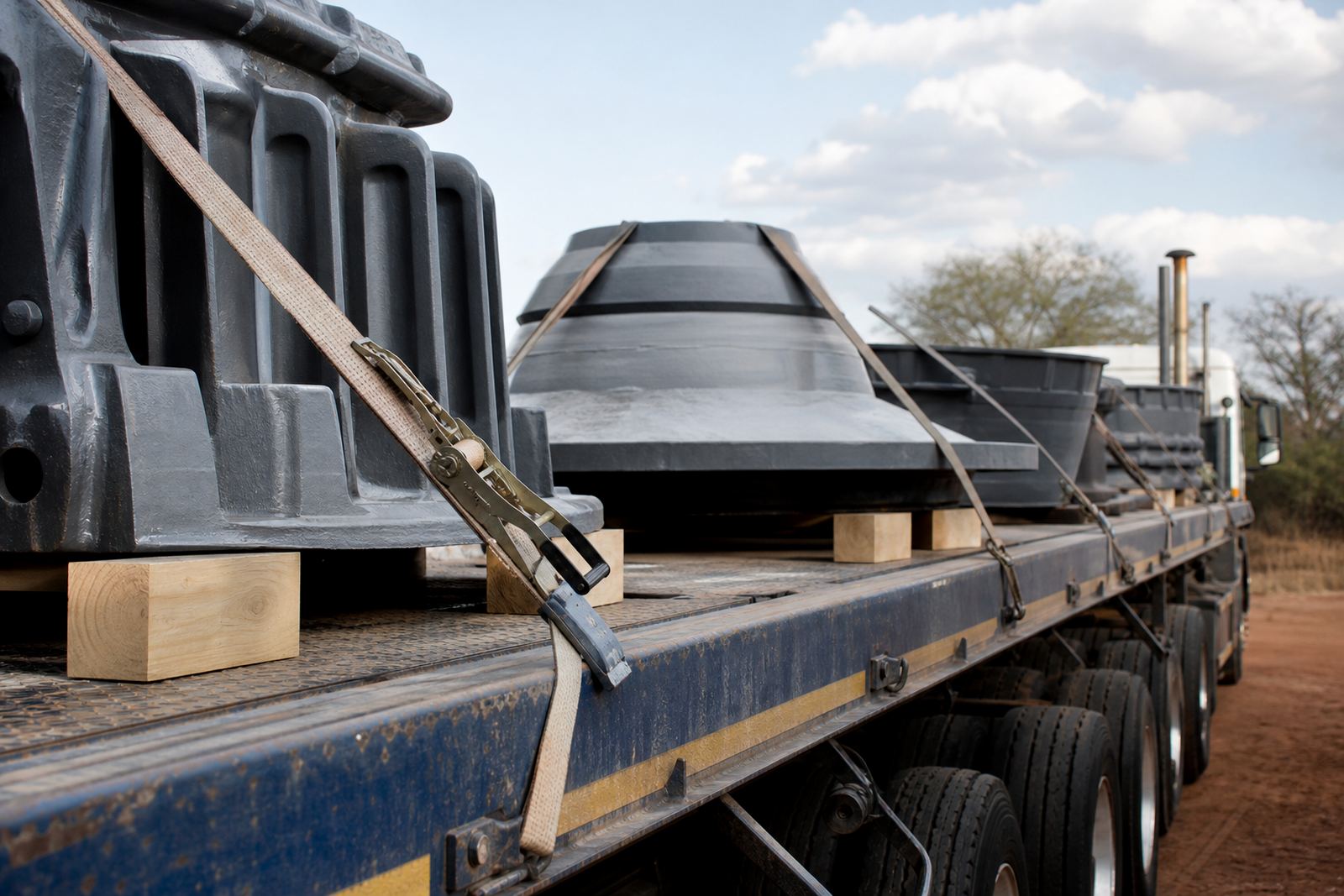
Load securing matters as much as timing. Crusher wear parts are heavy, awkward shapes and they shift if they are not strapped and braced properly. A bent edge or damaged surface can delay fitting and force rework during a tight turnaround. Good freight planning keeps the parts stable, the sequence clear, and the site team informed about what is coming and when. One missed detail can throw the whole scedule out.
Bundled kits make the fitting team faster
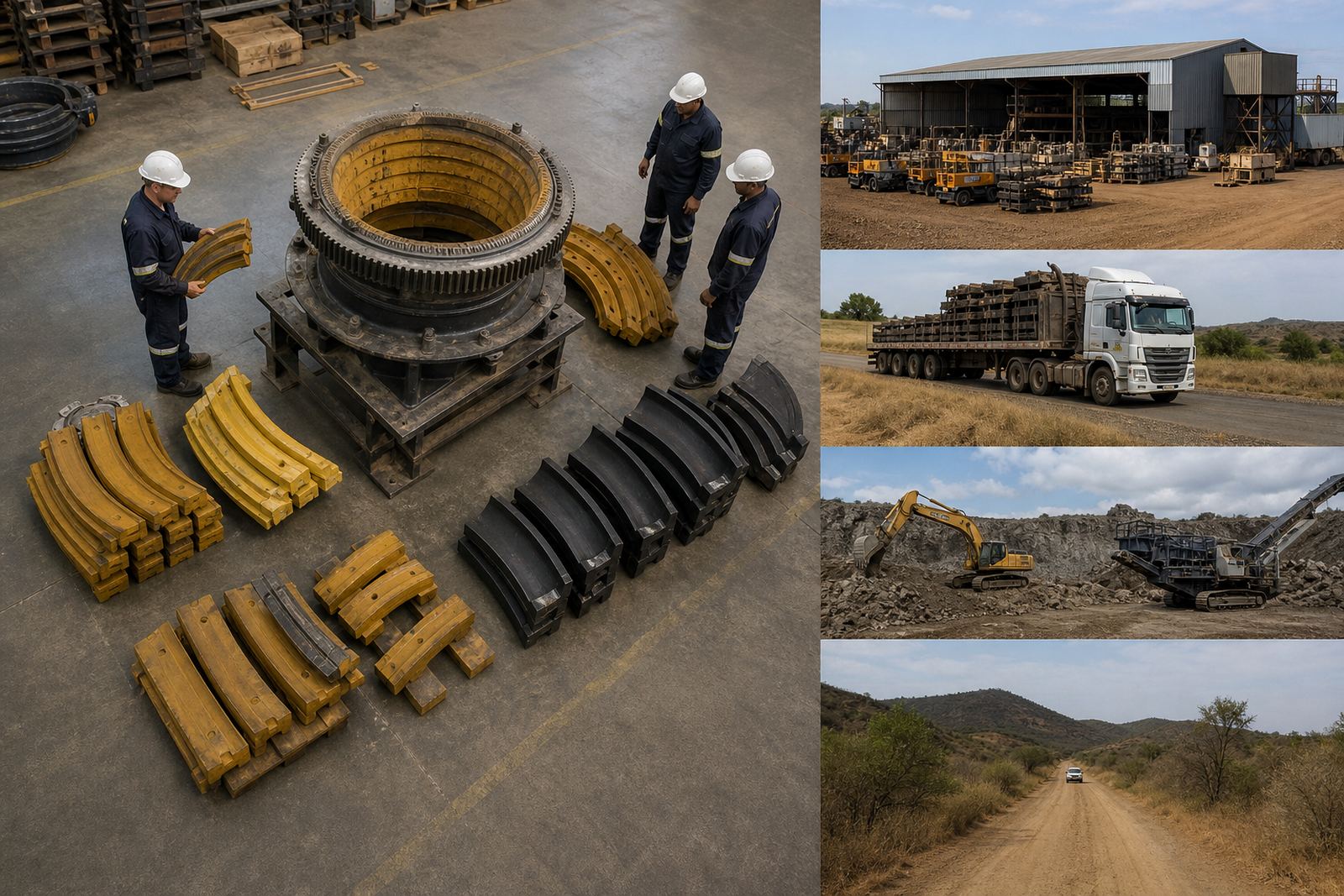
Shutdown crews do better when related parts arrive together in a kit. Instead of unpacking loose items and checking each one under pressure, the team receives a set that matches the machine plan. For example, a crusher service might need wear parts, fasteners, and supporting items grouped by machine section or fitment stage. That keeps the fitter focused on installation rather than sorting boxes on the ground.
Bundling also reduces return freight later. If a site receives too many mixed cartons, the unused pieces can be hard to track when the truck leaves. By consolidating orders before dispatch, the warehouse can pack by job, by site or by machine. It is a simple step, but it saves time when the shutdown is already running against the clock.
- Pack by shutdown stage, not by supplier line item
- Label each bundle for quick checking at offload
- Keep heavy wear parts low and secure in the load
- Separate urgent spares from general freight so they do not get missed
A practical example from Middelburg to a northern site
Consider a shutdown for a quarry north of Phalaborwa. The site needs a mix of wear parts for the crusher, but the crew cannot all fit at once because the plant takes a staggered shutdown. In that case, the first truck leaves Middelburg with the critical items needed for day one, while the balance stays on the floor for release once the inspection is done. That gives the site some breathing room if the engineer changes the fitment order after opening up the machine.
This approach works well for remote locations because the freight can be matched to actual progress on site. If the team finds wear on another component, the warehouse can be asked to release the next part while the first truck is still in transit. It keeps the shutdown moving and avoids the common problem of overloading the site with more stock than it can handle at once.
What good shutdown support should include
Shutdown logistics should be practical and easy to follow. The customer needs clear order support, a firm release plan and regular updates from first packing to final delivery. That is especially important when operations are split between site supervisors, maintenance planners and stores staff. One person may need the freight booked, another may need the packing list and a third may need the delivery notice for gate access. Without clear coordination, small delays turn into bigger ones.
Crusher Consumables Direct supports shutdowns from its Middelburg base with stock holding, remote mine freight, quarry deliveries and order consolidation for sites across South Africa. The team works with the realities of load-shedding, long-distance transport and site rules, so the parts arrive in step with the shutdown programme. For mines and quarries, that means fewer surprises and better use of the limited time available on plant.
- Plan the delivery window before the shutdown starts
- Match stock release to the fitting sequence
- Keep one contact point for updates and changes
- Use route planning to reduce avoidable delays on the road