Why Part Numbers Matter Before the Truck Leaves Middelburg
When a crusher stops, people want the replacement part on site as quickly as possible. That is where a clear part number helps. It gives our team a direct starting point for stock checking, freight planning, and load securing, instead of working through guesswork and back and forth messages.
For crusher wear parts, even a small mix up can hold a site for a full shift. A jaw plate that looks close enough on paper may have a different profile, fixing hole pattern, thickness, or weight. The same applies to mantles, concaves, blow bars and liners. If the wrong part gets loaded, the delivery still cost time and fuel but the machine stays idle. In mining, that kind of delay adds up fast.
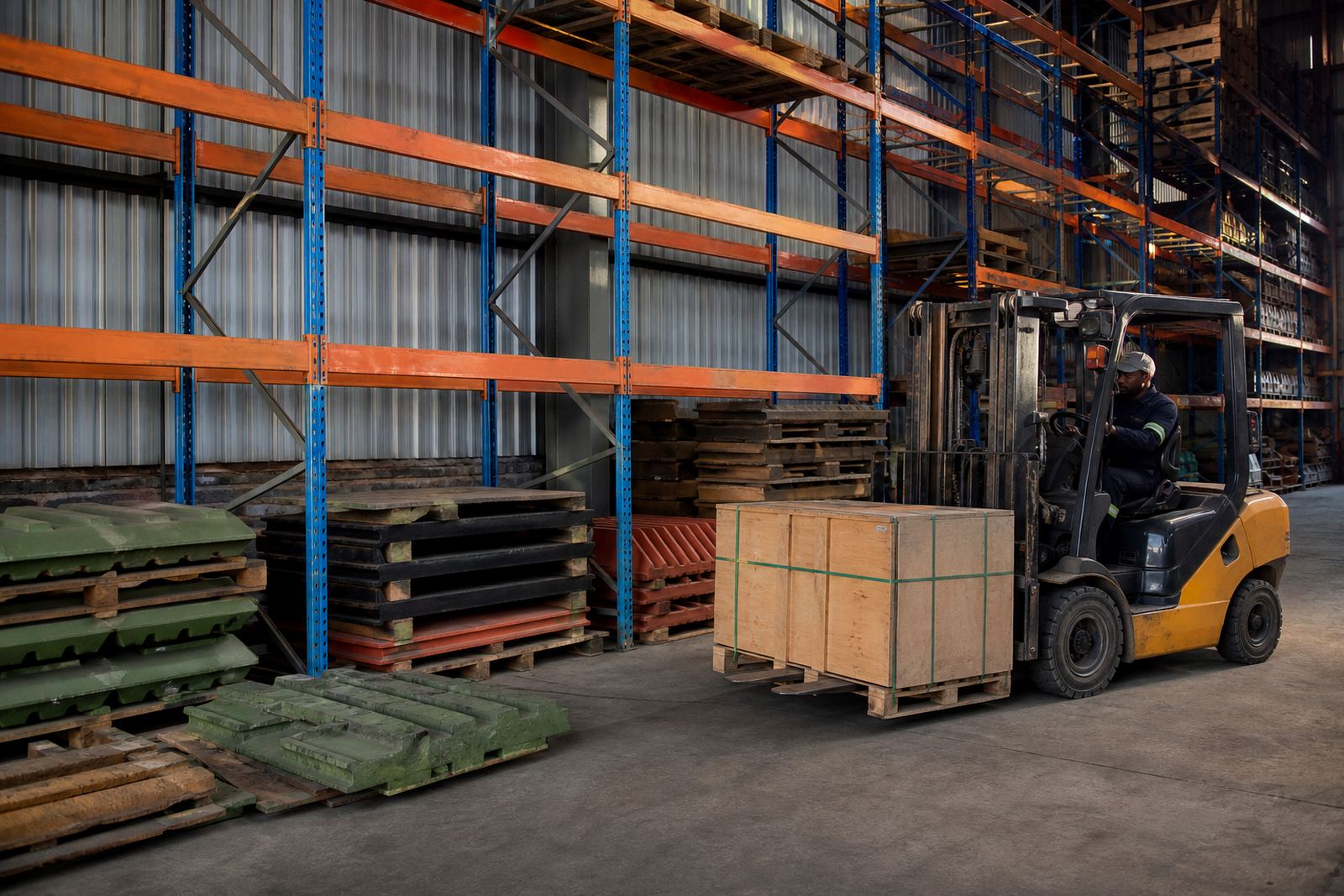
At our Middelburg base we hold stock for regular demand and support deliveries to Mpumalanga, Limpopo, the Northern Cape, North West and Gauteng. When an order arrives with a clear part number, our warehouse and freight teams can move faster and keep the paperwork straight.
What To Send With Your Order So We Can Match It Properly
The best orders are not long, they are clear. If you are unsure of the part number, send what you have and we can work from there. A few details on the enquiry form can save hours later, especially if the part is heading to a mine outside town where same day replacement is not always an option.
- Crusher make or machine type if known
- Part number from the old part, box or drawing
- Part name such as jaw plate, mantle, concave, blow bar or liner
- Side, position or set reference where relevant
- Measurements, including length, width, thickness and weight if available
- Clear photos from the front, back and mounting points
- Delivery site, nearest town and any site entry rules
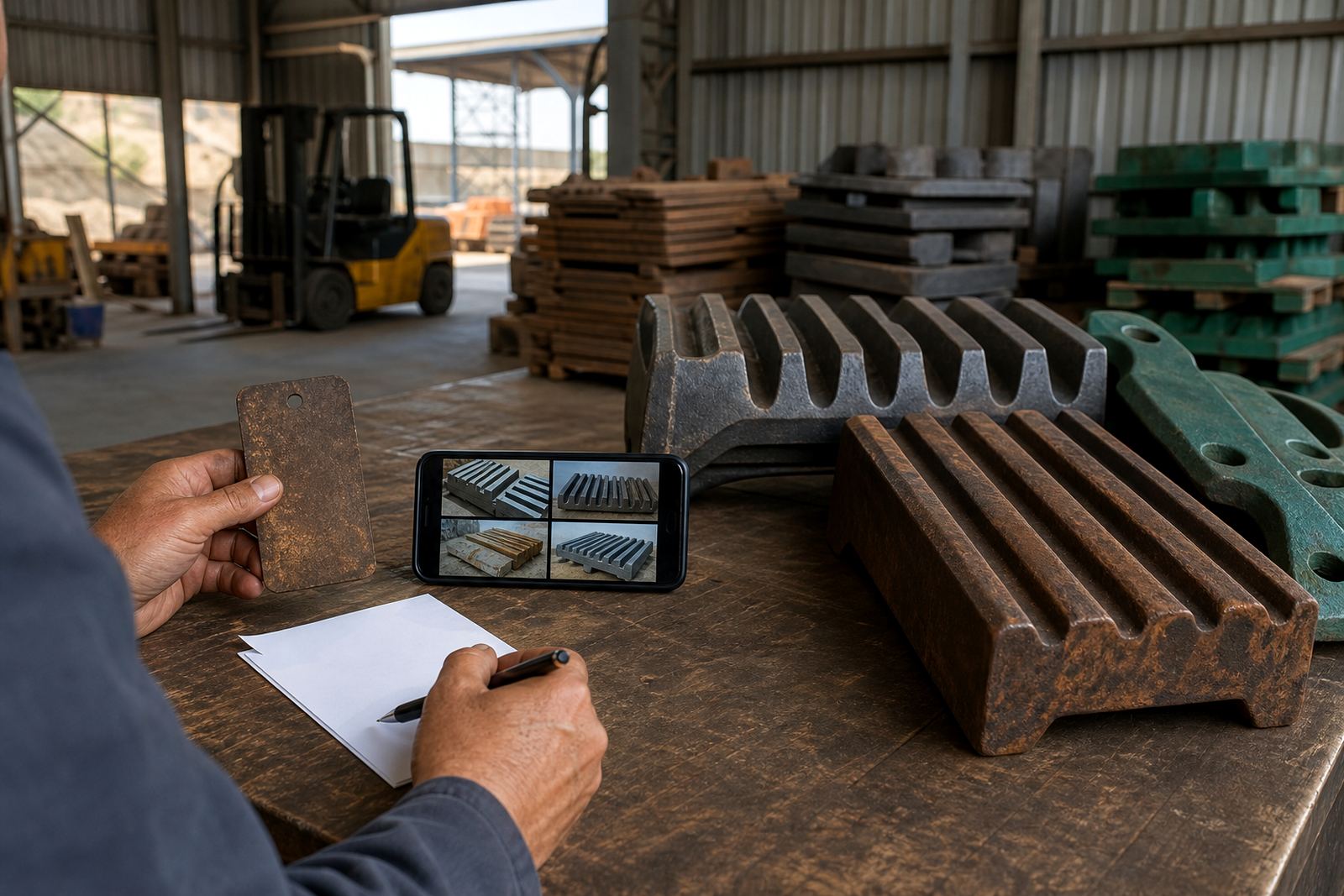
Photos are especially useful when the part number is faded or the old component is worn down. A photo can show bolt holes, profile shape, wear pattern and whether the item has been modified on site. Sometimes the difference is obvious to the eye once you have the right image in front of you and sometimes it is not.
How A Good Photo Prevents The Wrong Wear Part
Many crusher wear parts look similar from a distance, but they do not fit or wear the same way. A photo helps us compare shape and mounting points, and it helps when a site has more than one crusher in use. If the same part is fitted on different machines, the markings can still be different. That is where a clean image makes a real difference.
Try to include the whole part in the frame. Then take a close photo of any stamped numbers, casting marks or worn edges. If the part is broken, include both halves if possible. If there is a bolt pattern, place a tape measure across the holes. That simple step can prevent a wrong dispatch and avoid a wasted run to a remote site.
We often work with operations that are planning around load-shedding, wet weather, or long road stretches to outlying mines and quarries. When the order is complete from the start, the freight side is easier to plan and the site team gets better visibility on expected arrival. That matters when a shutdown window is short and the crusher has to be back in service without delay.
Common Mistakes That Slow Down Crusher Wear Part Orders
Most delays do not come from the road, they start with a vague order. A part described as “the big jaw thing” or “the round cone piece” is not enough to work with. It may sound obvious to the person on site, but the same machine can carry several similar looking items and the wrong one can still pass a quick visual check.
These are the mistakes we see most often:
- Sending only a name with no part number or measurement
- Using an old photo with no scale or marking
- Leaving out the machine position, such as left or right
- Assuming a previous order used the same item without checking
- Forgetting to mention if the machine has been altered
It helps to remember that wear parts change with use. A liner may have worn to the point where its profile is no longer clear, and a blow bar can be chipped or cracked. If the old part has been repaired or modified, tell us that as well. It is better to mention it upfront than to only discover it after the freight has already been booked.
A Local Example From A Remote Site In Limpopo
Picture a quarry outside Burgersfort that needs a set of wear parts before a planned shutdown. The site team has one old jaw plate with a faded number and a second plate that has already broken in service. They send a photo through the enquiry form, together with a ruler against the fixing holes and the machine details they still have on file.
That small amount of information allows our team to check stock, confirm the most likely match, and plan the freight route from Middelburg. Because the order is clear, the load can be prepared with the correct parts, secured properly, and sent with the right delivery instructions for the site gate. There is no need to wait for repeated calls or ask the mine to remeasure the same item three times.
This is especially useful for remote mines in Limpopo, the Northern Cape or North West where a missed dispatch can mean another day lost. A clear order does not remove every challenge, but it gives everyone a better chance of getting the right part on the first trip.
What Our Team Checks Before Dispatch
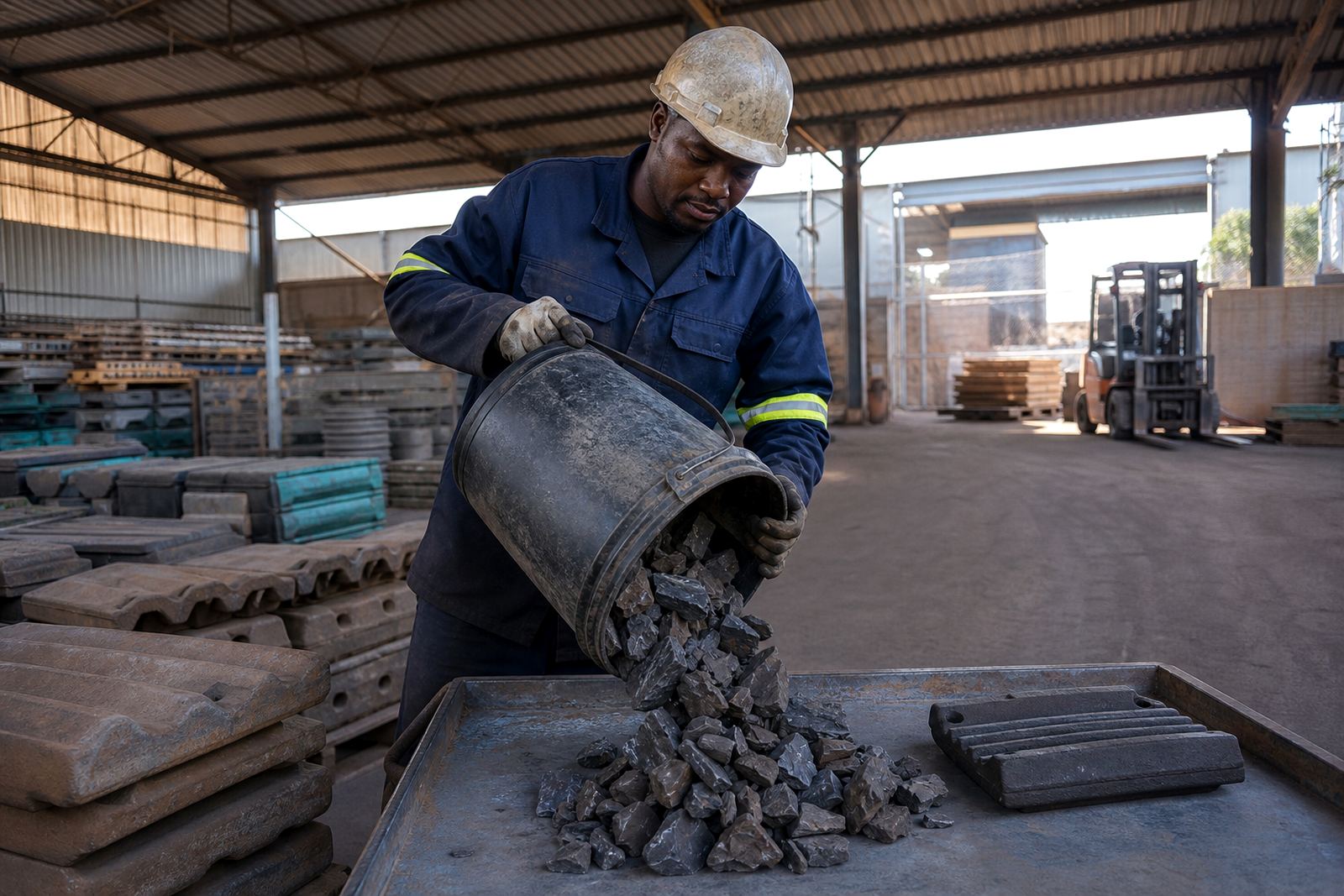
Our team in Middelburg works through the order carefully before anything leaves the depot. Stock Holding, Order Consolidation and Remote Mine Freight all depend on the same principle: get the details right before loading. That reduces the chance of returns and helps the delivery arrive in one piece.
Depending on the order, we will check the following:
- Part number and description against the enquiry
- Measurements and fit where available
- Quantity and whether items are ordered as a set
- Packaging needs for coastal humidity, dust or rain
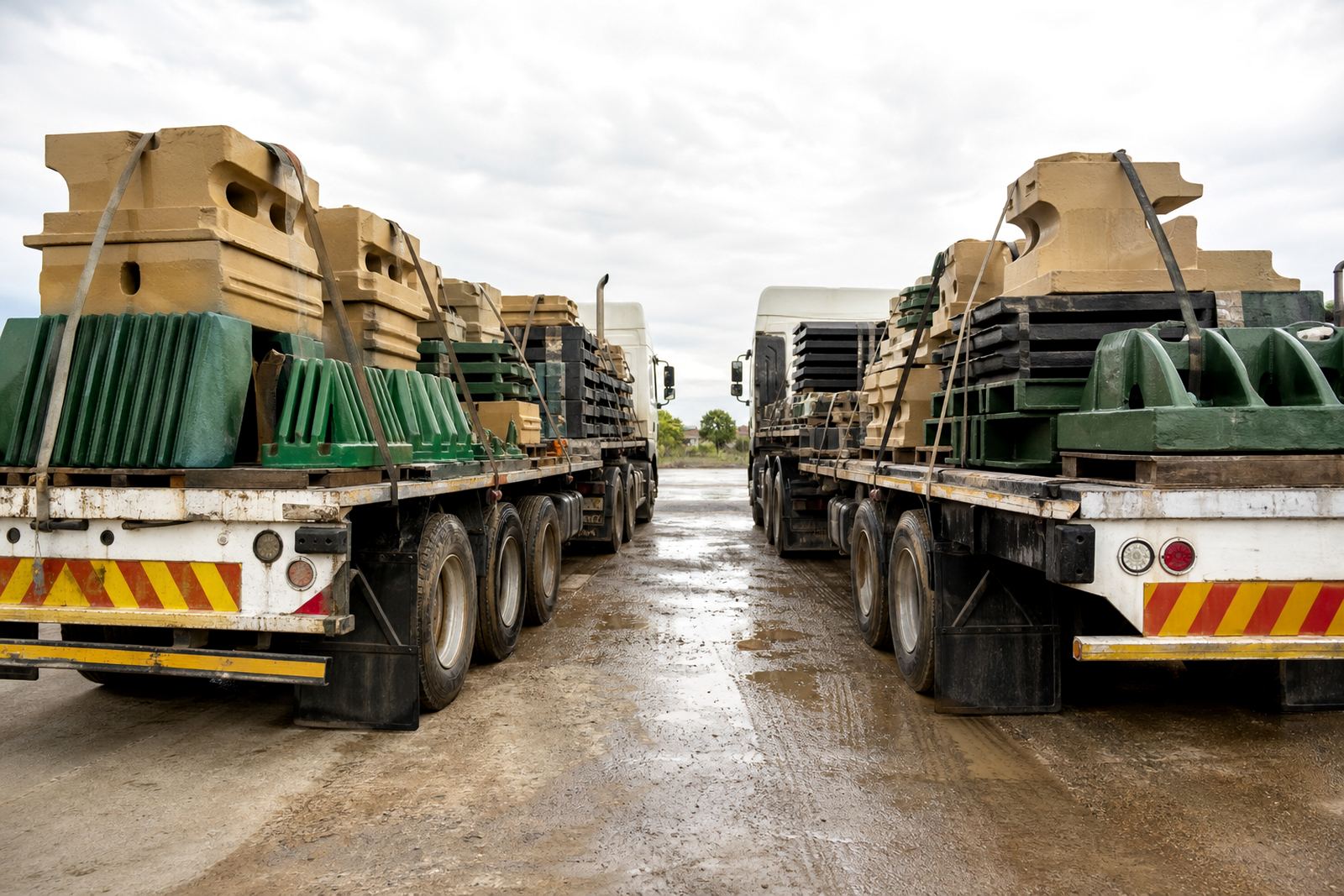
- Load securing for rough roads and long-distance freight
- Delivery notes for site access, offloading and gate control
Some orders need bundled part kits, while others need urgent part dispatch for a machine that cannot wait. Either way, the cleaner the reference, the easier it is for our warehouse supervisor and freight coordinator to work without delays.
The Fastest Way To Place A Clear Order
If you are ordering crusher wear parts and want to avoid delay, start with the part number if you have it. If you do not have it, send a photo, the measurements and the machine details through the enquiry form on our contact page. That gives us enough to begin checking stock and planning the next step.
Thabo Mokoena and the team support mines and quarries across Middelburg, Witbank, Steelpoort, Burgersfort, Phalaborwa, Rustenburg, Kathu and Johannesburg East. We know that remote deliveries need practical planning, not guesswork. When the reference is clear, the process is smoother from first check to final site drop.
Good ordering is not complicated. It just needs the right number, the right photo and a few honest details from site. That is often enough to keep the crusher supplied and the downtime under control.