
Start with the machine details, not just the part name
Before anyone reaches for a jaw plate, mantle, concave, blow bar or liner, confirm the crusher make, model and chamber size from the machine plate or maintenance file. Parts are often described by shape on site, but the same shape can vary by profile, thickness, fixing method and duty. A jaw plate that fits one machine may sit wrong on another, even if the plant team uses the same nickname for it.
It helps to note the serial number, the chamber configuration and whether the machine is in a primary, secondary or tertiary position. In Middelburg and the surrounding coal and aggregate areas, we often see orders delayed because a part was measured only from memory. A quick photo of the machine plate and the worn part usually clears up the first round of questions.
- Record the crusher model exactly as shown on the plate
- Confirm whether the part is fixed left, right, top or bottom
- Check if the part has a standard or heavy duty profile
- Keep the old part aside until the new one is fitted and checked
Measure the worn part where it still tells the truth
Wear changes the shape of a component, so a badly worn part can mislead the person taking measurements. When possible, compare the used part with an unworn section, or check the remaining thickness at several points. For liners and concaves, the wear pattern can show if the material is running too coarse, too wet or at the wrong feed rate.
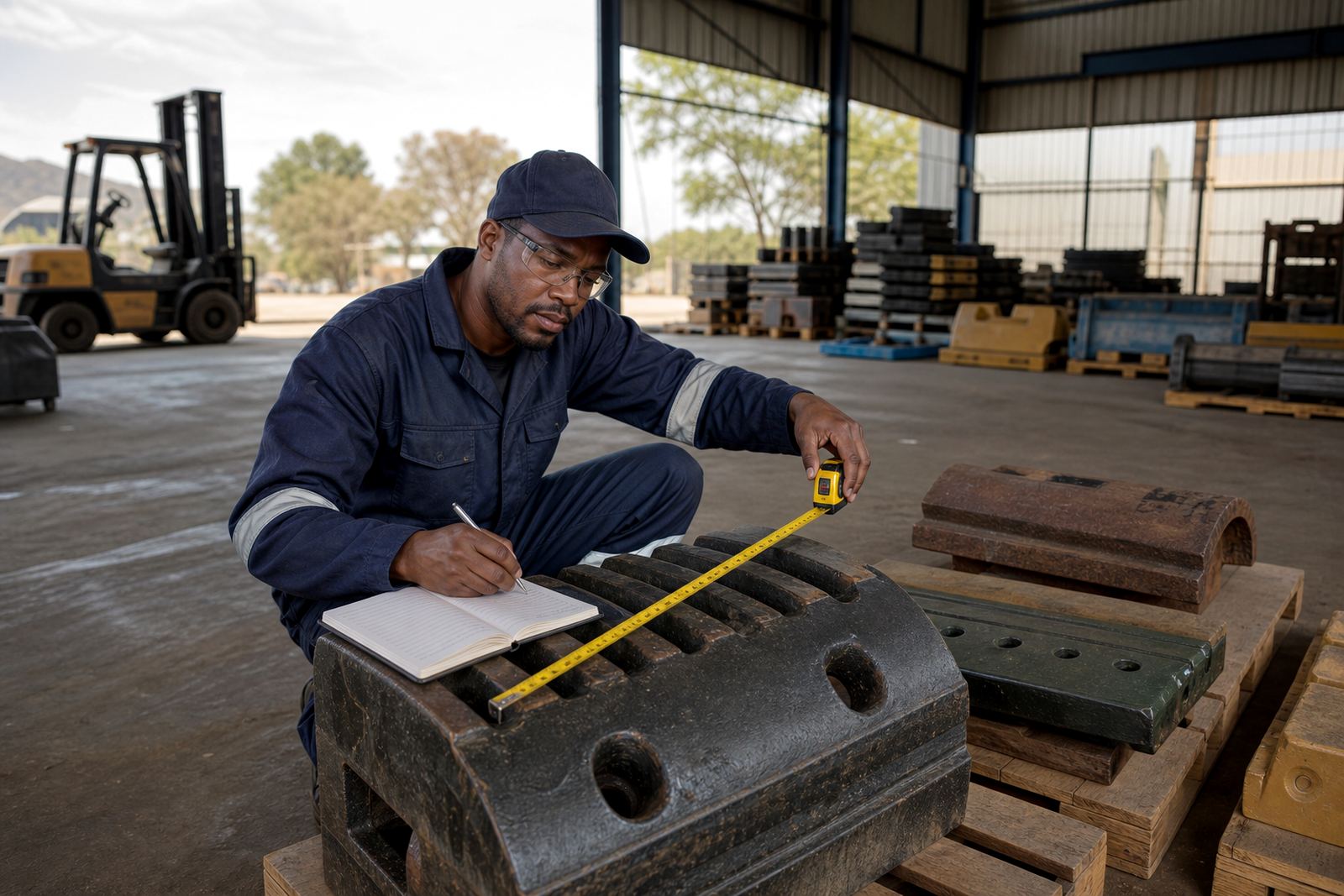
Use a steel rule or tape measure, and measure in millimetres. Note the overall length, width, thickness and bolt spacing, plus the direction of any wear grooves. If a blow bar has chipped corners or a mantle has worn unevenly on one side, write that down too. That detail helps identify the right profile and can save a second dispatch to a remote site.
- Measure more than once if the part is badly worn
- Note bolt holes, slots and locating lips
- Photograph both the working face and the back side
- Mark any cracks, chips or missing sections
Use the wear pattern to read what the crusher is doing
Wear pattern is often the quickest clue to the right replacement. A smooth, even wear on a jaw plate may point to normal use, while patchy wear can show feeding issues, oversize feed or a problem with the closed side setting. In cone applications, a mantle and concave that wear unevenly may point to feed segregation or too much fine material in the chamber.
Take note of what material the plant is processing. Hard rock, quartzite, chrome ore, recycled stone and softer quarry material all leave different wear marks. Coastal humidity can also affect storage and handling, so a part that has sat in a damp shed near Phalaborwa or on a site outside Rustenburg may show surface rust or seized fasteners. That does not always mean the part is wrong, but it does mean the team should inspect it carefully before loading.
- Check if wear is even, one sided or concentrated at the bottom
- Look for signs of feed issues or blockage
- Match the wear pattern to the material being crushed
- Inspect stored parts for corrosion, distortion or damage
Match the fixing points and working face
Many ordering mistakes happen because the working face is correct but the fixing points are not. The bolt pattern, hook points, clamps and seating surfaces must line up properly. A liner that looks close enough on paper can still foul the frame if the fixing points sit a few millimetres out. That is enough to create problems during a shutdown.
When confirming parts, ask the fitters to check the old fastening hardware as well. Worn bolts, damaged wedges and stretched clamps can make a new part behave badly if they are reused. It is worth checking whether the site needs the wear part only, or the full fixing set as well. This is especially useful on remote mine freight into Limpopo, the Northern Cape and parts of North West where a missing bracket can delay the whole install.
- Confirm the fixing method before the order is placed
- Check whether fasteners are being reused or replaced
- Look for bent wedges, damaged bolts and worn seats
- Make sure the part sits flat before the crusher is started
Build a simple site record for repeat orders
A clear part record avoids confusion when the same crusher needs parts again. Keep one sheet per machine with the model, serial number, wear part type, measurements, photo reference and the last fitment date. This is useful for shutdown planning, especially when the plant runs with short stoppages and load-shedding puts extra pressure on the maintenance crew.
A basic record also helps when the site team changes. If a supervisor moves from Steelpoort to Burgersfort, the next person can still identify the correct jaw plate or liner without starting from scratch. It is a small habit, but it saves time when a truck is already on the road and the order must be right first time. One clean record beats three hurried phone calls.
- Keep one file per crusher, not one file for the whole plant
- Store photos of both the old part and the fitted part
- Note the date, operating hours and reason for replacement
- Update the record after every shutdown or major repair
A local example from a busy shutdown in Mpumalanga
On a shutdown near Middelburg, a quarry team asked for a replacement liner set and gave the part description from memory. The old parts were still on the floor, but the wear had hidden several key details. Once the team checked the crusher plate, measured the bolt spacing and compared the wear face, the order changed slightly and the correct set was confirmed before loading. That avoided a return trip to site and kept the shutdown on track.
This kind of check matters most where the freight route is long and the site is remote. Whether the delivery is going to Witbank, Kathu or a mine road outside Johannesburg East, the aim is the same: confirm the part before dispatch. A few minutes spent on identification can prevent wasted time, duplicated handling and a plant standing idle while everyone waits on the wrong component.
If your team is unsure, send clear photos of the worn part, the machine plate and the fixing points through the enquiry form on our contact page. From there, the order can be checked against the machine details and the freight planned around the site requirements, weather and access conditions.