Coal feed that changes with rain, fines and handling
Coal plants do not see the same feed every day. One week the run of mine coal is dry and free-flowing, the next it carries fines, clays and moisture that make blockages and uneven wear more likely. In those conditions, wear parts need to be planned around actual site behaviour, not just the nominal crusher size.
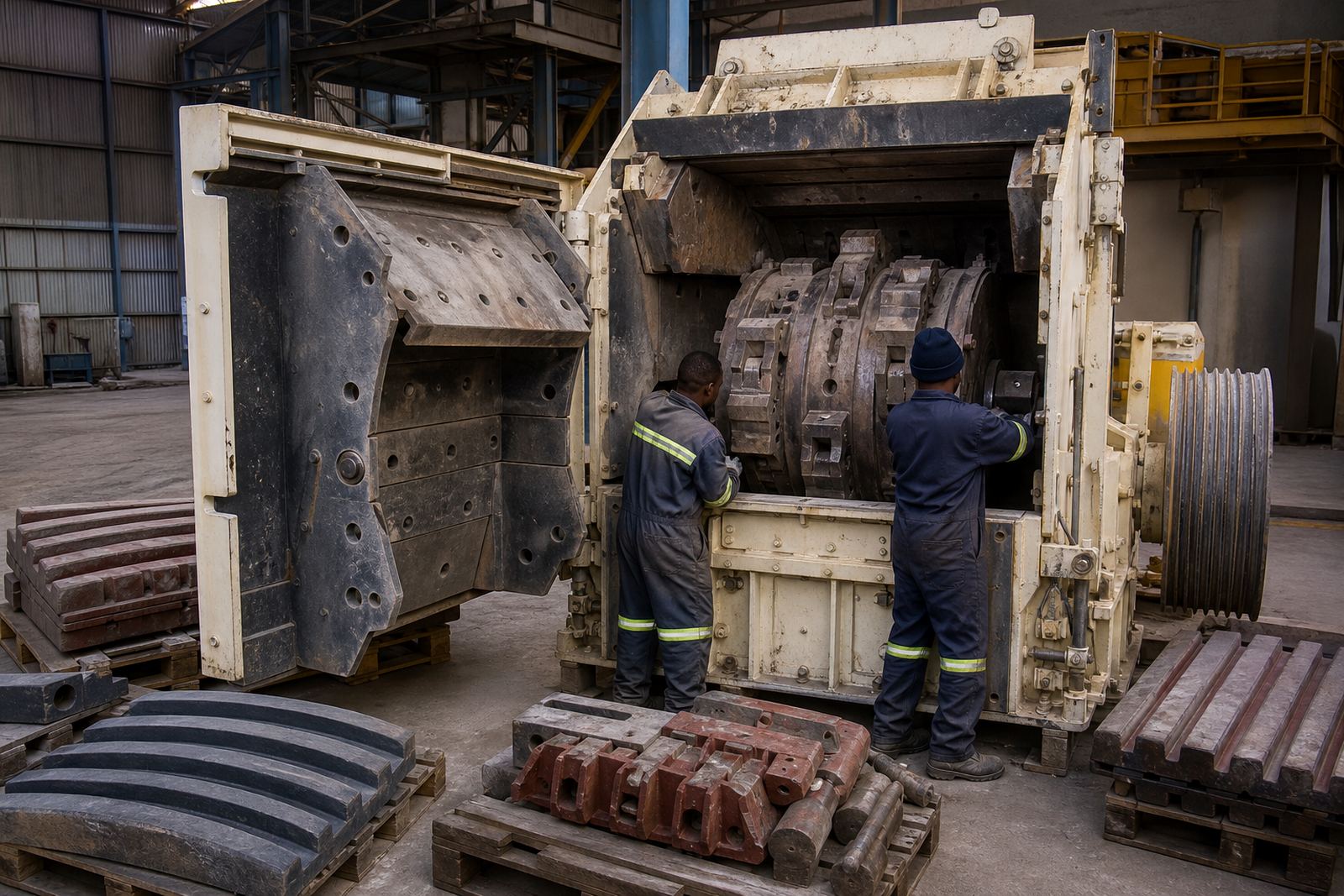
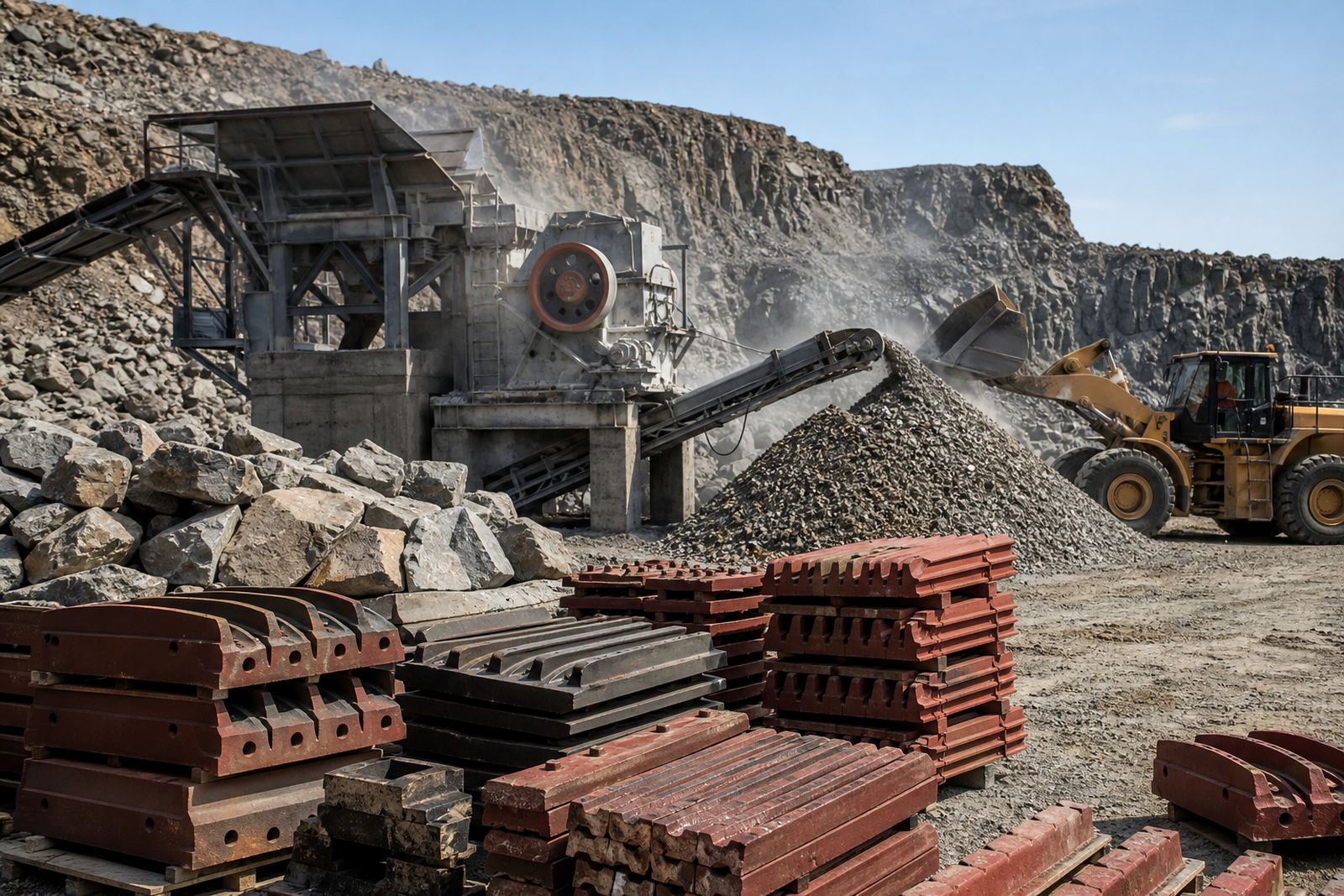
For coal processing, the usual wear items include jaw plates, mantles, concaves, blow bars and liners. The right choice depends on whether the plant is running primary reduction, secondary crushing or shaping material before screening. It also depends on how the feed is handled on site, whether there is a tip, feeder or surge bin feeding the crusher and how often the plant works through wet coal after rain.
At our Middelburg base we keep stock for fast dispatch into Mpumalanga and further afield, so mines and quarries do not have to wait on long lead times when a set is due for change-out.
Typical crusher set-up in coal circuits
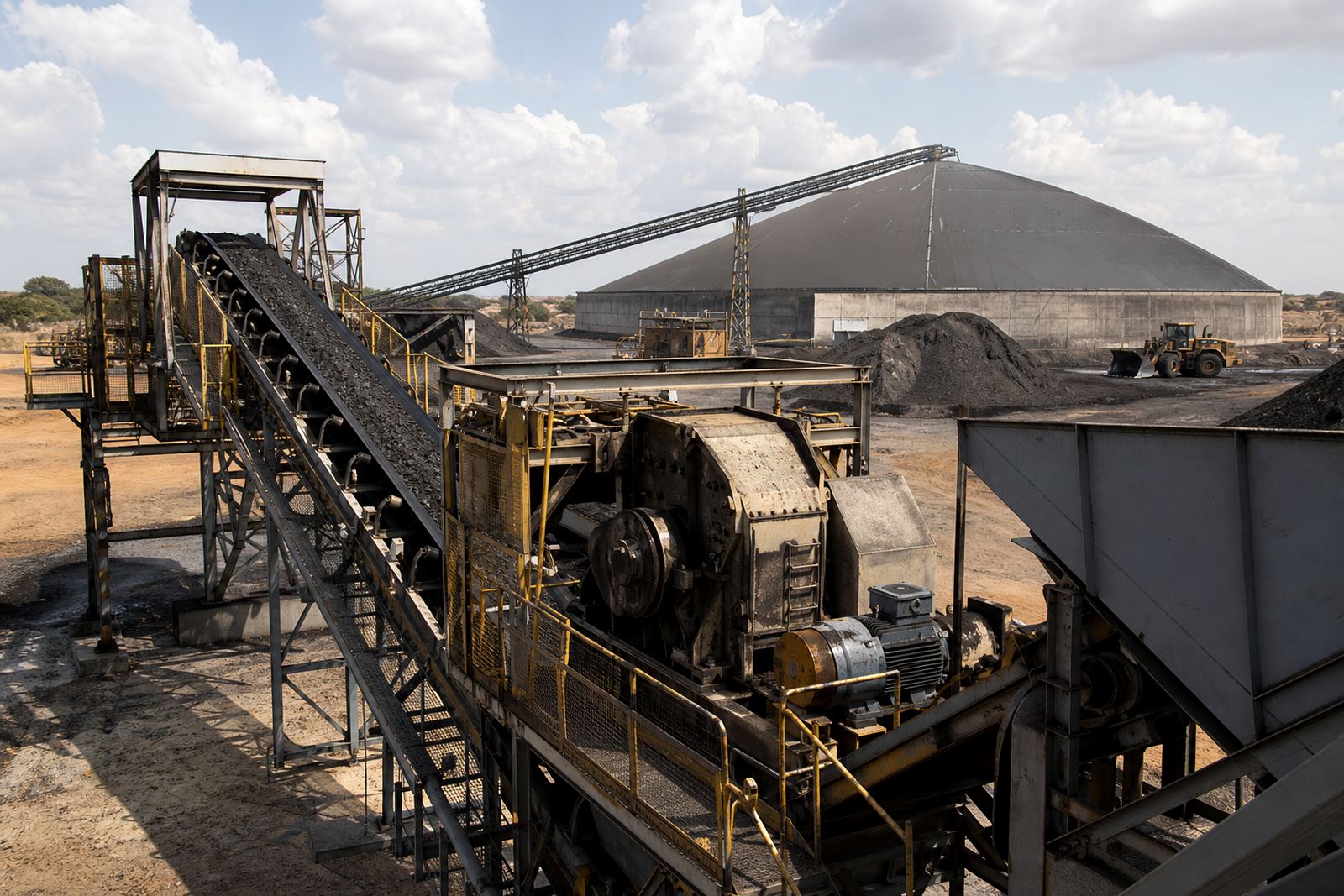
Coal circuits usually combine feed handling, crushing and screening, with the crusher sitting in the middle of the pressure point. When the machine is undersupplied with the correct wear set, operators often see poorer product shape, higher recirculation and more time spent clearing blockages.
A common set-up may include a jaw crusher for primary reduction, a cone crusher for secondary sizing, or an impact crusher where the coal needs more consistent shaping. Chutes, liners, feeder pans and transfer points also matter because wear does not stop at the crusher box. If the material is abrasive, even the transfer points can become a budget line of their own.
- Jaw plates for primary crushing where oversize coal enters the circuit
- Cones, mantles and concaves for secondary reduction and tighter sizing
- Blow bars for impact units where the feed needs a more controlled break
- Liners for chutes, hoppers and transfer points where sliding wear builds up
- Bundled part kits for planned shutdowns and multi-item change-outs
Planning stock around moisture and shutdown windows
Coal sites working in remote areas often lose time on two fronts, transport delays and unexpected wear. A good stock plan keeps the most used parts close to the site and the slower moving items in a controlled holding point. That matters in Limpopo, the Northern Cape, North West and the more isolated parts of Mpumalanga where freight timing can shift with road conditions and site access.
We usually advise clients to separate everyday wearing items from shutdown items. The first group should be easy to dispatch quickly. The second group can be consolidated into a planned order so the site changes several parts at once, rather than pulling the plant apart more than once. That approach cuts labour time and avoids mismatched change-outs. It also helps when load-shedding affects maintenance windows and teams need to work to a shorter practical shift.
Order consolidation, return freight planning and site delivery coordination are useful on coal work because the same truck may need to carry in fresh stock and bring back returns, scrap or empty packaging. That keeps the yard cleaner and the paperwork simpler.
Common mistakes that shorten wear life
One of the biggest mistakes is treating coal like a dry aggregate job. Coal fines are light, but when moisture rises they can pack into the chamber and cause uneven pressure on wear surfaces. Another common issue is running old and new wear parts together for too long, which can affect alignment and reduce the working life of the new set.
Sites also sometimes hold too little stock for high-use parts, then wait for a breakdown before ordering. That usually leads to urgent freight costs and rushed fitting. The opposite mistake is buying too much of one item while ignoring the parts that actually wear first. In coal work, the pattern changes with feed type, moisture and tonnage so the stock list needs review after each shutdown.
- Ignoring moisture changes after rain and pushing the crusher too hard
- Mixing worn parts with fresh ones for too long
- Skipping chute and liner checks because the crusher is the focus
- Ordering by habit instead of looking at wear rates from the last shift report
Freight to remote mines and quarries
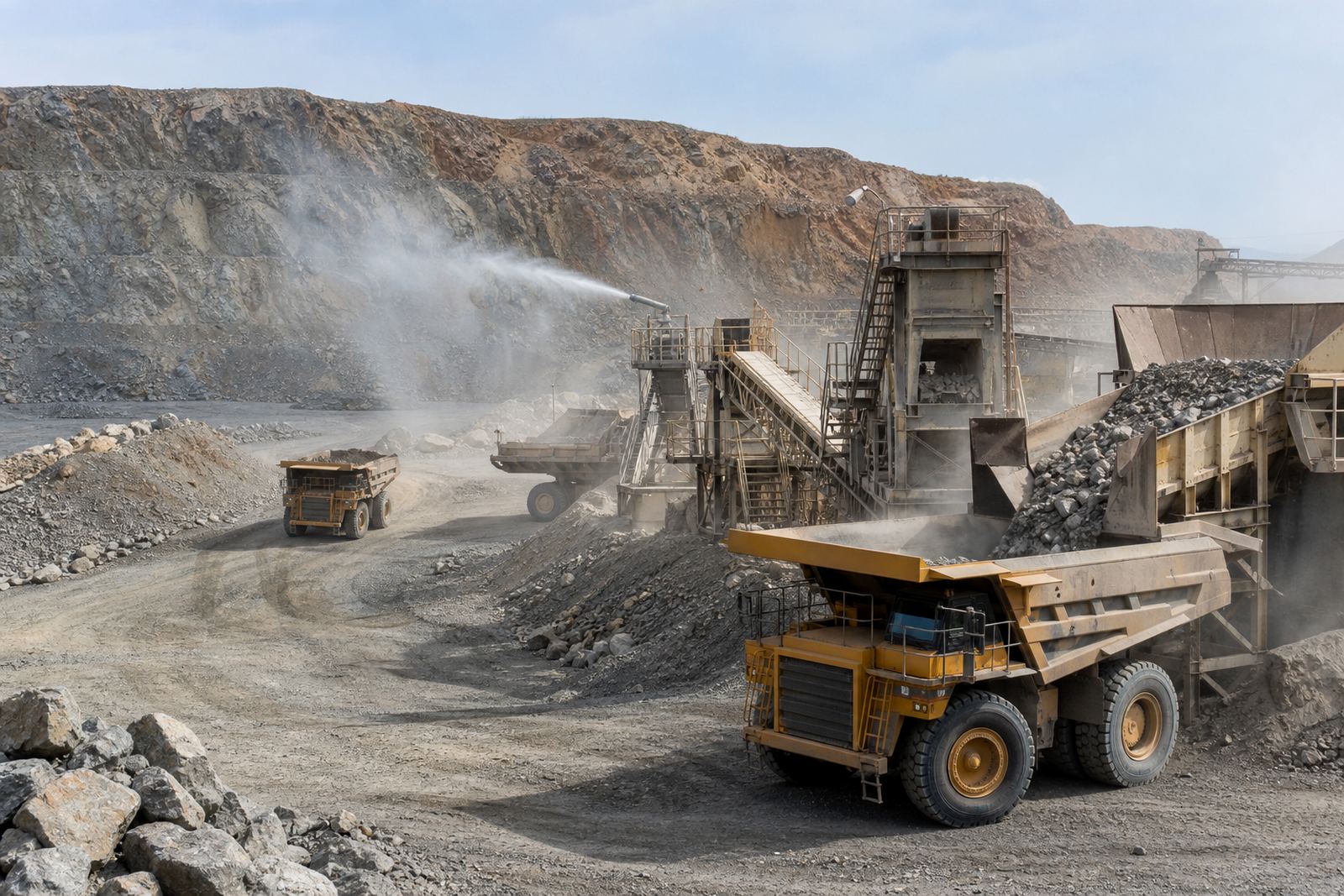
From Middelburg we run freight to coal sites and quarries across South Africa, with regular support into Mpumalanga, Gauteng, Limpopo, North West and the Northern Cape. That includes long routes to remote mines where access roads can be narrow, dusty or affected by weather. Load securing matters there, especially with heavy liners and large crusher parts that must arrive without damage.
Our freight planning is built around the realities of mine access. Some sites need precise gate times, some need induction completed in advance and others need part delivery aligned with contractor shifts. We also plan around route timing so a part does not arrive after a maintenance crew has stood down for the day. For coal operations, that sort of detail saves a lot of lost time.
The Middelburg Depot, Witbank Service Area, Steelpoort Service Area, Burgersfort Service Area, Phalaborwa Service Area, Rustenburg Service Area, Kathu Service Area and Johannesburg East Support are all covered through our order support process.
Budget ranges for coal wear planning
Budgets for coal processing wear parts vary according to crusher type, part size and how often the site changes out. As a working guide, a single small wear item may sit in the low thousands of Rand, while larger crusher sets and bundled change-out orders can move into the tens of thousands. Heavy liners, full sets of jaw plates or cone wear packages can be higher again, especially when freight and shutdown timing are added to the order.
The better way to plan is to separate the cost of the wear item from the cost of downtime. A part that looks cheaper upfront can cost more if it only lasts a short time or causes the crew to stop work twice. For that reason, many coal sites prefer bundled part kits, return freight planning and shutdown planning so the full spend is visible before the stoppage begins.
We support procurement from the enquiry form on our contact page and can help with order consolidation when a site needs several parts at once. It is a practical way to keep budgets under control and avoid emergency buying when a crusher goes down at the wrong time.