When a jaw crusher stops taking feed
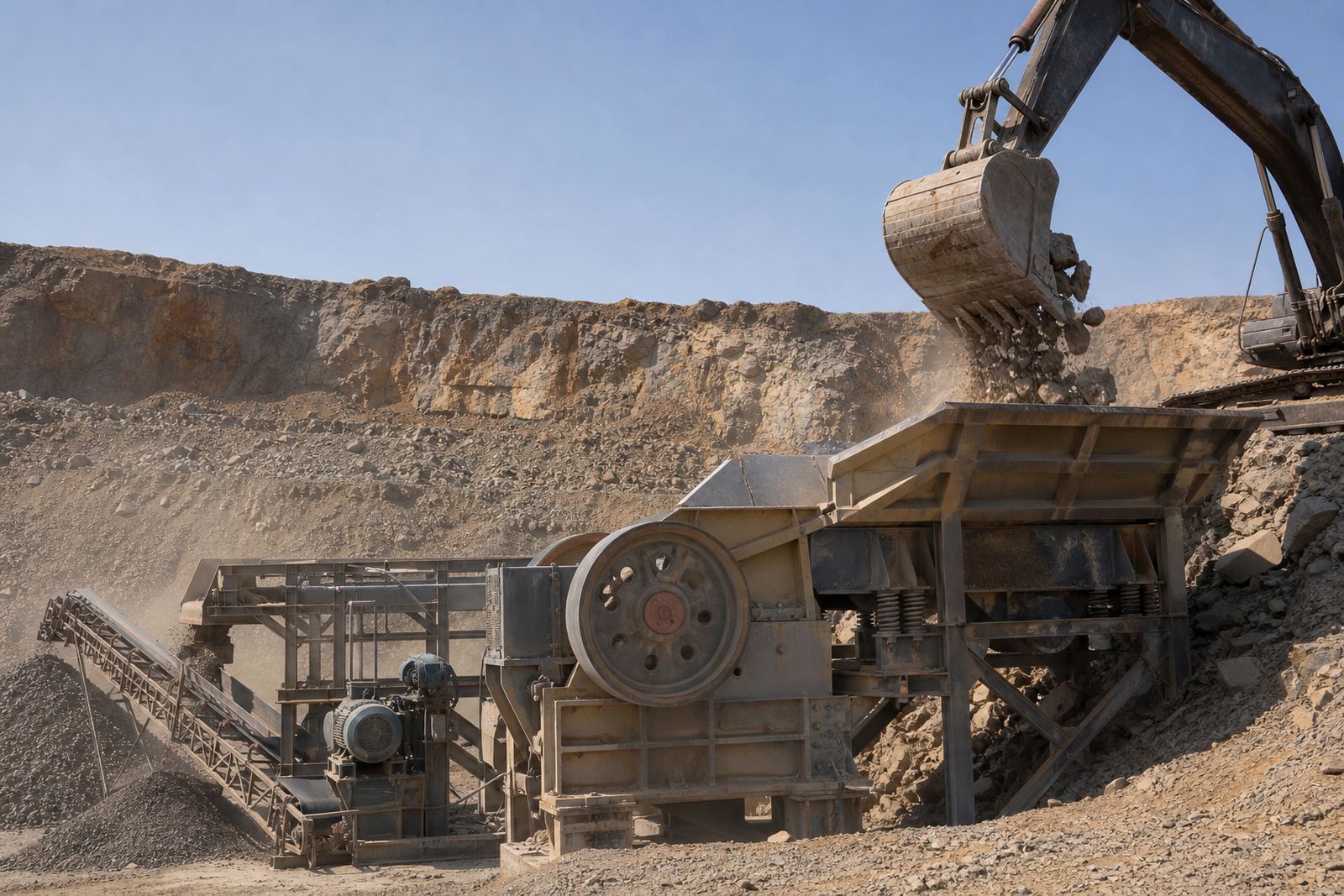
Jaw crushers do the first hard work on site, so when wear parts are late the whole plant feels it. A worn jaw plate, damaged liner or poor fitment can lead to uneven product size, higher power draw and unnecessary stoppages that ripple through screening and downstream crushing.
We work with mines and quarries that cannot wait for a last minute collection from town. That includes remote pits outside Steelpoort, plant yards around Rustenburg, and quarry operations where the road in is rough, dusty and slow after rain. Our focus is simple: keep the right crusher wear parts on hand and move them in time for planned changeouts or urgent breakdowns.
- Jaw plates for fixed and moving applications
- Cheek liners and side liners
- Toggle and support related wear items
- Bundled parts for one shutdown or one machine
Typical wear parts for primary jaw crushing
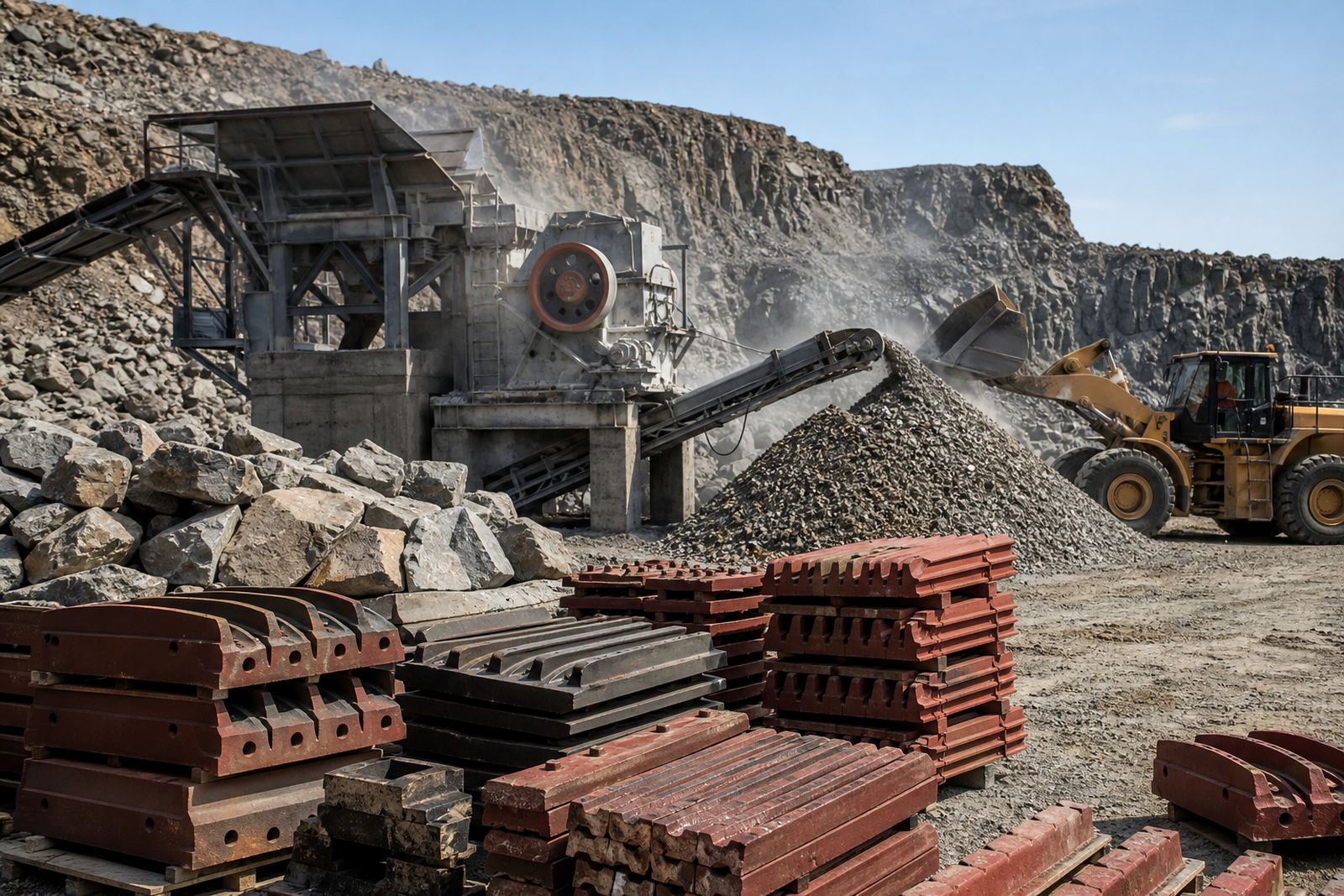
Most jaw crusher support starts with the core wear set. Depending on the machine and duty, sites commonly ask for jaw plates, side liners, cheek plates and associated hardware for a planned replacement. On some setups, the changeout is done as part of a larger maintenance window so the team can inspect the feed chute, discharge area and holding structures at the same time.
We supply crusher wear parts generically, so the conversation stays on fit, schedule and delivery rather than brand talk. That helps when a site runs mixed plant, or when a contractor is moving between a limestone quarry in Gauteng and a hard rock operation in the Northern Cape. The important point is matching the part to the crusher opening, feed pattern and expected wear rate.
- Jaw plates for hard rock, quartz and abrasive feed
- Fixed and moving liners for steady wear control
- Blow bars, mantles and concaves where other crushers are also on site
- Consumable extras packed with the main order when needed
Layout and planning for mine sites and quarries
Good planning starts before the truck leaves Middelburg. On jaw crusher jobs we ask about site access, offloading point, lifting gear available and whether the crusher is inside a plant area or near an open stockpile. That makes a real difference when the route runs through load shedding affected towns, narrow access roads or site gates with limited receiving hours.
For remote mines, we often plan the freight around the shutdown window instead of the warehouse clock. If the site is in Limpopo or the Northern Cape, one extra day of delay can come from road conditions, security checks or weather. So we build the order around the actual changeout time, the lift plan and the crew available on site. It is better to send the full set once than to split the order and pay twice.
- Confirm crusher size and wear set before release
- Check crane, fork lift or telehandler availability on site
- Stage consumables, hardware and spares together
- Leave room for return freight if used parts must come back
Common mistakes that push up downtime
One common mistake is waiting until the old set is fully spent before ordering the next one. That leaves no buffer for freight delays, stock allocation or a missed loading slot at the mine. Another mistake is ordering only the jaw plates and forgetting the liners, hardware or support pieces that should be changed at the same time. It looks like a saving on paper, but it usually creates a second shutdown.
Sites also get caught out by poor stock rotation. If one set is kept for too long in a damp shed near the coast or left open to dust at a quarry, the condition can suffer before fitment. We prefer clear labelling, wrapped pallets and order consolidation so the right parts arrive together and stay clean. A small missing item can hold up a fitter, and then the whole crew waits.
For larger plants around Johannesburg East or Rustenburg, it helps to keep a recorded changeout history. That gives the maintenance team a sense of wear rate and helps budget for the next order instead of reacting after a breakdown.
Freight support for remote mines and quarries
Our Middelburg base is set up to move crusher wear parts to places where access is not simple. That includes mine roads in Mpumalanga, haul routes into Limpopo, and long-distance freight into the Northern Cape where timing and load security matter. We also support quarry deliveries where the receiving team may only have a short window between blasting, loading and plant maintenance.
Load securing is part of the job. Jaw crusher wear parts are heavy and awkward, so pallets must be packed for stable transit, with the order list checked before dispatch. We can also help with return freight planning when old parts need to come back, or when a supplier pickup has to be lined up after shutdown.
- Remote mine freight across South Africa
- Quarry deliveries and site delivery coordination
- Urgent part dispatch when stock is available
- Order consolidation for grouped shutdowns
Budget ranges for jaw crusher wear part support
Budget depends on crusher size, wear rate, site location and whether the order is for one set or a full shutdown package. Smaller jaw crusher wear part orders may sit in the tens of thousands of Rand, while larger shutdown bundles can move into much higher ranges depending on the parts included. Freight to remote sites also needs to be factored in, especially where delivery is to a mine road, a quarry in a rural area or a site with limited access hours.
We advise clients to budget for the full changeout, not only the main wear item. That usually means the jaw plates plus liners, any supporting wear pieces, loading and freight, and a bit of contingency for urgent dispatch. A well planned order is usually cheaper than paying for two deliveries and an extra stop on the plant line. For many sites the better saving is not on the part alone, but on avoiding the second shutdown.
When you send the enquiry through our contact page, include the crusher type, site location, delivery deadline and whether the job is planned or urgent. That gives us enough detail to check stock, set up the freight and keep the order moving without back and forth.