The brief from a limestone site near Mokopane
The plant was running a fixed crushing programme and needed repeat deliveries of wear parts without waiting for each order to be sourced from scratch. The main items were impact plates and feed liners, with the usual pressure points of limited storage at site, long transport runs, and the need to keep changeouts aligned to shifts and shutdowns.
The brief was straightforward enough, but the constraints were real. The site sits outside the main metro freight routes, so collections and drop offs had to be planned with road conditions, weighbridge access and plant access times in mind. The team wanted one point of contact, clear order tracking and stock availability that could support more than one maintenance cycle at a time.
- Client type: limestone producer
- Location: near Mokopane, Limpopo
- Parts required: impact plates and feed liners
- Supply model: repeat deliveries from stock held in Middelburg
What we held in stock for the campaign
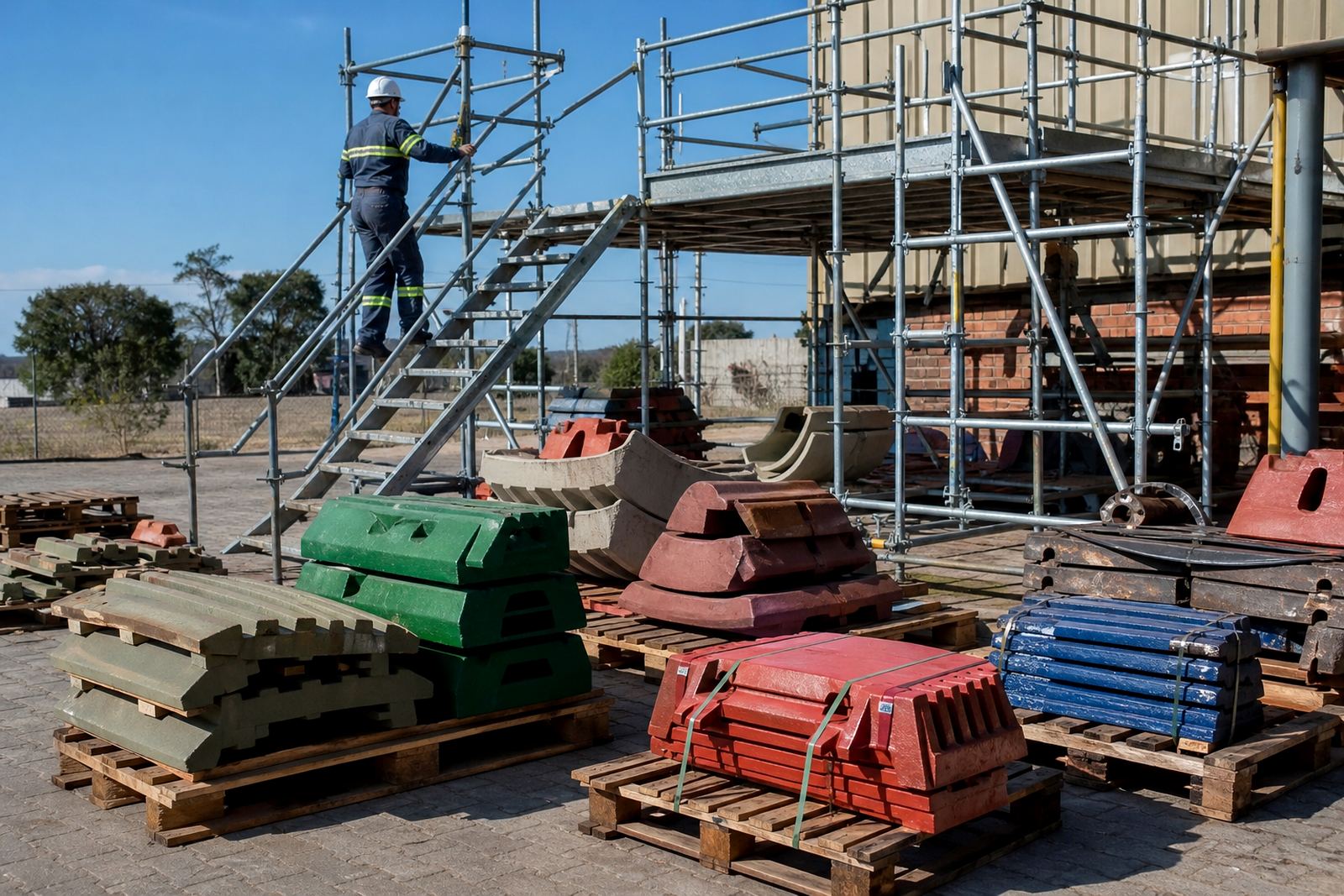
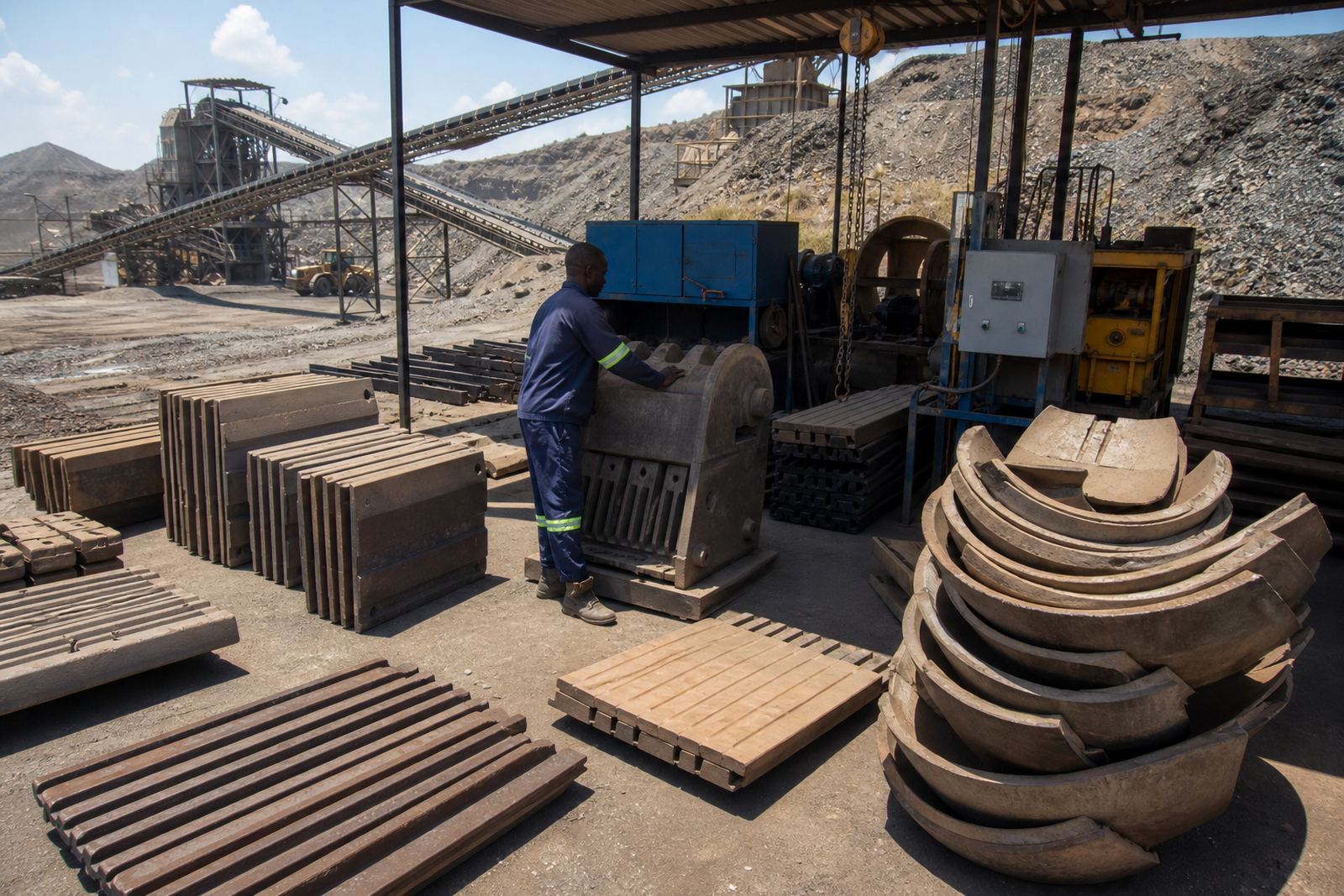
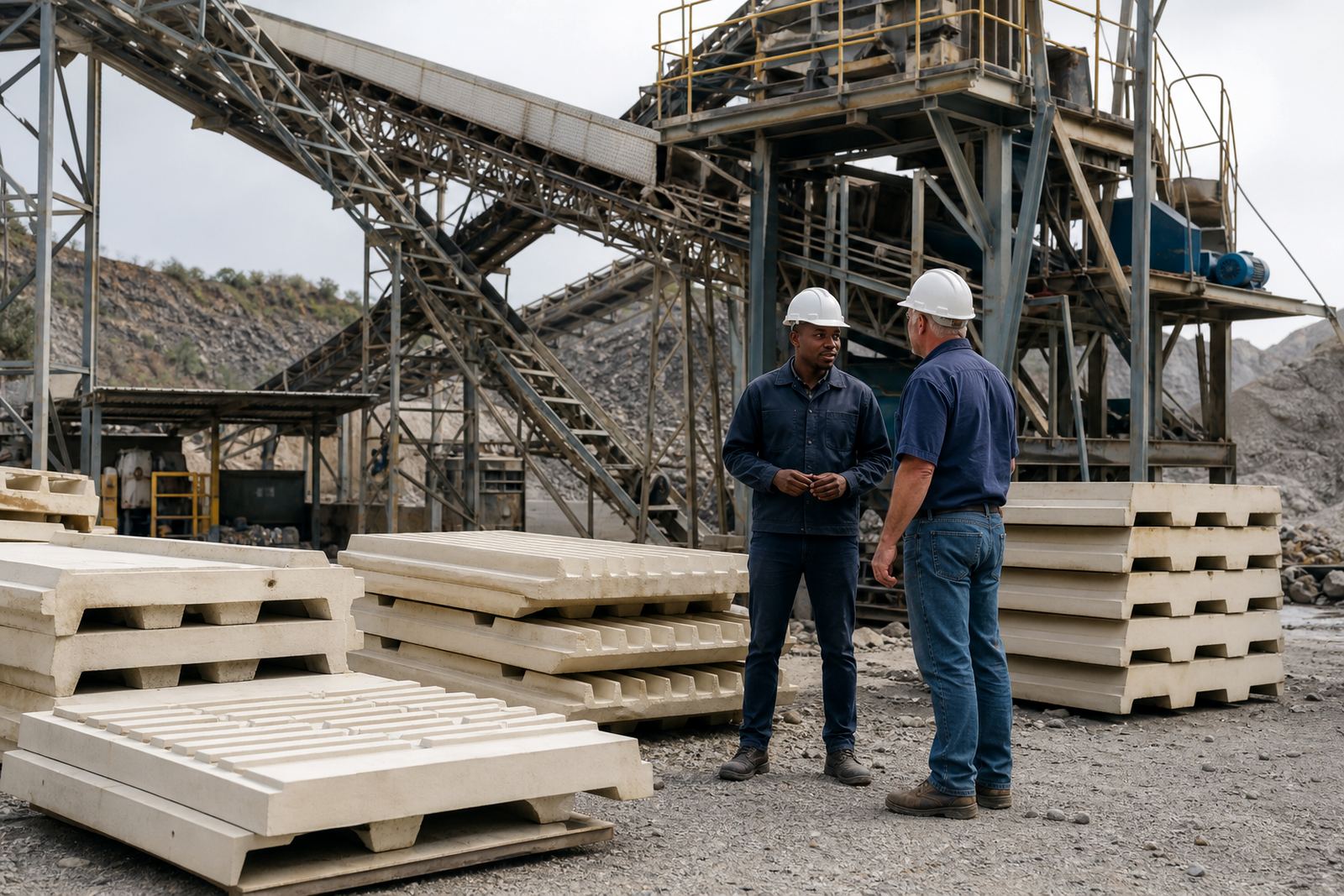
We held crusher wear parts in Middelburg, Mpumalanga, so the plant could call off what it needed without delay. The order mix was kept practical, with wear parts packed for safe handling, counted before dispatch and grouped so the receiving team on site could check each item against the picking list. That matters on sites where spare storage is tight and changeouts are done under time pressure.
For this project, the stock plan covered feed section protection and impact zone wear. We supplied parts in standard industrial forms used on limestone duty, with the focus on fit, repeatability and quick issue from the warehouse. The idea was not to overcomplicate it, just to keep the right items on the shelf and ready to move.
- Stock held in Middelburg for repeat issue
- Parts packed to reduce transit damage and handling delays
- Order consolidation done before loading
- Dispatch notes prepared for site receiving
Freight planning to a remote quarry environment
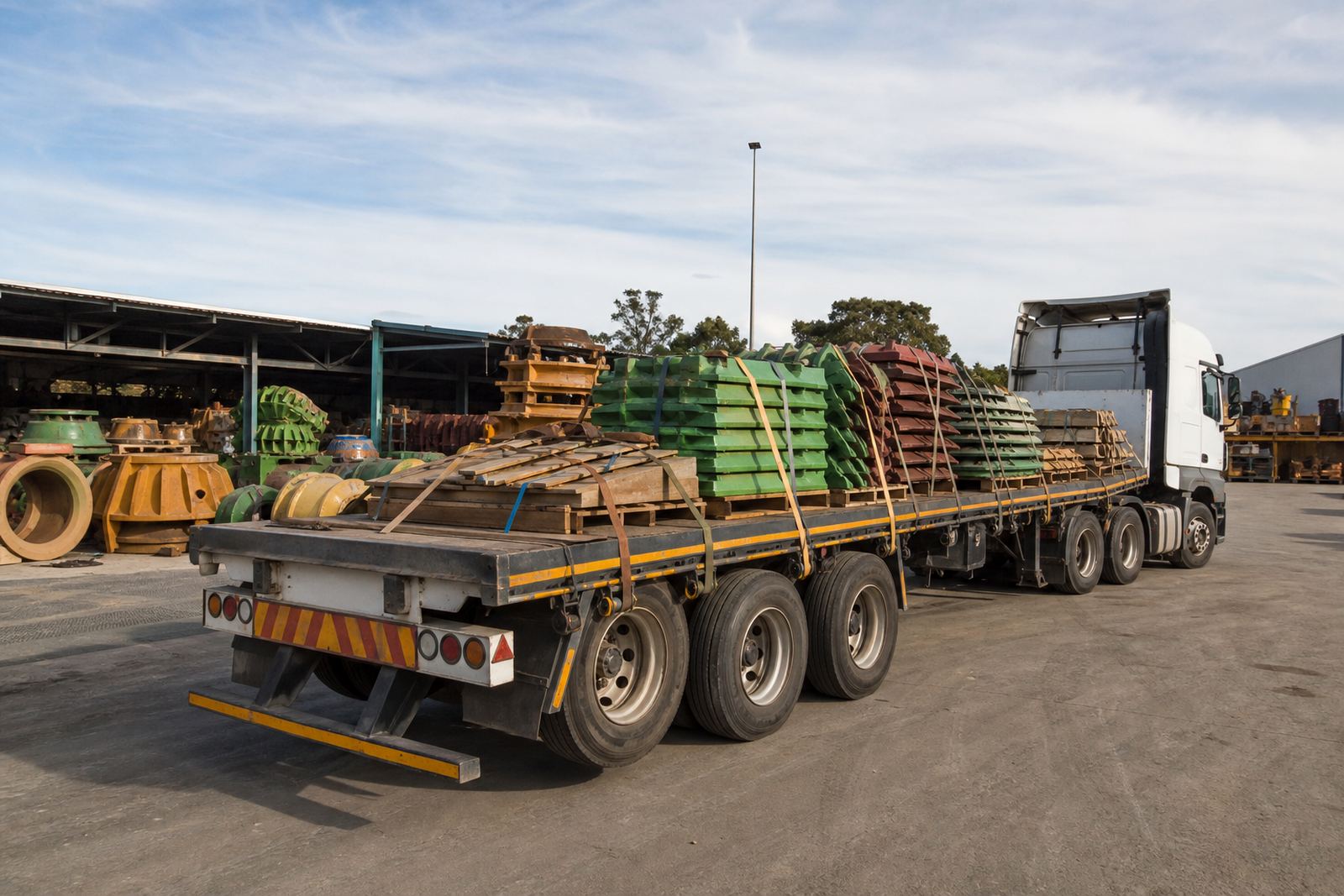
The freight side was as important as the parts. Limestone operations often have narrow receiving windows, and a missed truck can push a changeout into the next shift. We planned the route with the destination in mind, including entry instructions, delivery lead times and the best load securing method for rough road sections. The handover had to be simple, because site teams do not have time to rework paperwork at the gate.
We coordinated the transport from Middelburg through to the Mokopane area with load securing suited to crusher wear parts, and we kept the client updated through each stage. When load-shedding and general site interruptions can already affect plant output, transport timing has to be boring in the best way possible. It lands when it should, and the parts are there when the fitter needs them.
- Route planning for Limpopo freight movements
- Gate and receiving coordination before dispatch
- Load securing for heavy wear parts
- Delivery timing matched to maintenance slots
How the supply run was managed week by week
The first week was used to confirm the part list, delivery pattern and receiving process. We then put the stock aside, checked quantities and prepared the first dispatch. By week two, the repeat delivery rhythm was in place. The site was able to plan ahead with clearer visibility on what was coming and when, which helped the maintenance crew line up labour and lifting gear without waiting around.
Over the following weeks, we continued with order consolidation and urgent dispatch support where needed. When a plant is burning through wear material at a steady rate, the job is to keep the cycle predictable. That means better purchasing control, fewer emergency calls and less risk of stopping a shift because a consumable was missed or counted late.
- Week 1: brief, part confirmation and stock set aside
- Week 2: first delivery and receiving process confirmed
- Weeks 3 to 6: repeat calls, consolidated freight and order support
- Ongoing: shutdown planning for future maintenance windows
Results on site and what changed for the maintenance team
The main result was reliability. The plant had a workable supply line for impact plates and feed liners without having to chase each order individually. That improved planning at site level, especially for maintenance teams working around production targets and the realities of remote receiving. There was less last-minute pressure on procurement, and the stock position in Middelburg gave everyone a clearer lead time.
The maintenance team could schedule replacements with more confidence, and the quarry side of the operation had fewer interruptions linked to missing consumables. In a dusty limestone environment, that kind of consistency matters. It also makes it easier to keep records tidy for internal checks and handover between shifts, which can get messy fast if part numbers and delivery notes are not aligned.
- More predictable part availability
- Fewer urgent calls for small top up orders
- Better planning around shutdowns and changeouts
- Cleaner receiving and stock control at site
What we would do again for a similar Mokopane plant
If we were setting up the same type of run again, we would keep the same structure: hold stock close to the freight point, confirm the site receiving window early, and bundle related parts together so the plant gets a complete working set rather than a partial delivery. That approach saves time for the quarry and it keeps freight movements sensible across long distances.
For limestone plants near Mokopane and other remote sites in Limpopo, we would use the same mix of stock holding, route planning and order consolidation. The job is to keep crusher wear parts moving from shelf to site without fuss. Simple systems usually work best, especially when access roads, weather and plant stoppages can all change in a day. A small typo or two in the paperwork is easier to fix than a missed shutdown window, so we keep the process tight and the instructions clear.
- Hold fast moving wear parts in Middelburg
- Consolidate orders before dispatch
- Plan around plant stoppages and receiving times
- Keep one contact point for order support
Key facts
| Project type | Repeat supply for a limestone plant |
|---|---|
| Location | Near Mokopane, Limpopo |
| Key parts | Impact plates and feed liners |
| Stock base | Middelburg, Mpumalanga |
| Delivery model | Repeat freight with order consolidation |
| Timeline | Initial setup in 1 week, then repeat runs over the following weeks |