Start With the Job, Not the Parts List
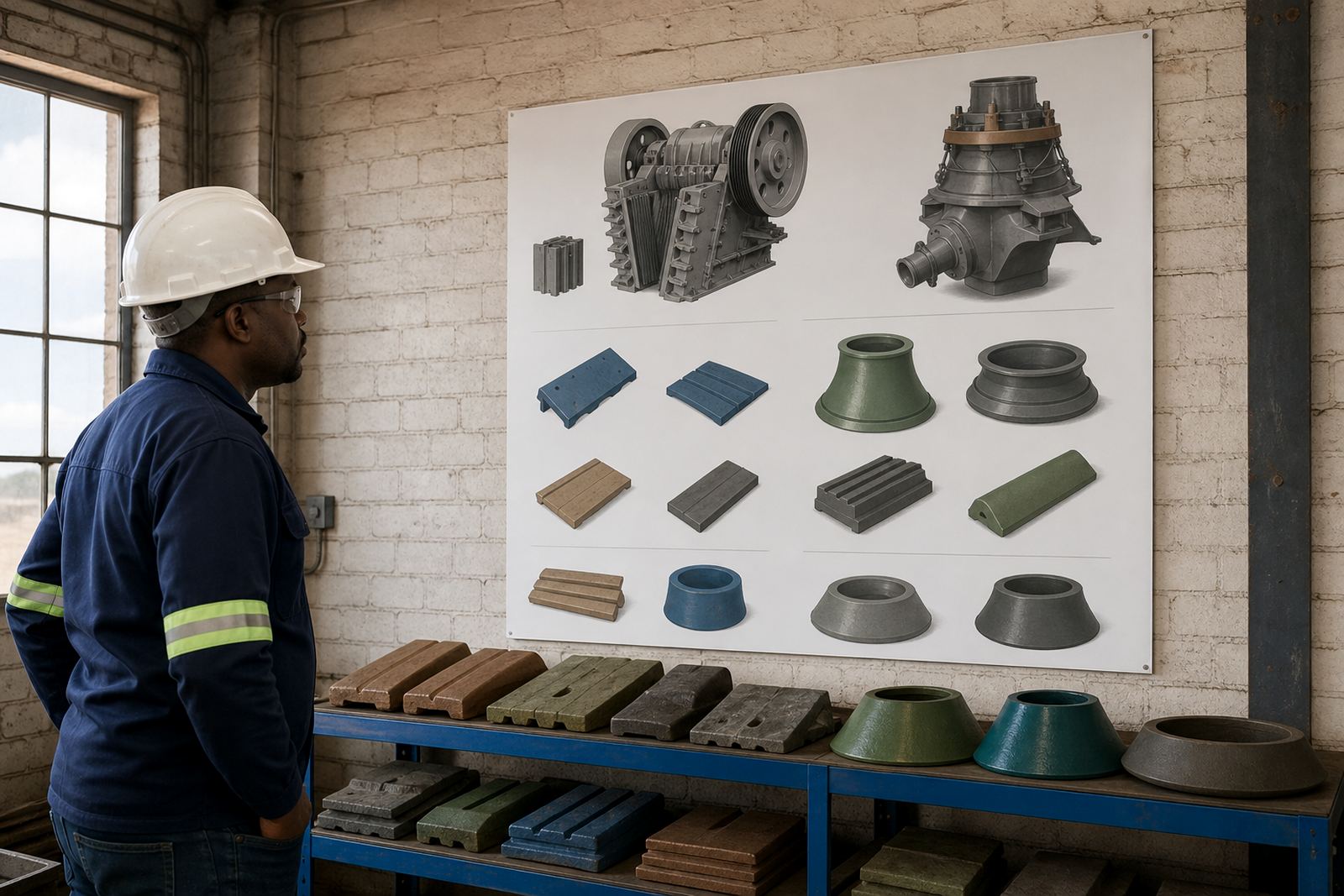
A good kit starts with the crusher and the work that needs doing. If the machine is due for a liner change, a chamber reset or routine wear replacement, list the parts that normally move together rather than ordering each item on its own. That usually means jaw plates, mantles, concaves, blow bars or liners, plus the fixings and small items needed to complete the changeout.
At our Middelburg, Mpumalanga base, we see the same problem on remote mine and quarry sites again and again: the main wear part arrives, but the fasteners, shims, wedges or sealing items are still on another truck. A proper kit prevents that delay and keeps the crew from standing around waiting for one missing piece.
Match Wear Parts With the Support Items They Need
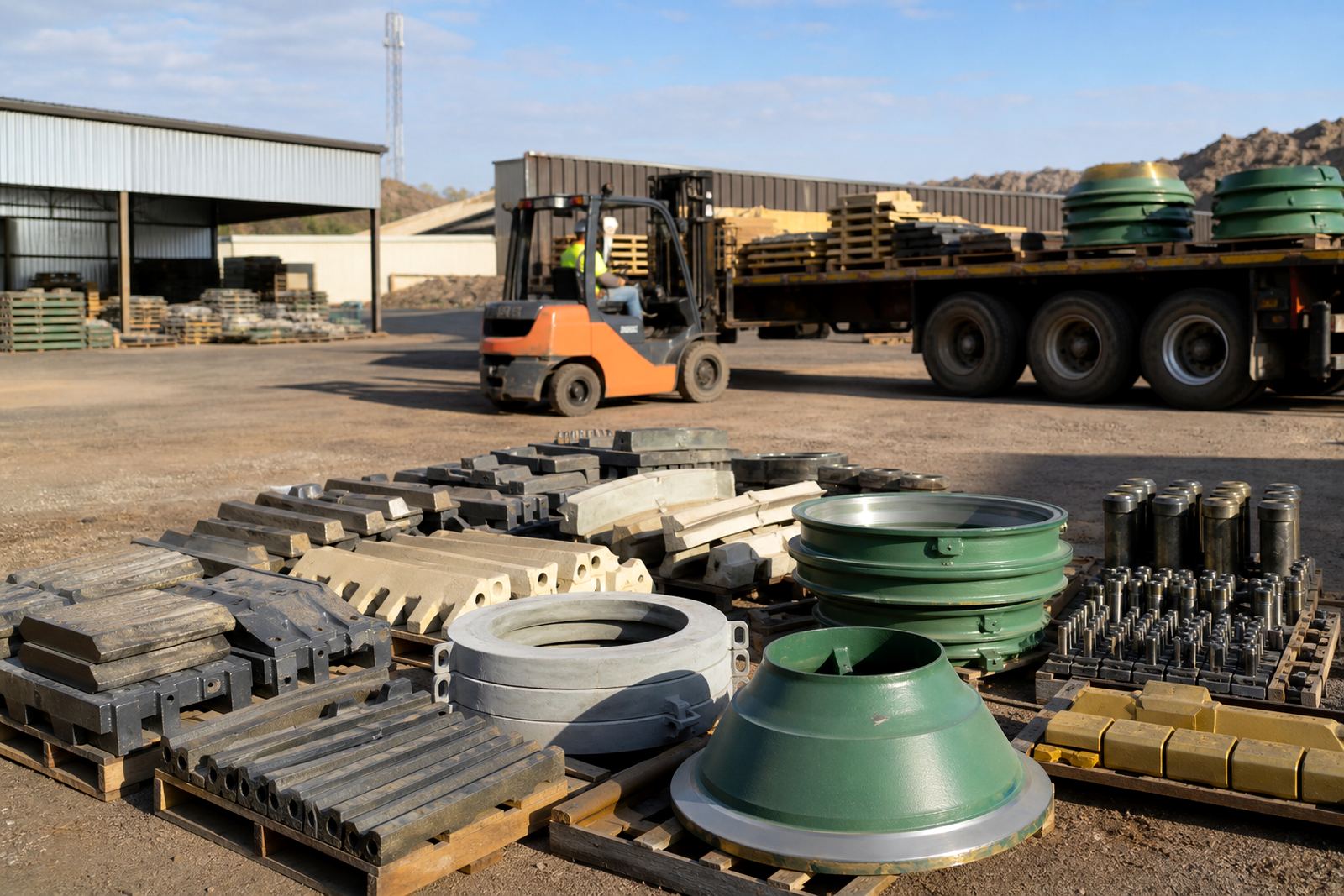
Build each kit around the actual machine and the planned maintenance window. Keep the core wear parts together with the support items that are always used at the same time. This makes receiving, counting and issuing far simpler when the site is busy and power interruptions or weather delays have already eaten into the shift.
- Primary wear parts: jaw plates, mantles, concaves, blow bars or liners
- Fixings: bolts, nuts, washers, clamps, wedges and retaining items
- Sealing and protection: seals, gaskets, dust control items and packers
- Handling support: slings, marking tags and load securing material
If your site has more than one crusher on the go, label each kit clearly by machine, chamber and maintenance date. A simple paper tag still helps when a foreman is working through several deliveries at once.
Build for Remote Conditions and Long Lead Times
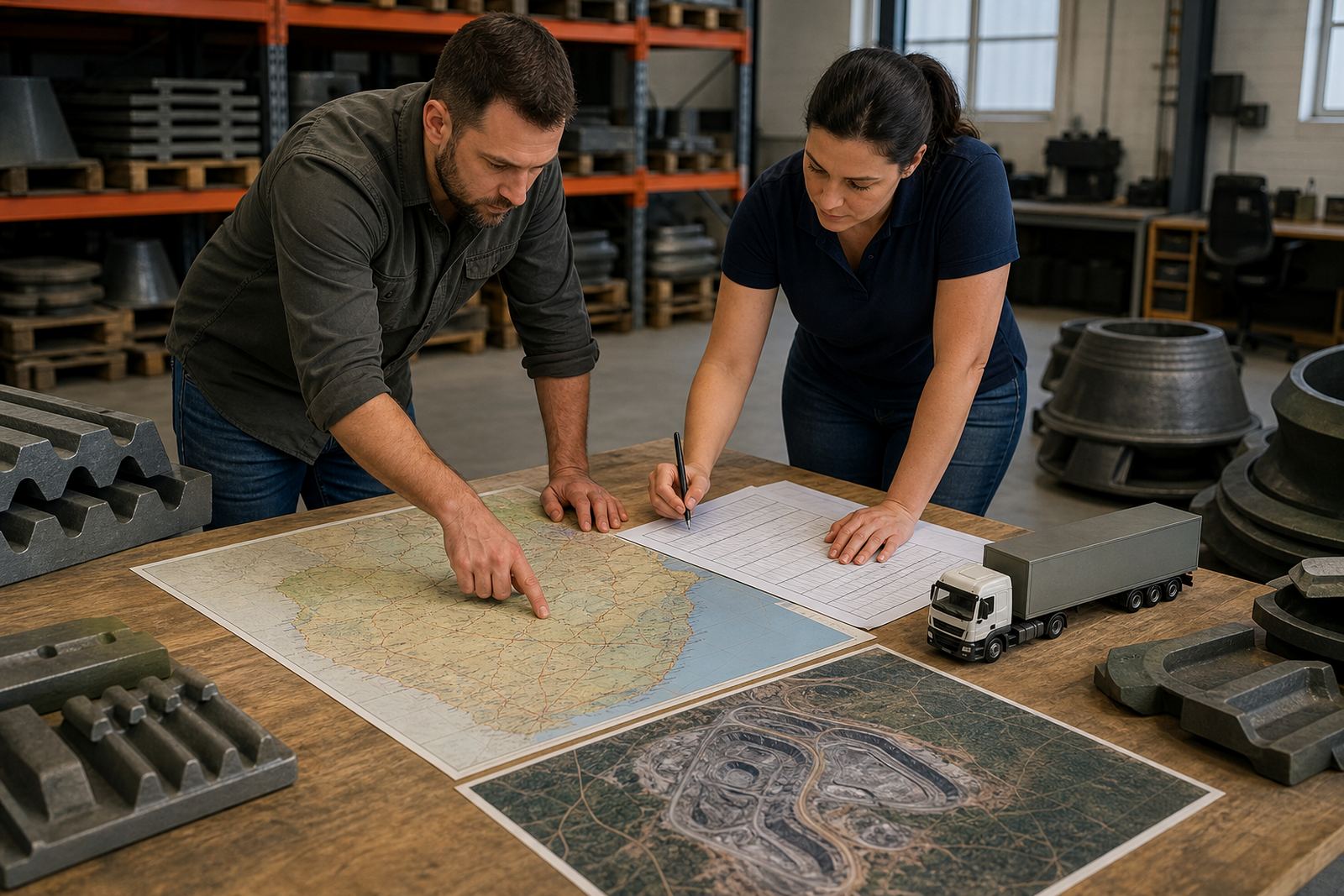
Remote mines in Mpumalanga, Limpopo, the Northern Cape, North West and Gauteng often need more than one delivery point checked before a part can be signed in. Road access, escort requirements and site timings all affect how a kit should be packed. For that reason, the bundle should be easy to identify, easy to offload and hard to mix up.
We often recommend splitting one shutdown into two or three smaller kits if the replacement work happens in stages. That helps when a site has limited storage or when the crusher bay is tight and only part of the team can work at a time. It also makes return freight planning easier once the used parts come off.
- Confirm the site, gate procedure and delivery slot before dispatch
- Group by machine number or plant section, not by general part type only
- Use clear marking for fragile or heavy items and keep each kit in one countable bundle
- Allow for extra securing on corrugated roads and rough access tracks
Use a Simple Checklist Before the Kit Leaves Middelburg
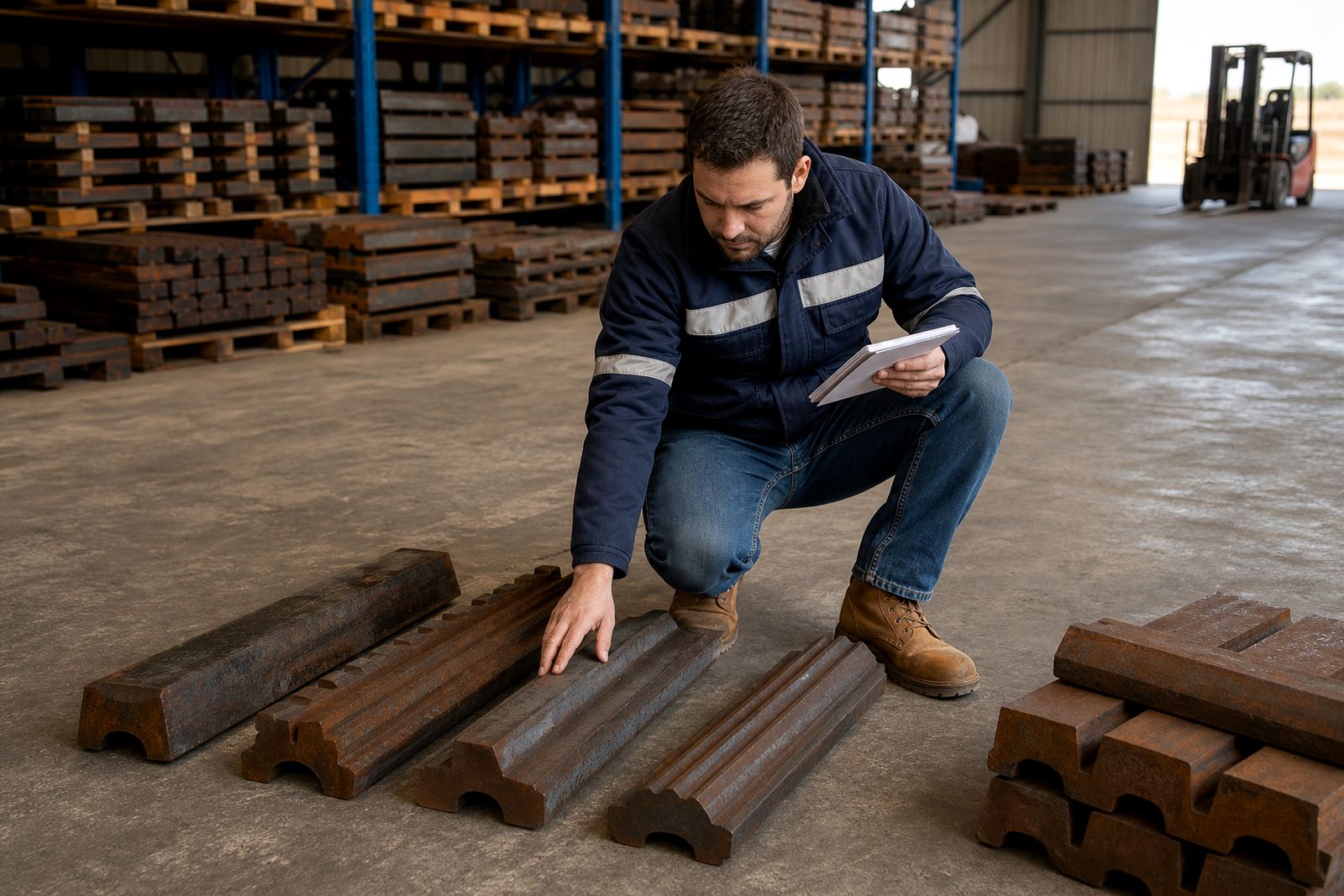
A final check before dispatch saves a second trip. Our warehouse team checks that each bundle matches the order, the packing list and the site instructions. That includes the correct quantities, the right sizes and any special handling notes for heavier wear components.
Here is a practical checklist to use before the freight leaves:
- Crusher model and wear part type confirmed
- All related fixings and consumables included
- Kit labelled for the right mine, quarry or contractor
- Packing list attached and quantities checked
- Load secured for road travel and offloading
- Return items identified if the old parts are being collected back
If a part is being held for a future shutdown, separate it from urgent dispatch stock so there is no confusion in the warehouse. That small step can save a lot of time later on.
Plan Around Shutdowns, Not Just Deliveries
Good kits support the full shutdown plan, from first arrival on site to final cleanup. When all the related items are packed together, the maintenance team can work in sequence without stopping to source a missing bolt or seal. This is especially useful on sites where shift handovers are tight and the weather can change fast.
For larger jobs, build two versions of the same kit if needed: a main bundle for the planned work and a back-up bundle with the parts most likely to be needed if wear is worse than expected. It is a small bit of extra planning, but it can prevent a stop-start repair that runs over the window.
Keep Ordering and Freight in One Clear Line
When part kits are ordered, packed and sent through one team, the process stays cleaner. Our Middelburg depot supports kit build, order consolidation, route planning, load securing and site delivery coordination for mines and quarries across South Africa. That means the kit can be prepared with the freight in mind, not as an afterthought.
Thabo Mokoena leads the business with support from Lerato Nkosi, Johan van der Merwe, Ayanda Dlamini, Sibusiso Mahlangu and Megan Naidoo. The team works with clients who need practical stock holding and freight support for crusher wear parts, especially where access is remote and timing matters. If you need help building a kit for a shutdown, send the order through the enquiry form on our contact page and we will help line up the parts, packing and route.