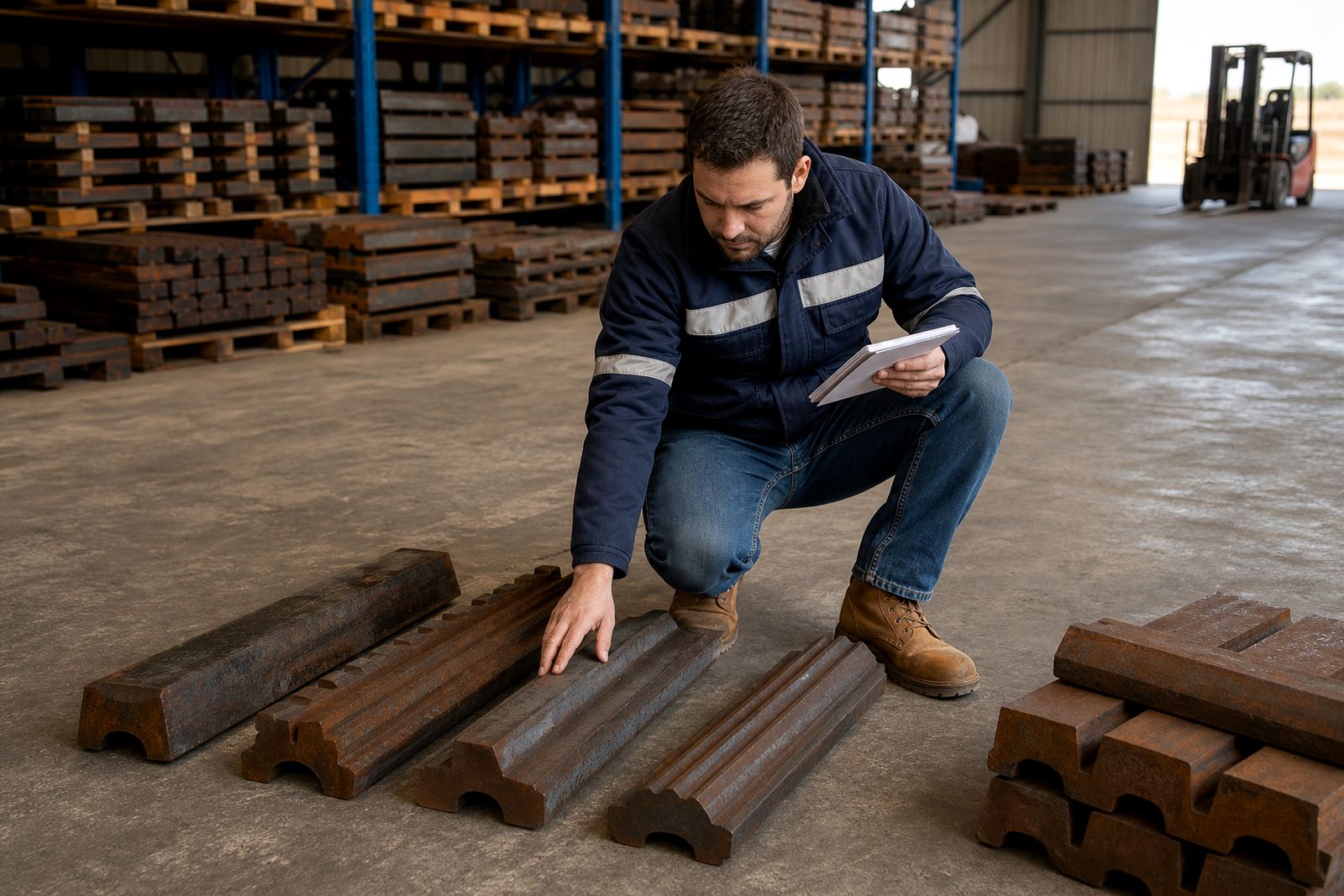
Start With the Feed You Are Crushing
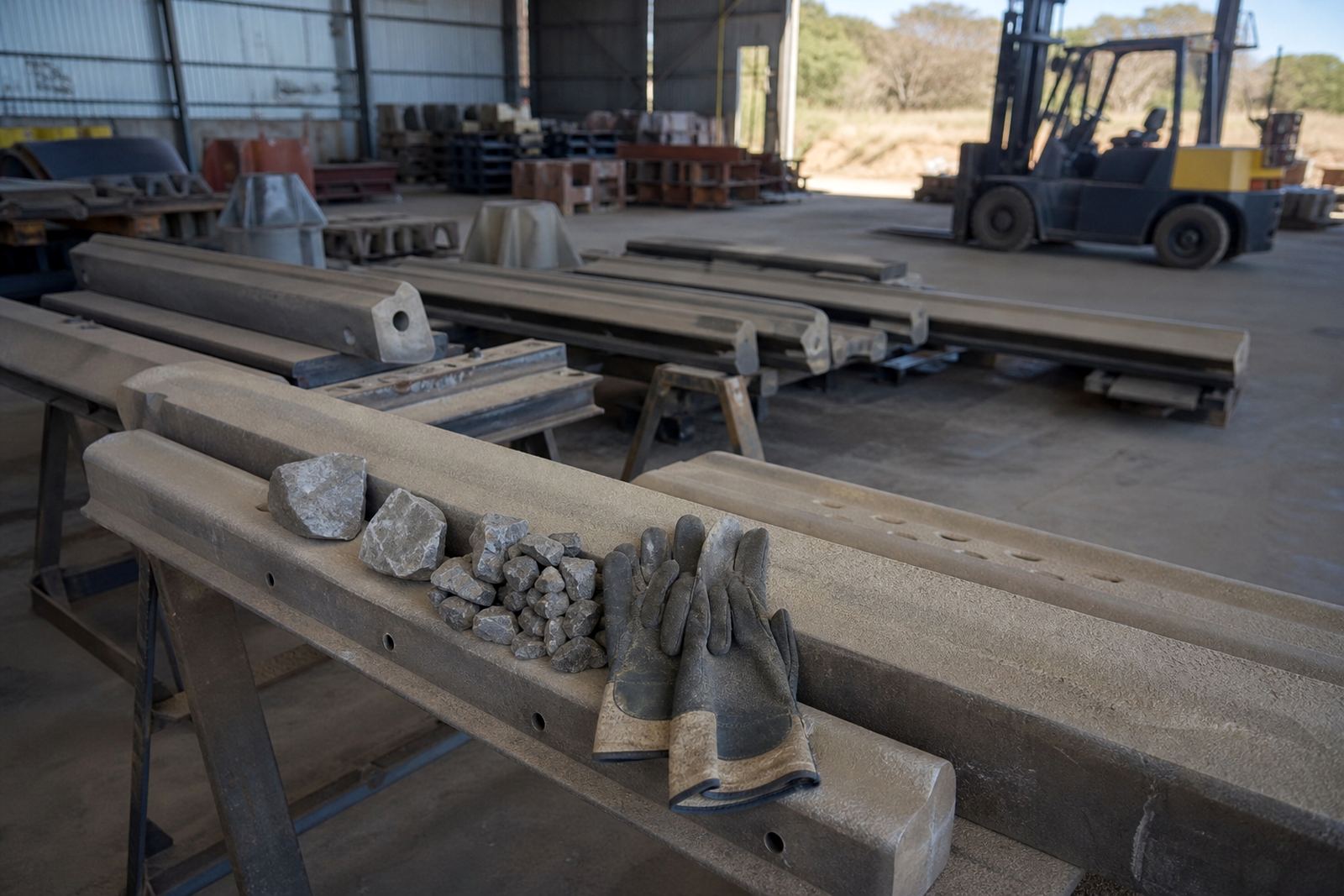
Before you order jaw plates, look at what is actually going into the crusher. Feed size, hardness, moisture and the amount of fines all affect how the plates wear. A mine handling hard, abrasive rock will need a different wear pattern from a quarry taking cleaner blasted material, and sticky clay changes the picture again.
Check the feed source, not just the end product. If the run-of-mine material carries oversize rock, tramp metal or wet clay, the plate shape and tooth profile need to suit that mix. A plate that works well on dry hard ore can struggle when the feed is uneven and the crusher chamber keeps packing up.
Match Jaw Plate Profile to the Job
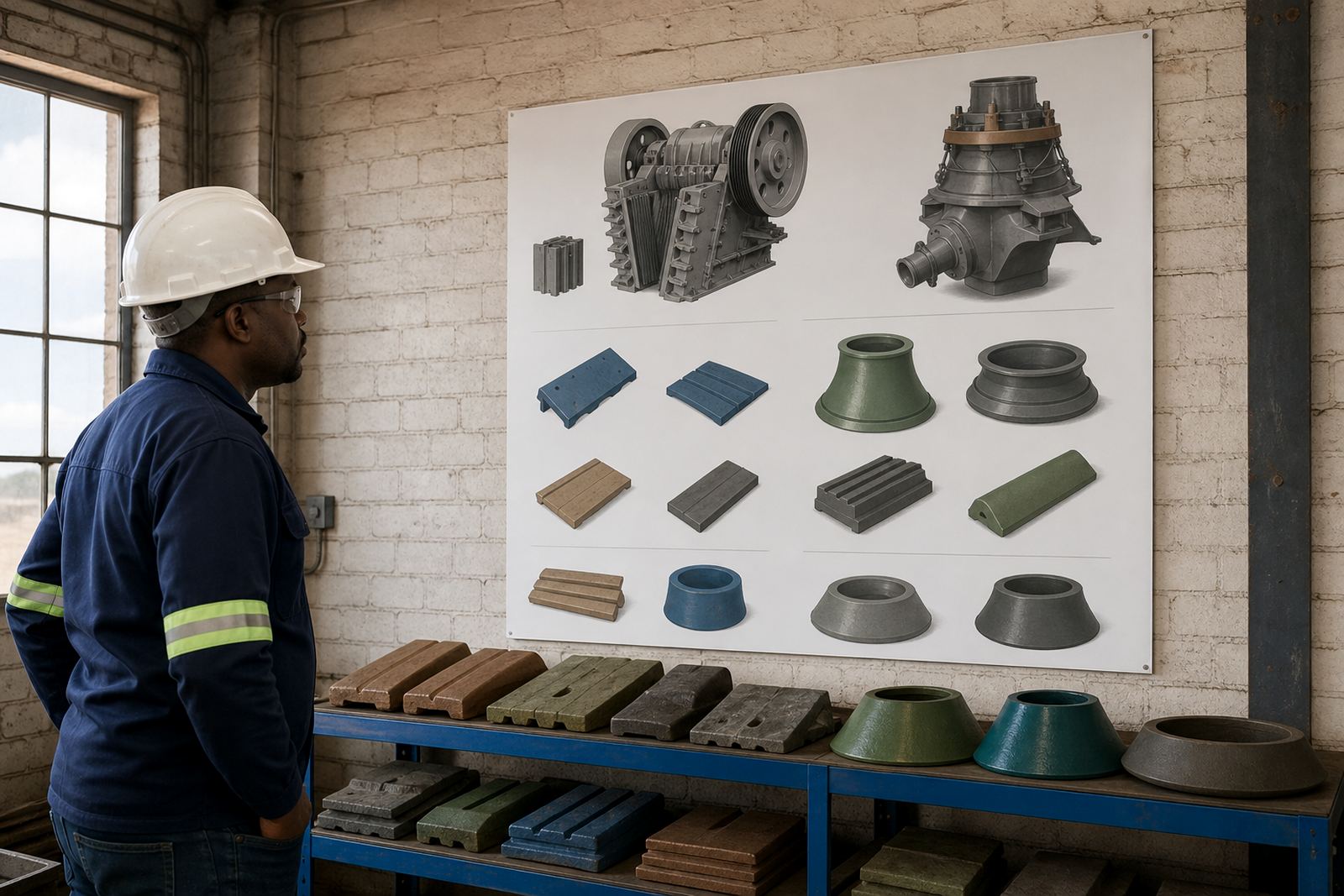
Jaw plates are not all meant to do the same work. Some profiles grip better and break tougher feed, while others favour output shape or longer wear life. The right choice depends on whether your priority is throughput, reduction ratio or fewer changeouts.
- Use a profile that suits the feed gradation and lump size.
- Choose a plate pattern that gives enough bite without choking the chamber.
- Check whether your site needs better wear life or faster material flow.
- Ask how the profile performs in wet conditions and with fines.
If the crusher is constantly packing, the plate may be too aggressive for the feed. If product is coming out too coarse, the chamber setup may need a different plate profile or a review of the closed side setting.
Look at Wear Life, Not Just Purchase Price
Jaw plates should be assessed over the full cost of use, not only the invoice amount. A cheaper plate that wears fast can cost more once you add extra labour, crane time, lost production and freight. In remote mines, each shutdown has a wider impact because spares and crews are harder to bring in at short notice.
Compare expected wear life against your planned maintenance window. If you only get access during a weekly stop, it may be better to fit a plate that lasts longer even if it costs more upfront. Keep a record of how quickly each set wears on each face, because patterns often show up after a few changeouts.
Check Fit, Fixings and Changeout Time
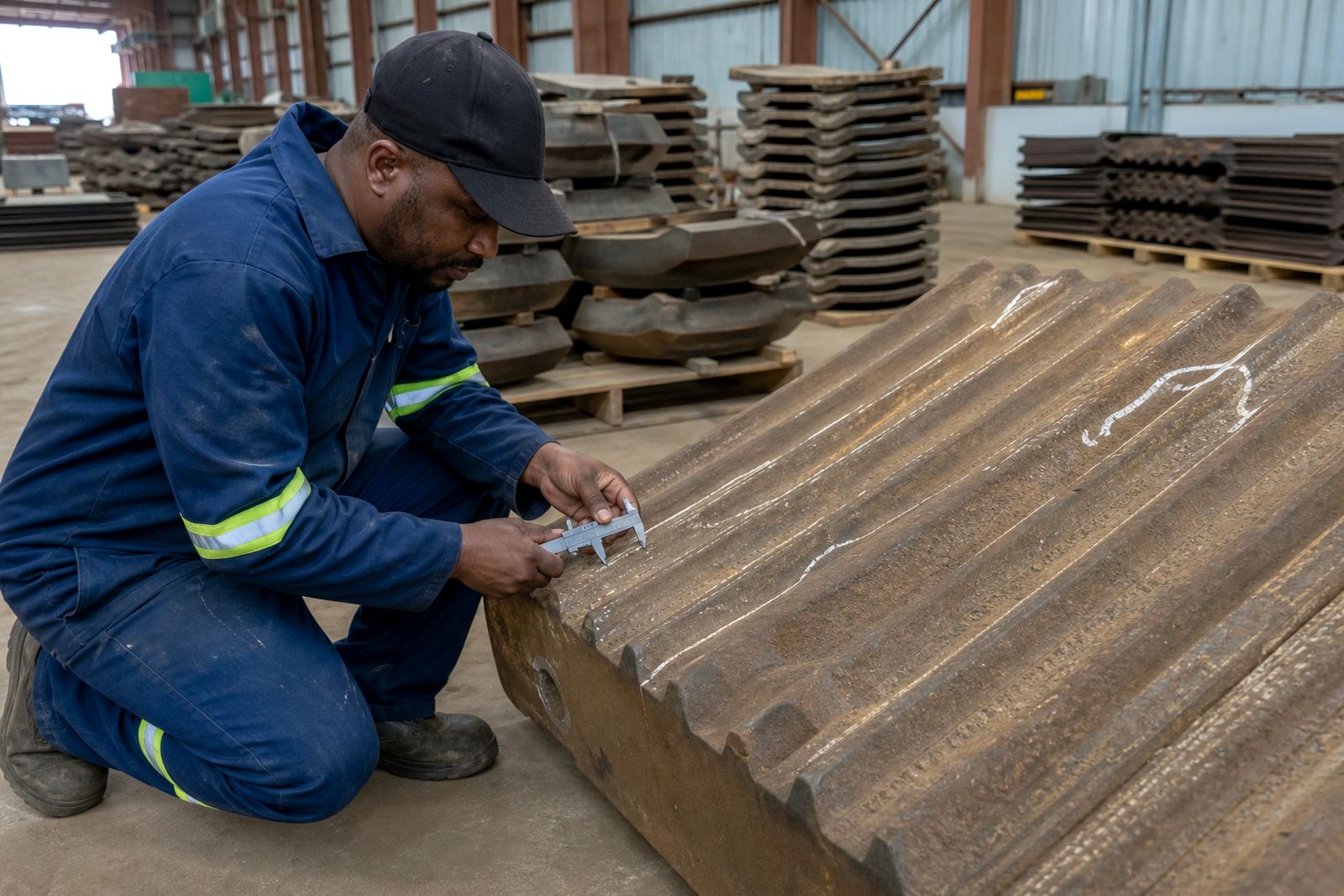
Good wear life means little if the plates are awkward to fit. Measure the crusher correctly and confirm the plate dimensions, fixing arrangement and support surfaces before dispatch. A plate that sits poorly can move under load, wear unevenly or damage the seat.
It also helps to think about the people doing the changeout. If the crew works with limited lifting gear, poor light or load shedding, a simpler fit can save hours. Keep the bolts, wedges and any wear liners needed for the job together in one kit so nothing gets missed during the shift.
- Confirm the crusher model and jaw opening.
- Check plate length, thickness and mounting holes.
- Inspect the seating surfaces for damage or scoring.
- Pack the full fixing set with the plates.
Plan for Remote Supply and Shutdown Windows
For mines and quarries across Mpumalanga, Limpopo, the Northern Cape, North West and Gauteng, supply timing matters as much as the part itself. If your site is far from town, allow for route planning, load securing and site delivery coordination before the shutdown starts. That gives the freight team time to plan around road conditions and access rules.
Stock holding in Middelburg helps reduce the pressure when a plate set must move quickly. It also helps when you need bundled part kits for a planned stop, or when a return freight arrangement is needed for used components. Good planning means fewer delays at the gate and less risk of a crusher sitting idle while a critical part is still on the road.
Use a Simple Selection Checklist
When you are comparing jaw plate options, keep the decision practical. The best answer is the one that suits your feed, your maintenance window and your freight reality. A site in Steelpoort may need a different supply approach from a quarry near Rustenburg, and that should shape the order.
- What is the feed type and average top size?
- How abrasive is the rock or ore?
- How often can you stop for maintenance?
- Do you need faster output, longer wear life or both?
- Will the plates arrive in time for the shutdown?
- Do you have the correct fixings and lifting gear on site?
If any of those answers are unclear, it is worth slowing the order down a bit. A small delay at the planning stage is usually better than fitting the wrong plate and having to change it again too soon.