Start With the Crusher Category, Not Just the Part Name
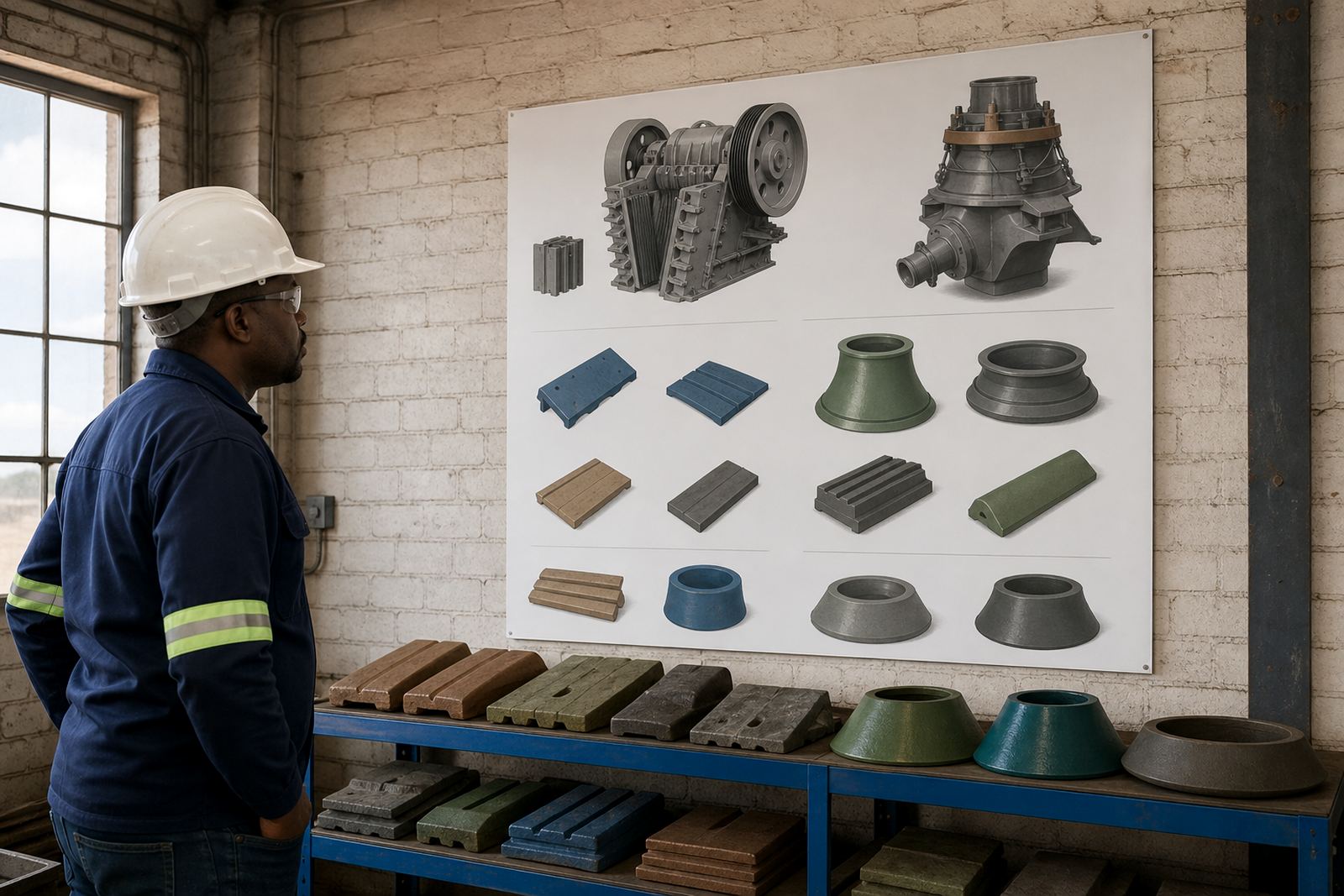
When a request comes in for jaw plates, mantles, concaves, blow bars or liners, the first step is to match it to the crusher category. The same part name can be used on more than one machine type, so a simple label on its own is not enough. In practice, the safest approach is to identify whether the machine is a jaw crusher, cone crusher, impact crusher or another crushing unit before anything is ordered.
At our Middelburg base, we often see enquiries where the part is described correctly but the crusher type is missing. That is where mistakes happen. A jaw plate for one machine will not suit a cone crusher, and a mantle will not fit an impactor. If the crusher type is wrong, the load may reach site and still be unusable.
- Jaw crusher: ask for jaw plates, cheek plates and side liners
- Cone crusher: ask for mantles, concaves and associated liners
- Impact crusher: ask for blow bars and impact liners
- Screen or chute area: ask for wear liners and related protection plates
Use the Machine Plate and Wear Part Shape to Confirm the Match
The machine identification plate is the most useful starting point. It usually carries the crusher type, model, serial number and key sizing details. If the plate is not easy to read because of dust, corrosion or weathering, take a clear photo and write down every number you can see. In the dry areas of the Northern Cape or in dusty quarries around Gauteng, plates can be hard to read after only a short period of use.
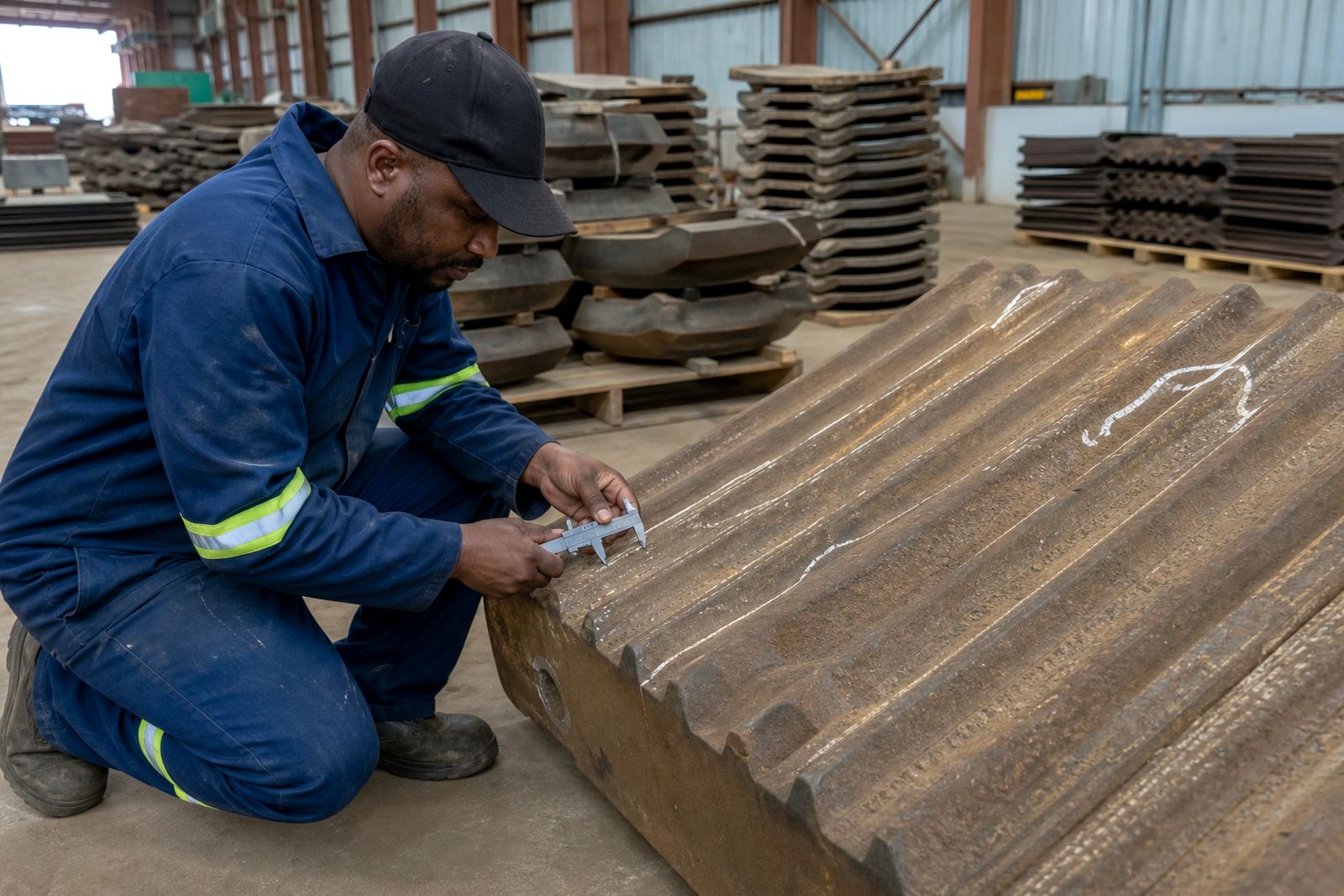
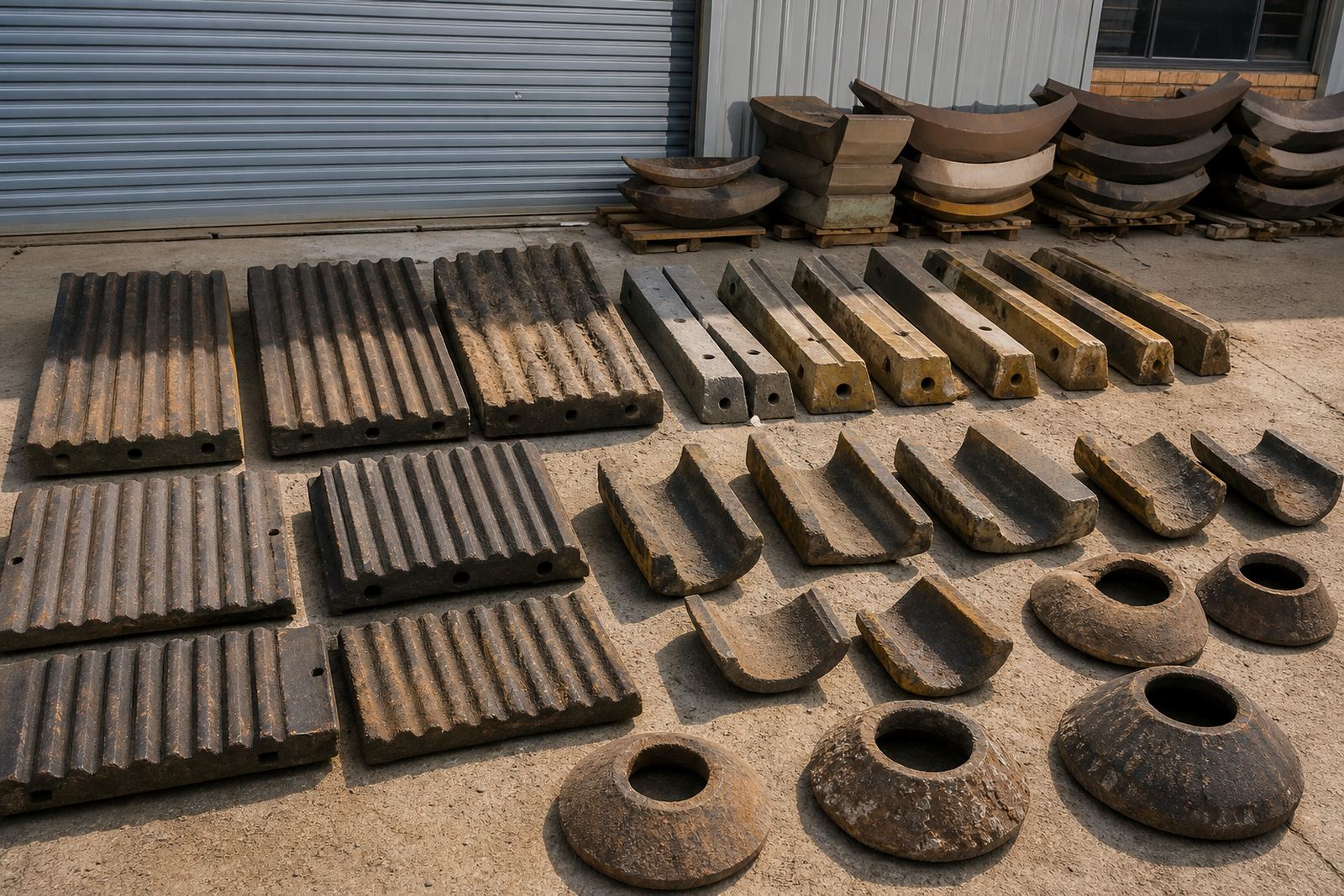
Part shape is the second check. Jaw plates have a very different profile to mantles and concaves, and blow bars are easy to confuse with other impact wear components if you only go by rough measurements. A quick photo of the worn part beside a tape measure helps a lot, especially when the machine is down and the site wants a fast turnaround. If there is any doubt, send the old part and the machine details together rather than one or the other.
- Take a photo of the machine plate
- Write down model, serial number and feed opening size
- Photograph the worn part from front, side and back
- Measure length, width, thickness and fixing points
Check the Working Conditions Before Choosing the Part
Crusher wear parts are affected by the material being processed and the site conditions. A quarry handling hard, abrasive stone will wear parts differently from a plant handling softer feed. Moisture, clay, oversize material and constant start stop work can also change how quickly parts wear. On coastal jobs and humid areas, storage matters too because rust can start before the part even reaches site.
For remote mines in Limpopo, Mpumalanga, the Northern Cape, North West and Gauteng, the site conditions must be considered before dispatch. If the crusher is running long shifts with limited maintenance windows, it may be better to bundle parts together for the next shutdown instead of sending one item at a time. That approach can save freight and reduce waiting around for another delivery.
Useful details to include with every enquiry:
- Type of material being crushed
- Whether the machine runs dry or with moisture in the feed
- Average wear life and previous part issues
- Whether the site needs urgent dispatch or planned shutdown supply
- Any constraints on access, offloading or site induction
Match the Part to the Crusher Duty and Mounting Style
Not every crusher of the same category uses the same wear part format. Mounting style, thickness, profile and fixing arrangement must all be checked. A blow bar may look similar across machines at first glance, but the fixing pattern, overall size and wear face can vary. The same applies to liners, where shape and section thickness must suit the chamber and the wear pattern seen on site.
Before an order is approved, ask these practical questions: does the part sit in the feed area, crushing chamber or discharge path? Is it a direct wear component or a support liner? Does the machine run with reversible parts or a fixed arrangement? These points help avoid the wrong match, and they matter more when freight is going into a remote area where a second trip would cost time and money.
Common matching checks include:
- Crusher type and model
- Part position in the machine
- Fixing holes, bolt centres or clamp points
- Material thickness and wear face profile
- Left hand, right hand or paired fitment
Prepare a Clean Enquiry Before You Use the Contact Form
A complete enquiry is the quickest way to get the right crusher wear parts moving. When clients use the enquiry form on our contact page, the more detail they include the faster the order can be checked, packed and routed. This is especially important when freight is heading to sites near Steelpoort, Burgersfort, Phalaborwa or Kathu where delivery timing can affect the whole shift.
Keep the request simple and accurate. State the crusher type, the required wear part, the quantity needed and whether the machine is still running. If the order is for a shutdown, give the planned date and the site receiving point. If the parts must go with other items, say so upfront so the order can be consolidated properly. That way the warehouse team and freight coordinator can plan the load securing and route without guesswork.
- Crusher type and model
- Wear part name and quantity
- Urgency level: immediate, planned or shutdown
- Delivery site, access instructions and offload method
- Any old part photos or measurements
Use Stock Holding and Freight Planning to Reduce Downtime
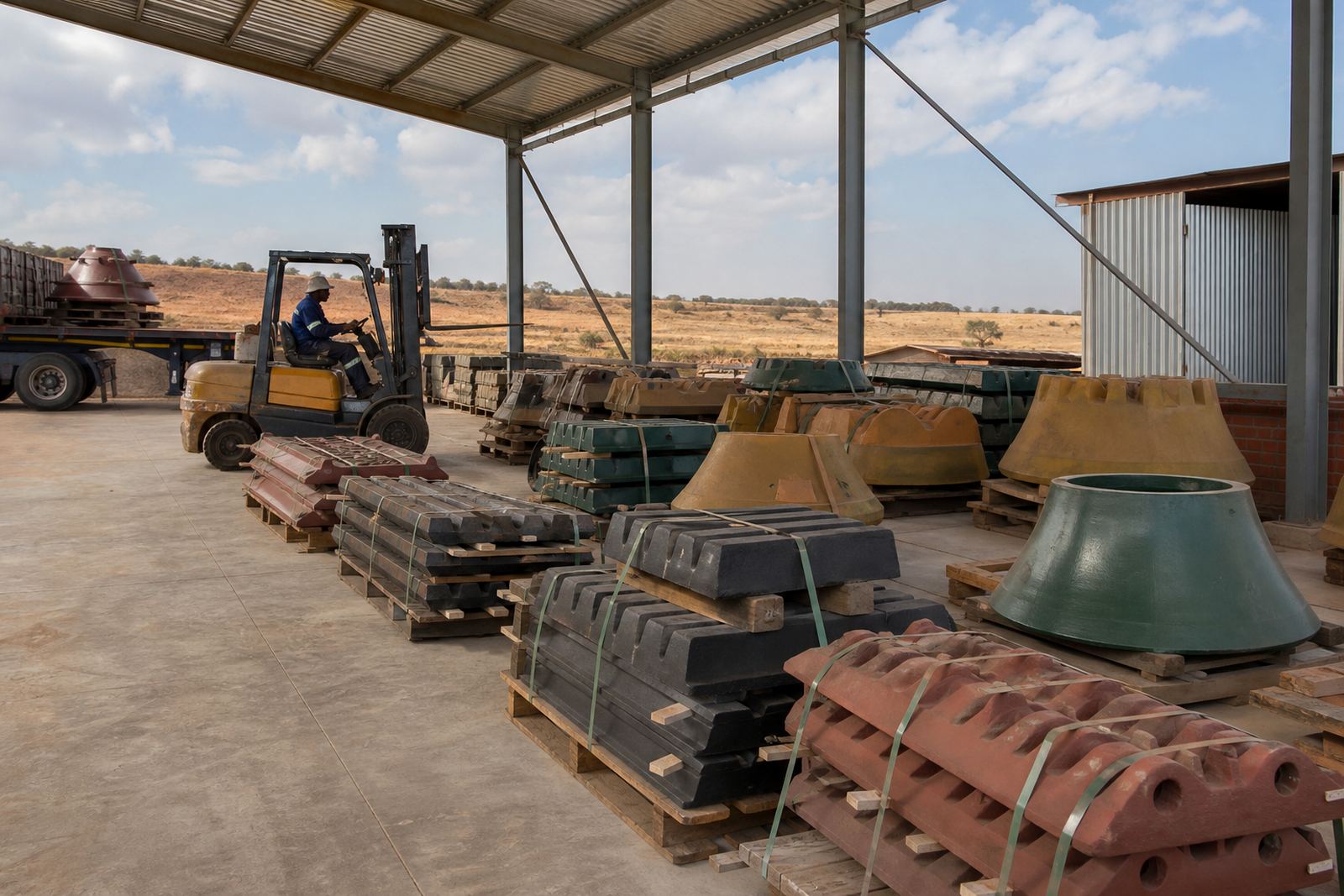
When crusher wear parts are held in stock close to the point of dispatch, the site is less exposed to long lead times and transport delays. From our Middelburg depot, we support quarry deliveries and remote mine freight across South Africa, with planning that suits load shedding, road conditions and site access rules. Some locations need early morning delivery, others need load-secure transport that can cope with rough roads and long distances.
Good planning also helps with return freight, bundled part kits and urgent part dispatch. If a site expects repeat wear, it can be better to keep a small buffer of the common items instead of waiting for a breakdown. For many remote operations that one decision reduces pressure on production and keeps the crusher line running with fewer interruptions, which is what the whole process is meant to support.
Final Check Before You Place the Order
Before the order is sent, do one last check against the machine and the part request. This final review catches most of the avoidable errors. A few minutes spent confirming the crusher category, the mounting points and the site delivery details can prevent a costly mismatch. It also gives the warehouse team a clear instruction on packing, consolidation and route planning.
If you are unsure whether a request belongs to a jaw crusher, cone crusher or impact crusher, pause and verify it first. The part itself may be standard, but the fitment is never guesswork. On a tight shutdown window, that difference matters. When the machine details are right, the freight plan is right too and the site gets the part it actually needs.
- Confirm crusher type
- Confirm part shape and position
- Confirm quantity and urgency
- Confirm delivery site and offload access
- Send the enquiry through the contact form