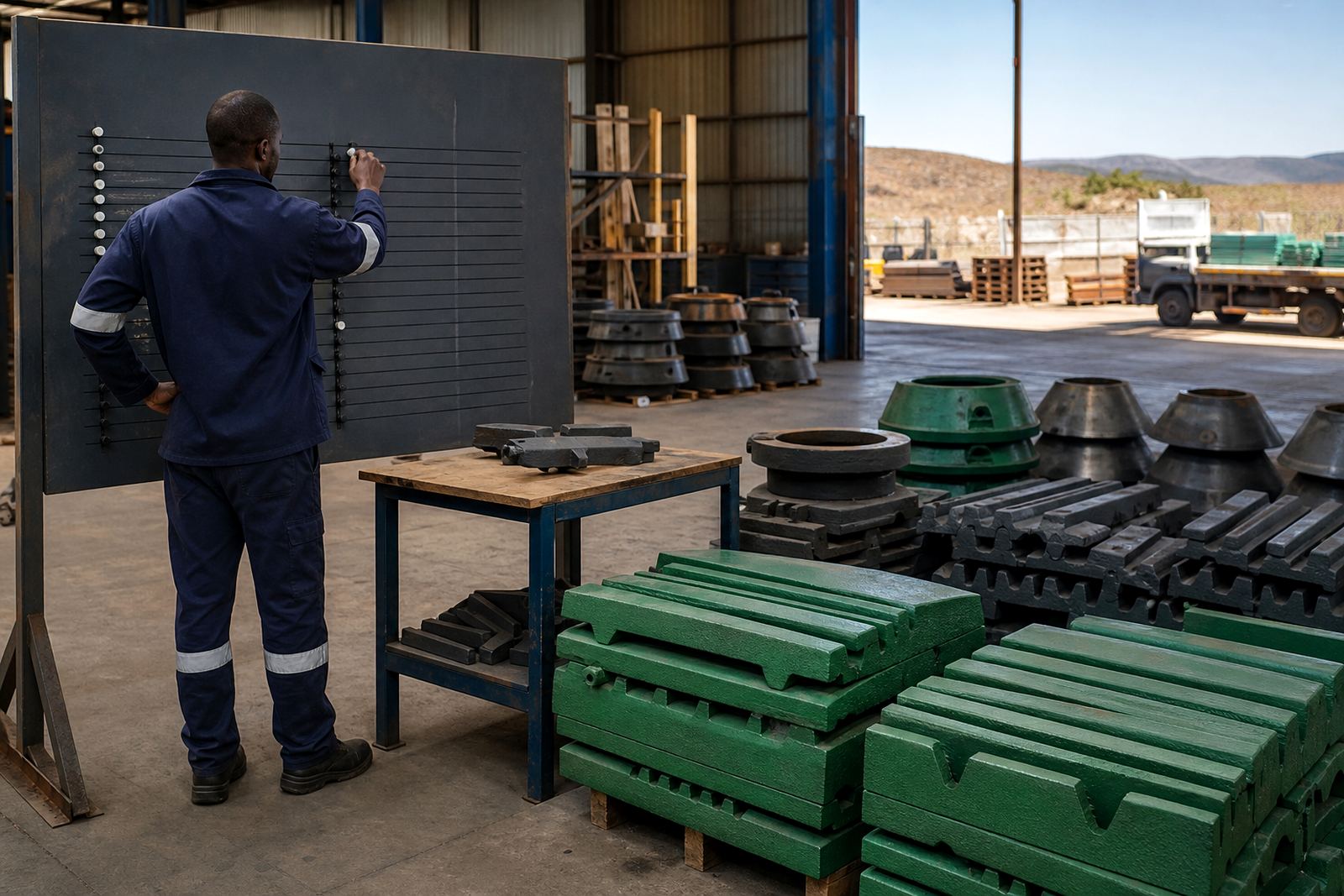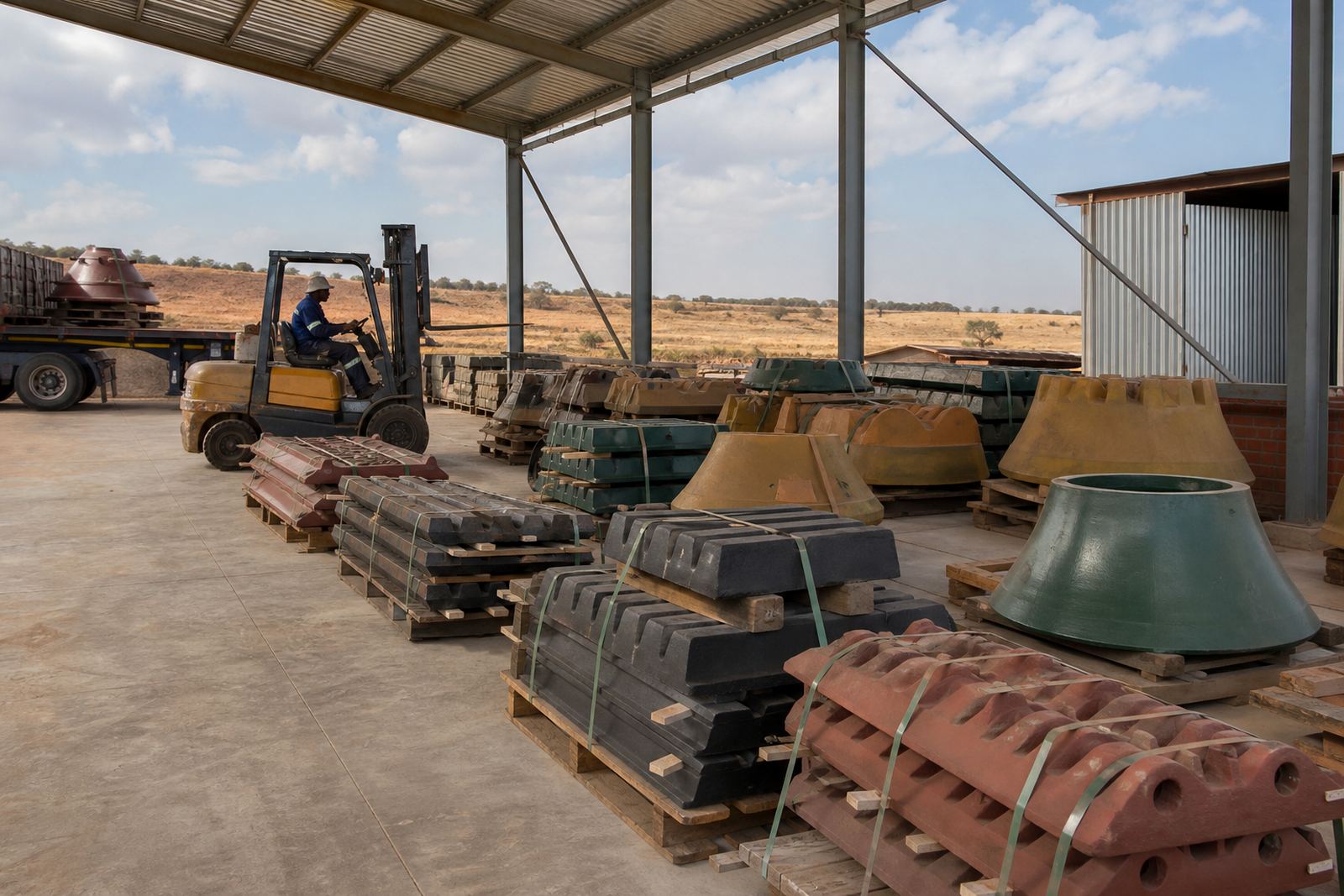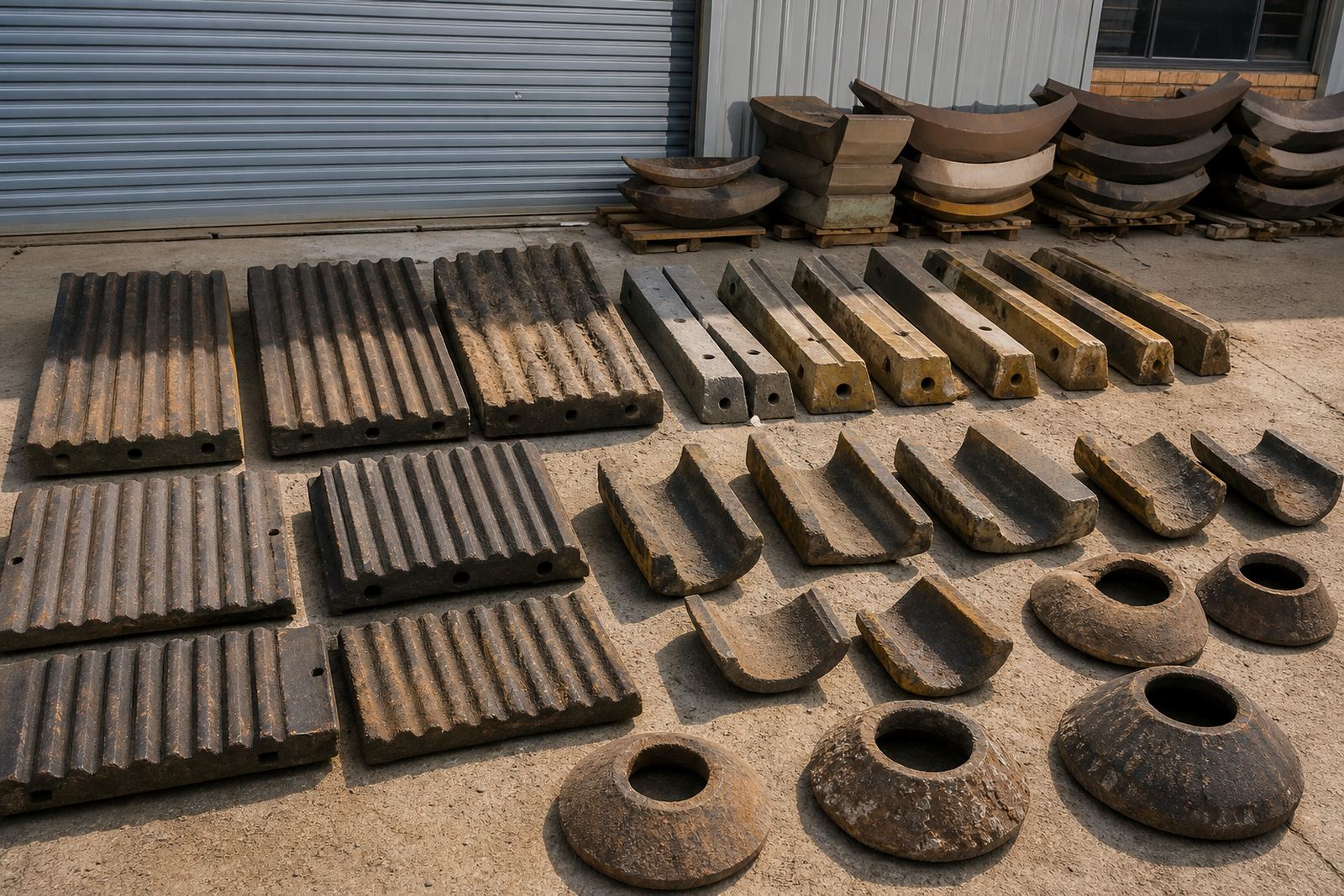
Start with a clean liner and a safe work area
Before you measure anything, clear the liner of loose fines, grease, packing and rust scale. A dirty face can hide the true profile by several millimetres, which is enough to cause the wrong fit on site. Work on a flat surface with enough light, and use gloves because worn edges can still be sharp.
In Middelburg and the surrounding mining belt, liners often come off machines that have worked through dust, vibration and long shifts. If the part is hot, let it cool properly. If it is still on a machine, isolate it fully and follow site lock-out rules before taking any readings.
- Brush off all loose material first
- Mark the part number if any trace is still visible
- Check for cracks, broken corners and uneven wear
- Take photos from the front, back and side
Measure the main dimensions in more than one place
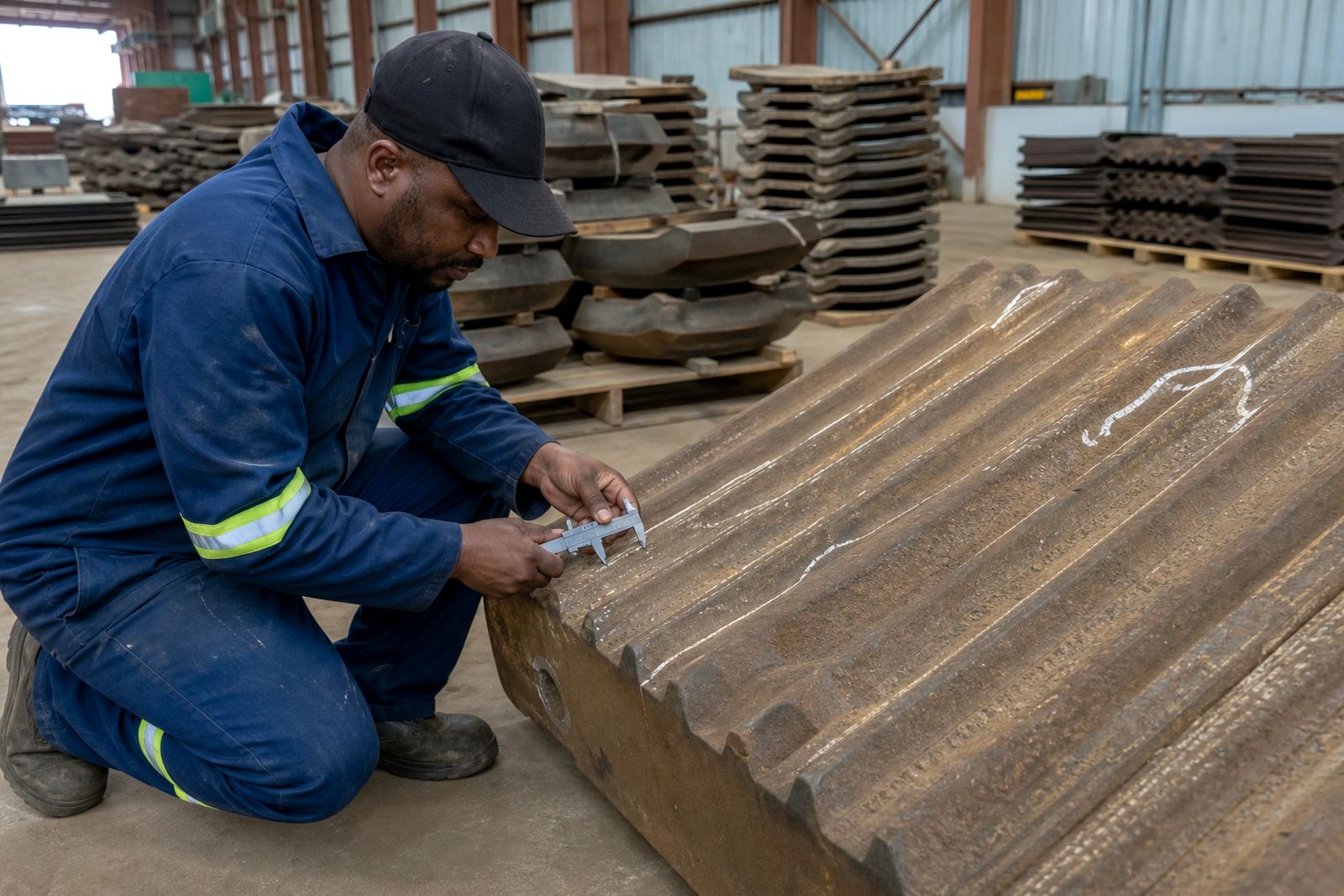
Old liners rarely wear evenly, so one measurement is not enough. Measure the overall length, width and thickness at the least worn section and again at the most worn section. If the liner has a curved profile, measure the height of the curve and the distance between key fixing points. For jaw plates, note the tooth pattern and the location of any mounting holes. For mantles and concaves, record the diameter, angle and seating profile. Liners and blow bars should also be checked for taper, step wear and any rounded edges.
Use a steel tape, straight edge and calipers where possible. If you only have a tape measure on site, that is still useful as long as you are consistent. Write down the units clearly, and avoid mixing millimetres with centimetres. A small slip here can create a big delay when the freight is already booked.
- Overall length and width
- Thickness at the top, centre and bottom
- Bolt hole spacing or slot spacing
- Radius, angle or curve height
- Any lugs, lips or locating tabs
Capture the wear pattern, not just the size
The way a liner has worn tells a lot about the replacement needed. A liner that is worn thin in the centre but still strong at the edges may mean the chamber has been running with a particular feed pattern. A part that has broken at one end can point to a misalignment, poor tightening or material impact in one area. This is why photos matter just as much as the numbers.
When you send an enquiry, include which side faced the feed, which side faced the shell or frame, and where the wear was heaviest. If the machine is used at a quarry near Rustenburg or a remote mine in the Northern Cape, mention the type of material as well. Hard rock, abrasive ore and damp clay all wear parts differently.
- Note the heaviest wear zone
- Show the feed side and discharge side
- Photograph any cracks, chips or broken corners
- Record whether wear is even or one-sided
Record the machine details that affect fit
A liner measurement on its own is not always enough. The same style of wear part can vary between machines, chamber shapes and frame setups. Record the crusher type, the position of the part, and any markings on the old component. If there is a serial plate on the machine, copy the details exactly as they appear. If the plate is damaged or missing, note the model family and the application instead.
For operations in Gauteng, Limpopo, Mpumalanga and North West, these details help match the part before it leaves the warehouse in Middelburg. That can save a second trip to site and reduce the chance of urgent freight running back with the wrong item. It also helps with shutdown planning when several wear parts must arrive together.
- Crusher type and chamber position
- Any visible casting or stamp marks
- Machine serial number if available
- Material being processed
- Whether the part is fitted to a primary, secondary or tertiary unit
Use a simple checklist before you send the enquiry
A good set of notes makes order support much easier. It allows the team to check stock holding, plan return freight if needed, and line up route planning for remote mine delivery. If you are working through a shutdown or a tight production window, the more complete your note is, the better the chance of getting the right part out in one movement.
Before submitting the enquiry form, go through the basics below and make sure the photos are clear. Blurry images and half-finished measurements can slow things down more than a missing bolt on a quiet day. A quick second check now is worth it later.
- Part name and machine position
- All measurements in millimetres
- Wear pattern description
- Clear photos from several angles
- Delivery location and site access notes
- Any urgency linked to shutdown dates
When worn liners need replacement advice
Some liners are too worn for a direct visual match, especially when the face has worn smooth or broken away at the edges. If that happens, send the best measurements you can together with photos of the old part and the machine area it came from. Even an incomplete liner can still be identified if the bolt spacing, curve and profile are recorded properly.
Crusher Consumables Direct holds crusher wear parts in Middelburg, Mpumalanga and arranges freight to remote mines and quarries across South Africa. That includes places where road access, weather and load-shedding all affect delivery timing. If your site needs jaw plates, mantles, concaves, blow bars or liners, the enquiry form is the place to start and we can work from the details you supply.
Quick field notes for busy shutdown teams
When time is tight, use a simple field note sheet and fill in the same order every time. That makes it easier for everyone on the team to read the information, whether the request comes from a foreman, storeman or planner. It also helps when several parts come off at once and each one needs to be tracked separately.
- Write the date and site name at the top
- List each liner with a number or tag
- Measure each item separately, not as a group
- Keep the old part with the notes until the order is confirmed
Our team, led by Thabo Mokoena with support from Lerato Nkosi, Johan van der Merwe, Ayanda Dlamini, Sibusiso Mahlangu and Megan Naidoo, works with these details every day. That makes it easier to line up stock, freight and site delivery coordination for mines and quarries from Steelpoort to Kathu.