Start with the feed: what the material does in the chamber
Blow bars are not chosen by size alone. They need to match how the feed breaks, how abrasive it is, and whether the material arrives dry, wet, sticky or mixed with fines. A hard but brittle feed can respond differently from a softer material with high abrasion, so the first step is to look at what is actually entering the machine day by day.
For quarry and mine operators in places like Middelburg, Rustenburg, Kathu or Phalaborwa, feed can change after rain, blasting changes, or a shift in ROM quality. If the crusher is handling sharp, abrasive rock, the bars may wear from the outside in. If the feed is lumpy with unbroken pieces, impact loading can be uneven and the bar profile may fail quicker than expected. That is why the material profile matters just as much as the machine size.
- Check whether the feed is abrasive, brittle or mixed.
- Note moisture, clay, fines and oversize contamination.
- Record if wear is even, chipped or concentrated at one end.
Match the bar material to the wear goal
Different blow bar materials suit different jobs. Some are preferred where impact is high and the feed is less abrasive, while others are better where the main concern is wear from sand, stone dust and repeated contact. The wrong choice can lead to either fast wear or poor resistance to shock, and both cost time on site.
A practical way to choose is to decide what you want more of: longer life, better resistance to impact, or a balance between the two. On remote mines and quarries, especially where freight lead times matter, it is often better to keep a matched set on hand rather than wait for a replacement after a failure. That small bit of planning can save a shutdown later on.
- Use impact resistance where the feed is less abrasive but more violent.
- Use wear resistant options where stone dust and grit are constant.
- Keep the machine manufacturer’s size and fixing pattern in mind.
Read the wear pattern before you order again
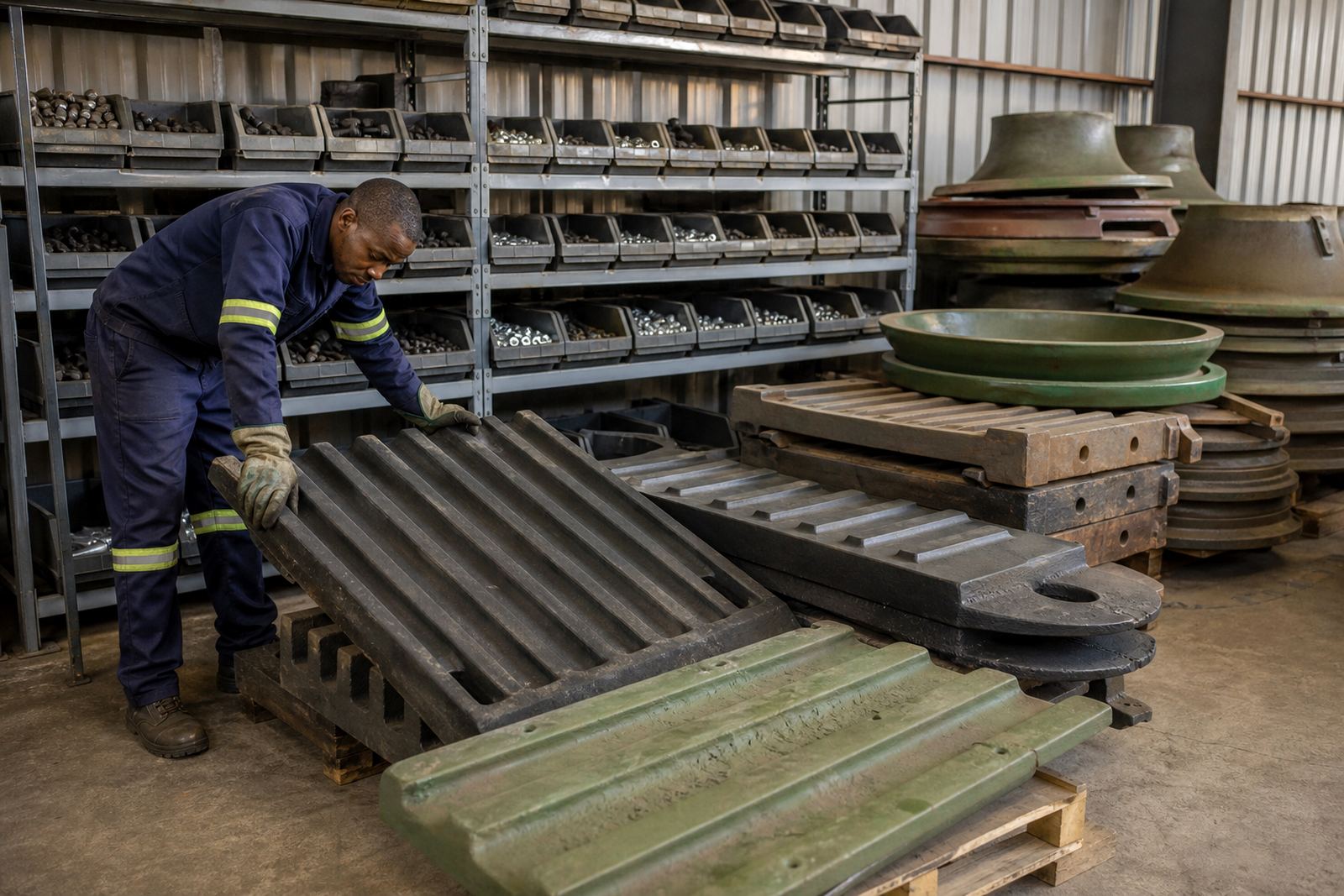
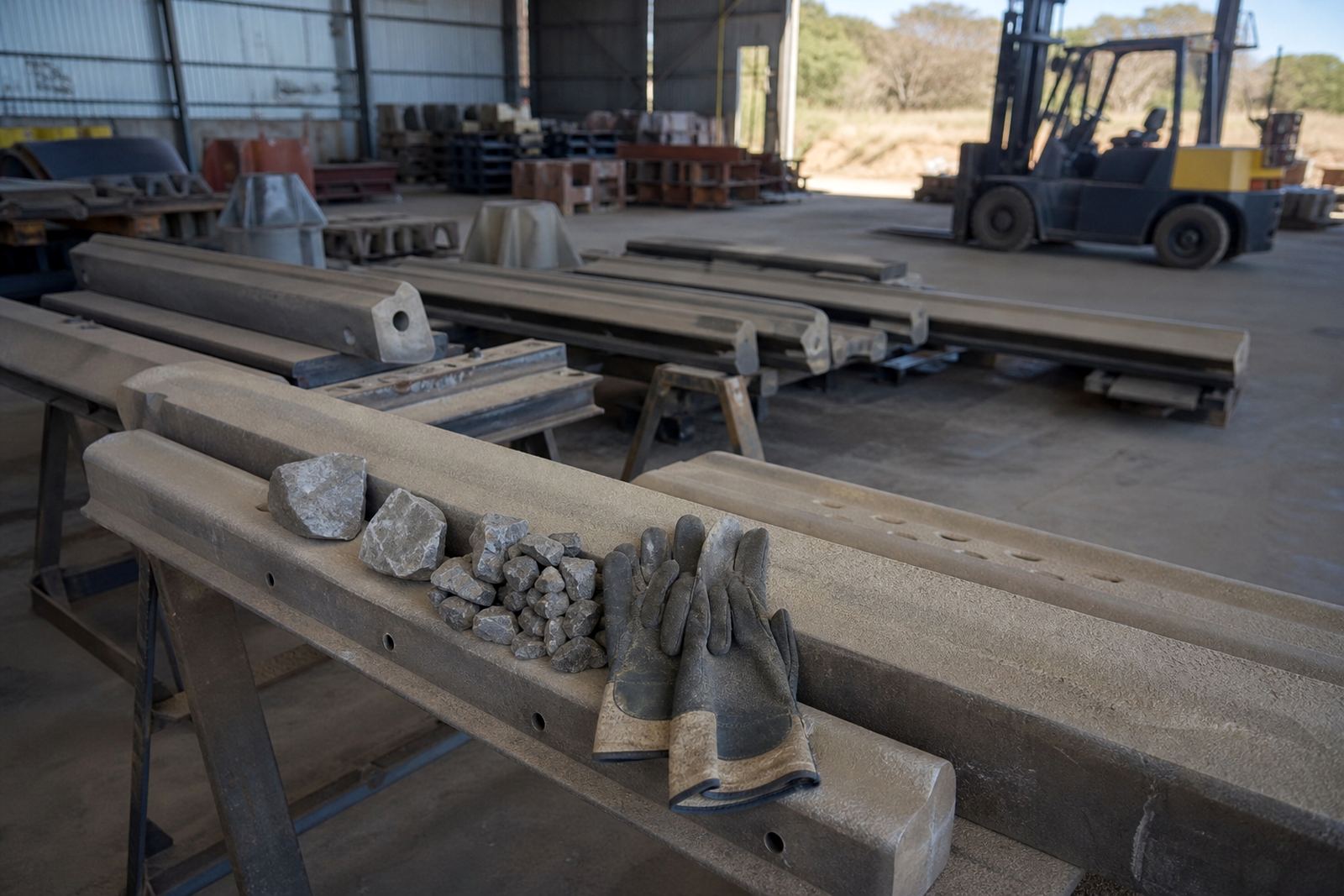
Used bars tell a story. If the leading edge is rounding off evenly, the selection may be close to right. If one side is wearing much faster, the issue could be feed presentation, rotor speed, or a discharge problem. Cracking, corner breakage and uneven chipping often point to impact stress or a mismatch between the bar and the application.
Do not wait until the machine is running on very thin bars. In most plants the better practice is to inspect during every planned stop, then compare bar condition with throughput and product size. A quick check with the maintenance team can help decide whether the next set should be a different type or the same spec with tighter spares control. It sounds simple, but it saves a lot of grief on a shutdown.
- Look for rounding, cracking, corner breakage and uneven wear.
- Compare wear against tonnage, not only running hours.
- Keep photos or notes from each changeout for future ordering.
Plan for maintenance windows, not just emergency changes
In remote areas, the best blow bar choice is often the one that fits your maintenance cycle. If your crew only gets access during weekend stops or month-end shutdowns, then a bar with slightly longer service life may be worth more than one that gives marginally better product shape. The aim is not only to crush, but to keep the machine available when people and cranes are actually on site.
Think through the full changeout process: lifting gear, labour, torque checks, safe access, and whether the site has enough lighting during load-shedding. On mines and quarries in Limpopo or the Northern Cape, logistics also matter. If a part is needed urgently, freight timing and load securing can decide whether the next shift runs smoothly or sits waiting for a delivery.
- Align the bar choice with planned stop dates.
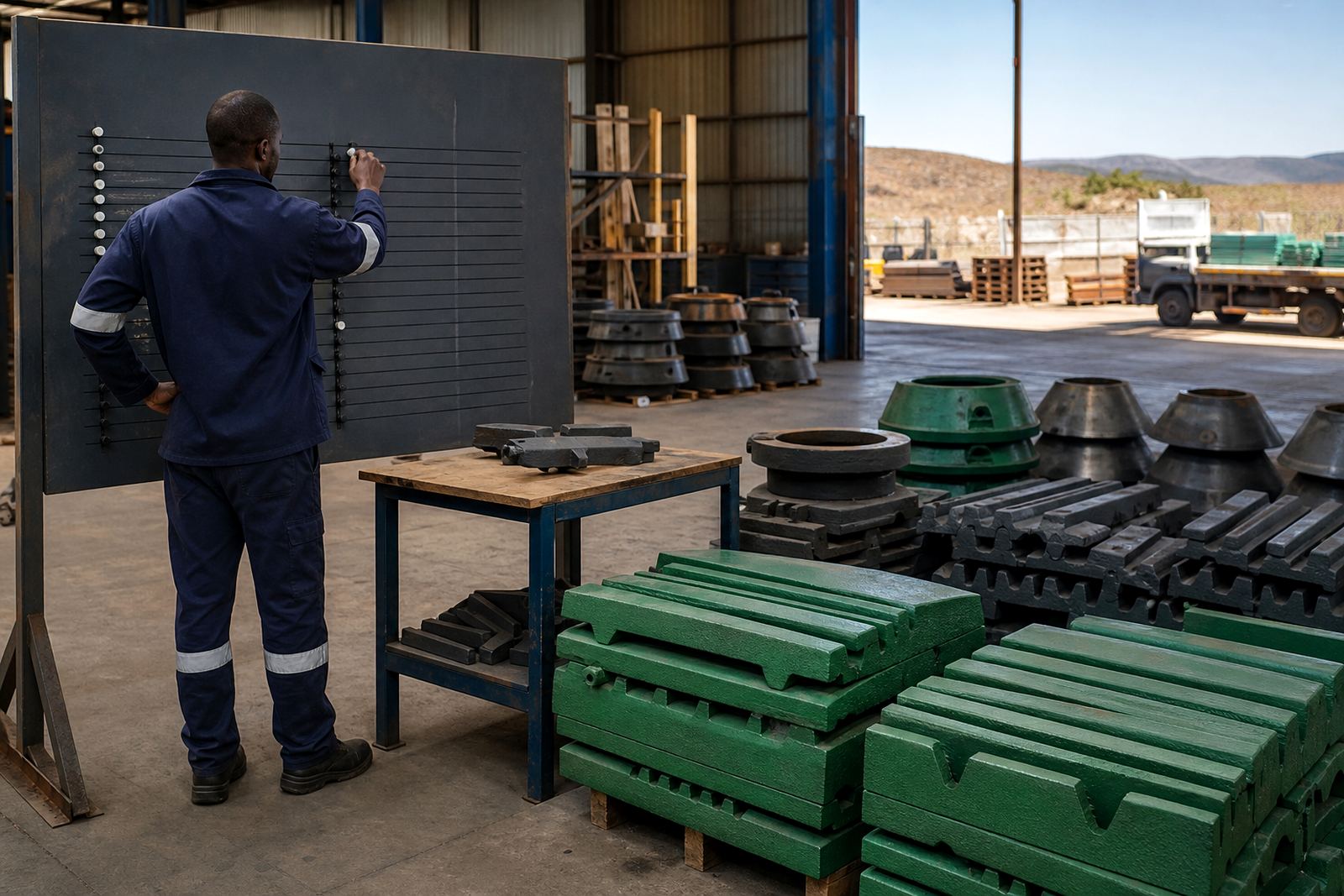
- Keep spares for the full set, not one piece at a time.
- Factor in crane availability, lighting and safe access.
Use the site location to guide stock levels and freight timing
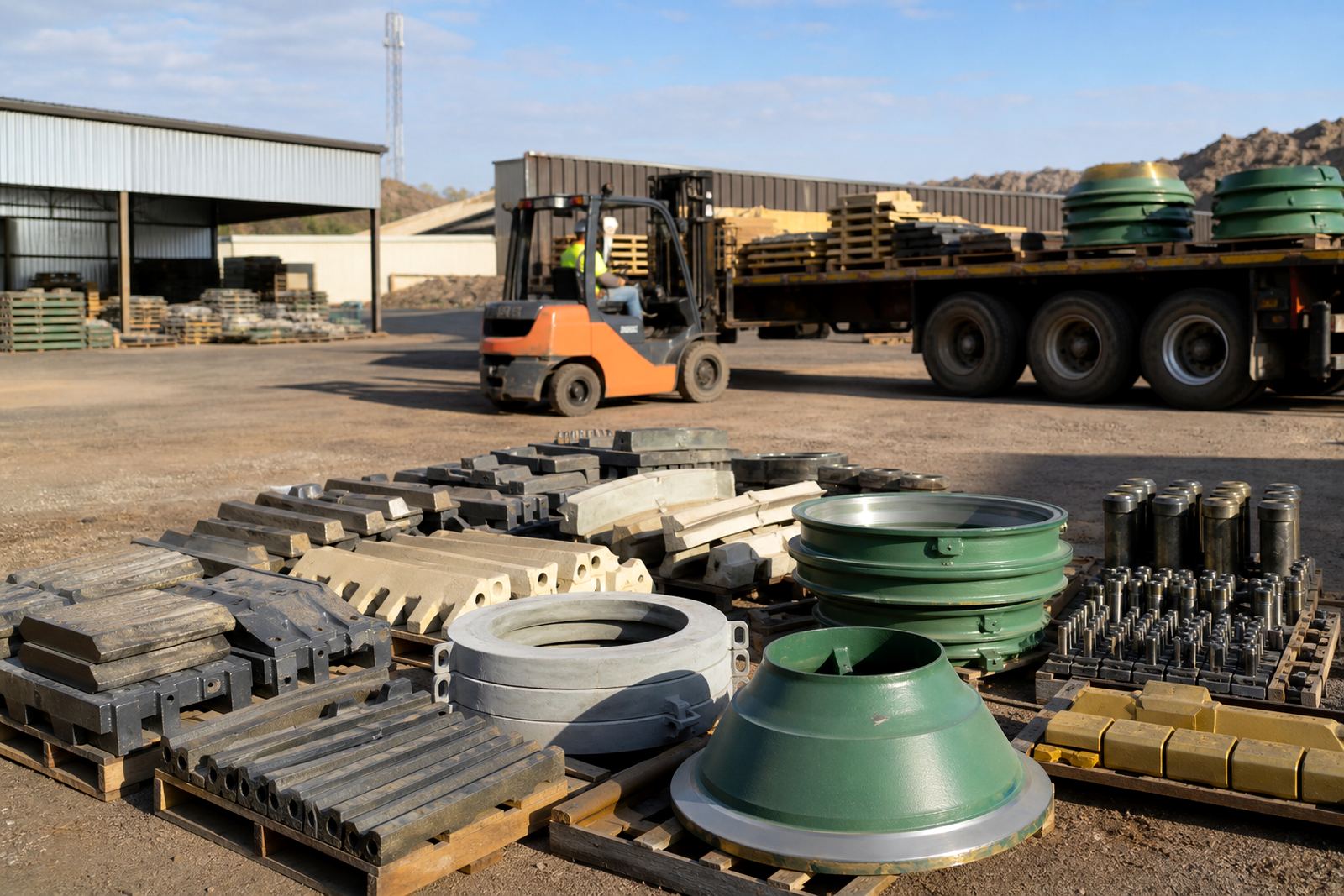
Blow bars should not only be selected for wear. They should also be selected for supply reality. A mine near Johannesburg East may have faster access to emergency freight than a site outside Kathu or Steelpoort, where road distance and site access add time. That is why holding stock in Middelburg helps with order consolidation and quicker dispatch to remote operations.
If the crusher is critical to plant output, ask what happens if a set fails mid-week. Is there a spare set on site, or will the next delivery need to come through a long route with site entry controls, weighbridge timing and proof of delivery rules? Good planning reduces the risk of sitting with a machine down and no parts in hand. Even a well run site can get caught out if the ordering window is too short.
- Keep a minimum stock level for high-wear sites.
- Plan freight around distance, road condition and site access.
- Use bundled part kits when a full set change is likely.
A practical checklist before you place the order
Before ordering blow bars, make sure the crusher team, maintenance team and procurement team are looking at the same details. The goal is to avoid wrong sizes, mixed materials or delays caused by unclear notes. A simple checklist is usually enough to keep the process clean and repeatable.
For sites running across Mpumalanga, Gauteng, North West, Limpopo and the Northern Cape, this checklist also helps with freight scheduling and return freight planning. If old bars need to come back or the next order must be consolidated with other wear parts, the paperwork should be ready before the truck is booked. It keeps everyone from scrambling at the last minute.
- Confirm crusher model, fixing type and bar dimensions.
- Note the feed type, moisture and expected wear pattern.
- Confirm whether the order is for one set, a spare set or shutdown cover.
- Check site access times, security requirements and offloading method.
- Ask whether other wear parts should travel with the same load.
When support from a local stock holder helps
If you are balancing production targets, shutdowns and remote deliveries, it helps to work with a supplier that understands crusher wear parts and freight control. In Middelburg, our team at Crusher Consumables Direct supports mines and quarries with stock holding, urgent dispatch and route planning for sites across South Africa. That means less waiting and more control over what arrives when.
Thabo Mokoena and the team help customers match blow bars to the material conditions on site and the maintenance window available. Whether the need is for a planned shutdown in Burgersfort, a quarry delivery near Rustenburg, or a remote order heading toward Kathu, the focus stays on keeping the crusher supplied and the site moving. If the spec is unclear, a quick enquiry through the contact page is the simplest place to start.