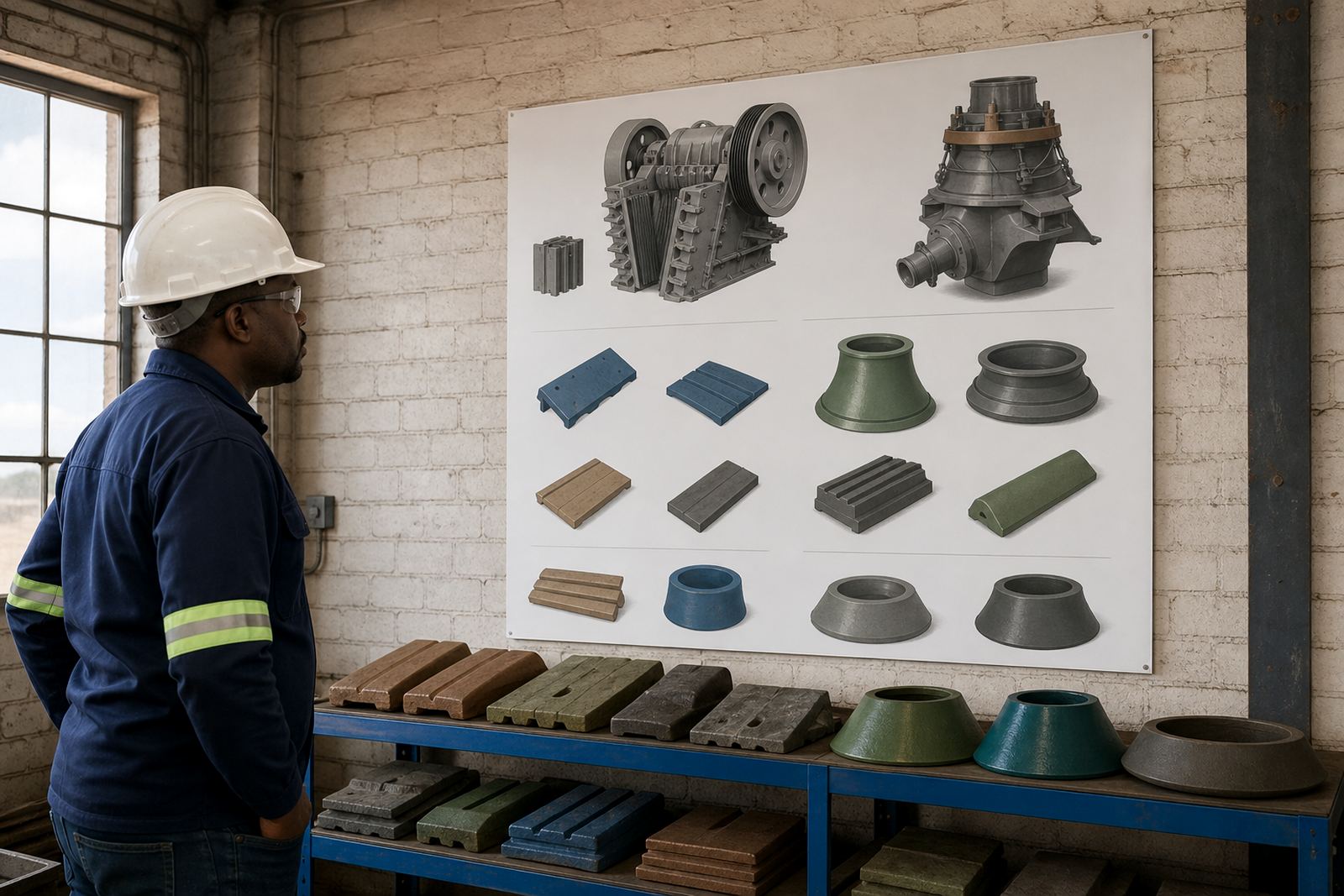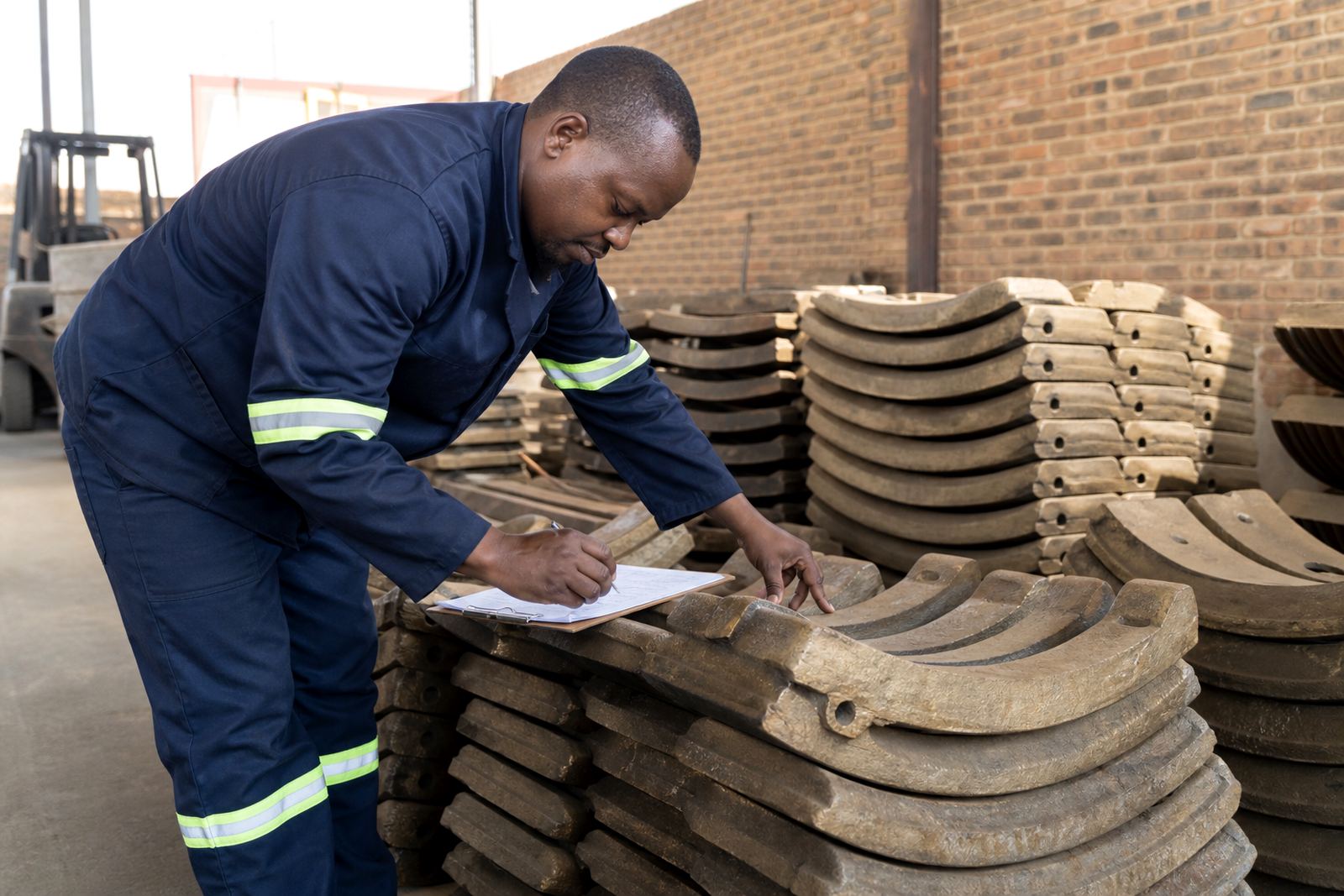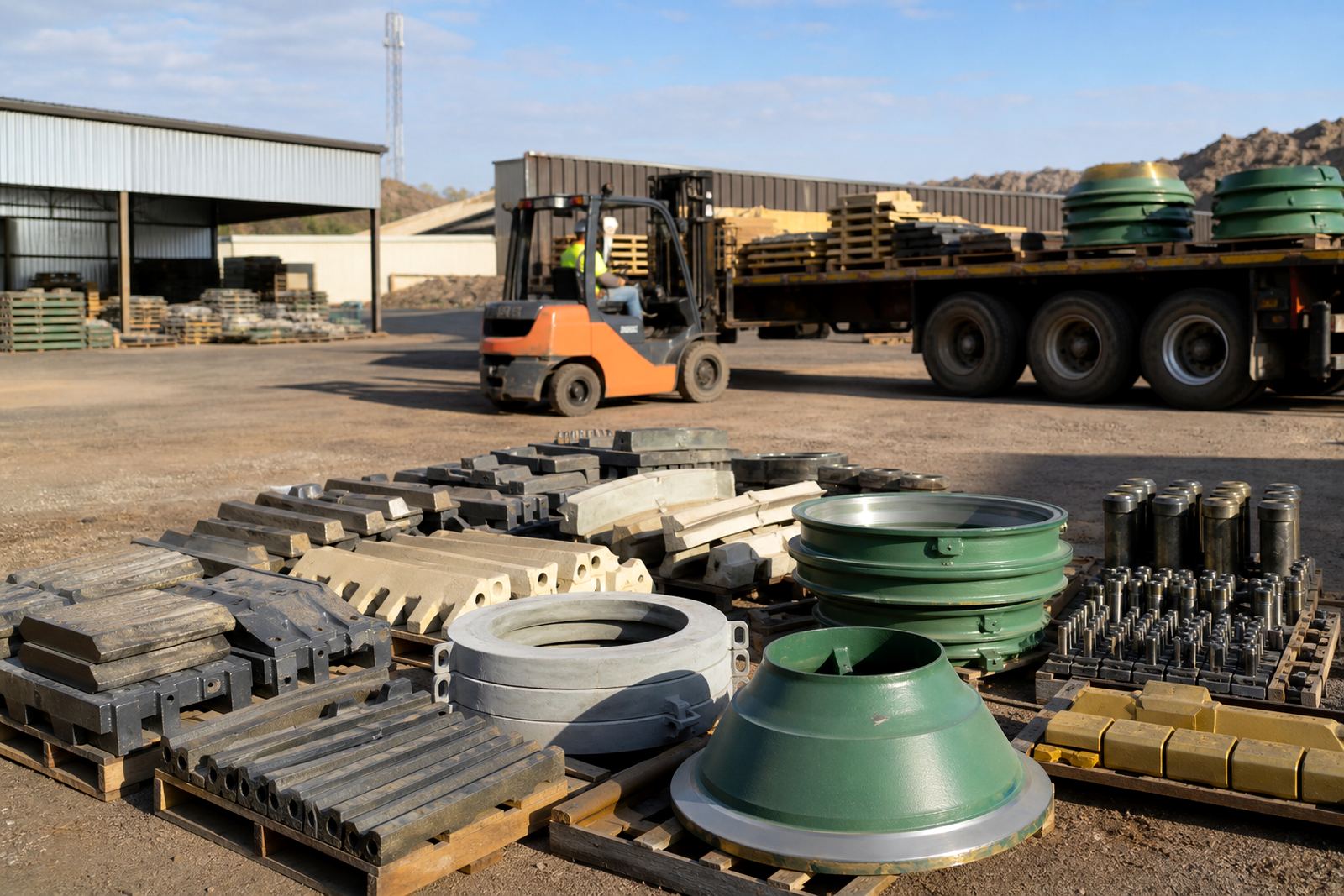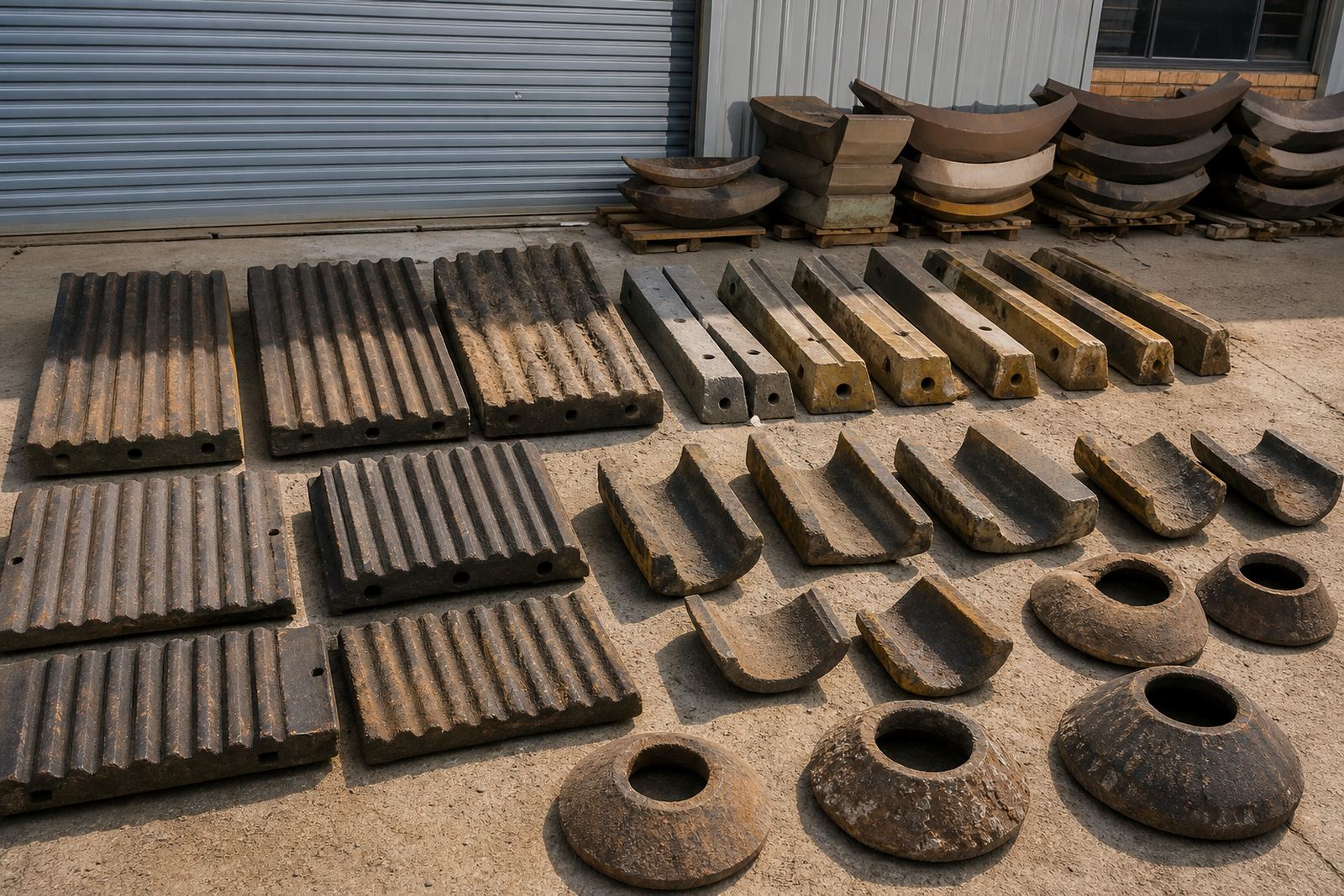
Start With the Wear Surface, Not the Calendar
Time in service matters, but it should not be the only trigger for replacement. A jaw plate, mantle, concave, blow bar or liner can wear unevenly depending on feed size, moisture, hardness, tramp metal and how steady the feed has been. In places like Middelburg, Steelpoort or Kathu, dusty feed and long haul routes can change the way parts wear, so a weekly visual check is worth the effort.
Look at the whole wear face. A part that still has thickness in one area but is paper thin in another may already be affecting product size, throughput or power draw. If one side is carrying most of the load, that usually points to feed issues, chamber setup or a blockage that needs sorting before the next set goes in.
- Check for uneven wear from top to bottom and left to right.
- Compare the left and right side of the chamber if the machine allows access.
- Note any sudden change after a shovel strike, oversize feed or metal contamination.
What Jaw Plate Wear Usually Tells You
Jaw plates often show the story first. If the profile is wearing smooth too early, the feed may be too fine or too wet, and the bite is not doing its job. If the bottom section is worn far faster than the top, the discharge setting may be too tight or the chamber is running with poor nip. Watch for cracking around fixing points too, because that can turn a normal changeout into an urgent stop.
When speaking to us about replacement, give a plain description of the wear pattern. That helps us match the part request to the actual condition on site and plan freight properly to remote mines or quarries. A short photo set can also help, especially when the site is dealing with load-shedding, reduced lighting or a night shift inspection.
- Look for a smooth, polished face where there should still be bite.
- Check whether the bottom third is disappearing faster than the rest.
- Inspect for cracks, broken corners or movement at the fastening points.
Reading Mantle and Concave Wear
Mantles and concaves should wear in a controlled pattern across the chamber. If the wear is patchy or one side is carrying most of the load, the crusher may be running off-centre, the feed may be poorly distributed, or the setting may not suit the material. In hard rock conditions common across the Northern Cape and North West, these signs often appear before the output quality starts to fall off.
Keep an eye on the shape of the cavity. When the profile opens up too much, the machine can start passing larger material and the plant may need to work harder to achieve the same result. If you see a pronounced ridge, step or hollow area, record where it sits in the chamber and how quickly it has formed. That detail helps with shutdown planning and bundled part kits, especially when the next delivery has to go out to a remote site.
- Check for ridges, hollows and flat spots in the crushing zone.
- Compare wear on the feed side with wear on the discharge side.
- Note any change in product size, noise or power draw linked to the wear.
Blow Bars and Liners Need Different Checks
Blow bars and liners wear differently, so they should be checked with the right expectation. Blow bars often show edge rounding, chipping or a broken leading edge when the feed is too abrasive or too blocky. Liners may show thinning, cracking or a scalloped pattern where material is moving unevenly through the machine. On wet coastal material, or where fines are building up, the wear may look less dramatic but still affect performance.
Do not wait for a part to fail completely if the wear pattern is already changing the way the machine runs. A good site note should mention the area of the part, the type of wear and whether it is getting worse after each shift. That makes order support much easier and avoids guesswork when freight has to be arranged quickly from our Middelburg base.
- For blow bars, look for chipped edges, twisting, and uneven striking faces.
- For liners, check for thinning, cracking and repeated impact marks in the same spot.
- Record whether the wear is steady, accelerating or linked to a particular feed source.
Use a Simple Inspection Checklist on Site
A short checklist works better than memory, especially on busy shifts. Ask one person to inspect, one to record, and one to compare against the last service note. That is often enough to spot a pattern before it becomes an outage. It also helps when multiple areas are running, such as Witbank, Burgersfort, Rustenburg or Johannesburg East, where stock movement and site access can vary from week to week.
Keep the inspection practical. You do not need a long report, just enough detail to make the next order accurate and the freight plan realistic. If the site is remote, note road conditions, gate times and any weighbridge or entry rules that may affect delivery. Small details save time later, especially when the part must arrive in a tight shutdown window.
- Part type and machine area.
- Visible wear pattern and location.
- Thickness left, if it can be measured safely.
- Date of last changeout or inspection.
- Any vibration, noise, heat or product change noticed by operators.
When Wear Means It Is Time to Order
Order timing should be based on remaining life, transport time and the shutdown plan, not just on how worn the part looks. If a part is near its limit and the mine is in Phalaborwa, Kathu or another far site, it is better to line up replacement early than wait for a failure on a weekend. The same applies where access is restricted by weather, security procedures or municipal road work.
As a rule, start the conversation as soon as the wear pattern becomes clear and the part is no longer wearing evenly. Send us the condition notes, the machine type if known, and the site location. From there we can help with stock holding, order consolidation, load securing and route planning so the delivery matches the actual job on site.
- Order when wear is affecting output, not only when the part is fully spent.
- Plan ahead for shutdowns, long haul freight and limited site access.
- Keep one spare or a bundled kit ready where lead times are tight.
What to Send Us With Your Enquiry
Clear photos and a simple note save time for everyone. You do not need to write a long message, just enough detail for us to understand the wear pattern and the site need. Our team in Middelburg can use that information to match the right wear parts and organise dispatch to a mine or quarry anywhere across Mpumalanga, Limpopo, the Northern Cape, North West and Gauteng.
When you contact us through the enquiry form, include what you can see, what changed, and how soon you need the part. If the machine is down, say so. If it is a planned changeout, say when the shutdown starts and how the site wants delivery handled. That makes the process quicker and keeps the job practical, not messy.
- Clear photos of the worn face, fixing points and side profile.
- Machine or chamber details if available.
- Site location and delivery window.
- Any access notes for remote roads, security or off-loading.