
Start with a dry, clean receiving area
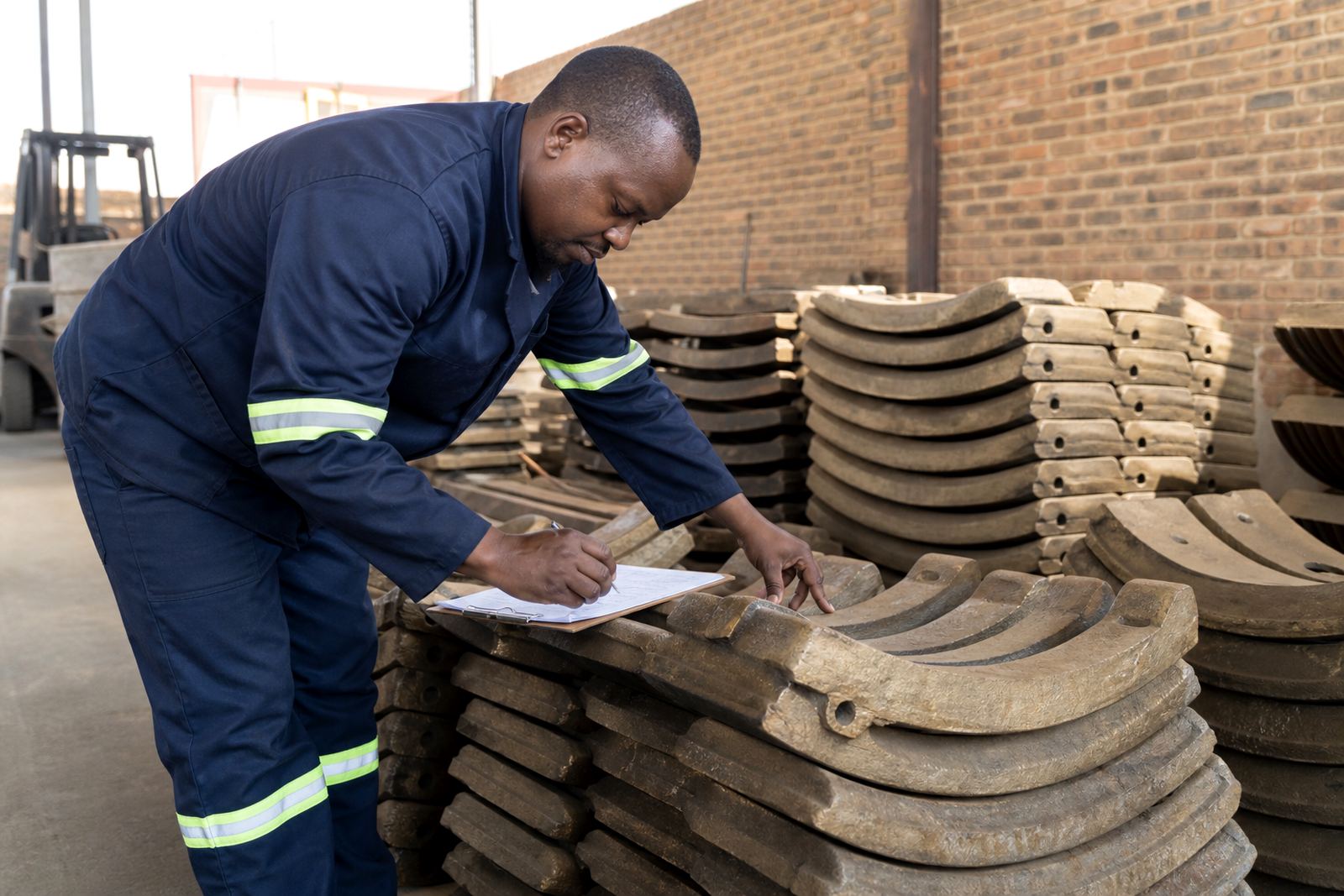
When parts arrive at the Middelburg depot or go straight to site, the first step is always a clean receiving area. Concrete floors are better than bare ground, and the space should stay dry, well ventilated and clear of wash water, dust and oily residue. In Mpumalanga and Limpopo, humidity can climb quickly, so do not leave parts open to the air longer than needed.
Keep pallets off the floor and away from walls. A small gap helps with airflow and makes it easier to check for leaks, damp patches or packaging damage. If a part has arrived in a sealed wrap, leave it sealed until the area is ready for storing and handling.
Keep each part type separate and clearly marked
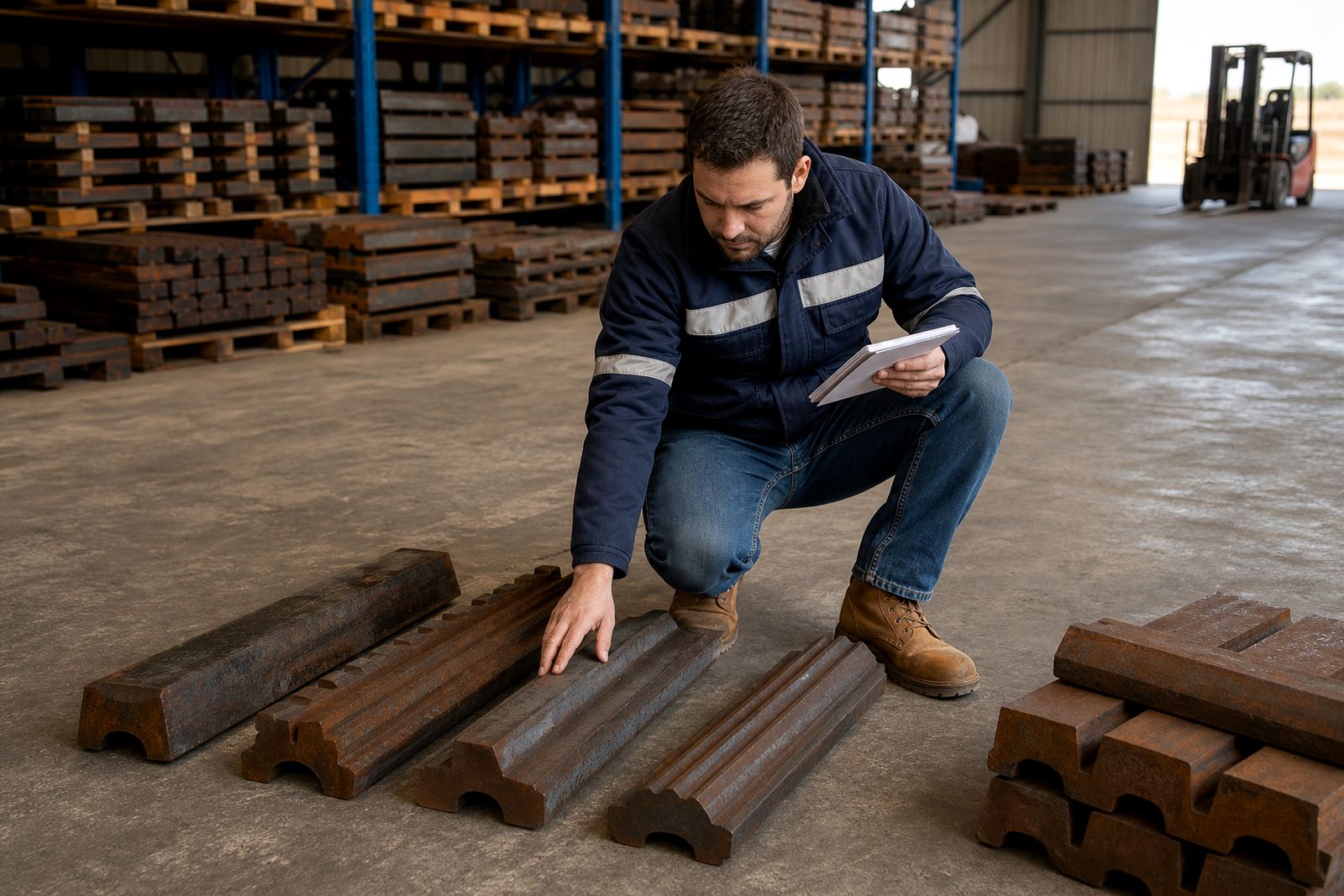
Crusher consumables should never be stacked loosely together. Jaw plates, mantles, concaves, blow bars and liners all have different profiles, wear faces and fitting points. If they are mixed, the risk of picking the wrong part goes up fast, especially during a shutdown when teams are working under pressure.
- Store by part type, machine size and order number.
- Use clear tags showing description, quantity and date received.
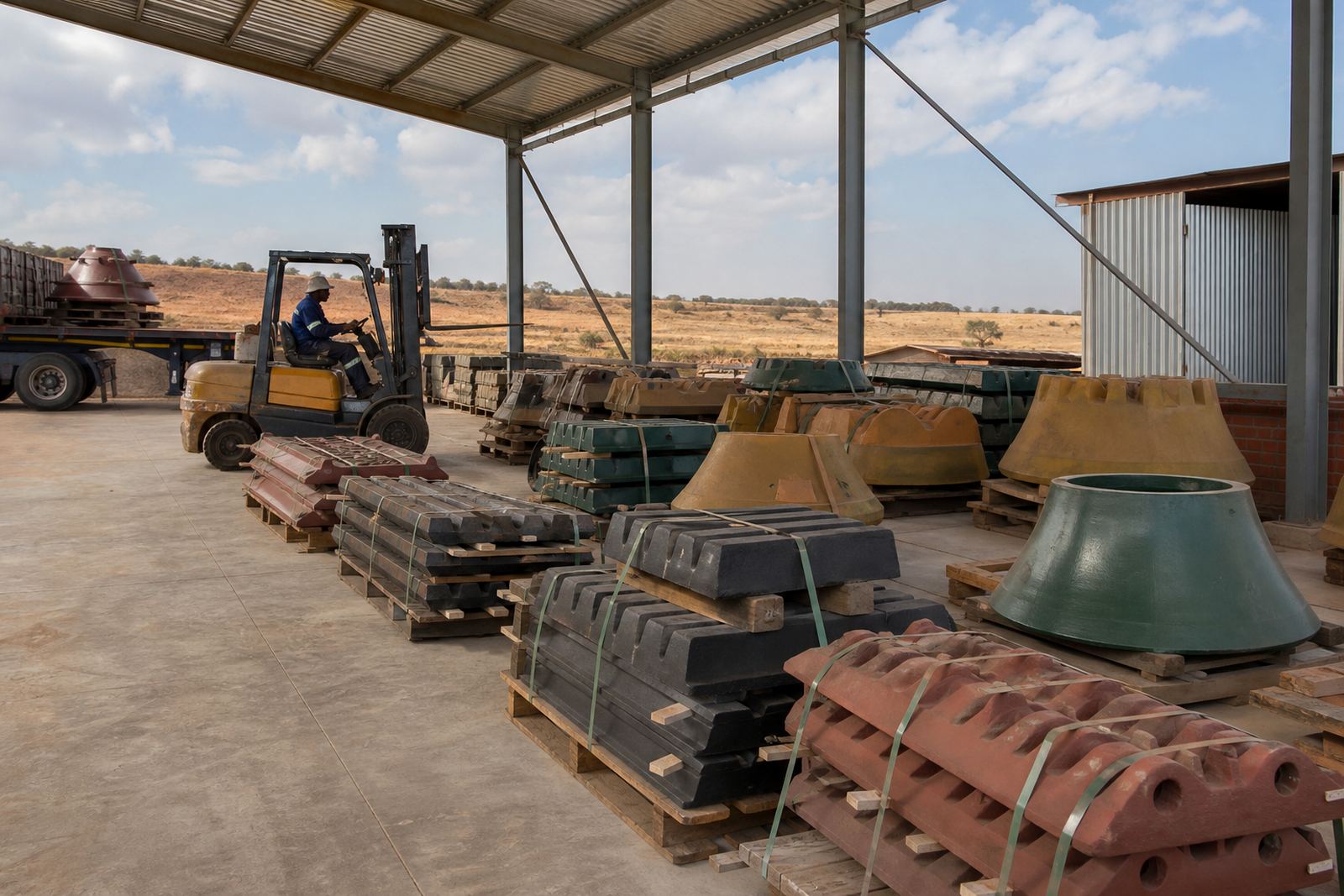
- Keep heavy wear parts on marked pallets or stillages.
- Place smaller items and fixings in sealed, labelled crates.
- Use one storage position per job where possible.
For remote mines in the Northern Cape or North West, this kind of separation saves time when a truck arrives after a long route and the loader needs the correct kit offloaded straight away.
Protect against rust, dust and moisture
Rust is one of the main storage risks for crusher wear parts, especially where stock is held near the coast, in hot sheds, or in yards exposed to summer rain. Even inland, dust can settle on contact surfaces and packing can trap moisture if it is left on damp ground.
Use the original wrapping where possible. If parts need to be re-packed, use clean dry material and keep the load off the ground. Do not wrap wet metal tightly in plastic, because trapped moisture can cause surface corrosion. If a part has been handled by forklift tines or chains, check the edges and faces before it goes back into storage.
- Wipe off dirt and oil before storing.
- Keep silica packs or moisture control material inside sealed containers where suitable.
- Avoid placing stock near open doors, windows or roof leaks.
- Inspect for rust spots after rain, especially in summer.
- Do not store parts under tarps that touch the metal directly.
Handle heavy parts safely to avoid damage
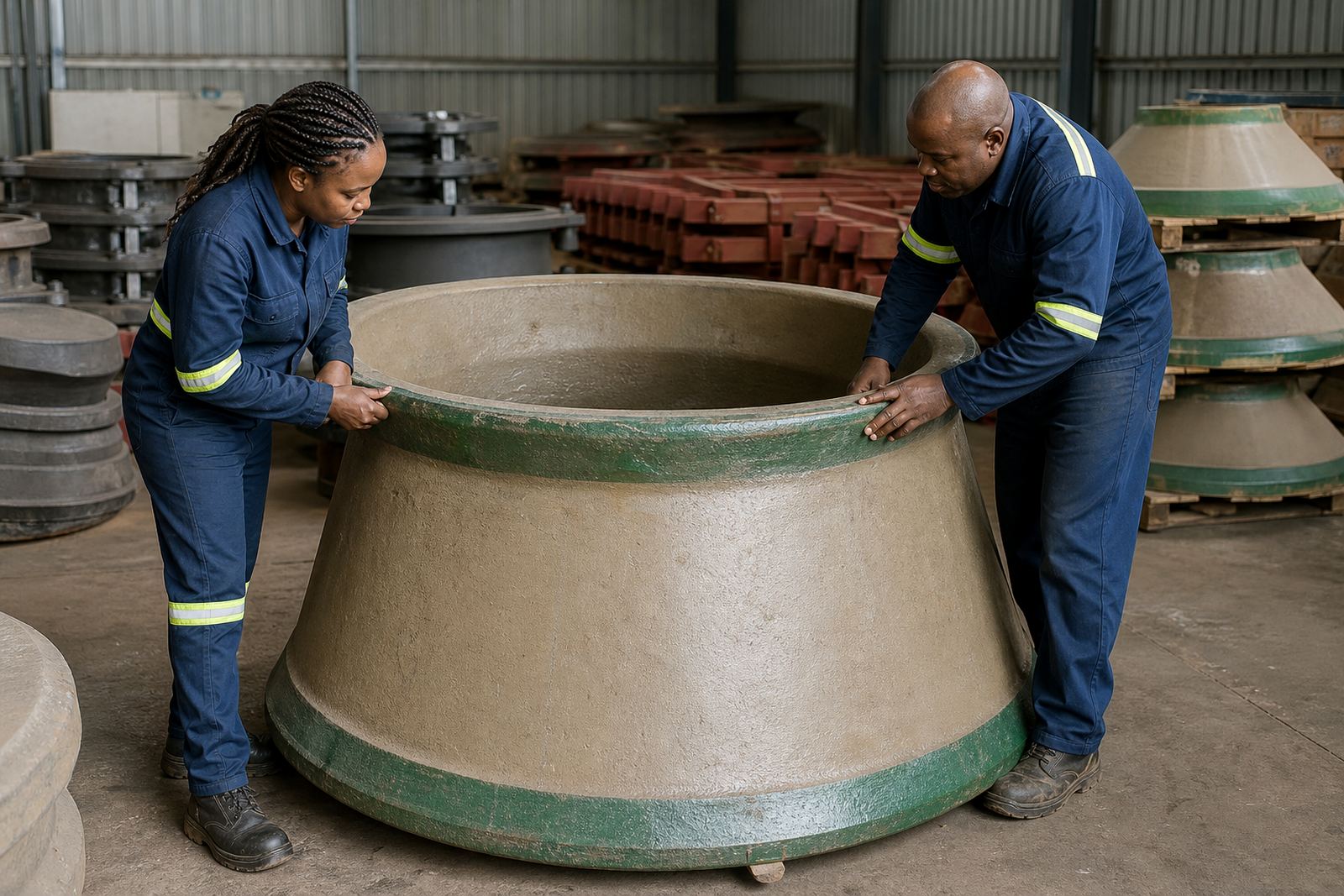
Wear parts are heavy and awkward, so safe handling matters from the moment the delivery is unloaded. Bent lips, chipped edges or damaged seating surfaces can cause poor fitment later. In a depot or at a remote quarry, use the right lifting gear and give the load enough space to move without scraping other stock.
For jaw plates and liners, keep lifting points clear and never drag parts across the floor. Mantles, concaves and blow bars should be moved with suitable slings or lifting aids, not with makeshift methods. If a part lands hard or is knocked against another steel item, inspect it before it is signed off for storage.
Plan stock for shutdowns and urgent dispatch
Good storage is not only about keeping parts safe, it also helps with planning. If stock is arranged by job and machine, the warehouse team can prepare bundled part kits for shutdowns, urgent dispatch and remote mine freight without wasting time searching through mixed pallets. That is important for operations in places like Steelpoort, Burgersfort, Phalaborwa and Kathu where a delay can hold up plant work.
Match the stored stock to expected call-offs and keep a simple status note on each item. That way, procurement, freight and warehouse teams can see what is available, what is reserved and what still needs to be moved. It also helps with return freight planning when old parts need to come back from site for inspection or disposal.
- Tag reserved stock clearly so it is not issued by mistake.
- Keep fast-moving items in easy reach and slow-moving stock higher or further back.
- Record part condition on receipt and before dispatch.
- Group kits by shutdown job where practical.
Use a simple weekly check before the truck leaves
A short weekly check keeps stored crusher consumables ready for the road. This is useful in Middelburg, Witbank and the greater Gauteng route network where freight schedules can change with traffic, weather or site access rules. It also helps when load-shedding affects yard activity and crews need to work with limited time.
Before dispatch, confirm that labels are readable, packaging is intact and the part count matches the order. Check that the load is secure, balanced and protected from movement on rough road sections. On site delivery, make sure the receiving team signs for the correct items and records any visible damage before the truck leaves.
- Check for loose strapping or torn wrapping.
- Confirm the correct part number and quantity.
- Inspect for rust, impact marks or bent edges.
- Make sure pallets are stable and forklift ready.
- Keep the paperwork with the load from dispatch to handover.
When to reject stored stock and ask for support
Not every item should be kept in storage and used later. If a crusher wear part has heavy corrosion, cracked edges, damaged seating faces or visible distortion, put it aside for review. The same applies if packaging has failed and the item has been exposed to rain, mud or contamination from oil and grit.
If you are not sure whether a part is fit to hold for the next installation, ask for support before it is moved into the active stock area. A quick check is better than sending the wrong item to a remote mine and trying to fix the mistake after a shutdown has already started. Clear storage habits save time, reduce waste and keep the warehouse ready for the next delivery.