What concave segments do in the crushing chamber
Concave segments form the upper wear surface inside a cone crusher and work with the mantle to break rock as feed passes through the chamber. Each segment takes impact and abrasion day after day, so the wear pattern is uneven on many sites and a full set does not always need to be changed at once. That is where individual concave segments make sense. They let a mine or quarry replace only the worn section, keep the rest in service for longer, and manage spend better on remote operations where every delivery has to count.
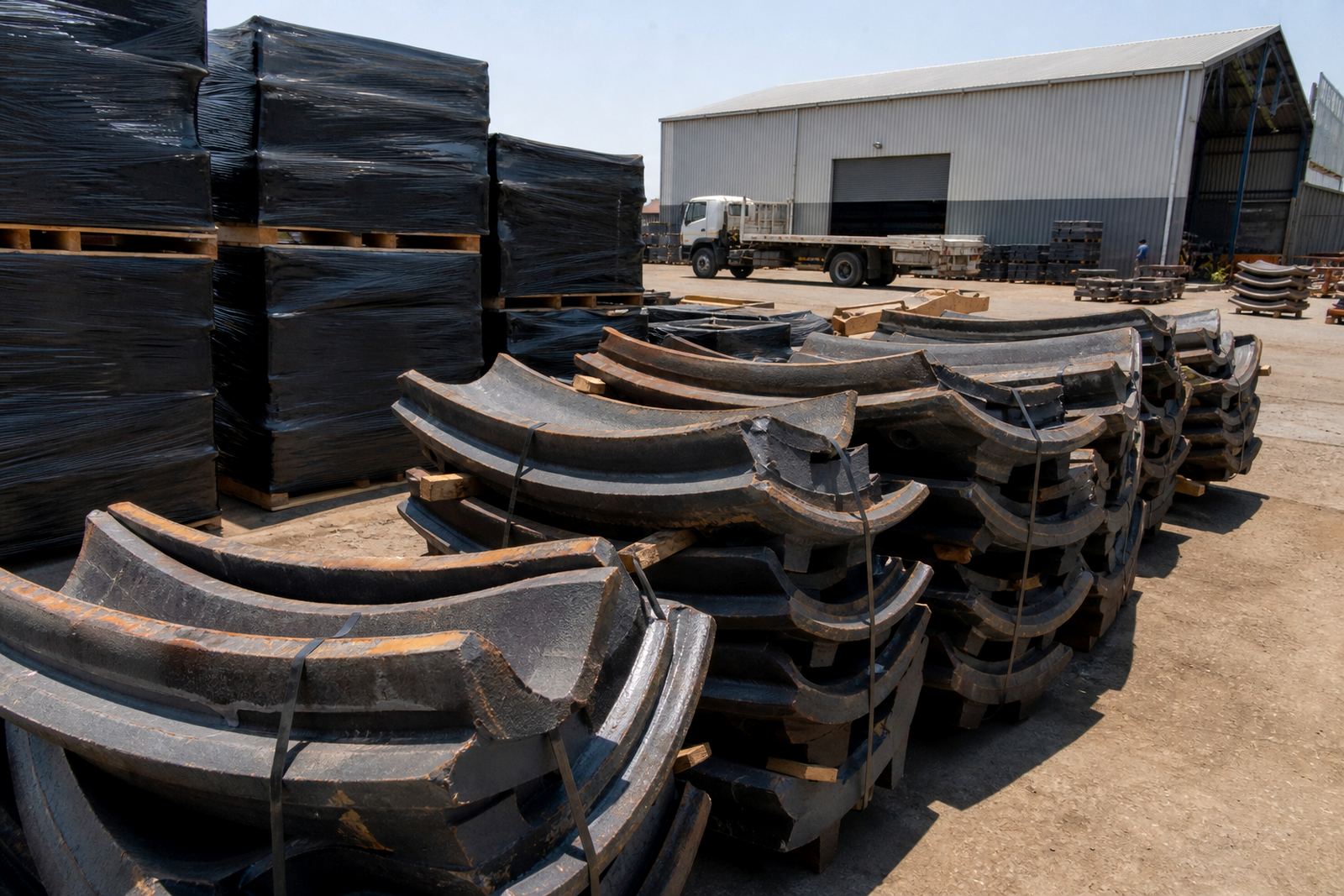
We supply concave segments as loose items for staged replacement plans, shutdown work and emergency call-outs. This is useful on sites handling hard rock, variable feed sizes or dusty material with fines that pack into the chamber. If your plant runs long shifts, or if access to the site is limited by weather, road conditions or security controls, holding a practical mix of concave segments on the shelf can reduce downtime and help the crusher return to full duty quickly.
Sizes, profiles and fitting options
Concave segments are not one-size-fits-all. The correct choice depends on the crusher model, chamber profile, feed size and the reduction you need from the plant. We supply segments in matching sections for staged change-outs, with options suited to fine, medium and coarse duty depending on the chamber setup. Some plants use a full ring arrangement while others work better with partial replacement around the high-wear zones. We can support order planning around your site practice, whether you replace in pairs, by quadrant or as a complete set during planned maintenance.
For supply planning, it helps to know whether the crusher is working on hard aggregate, reef material or mixed quarry feed. It also helps to confirm the closed side setting and the current wear pattern, because that affects how the chamber holds material and how quickly the wear face closes up. If you are running stock in Middelburg, Steelpoort or Kathu, it is usually best to keep the same segment pattern on hand so the next change can be done without delay.
- Supplied individually for staged replacement and stock control
- Available for different chamber profiles and wear duties
- Suitable for partial change-outs where only specific sections are worn
- Useful for remote sites that need fewer heavy lifts and quicker shutdowns
Where concave segments suit South African operations
These wear parts are commonly used on cone crushers in mines, quarries and crushing plants where the feed is abrasive and turnaround time matters. In Mpumalanga and Limpopo, many sites work in dust, heat and long transport runs from town, so keeping wear parts in stock avoids waiting on a single urgent delivery from far away. In the Northern Cape and North West, distance and road access can make planned stock holding even more important. A delayed part can hold up a whole shift and affect downstream screening, stockpiling and truck loading.
Concave segments suit operations that need controlled replacement rather than a full chamber strip every time wear is detected. They also suit sites where maintenance teams work with limited crane access or where shutdown windows are short. If your site is in Gauteng or around Johannesburg East, we can consolidate parts with other wear items and arrange freight to match the work schedule. For more remote places such as Phalaborwa or Rustenburg service areas, route planning and load securing matter just as much as the part itself.
- Mining sites with high abrasion and regular chamber wear
- Quarries handling hard stone, blasted rock or mixed feed
- Remote plants needing staged replacements and lower stock pressure
- Sites planning shutdowns around weather, access or municipal curfews
Installation needs, handling and power requirements
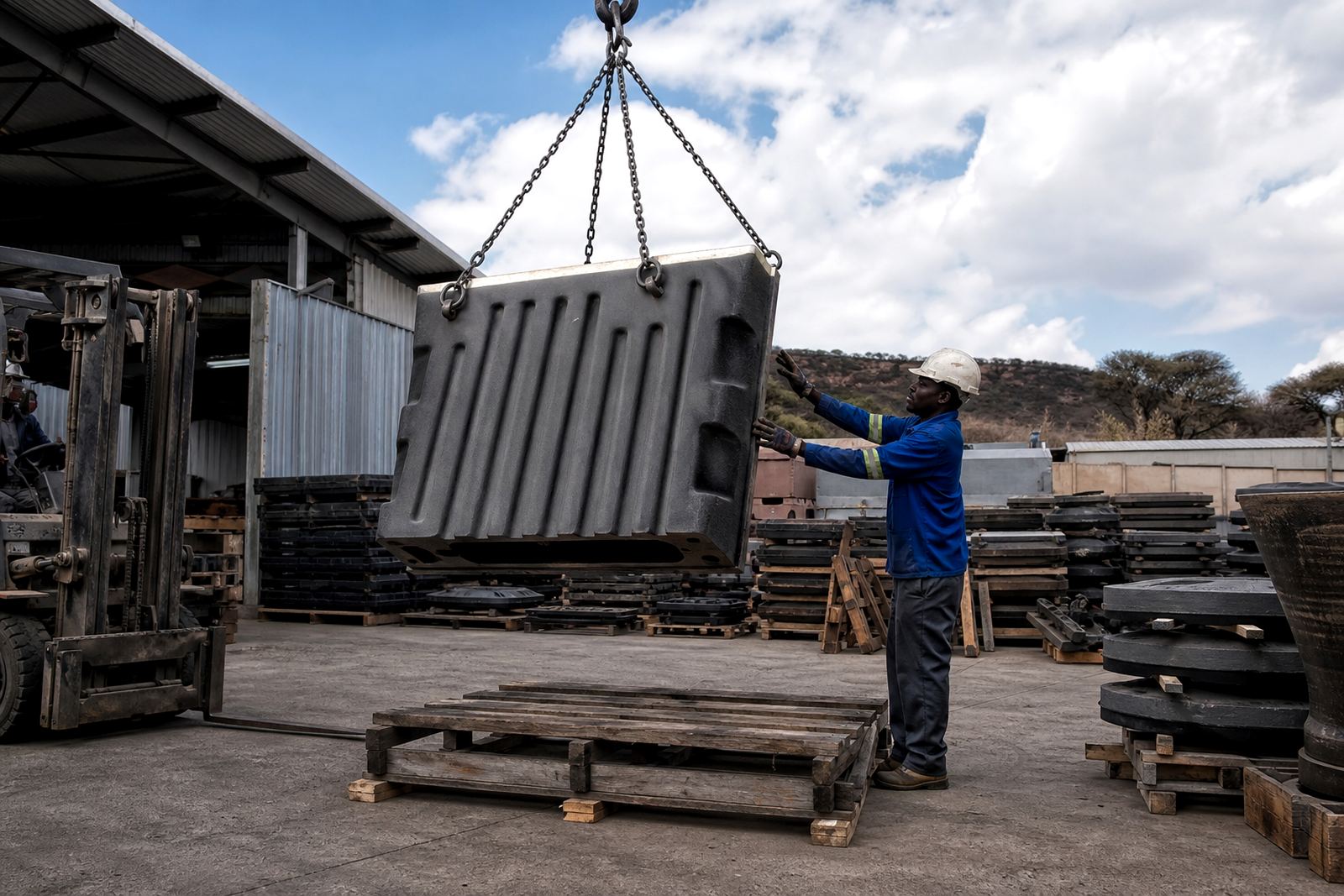
Concave segments do not need power or gas to operate on their own, but they do need correct handling during installation. The crusher must be isolated, locked out and made safe before any lifting begins. Segments should be inspected for cracks, shipping damage and correct profile before fitting. Because these parts are heavy and awkward to handle, a proper lifting plan, qualified rigging team and suitable crane or hoist are required. On remote sites, especially where load-shedding affects workshop power, it helps to schedule the work around daylight and equipment availability so the crew is not rushing.
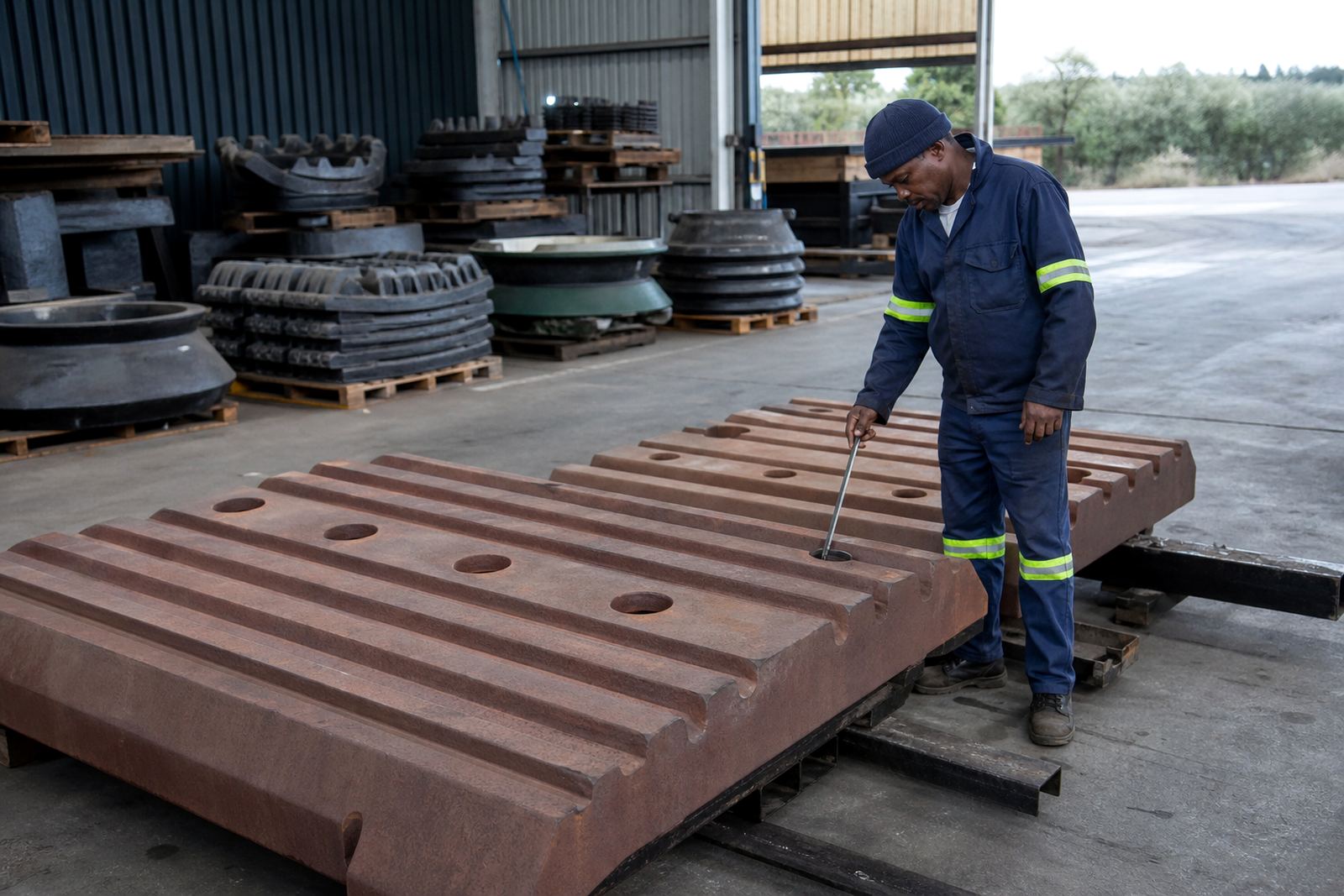
Before fitting, make sure the seating surfaces are clean and free of old material build-up. Check the backing area, bolts, wedges and clamping arrangement where relevant, then confirm the segment sits evenly in the chamber. Uneven seating can lead to hot spots and early wear. After commissioning, inspect the chamber again once the crusher has settled under load. A small amount of bedding-in is normal, but loose fitment or rattling is not. Keep records of the segment positions fitted so future replacement can be done in the same sequence if needed.
Care, servicing and shutdown planning
Good care starts with regular checks on wear rate, feed consistency and the condition of adjacent wear parts. If the mantle, liners or chamber hardware are also wearing unevenly, the concave segments may not be carrying load as intended. Dust ingress, moisture and sticky fines can all affect performance, especially in coastal humidity or during the rainy season. Cleaning around the crusher during planned stops helps the team see movement, wear marks and signs of looseness before a problem grows.
For planned shutdowns, it helps to map which segments are due first and keep the next set ready in the warehouse or on site. That way the team can swap only the required pieces and avoid over-ordering. We also support bundled part kits where concave segments are planned together with other crusher wear items, which can save time when a site is already under pressure. If return freight is needed for removed parts or packaging, that can be arranged as part of the order plan, which is handy when the site is far from the nearest industrial centre.
- Check wear depth and cracking during every shutdown window
- Keep adjacent wear parts aligned with the same service interval
- Store segments under cover to limit rust and contamination
- Plan freight early for remote sites with restricted access or long lead times
What to confirm when ordering concave segments
To supply the correct concave segments, we need the crusher model, chamber arrangement and the wear profile currently in use. It also helps to know whether you want a single replacement piece, a partial set or a full chamber order for stock. If the site has had previous changes to the feed arrangement, discharge setting or liner pattern, let us know because that can affect the segment selection. When in doubt, send the existing part details through the enquiry form and we can help you work through the order step by step.
For remote mines and quarries, the practical details matter too. Tell us where the delivery has to go, whether there are site induction rules, weighbridge requirements or restricted offloading times, and whether the part needs to go with other crusher wear stock. The more complete the order information, the smoother the freight planning. Our Middelburg base supports deliveries into Mpumalanga, Limpopo, the Northern Cape, North West and Gauteng, with coordination for sites in Steelpoort, Burgersfort, Witbank, Rustenburg, Kathu and Johannesburg East. That helps keep your machine on the schedule and not waiting for the next truck.
Key facts
| Product type | Crusher wear part for cone crusher chamber wear surfaces |
|---|---|
| Supply format | Individual concave segments for staged replacement |
| Typical use | Mining and quarry crushing plants with abrasive feed |
| Installation | Requires lockout, lifting gear and qualified fitting team |
| Power or gas requirement | None for the part itself |
| Supply area | Middelburg base with freight to remote sites across South Africa |