What feed liners do in a crusher line
Feed liners sit in the path of the incoming rock, ore or aggregate before the material is fully broken down. Their job is to take the first impact and spread the wear over a replaceable part rather than the machine body, chute or hopper walls. In practical terms, that means less damage to expensive structural parts and less unplanned downtime when feed conditions are harsh or irregular.
These parts are used where material drops in from a conveyor, loader, tipper or transfer point and where fines, sharp edges and repeated impact cause fast wear. In South African mining and quarry work, that often includes dusty, hot inland sites, and also coastal operations where moisture can cause material to cling and pack. A good feed liner helps keep the flow moving and gives the operator more control over wear patterns.
Sizes, profiles and material options we can supply
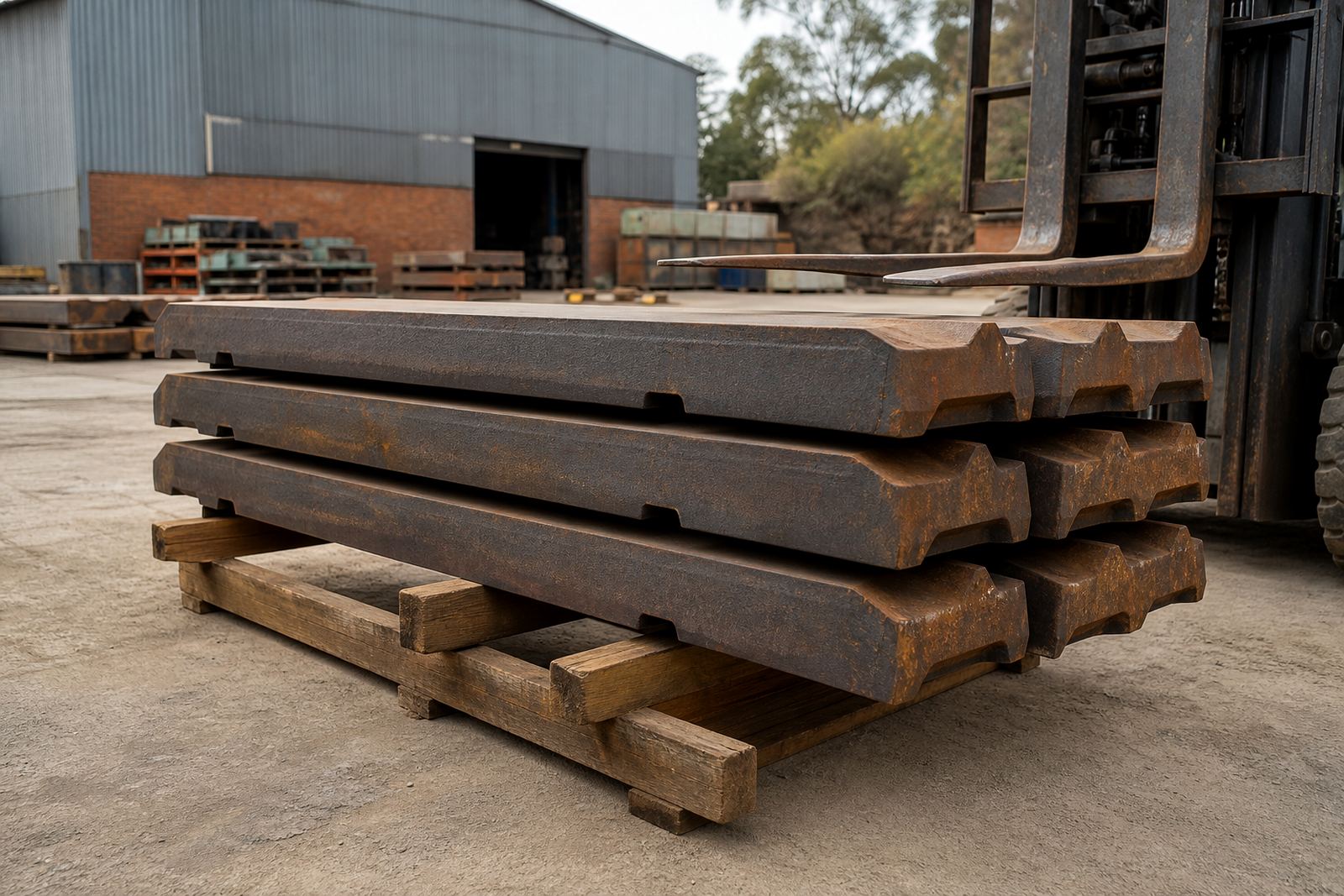
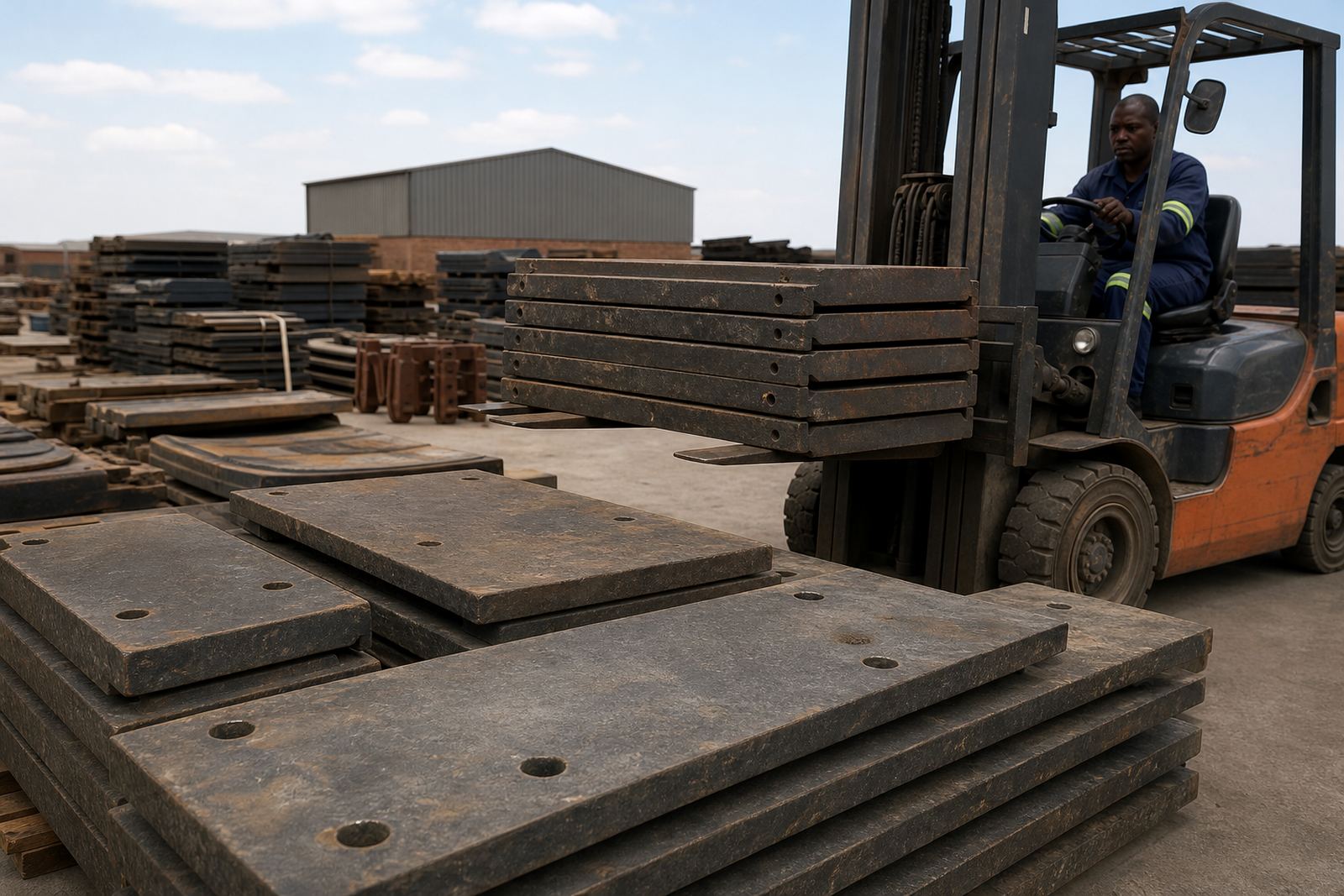
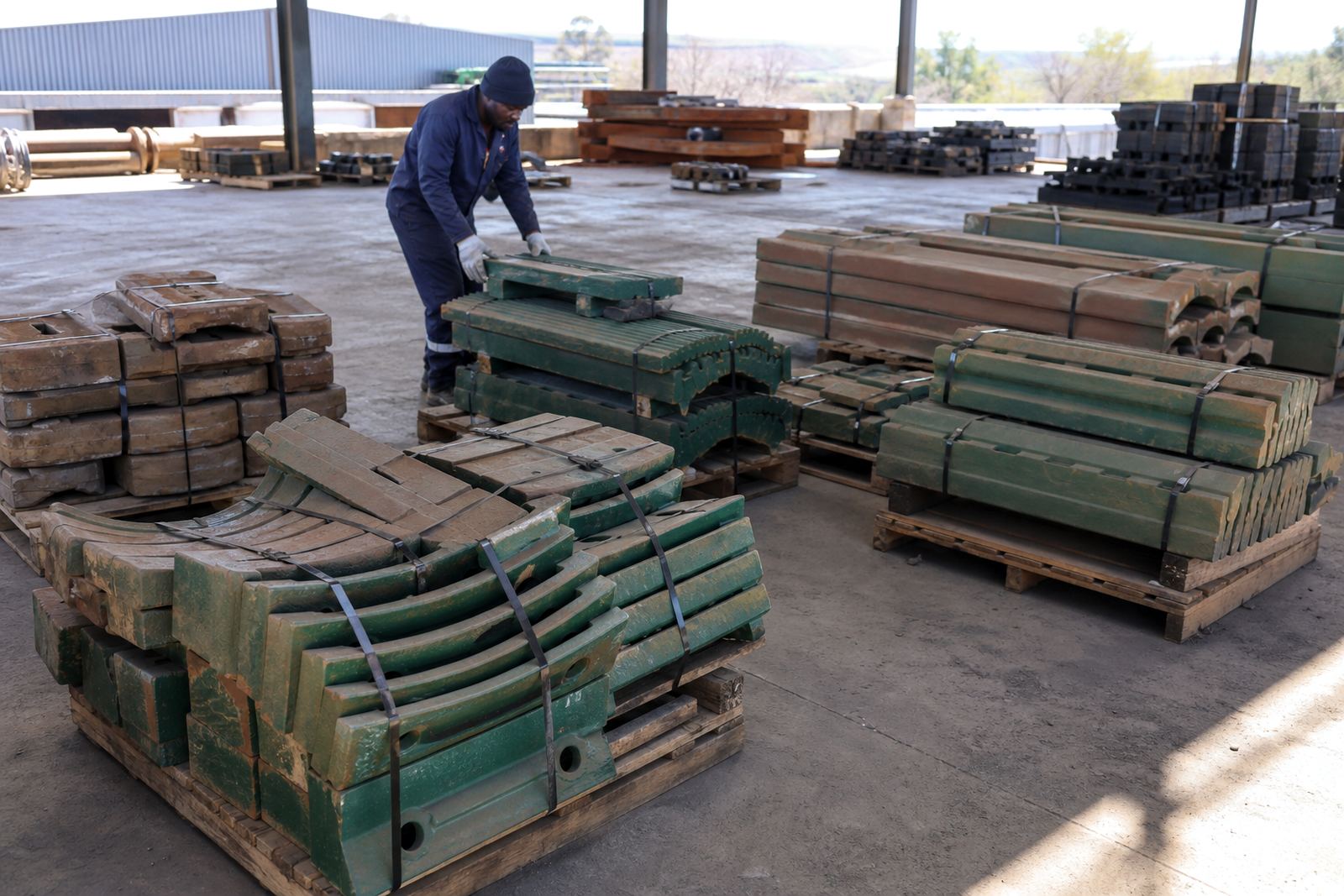
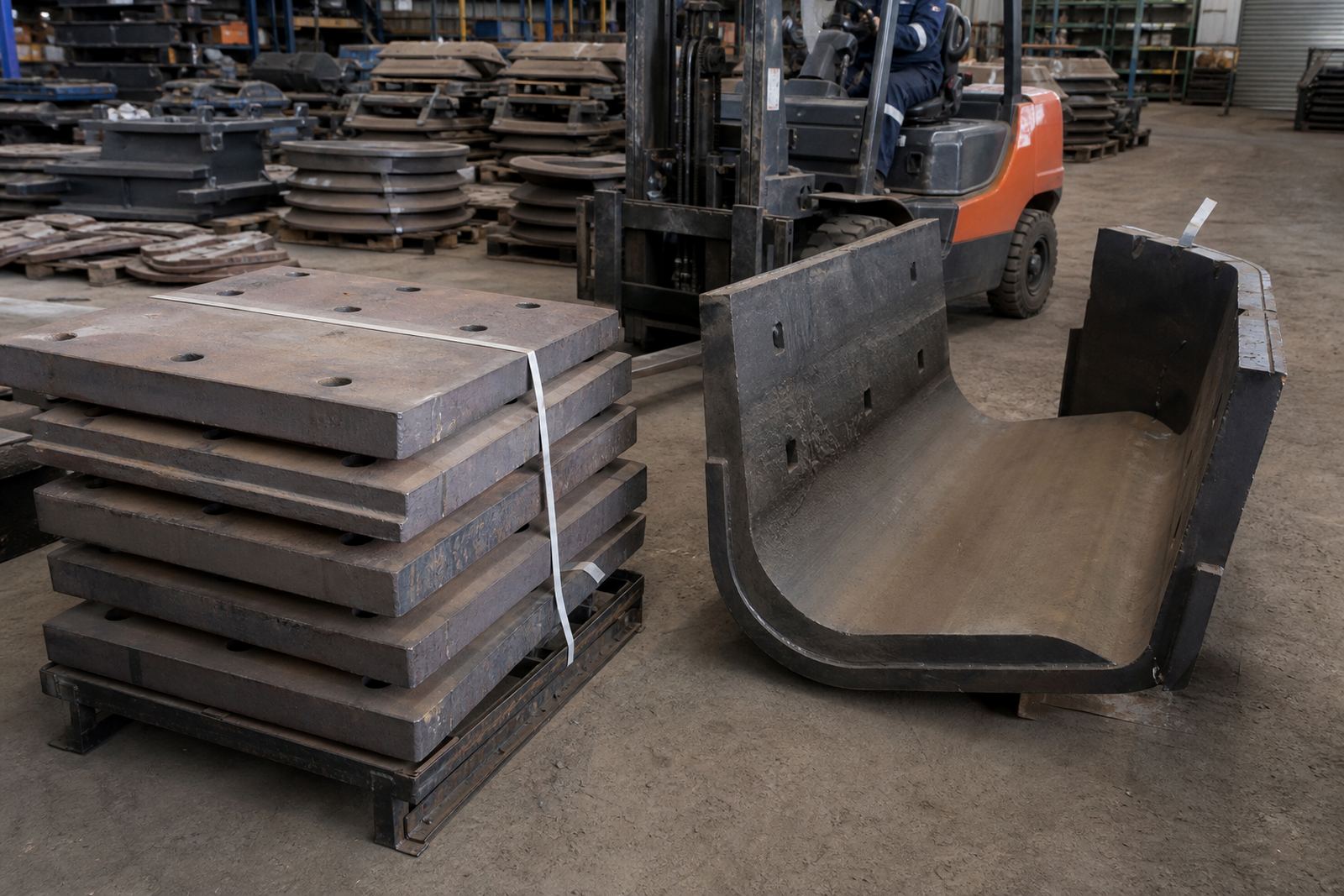
Feed liners are not one-size-fits-all. They can be supplied in different thicknesses, widths, lengths and fixing patterns depending on the opening, chute or hopper they protect. Some jobs need flat wear plates, while others need profiled sections that guide the feed and reduce direct impact on one spot. We can help with single replacement pieces, matched sets and bundled kits for planned shutdowns.
- Typical thickness ranges from light duty sections through to heavy wear plate for high impact areas
- Flat, curved or profiled options depending on the feed angle and material path
- Bolt-on or clamp-fixed arrangements, subject to the machine design
- Hardened or abrasion-resistant wear material for longer service life
- Cut-to-size replacement sections for repair work on existing chutes and hoppers
Where the original unit has already worn unevenly, it is often better to measure the worn opening carefully and replace like for like, then make small adjustments to suit the actual site conditions. That keeps the fit better and helps avoid gaps that let material sneak behind the liner.
Where feed liners suit best on site
Feed liners suit crushers, screens, transfer chutes, hopper inlets and other areas where the material enters under force or at speed. They are especially useful on sites that handle coarse rock, abrasive ore, mixed rubble or sticky feed that shifts suddenly. In quarry work, they can protect the load point after tipping and help reduce the damage caused by oversize pieces landing off centre.
On remote mines, the main benefit is protection from wear that would otherwise reach the base metal too quickly. That matters when the nearest repair crew is far away and every stop has to be planned around crew changes, shift breaks and transport windows. A properly selected liner can keep the feed path in better condition, which supports steadier throughput and fewer emergency callouts.
- Crushers and feeder openings
- Primary hoppers and transfer chutes
- Quarry loading points and stockpile drop zones
- Remote mine plants where access is limited
- Sites with high dust, moisture or uneven feed sizes
Installation basics, power needs and site checks
Feed liners are mechanical wear parts, so they do not need electrical power or gas to function. Installation is usually done with standard fitter tools, lifting gear and the correct fastening hardware for the machine. On larger sections, a crane, telehandler or overhead hoist may be needed to position the liner safely. Before work starts, the plant should be isolated and locked out in line with site rules and municipal safety requirements where relevant.
Good installation starts with a clean contact surface, the right hole alignment and enough clearance to avoid the liner binding against moving parts. If a liner is fitted crooked or with loose fasteners, it can crack early or allow material to work behind it. The fitting team should also check for damaged support faces, bent brackets and uneven wear on the adjoining parts, because those issues often shorten the life of the new liner. It sounds basic, but it saves a lot of trouble later.
- No power or gas connection needed for the liner itself
- Lockout and isolation required before removal or fitment
- Check lifting access for heavier sections
- Inspect bolts, brackets and mating surfaces before fitting
Care, servicing and wear signs to watch
Feed liners should be checked during routine plant inspections, especially after long runs, hard feed or shutdown restarts. Wear is usually seen as thinning in the impact zone, rounded edges, cracks near fixings or patchy abrasion where the material has been hitting one point repeatedly. On some sites, you may also see build-up where wet fines have started to pack against the liner face.
Regular servicing is straightforward: clean the area, inspect for loose bolts, measure remaining thickness and confirm that the liner still sits square. If the feed path is changing because of a new haul route, different blend or wetter feed, the liner may need a different profile or thickness. Planning replacement before the part fails completely is cheaper than waiting for a hole to open up and damage the shell behind it.
- Check for cracks around holes and edges
- Measure wear depth against the original profile
- Look for loosened fasteners after vibration or impact
- Remove trapped fines and build-up during shutdowns
What to send us when ordering feed liners
When you place an order, the more detail you can share the quicker we can match the right part. Start with the machine type, the area being protected and the measurements of the worn section. If you have an old liner, a clear photo and the fixings help a lot. If the part is for a remote mine, tell us the delivery location, access route and any site time limits so freight can be planned properly.
We hold stock in Middelburg, Mpumalanga and support deliveries to mines and quarries in Mpumalanga, Limpopo, the Northern Cape, North West and Gauteng. For shutdown work or urgent swaps, we can help consolidate orders and plan load securing so the parts arrive ready for fitting. Our team in Middelburg also assists with order support, return freight planning and route planning for harder-to-reach sites.
- Machine make and model if known
- Dimensions, thickness and fixing layout
- Photo of the worn part or opening
- Site location, access notes and required delivery date
- Whether you need a single liner or a full kit
Key facts
| Product type | Feed liners for impact and abrasion zones |
|---|---|
| Typical use | Crusher inlets, hoppers, transfer chutes and loading points |
| Material options | Abrasion-resistant wear plate and hardened wear sections |
| Mounting | Bolt-on or clamp-fixed, subject to the machine design |
| Supply format | Single items, matched sets or bundled shutdown kits |
| Delivery area | Middelburg base with freight to mines and quarries across South Africa |